Jewelry Armoire Black Finishes: A Technical Buyer's Guide
Discover the technical differences in black jewelry armoire finishes, wood substrates, and anti-tarnish linings to protect your collection in 2026.

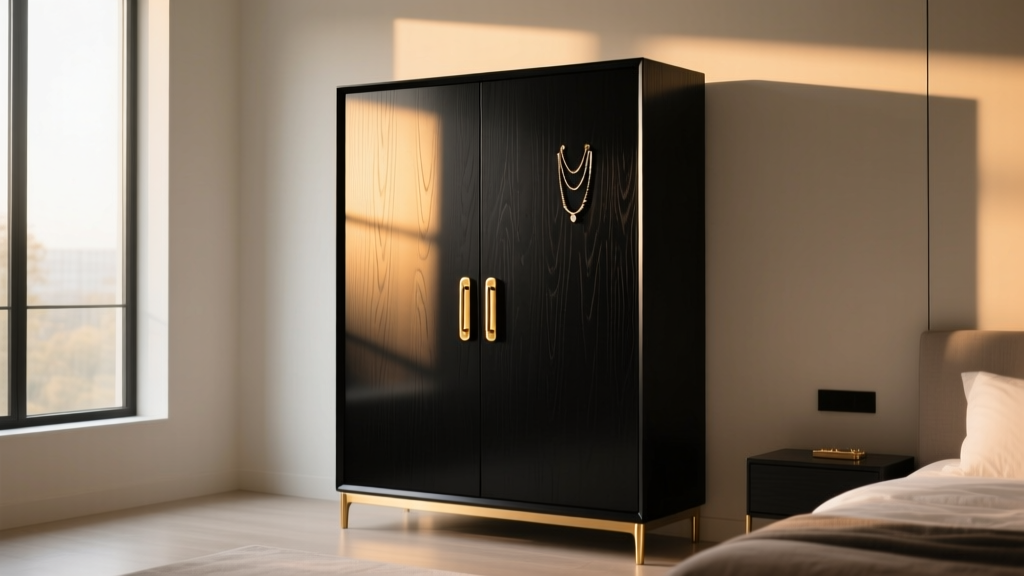
When investing in a jewelry armoire black finishes demand a much closer look at the chemical composition of the stain, topcoat, and interior linings than lighter wood tones. While a dark, moody aesthetic provides a stunning backdrop for gold and diamond pieces, the manufacturing shortcuts often used in mass-produced black cabinets can actively harm your collection. In this 2026 technical deep dive, we bypass the marketing fluff to examine the structural engineering, finish chemistry, and material science that separate a premium black jewelry armoire from a disposable one.
The Anatomy of a Premium Black Jewelry Armoire
A high-end armoire is not merely a box with drawers; it is a micro-climate control system. The shift toward dark, opaque finishes in modern furniture design has led to an influx of low-quality MDF (Medium-Density Fiberboard) wrapped in PVC vinyl. While this mimics the look of painted wood, it lacks the structural rigidity required to support the heavy, concentrated weight of metal jewelry. A true premium black armoire relies on solid hardwoods or high-grade plywood substrates, finished with catalyzed polyurethanes and lined with chemically inert, anti-tarnish textiles.
Wood Substrates: MDF vs. Solid Hardwoods
The substrate is the skeleton of your armoire. Because black finishes obscure the natural grain, manufacturers frequently use cheap particleboard or MDF, painting over the edges to hide the compressed fibers. According to the Woodworking Network, MDF is highly dimensionally stable in dry environments, but it is notoriously susceptible to edge-swelling if exposed to ambient humidity or accidental water spills.
| Material | Weight Capacity | Moisture Resistance | Finish Adhesion | Typical Price Range |
|---|---|---|---|---|
| Particleboard | Low (Sags over time) | Poor (Disintegrates) | Moderate | $80 - $150 |
| MDF (Medium-Density) | Moderate (Heavy but stable) | Poor (Edge swelling) | Excellent (Smooth surface) | $150 - $350 |
| Baltic Birch Plywood | High (Cross-banded strength) | Good | Good (Requires grain fill) | $400 - $800 |
| Solid Rubberwood (Ebony Stain) | Very High | Excellent | Excellent (Deep penetration) | $800 - $2,500+ |
For a black armoire, solid rubberwood stained with an ebony or true-black aniline dye offers the best balance of density and screw-holding strength, ensuring that heavy drawer slides and mirror hinges will not strip out over time.
The 'Black' Finish: Lacquer, Polyurethane, and Matte Paints
The most common complaint with black furniture is fingerprinting and micro-scratching. High-gloss 'piano black' finishes are typically achieved using polyester resins or nitrocellulose lacquers. While visually striking, nitrocellulose lacquer remains slightly soft and is highly prone to showing sebum (skin oils) and dust.
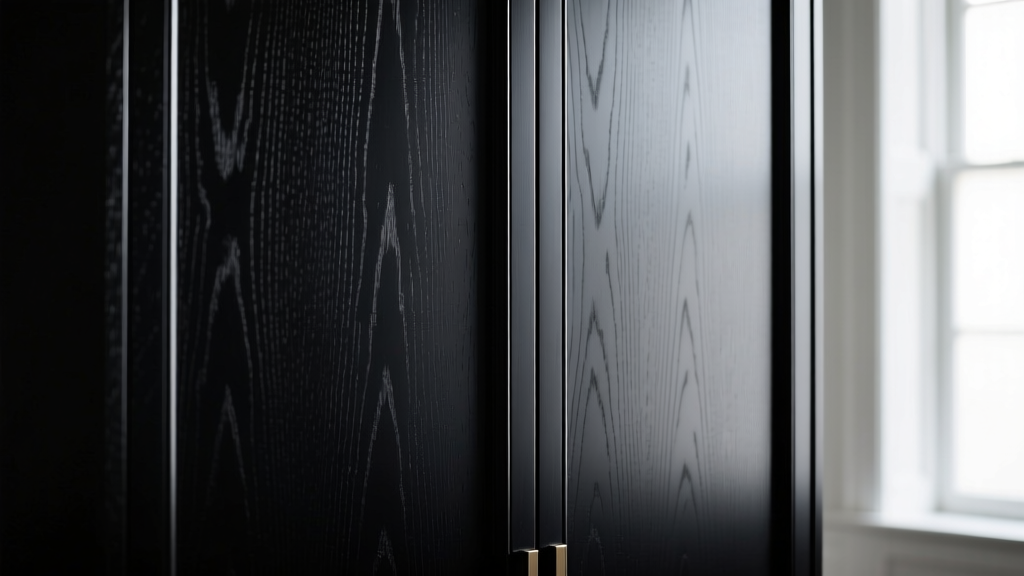
For daily use, a matte or satin catalyzed polyurethane is vastly superior. Catalyzed polyurethanes undergo a chemical cross-linking process as they cure, creating a hardened, plastic-like shell that resists solvents, cosmetics, and perfumes. When shopping, look for '2K polyurethane' or 'conversion varnish' in the product specifications. These finishes scatter light rather than reflecting it, effectively hiding dust and fingerprints while providing a rich, deep black hue.
Hardware and Hinges: The Hidden Failure Points
The hardware on a black armoire serves as both a functional pivot and a visual accent. Cheap black hardware is usually made from Zamak (a zinc alloy) and finished with a black oxide or painted coating. Black oxide offers zero abrasion resistance; within months of daily pulling, the black wears off, exposing the dull gray zinc beneath.
Expert Tip: Always inspect the back of the drawer pulls. If the black finish looks powdery or chips easily with a fingernail, it is a superficial chemical blackening, not a durable coating.
The gold standard for dark hardware in 2026 is PVD (Physical Vapor Deposition) Black Titanium Nitride. PVD is a vacuum-coating process that bonds titanium molecules to a solid brass substrate at the atomic level. It is completely impervious to UV fading, sweat, and cosmetic chemicals, ensuring the matte black or black nickel look lasts decades without wearing through to the base metal.
Interior Linings: The Tarnish Paradox of Black Felt
Perhaps the most critical technical oversight in black jewelry armoires is the interior lining. To match the dark exterior, manufacturers often use cheap, synthetic black felt or polyester fleece. However, the sulfur-based dyes used to achieve deep black colors in synthetic textiles actively off-gas sulfur compounds. When trapped in a closed drawer, these gases react with the copper and silver alloys in your jewelry, accelerating tarnish at an alarming rate.
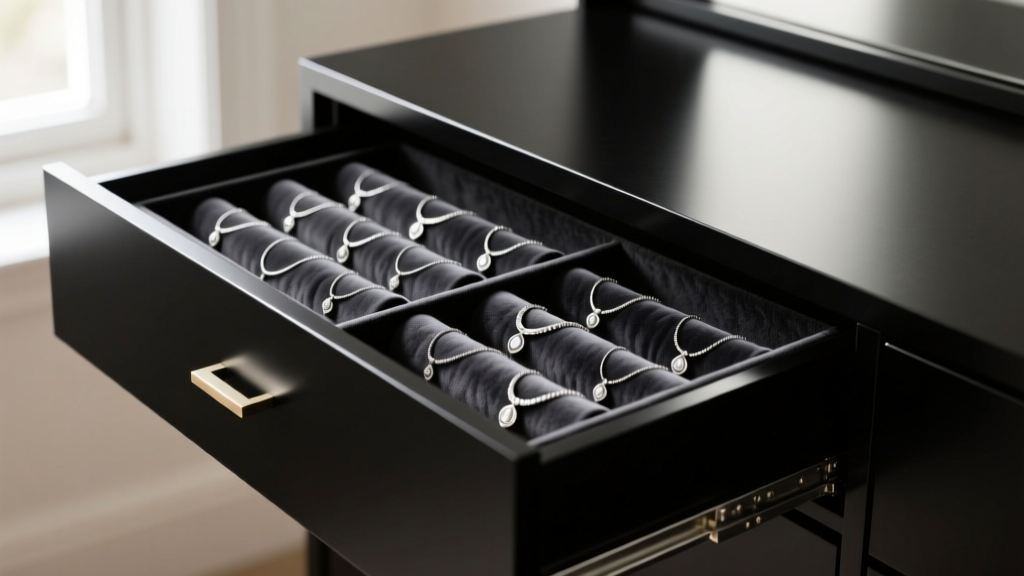
The American Institute for Conservation strictly advises against using standard dyed felts for long-term silver storage. Instead, premium black armoires utilize Intercept Technology™ linings or Pacific Silvercloth. These materials are embedded with microscopic copper particles that act as a sacrificial anode, absorbing and neutralizing corrosive gases before they reach your silver. If an armoire features standard black felt, you must line the drawers yourself with acid-free, unbleached cotton or specialized anti-tarnish strips.
Weight Distribution and Tip-Over Prevention
Jewelry is dense. A single drawer filled with sterling silver chains, gold bangles, and gemstone rings can easily weigh over 15 pounds. When multiple heavy drawers are pulled open simultaneously on a tall, freestanding black armoire, the center of gravity shifts dangerously forward.
When evaluating structural safety, ensure the armoire complies with the ASTM F2057-23 standard for clothing and storage furniture tip-over. A properly engineered armoire will feature:
- Interlocking Drawer Glides: Mechanisms that prevent more than one drawer from opening at a time.
- Counterweighted Bases: A solid wood base that extends slightly beyond the front footprint of the cabinet.
- Mandatory Tether Kits: Heavy-duty steel braided cables and lag bolts designed to anchor the top rail directly into drywall studs.
Final Verdict: What to Look for in 2026
A black jewelry armoire is a long-term investment in both interior design and asset protection. Do not be swayed solely by the sleek, dark aesthetic in product photos. Demand transparency regarding the wood substrate, insist on catalyzed polyurethane or PVD hardware for durability, and ruthlessly reject any cabinet that utilizes sulfur-dyed synthetic linings. By focusing on these technical specifications, you will secure a storage solution that keeps your valuables pristine and your space impeccably styled for years to come.


