Beginner Guide: Choosing the Perfect Jewelry Box With Legs
Discover why a jewelry box with legs elevates your vanity. Learn about wood types, joinery, anti-tarnish linings, and weight distribution.

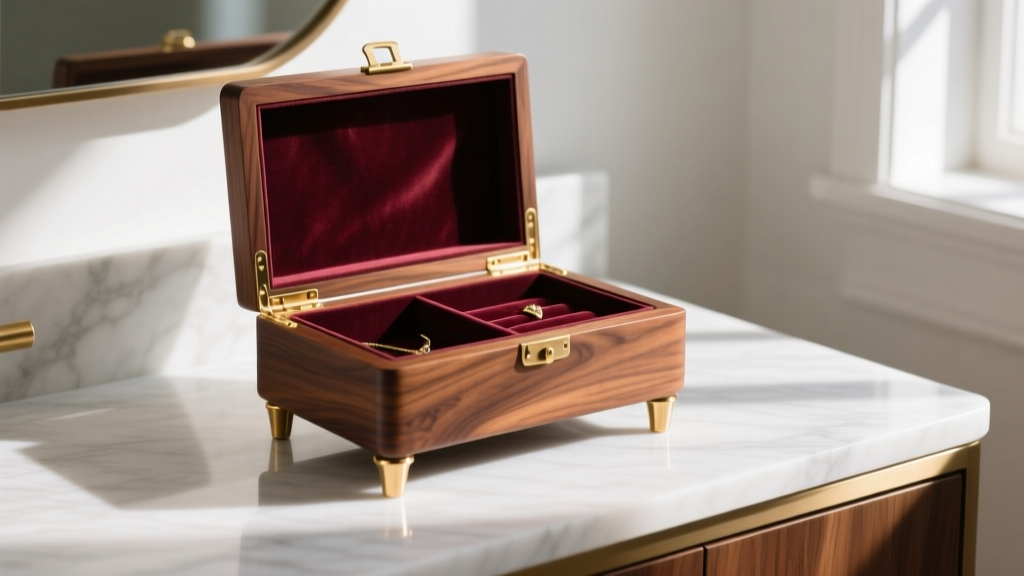
The Ergonomic and Aesthetic Appeal of Raised Storage
When organizing a growing collection, most beginners default to flat, stackable trays or heavy, low-profile caskets that sit directly on the dresser surface. However, a jewelry box with legs offers a distinct functional and aesthetic advantage that is often overlooked. By elevating the storage compartment four to six inches off the vanity surface, you create a micro-environment that improves airflow, reduces dust accumulation underneath, and fundamentally changes how you interact with your accessories.
From an ergonomic standpoint, standard bathroom and bedroom vanities typically range from 30 to 34 inches in height, according to guidelines from the National Kitchen and Bath Association (NKBA). When you place a flat box on a 32-inch vanity, you are forced to hunch over to view the bottom tiers. A legged jewelry chest raises the primary viewing plane to roughly 38 inches, bringing your necklaces, watches, and rings closer to eye level. This subtle shift reduces cervical strain during your daily dressing routine and transforms a mundane storage task into an elegant, gallery-like experience.
Material Matters: Woods, Metals, and Acrylics
The longevity of a raised jewelry chest depends entirely on the materials used for both the main carcase and the supporting legs. Beginners often make the mistake of purchasing engineered wood boxes with glued-on decorative legs, which quickly fail under the stress of daily drawer use.
Hardwood vs. Engineered Wood
For a premium piece that will last decades, look for solid hardwoods. Black Walnut (Janka hardness rating of 1010) offers a rich, dark grain that hides minor scratches beautifully, while Hard Maple (1450 Janka) provides a lighter, highly durable canvas. Avoid Medium-Density Fiberboard (MDF) for legged designs. MDF lacks the tensile strength to hold leg screws securely over time, leading to stripped holes and wobbling.
Leg Materials and Finishes
The legs themselves are usually crafted from metal or turned wood. Solid brass legs are a hallmark of mid-century and traditional designs. Unlacquered brass will develop a natural patina over time, reacting to the oils in your hands and the ambient humidity. If you prefer a permanently bright finish, ensure the brass is coated with a high-quality polyurethane lacquer. For modern vanities, powder-coated steel legs in matte black or brushed nickel offer superior load-bearing capacity and resist chipping far better than cheap electroplated finishes.
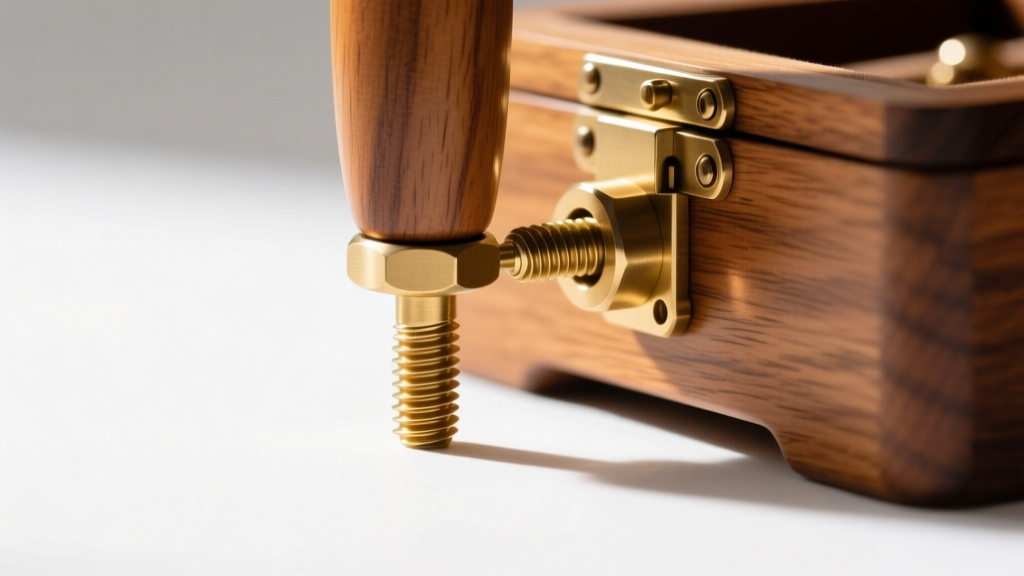
Weight Distribution and Joinery: Preventing the Wobble
A jewelry box with legs is essentially a miniature piece of furniture, and it must be engineered to handle dynamic loads. When you pull out a fully loaded drawer containing heavy silver bangles or steel dive watches, the center of gravity shifts forward. If the legs are poorly attached, the entire unit will tip or wobble violently.
Understanding Leg Attachment Methods
The joinery connecting the legs to the base is the most critical failure point in raised storage. Here is a breakdown of the most common attachment methods you will encounter on the market:
| Attachment Method | Durability Rating | Best Application |
|---|---|---|
| Wood Screws (Direct) | Poor | Lightweight acrylic boxes; avoid for heavy wood. |
| Threaded Inserts & Machine Screws | Excellent | Solid wood boxes with metal or turned wooden legs. |
| Mortise and Tenon | Superior | High-end artisan heirloom pieces; permanent fixture. |
| Corner Brackets (L-Brackets) | Good | Mid-tier boxes; allows for easy leg replacement. |
Always inspect the underside of the box before purchasing. If you see simple wood screws driven directly into the baseboard, walk away. Threaded brass inserts paired with steel machine screws allow you to tighten the legs years down the line without stripping the wood.
Interior Linings: Anti-Tarnish and Fabric Grades
The exterior legs might catch your eye, but the interior lining protects your investment. Many mass-produced legged boxes use standard polyurethane foam or cheap polyester velvet. Polyurethane foam is particularly dangerous for jewelry storage; as it ages, it breaks down and releases acidic gases that can severely tarnish silver and degrade the nacre on freshwater pearls.
Instead, seek out boxes lined with anti-tarnish treated flannel or Pacific cloth. According to the Smithsonian Museum Conservation Institute, silver tarnishes when exposed to sulfur compounds in the air. Specialized anti-tarnish fabrics, like those developed by Hagerty, are embedded with microscopic silver particles that absorb and neutralize sulfur gases before they can reach your jewelry. When evaluating a jewelry box with legs, check the product specifications for 'tarnish-resistant' or 'archival-grade' lining. If the box uses standard felt, plan to line the drawers yourself with anti-tarnish tabs or treated cloth sheets.
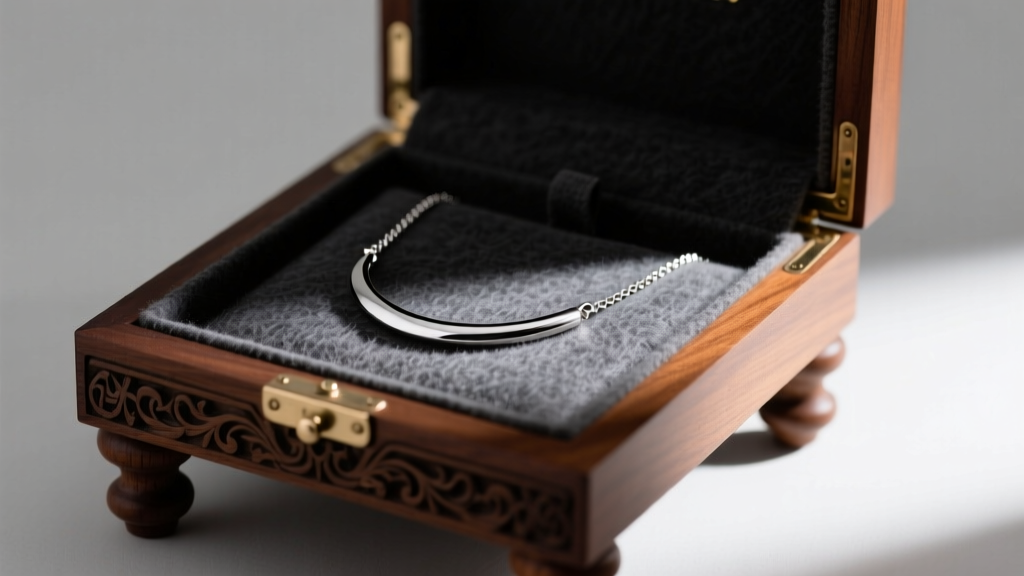
Sizing Your Legged Box for Standard Vanities
Proportion and clearance are vital when integrating a legged chest into your existing bedroom or bathroom decor. Standard vanities are typically 21 inches deep. If you purchase a jewelry box that is 18 inches deep, you will leave only 3 inches of clearance at the back, making it difficult to open the lid fully if it features a back-hinged door, and leaving no room for your hands to maneuver when retrieving items.
- Depth Rule of Thumb: The box should be no more than 75% of your vanity depth. For a 21-inch vanity, aim for a box depth of 14 to 16 inches.
- Width Considerations: Leave at least 4 inches of lateral space on either side of the box to accommodate daily essentials like perfume bottles or watch winders.
- Drawer Pull Clearance: Ensure the legs are tall enough (minimum 4 inches) so that the bottom drawer does not scrape against the edge of the vanity or catch on decorative vanity skirts.
Maintenance and Long-Term Care
Owning a raised jewelry chest requires a slightly different maintenance routine than a flat box. Because the legs elevate the unit, the top surface is more exposed to ambient dust and airborne cosmetics like hairspray and perfume.
Expert Tip: Never spray perfume or hairspray directly over your open jewelry box. The alcohol and aerosol propellants will settle into the anti-tarnish lining, neutralizing its protective properties and leaving a sticky residue on your gemstones. Always apply cosmetics before opening your storage chest.
To protect your vanity surface, apply high-density felt pads to the bottom of each leg. Hardwood or brass legs can easily scratch a glass or polished marble vanity top when the box is shifted during cleaning. Every six months, check the tension on the leg screws. The natural vibration of opening and closing heavy drawers can slowly back out machine screws over time. A quick quarter-turn with an Allen wrench or screwdriver will keep your jewelry box with legs perfectly stable and level for decades to come.
Final Thoughts on Elevated Storage
Transitioning to a jewelry box with legs is a hallmark of a maturing collector. It moves your storage from a hidden utility to a celebrated focal point in your dressing area. By prioritizing solid hardwood construction, robust threaded joinery, and archival-grade anti-tarnish linings, you ensure that your storage solution is just as enduring and valuable as the pieces it holds inside.


