Restoring the Bombay Company Jewelry Box: A Repair Guide
Learn how to troubleshoot, clean, and restore a vintage Bombay Company jewelry box. Fix stuck drawers, tarnished brass, and peeling velvet linings.

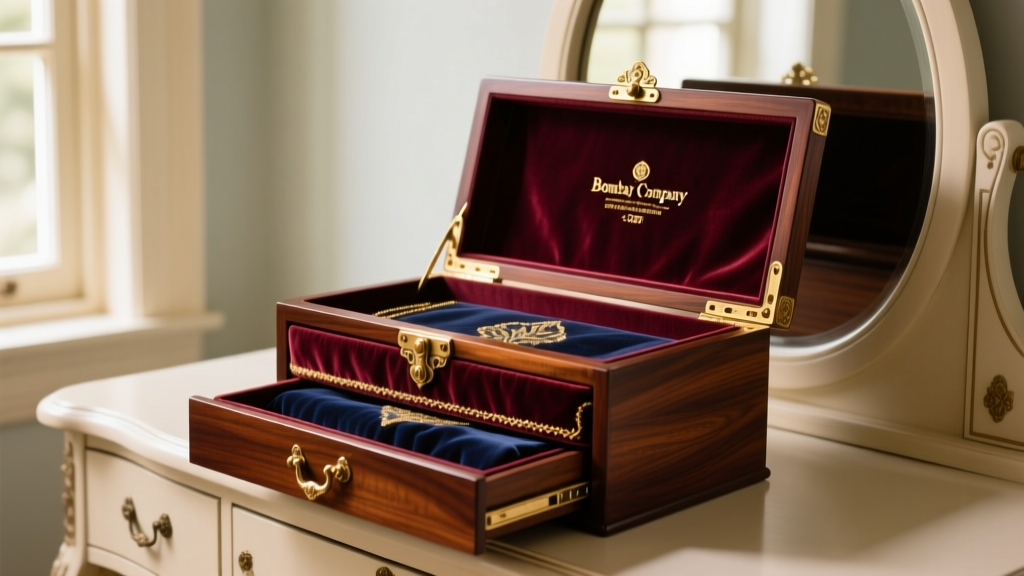
The Legacy and Construction of Bombay Company Jewelry Boxes
Before its North American retail closure, The Bombay Company was renowned for its English-reproduction furniture and accessories. Today, vintage pieces are highly sought after at estate sales and antique markets. When you acquire the Bombay Company jewelry box, you are typically looking at a piece constructed with a medium-density fiberboard (MDF) or plywood core, wrapped in high-quality mahogany, cherry, or walnut veneers. These boxes are celebrated for their intricate brass inlay, hidden compartments, and plush velvet interiors. However, decades of fluctuating humidity, UV exposure, and daily use lead to specific degradation patterns that require targeted troubleshooting.
Restoring these pieces is not just about aesthetics; it is about creating a safe, non-reactive environment for your fine jewelry. Below is a comprehensive, expert-level guide to diagnosing and repairing the most common issues found in vintage Bombay Company storage pieces.
Diagnosing Common Bombay Company Jewelry Box Issues
Before applying any solvents or adhesives, you must accurately diagnose the material composition and the root cause of the damage. Use the following diagnostic table to identify your starting point.
| Issue | Primary Cause | Material Affected | Quick Fix Strategy |
|---|---|---|---|
| Tarnished or Corroded Brass | Oxidation, skin oils, and humidity | Solid brass or brass-plated zinc | Magnet test followed by targeted polishing |
| Stuck or Jammed Drawers | Wood swelling from moisture absorption | Veneered wooden drawer runners | Track waxing or 220-grit garnet sanding |
| Peeling Interior Lining | Desiccation of original animal hide glue | Rayon velvet and paper backing | Solvent removal and acid-free re-adhering |
| Musty or Mildew Odor | Trapped moisture in the MDF core | Wood core and fabric lining | Desiccant therapy and activated charcoal |
Restoring Tarnished Brass Hardware and Hinges
The hardware on the Bombay Company jewelry box ranges from solid cast brass to thin brass plating over zinc or steel alloys. Using the wrong abrasive can permanently ruin a plated finish.
The Magnet Test
Before cleaning, hold a rare-earth magnet to the drawer pulls and hinges. If the magnet pulls strongly, the hardware is brass-plated steel. If there is no magnetic pull, it is likely solid brass or plated zinc. According to the National Park Service Museum Program guidelines on metal care, plated surfaces should never be treated with harsh abrasive pastes, as you risk rubbing through the micron-thin brass layer and exposing the base metal.
Cleaning Solid Brass vs. Plated Hardware
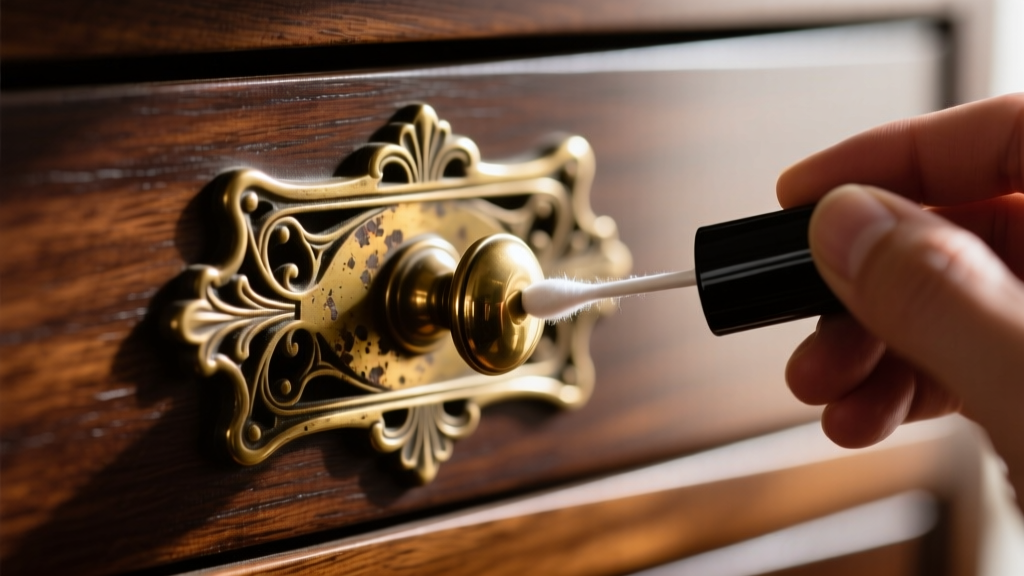
For solid brass, create a gentle, non-toxic paste using equal parts white vinegar, table salt, and flour. Apply it with a soft toothbrush, let it sit for 10 minutes, and buff it off with a microfiber cloth. For heavy tarnish, a commercial paste like Brasso can be used, but you must meticulously mask the surrounding wood veneer with blue painter's tape. Ammonia-based polishes will instantly strip the shellac or polyurethane finish off the adjacent wood.
For plated hardware, avoid pastes entirely. Use a few drops of mild dish soap (like Dawn) mixed with distilled water on a cotton swab to gently lift grime, followed by a dry buffing with a jeweler's polishing cloth.
Fixing Stuck Drawers and Warped Wood Tracks
Unlike modern furniture with metal ball-bearing glides, vintage Bombay Company boxes utilize wooden runners. Over time, the MDF or wood veneer absorbs ambient moisture, causing the tracks to swell and the drawers to jam. Forcing a stuck drawer can snap the delicate wooden stops or tear the veneer.
Lubricating the Tracks
Never use silicone-based lubricants or WD-40 on wooden tracks. Silicone migrates into the wood pores and creates finishing nightmares if the piece ever needs to be refinished. Instead, use a microcrystalline wax (such as Renaissance Wax) or pure beeswax. Apply a micro-thin layer to the drawer runners using a lint-free cotton cloth, let it haze for 10 minutes, and buff it smooth. This reduces the coefficient of friction without introducing moisture.
Sanding Warped Runners
If waxing fails, the wood has physically warped. Remove the drawer and inspect the tracks for 'shiny spots,' which indicate the exact points of friction. Lightly sand only those high spots using 220-grit garnet sandpaper. Garnet is preferred over aluminum oxide because it cuts cleanly without loading up with wood resins. Sand in the direction of the wood grain, checking the fit every few strokes to avoid removing too much material.
Replacing and Repairing the Velvet Lining
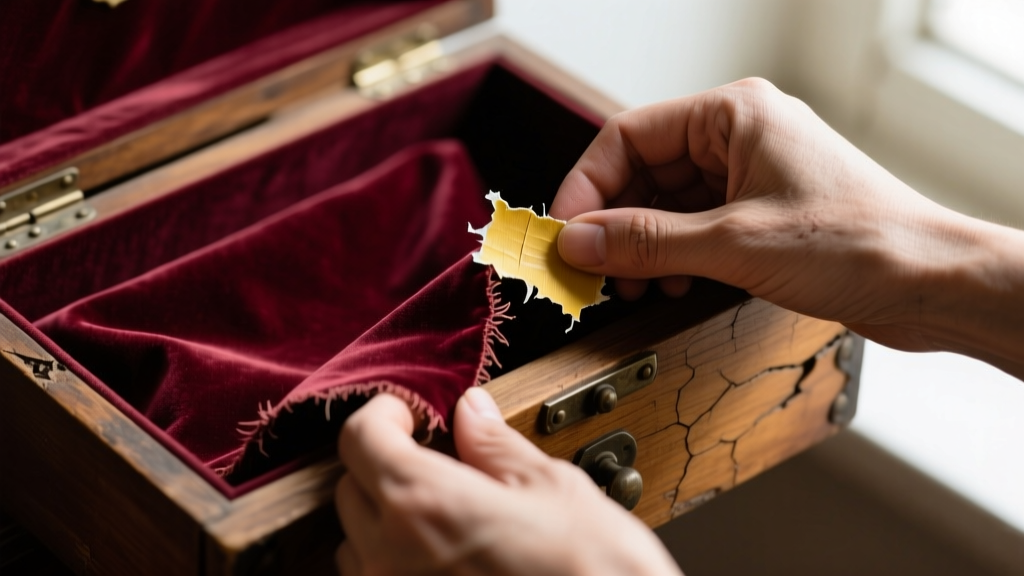
The interior lining of the Bombay Company jewelry box is typically a rayon or cotton velvet backed with paper, adhered using water-soluble animal hide glues. After 20 to 30 years, these glues become brittle and crystallize, causing the velvet to peel away from the wood.
Safe Adhesive Removal
Do not rip the velvet out, as the paper backing will tear and leave a stubborn, uneven residue. Instead, use a citrus-based solvent like D-Limonene (often sold as Goo Gone). Apply the solvent to a cotton pad and press it against the glue for 60 seconds to soften it, then gently scrape the residue away with a plastic putty knife. Avoid metal scrapers, which will gouge the soft wood substrate.
Selecting the Right Replacement Materials
When replacing the lining, material selection is critical for jewelry preservation. The Library of Congress recommends avoiding acidic environments for textile and metal preservation. Standard craft glues (like Mod Podge or PVA white glues) off-gas acetic acid as they cure, which will rapidly tarnish sterling silver and damage pearls.
- The Fabric: Use a high-grade rayon velvet or unbleached cotton flannel. Avoid synthetic polyesters, which can trap moisture and generate static electricity.
- The Adhesive: Use an acid-free, archivally safe adhesive like Lineco Neutral pH Adhesive. Apply it with a silicone spatula for an even, lump-free distribution.
- The Cut: Measure the interior cavity to the millimeter. Cut the replacement velvet on a self-healing mat using a fresh rotary blade to prevent frayed edges that will unravel inside the drawer.
Eliminating Musty Odors Without Damaging the Finish
Vintage jewelry boxes stored in basements or attics often develop a pervasive musty odor caused by mildew spores trapped in the porous MDF core. Masking the odor with aerosol sprays like Febreze introduces moisture and volatile organic compounds (VOCs) that can degrade the lacquer finish and harm sensitive gemstones like opals and emeralds.
The Desiccant Therapy Method
To safely extract odors, place the empty, open jewelry box inside a larger, sealed plastic storage tote. Inside the tote, place several breathable muslin bags filled with activated bamboo charcoal and silica gel desiccant packets. The charcoal absorbs the odor-causing molecules, while the silica gel draws out the ambient moisture fueling the mildew. Leave the box in this controlled micro-climate for 14 to 21 days, replacing the silica packets every week. This passive, dry method neutralizes odors at the source without risking chemical damage to the wood veneer.
When to Call a Professional Conservator
While most maintenance on the Bombay Company jewelry box can be handled at home, certain issues require professional intervention. If the wood veneer is actively flaking, if the brass inlay is lifting, or if the piece features a rare, historically significant patina, DIY repairs can drastically reduce its antique value.
"Preserving the original finish and structural integrity of reproduction antique furniture requires an understanding of historical adhesives and finishes. When in doubt, consult a certified furniture conservator rather than attempting irreversible chemical stripping."
By understanding the specific materials and construction methods used in these classic pieces, you can successfully troubleshoot common issues and ensure your vintage jewelry storage remains both functional and beautiful for decades to come.


