Style Guide: Choosing a Jewelry Case Small Enough for Travel
Discover why collectors are downsizing. Our 2026 style analysis of the jewelry case small enough for travel covers materials, layouts, and anti-tarnish tech.

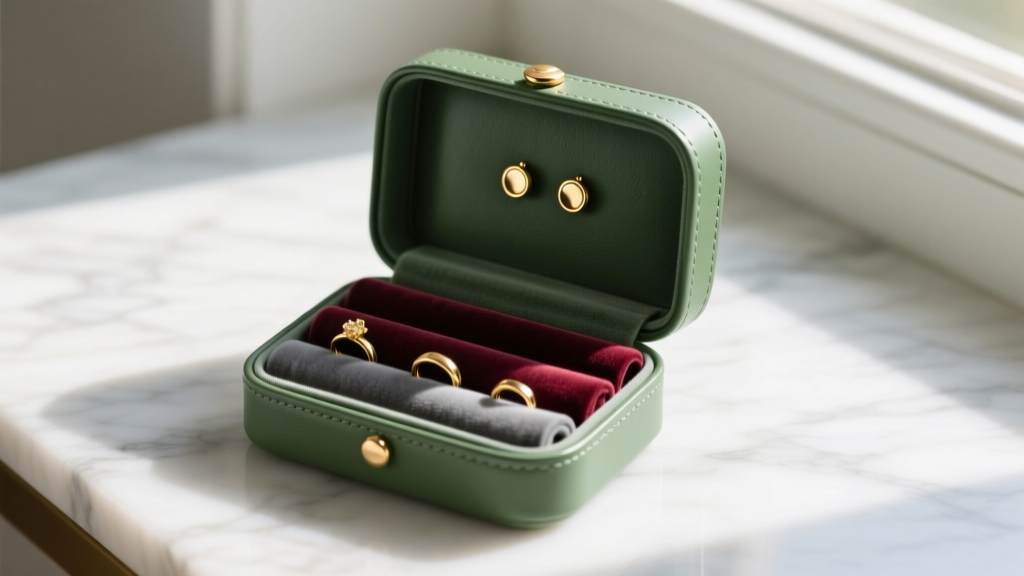
The era of the sprawling, multi-drawer mahogany jewelry armoire is officially over. As we move through 2026, the prevailing philosophy among serious collectors and everyday enthusiasts alike has shifted from hoarding to hyper-curation. With the rise of investment-grade minimalist jewelry and the 'quiet luxury' aesthetic, consumers are buying fewer, higher-quality pieces. Consequently, the demand for a jewelry case small enough to fit inside a structured mini handbag, yet protective enough to house thousands of dollars in precious metals and gems, has completely reshaped the storage market. This style and trend analysis breaks down the material science, spatial engineering, and aesthetic movements defining the modern compact jewelry organizer.
The 2026 Shift to Micro-Storage Dimensions
In previous years, 'compact' was a relative term that often still resulted in bulky 8x6 inch boxes that ruined the silhouette of a travel tote. Today, the industry standard for a premium small jewelry case has been aggressively redefined. The 2026 benchmark for a true travel-ready capsule is exactly 4.2 x 3.8 x 2.1 inches. This specific dimensional ratio is not arbitrary; it is engineered to slide seamlessly into the exterior slip pockets of popular luxury and contemporary totes, such as the Cuyana System Tote or the Loewe Puzzle bag. By prioritizing a smaller footprint, designers are forced to innovate internally, utilizing vertical space and modular tension systems rather than relying on wide, flat trays that allow chains to tangle.
Material Science: Beyond Standard Vegan Leathers
The exterior and interior materials of small jewelry cases have undergone a massive technological upgrade. Cheap polyurethane (PU) leathers are being phased out due to their tendency to off-gas volatile organic compounds (VOCs) in enclosed spaces, which accelerates the oxidation of silver and the degradation of porous gemstones like pearls and opals.
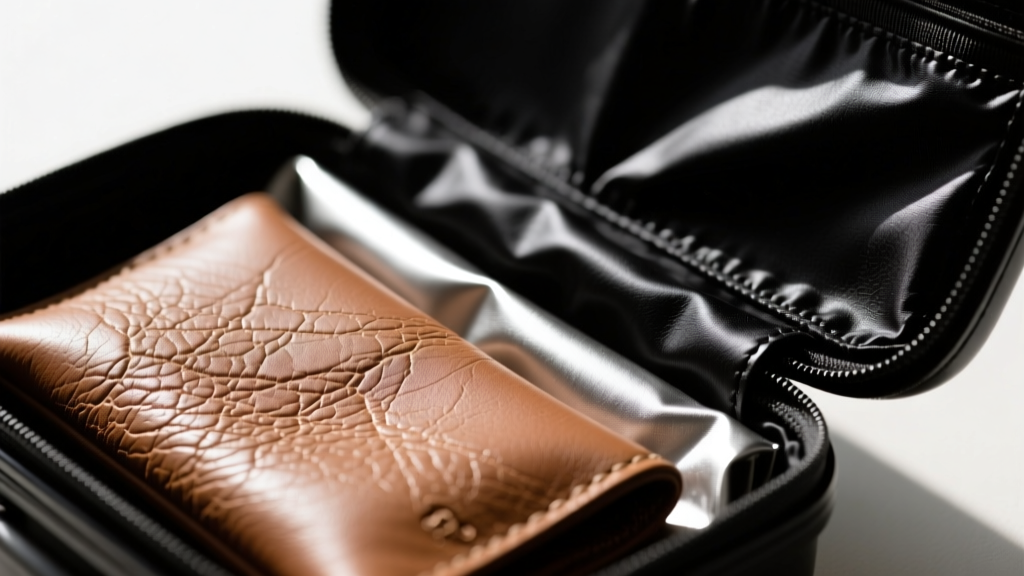
Instead, the 2026 trend report highlights the dominance of MIRUM and Desserto. MIRUM, a completely plastic-free, plant-based leather alternative made from natural rubber and plant oils, offers the structural rigidity required for a hard-shell small case without the environmental toll of PVC. On the interior, the gold standard for anti-tarnish technology remains Pacific Silvercloth. According to the Gemological Institute of America (GIA), silver tarnish is primarily caused by a reaction with hydrogen sulfide in the ambient air. Pacific Silvercloth is embedded with microscopic silver particles that act as a sacrificial anode—meaning the cloth tarnishes instead of your jewelry. When selecting a small case, verifying that the interior lining is either untreated microfiber or specifically treated with anti-tarnish agents is non-negotiable for preserving high-karat gold and sterling silver.
Spatial Engineering: Layouts and Capacity
Because the exterior dimensions are severely restricted, the internal layout dictates the case's true value. The modern small jewelry case abandons the traditional 'one large compartment' approach in favor of specialized, high-density zones. Below is a comparison of the three dominant layout architectures trending this year.
| Case Architecture | Avg. Dimensions | Max Capacity | Best Use Case | Structural Core |
|---|---|---|---|---|
| The Clamshell Grid | 4.5" x 3.5" x 1.5" | 4 Rings, 2 Necklaces, 1 Stud Plate | Daily wear rotation and office commutes | Recycled ABS Plastic |
| The Cylinder Roll | 4.0" x 2.0" x 2.0" | 8-10 Rings, 0 Necklaces | Ring collectors and signet enthusiasts | High-Density EVA Foam |
| The Magnetic Capsule | 3.5" x 3.5" x 2.5" | 6 Rings, 1 Bracelet, 2 Drop Earrings | Minimalist travelers and gym-goers | Anodized Aluminum |
The most critical innovation in these layouts is the silicone necklace tensioner. In a small case, chains are highly prone to the 'knotting phenomenon' when laid flat. The 2026 tensioner uses a micro-elastic silicone bridge that locks the chain clasp in place, keeping the chain taut against the velvet backing and entirely eliminating tangles during transit.
Aesthetic Movements Shaping Compact Organizers
Quiet Luxury and Invisible Hardware
Visually, the modern small jewelry case rejects the loud, ornate brass padlocks and heavy metal feet of the early 2010s. The current aesthetic is defined by 'invisible hardware.' Premium cases now utilize YKK Excella zippers with PVD (Physical Vapor Deposition) coatings. The Excella line features individually polished zipper teeth, which is a crucial detail: if a delicate 18k gold snake chain brushes against the zipper track during closure, the polished teeth prevent micro-abrasions and snagging. Furthermore, magnetic closures have shifted from weak ceramic magnets to N52-grade neodymium magnets, providing a satisfying, secure snap without the need for external metal clasps.
Modular and Stackable Ecosystems
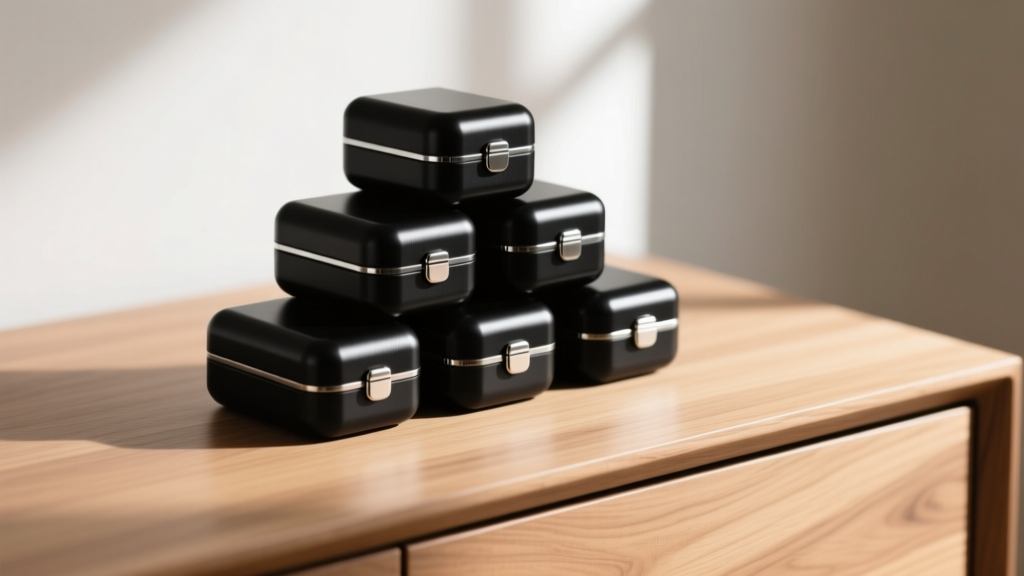
As highlighted by Vogue's recent coverage on jewelry organization, the modern collector prefers modular systems that adapt to their lifestyle. The newest trend is the stackable capsule. These small cases feature recessed magnetic bases and raised top lids, allowing users to snap multiple small cases together into a single tower for home storage, then detach a single unit for travel.
Expert Buying Framework: Avoiding Common Pitfalls
When shopping for a high-end small jewelry case, avoid these common manufacturing shortcuts that compromise the safety of your collection:
- The Polyester Trap: Avoid cases lined with standard, untreated polyester. This synthetic fabric traps ambient moisture against the metal, creating a micro-climate that accelerates copper and silver oxidation. Always opt for treated micro-suede or 100% cotton flannel.
- Soft-Sided Illusions: A 'small jewelry case' must have a rigid core. If the case can be easily crushed by the weight of a laptop in your carry-on, it is a pouch, not a case. Look for a 60D density EVA (Ethylene-Vinyl Acetate) foam core, which provides crush resistance while remaining lightweight.
- Ring Roll Sizing: If you collect contemporary, chunky signet rings, verify the width of the ring roll slots. Standard vintage slots are 0.8 inches wide, which will stretch and tear the velvet. Modern luxury cases feature 1.2-inch wide slots to accommodate heavier bands.
Final Verdict on the Compact Storage Movement
The transition toward the micro-organizer is not merely a passing fad; it is a direct reflection of how we consume and value jewelry in 2026. By prioritizing advanced material science, precision spatial engineering, and understated aesthetics, the modern small jewelry case offers unparalleled protection for curated collections. As the industry continues to move away from fast fashion and toward sustainable, investment-grade accessories, your storage solutions must evolve in tandem. Choosing a meticulously engineered compact case ensures that your most treasured pieces remain pristine, untangled, and ready to wear, no matter where your travels take you. For further reading on sustainable material shifts in fashion accessories, the Business of Fashion provides excellent ongoing analysis of the plant-based leather markets driving these innovations.


