Jonathan Adler Jewelry Box: Care, Cleaning & Maintenance Guide
Learn how to properly clean, maintain, and protect your Jonathan Adler jewelry box, from high-gloss lacquer exteriors to velvet interiors.

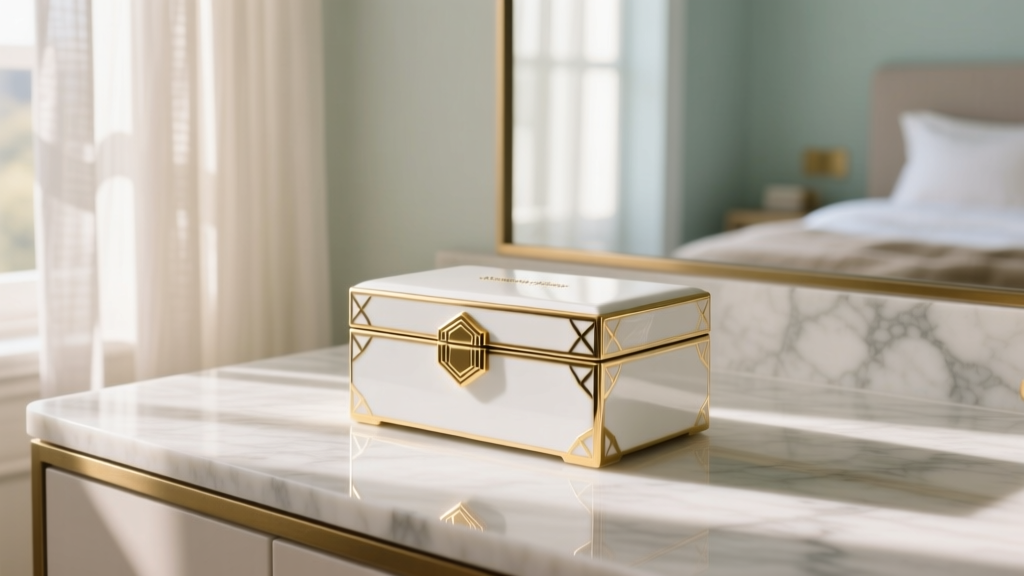
The Investment of High-End Jewelry Storage
A Jonathan Adler jewelry box is more than just a place to stash your rings and necklaces; it is a piece of functional art. Known for their impeccable craftsmanship, these organizers often feature hand-applied high-gloss lacquer, solid cast brass hardware (like the iconic horse or elephant pulls), and plush velvet or suede interiors. Depending on the collection—such as the Parker, Maxime, or Lucite lines—these pieces can retail anywhere from $250 to over $800. Protecting this investment requires moving beyond generic dusting and adopting material-specific conservation techniques.
Improper cleaning can lead to lacquer "blushing" (a permanent cloudy haze), stripped brass patinas, and crushed velvet naps that trap abrasive dust against your fine jewelry. In this comprehensive guide, we break down the exact protocols for maintaining the exterior finishes, interior linings, and structural integrity of your designer jewelry storage.
Material-Specific Cleaning Protocols for Exteriors
The exterior of a Jonathan Adler box is typically a combination of painted or lacquered wood and metallic accents. Each material reacts differently to commercial cleaning agents.
High-Gloss Lacquer and Painted Wood
The signature high-gloss finish on Adler’s wooden boxes is achieved through multiple coats of hand-rubbed lacquer. This creates a glass-like surface that is highly reflective but surprisingly vulnerable to alkaline chemicals.
- The Ammonia Danger: Never use standard glass cleaners (like Windex) or multi-surface sprays on lacquered wood. Ammonia and high-alkaline surfactants cause a chemical reaction known as "blushing," where the lacquer turns cloudy and opaque. According to the Library of Congress Preservation Guidelines, once lacquer blushing occurs, it often requires professional stripping and refinishing to reverse.
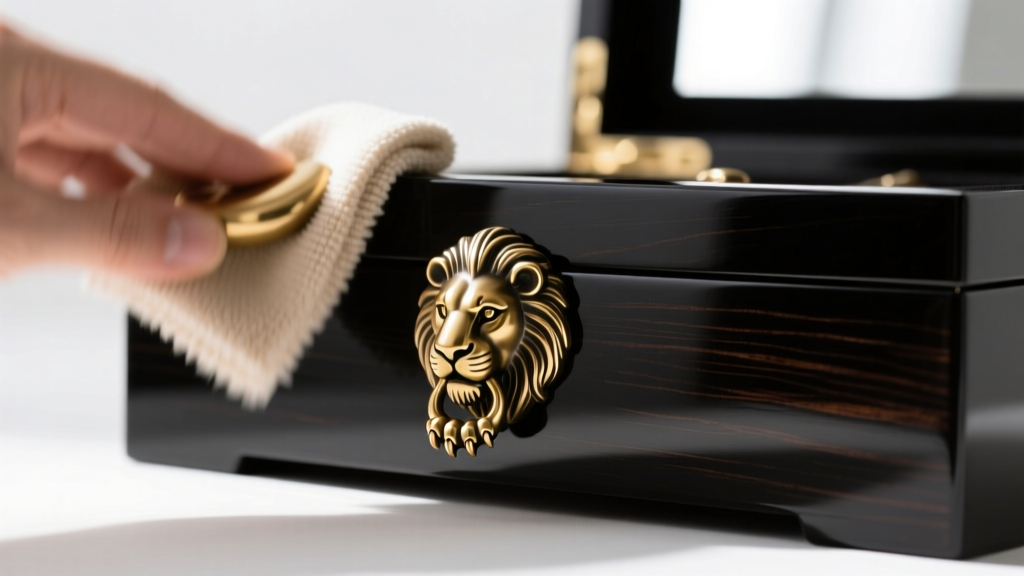
- The Correct Cleaning Method: Use a clean, ultra-fine microfiber cloth (at least 300 GSM to trap dust rather than drag it). If you need to remove fingerprints or light oils, lightly mist the cloth—not the box—with a solution of distilled water and a single drop of pH-neutral dish soap. Wipe gently in the direction of the wood grain, then immediately buff dry with a second, completely dry microfiber cloth.
- Annual Waxing: To maintain the deep gloss and provide a sacrificial barrier against micro-scratches, apply a thin layer of pure carnauba paste wax once a year. Avoid silicone-based polishes like Pledge, which build up over time and attract dust.
Solid Brass and Gold-Plated Hardware
Jonathan Adler frequently uses solid cast brass for hinges, drawer pulls, and decorative banding. It is crucial to determine whether the brass is lacquered (clear-coated) or raw.
- Lacquered Brass: Most modern designer furniture hardware features a clear polyurethane or acrylic coating to prevent tarnishing. If your hardware is lacquered, metal polishes like Brasso will ruin the clear coat. Simply wipe with a damp cloth and dry immediately.
- Unlacquered (Raw) Brass: If the hardware is raw brass, it will develop a natural patina over time. If you prefer the high-shine factory look, apply a pea-sized amount of a non-scratching brass cream (like Wright’s Brass Cream) using a cotton swab to avoid getting the polish on the surrounding lacquered wood. Buff to a shine with a soft jeweler's cloth.
Preserving the Interior: Velvet, Suede, and Anti-Tarnish Linings
The interior of your jewelry box is the microenvironment that directly impacts the longevity of your metals and gemstones. The Gemological Institute of America (GIA) emphasizes that proper storage environments are critical to preventing gemstone abrasion and metal tarnish.
Lifting the Velvet Nap
Crushed velvet and suede linings are prone to "crushing," where the fibers lay flat and trap dead skin cells, cosmetic dust, and metal polish residue. Do not use liquid cleaners on velvet interiors, as water spots are nearly impossible to remove from dyed velvet.
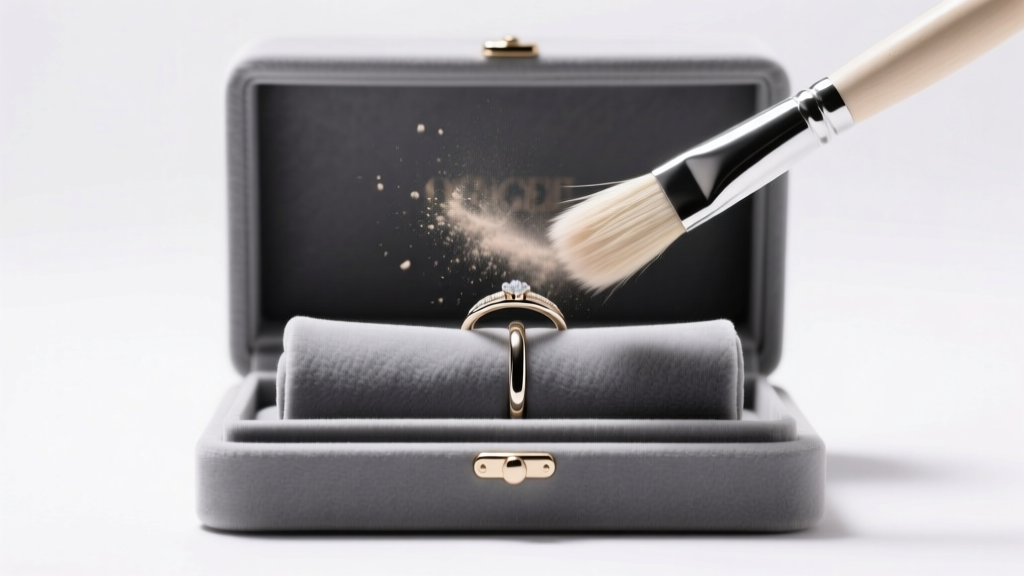
- Dry Extraction: Use a clean, soft-bristled horsehair brush or a brand-new, fluffy makeup brush to gently sweep the velvet nap in one direction. This lifts the fibers and dislodges trapped particulate matter.
- Lint Removal: Avoid standard sticky lint rollers, which can pull and tear delicate velvet loops. Instead, use a velvet-specific lint brush or a piece of wide painter's tape wrapped loosely around your fingers (sticky side out) to gently dab the surface.
Recharging Anti-Tarnish Properties
Many high-end jewelry boxes incorporate anti-tarnish linings or hidden compartments for anti-tarnish strips. These materials absorb hydrogen sulfide and sulfur dioxide from the air before they can react with your silver and copper alloys.
| Interior Material | Primary Threat | Approved Cleaning Method | Agents to Avoid |
|---|---|---|---|
| Crushed Velvet | Fiber crushing, dust trapping | Horsehair brush, gentle dabbing with low-tack tape | Water, liquid spot removers, sticky lint rollers |
| Micro-Suede | Oil stains from skin/hair products | White vinyl eraser for spot lifting, dry brushing | Solvents, alcohol, baby wipes |
| Anti-Tarnish Cloth | Saturation of sulfur-absorbing agents | Replace 3M anti-tarnish tabs every 6 months | Washing the cloth (strips the active zinc/copper treatment) |
Environmental Controls: Preventing Warping and Fading
Wood and lacquer are hygroscopic, meaning they absorb and release moisture based on the ambient environment. Placing a lacquered Jonathan Adler box in a bathroom exposes it to extreme humidity fluctuations from hot showers, which can cause the wood substrate to expand and the rigid lacquer topcoat to crack or craze (develop a network of fine lines).
- Relative Humidity (RH): Maintain the room's RH between 40% and 50%. If you live in a highly humid climate, store the box in a bedroom with a dehumidifier rather than a bathroom vanity.
- UV Degradation: Direct sunlight is the enemy of both lacquer and dyed velvet. UV rays will cause the vibrant colors of the interior velvet to fade and can cause the exterior lacquer to yellow or become brittle over time. Position your jewelry box away from direct window exposure, or use UV-filtering window films in your dressing area.
Troubleshooting Common Jonathan Adler Box Issues
Even with meticulous care, mechanical issues can arise with daily use. Here is how to address them without voiding any warranties or damaging the finishes.
Sticky or Misaligned Wooden Drawers
If a small jewelry drawer begins to stick, it is usually due to seasonal wood swelling or a lack of lubrication on the wooden runners. Never use WD-40 or silicone sprays, which will off-gas and tarnish the jewelry inside. Instead, remove the drawer and rub a plain, unscented candle (paraffin or beeswax) along the wooden tracks. The wax provides a dry, safe lubricant that allows the drawer to glide smoothly.
Loose Macrame or Fringe Accents
Some limited-edition Jonathan Adler boxes feature textile accents like macrame, fringe, or embroidered motifs. If a thread pulls or frays, do not cut it with scissors, as this can unravel the entire knot structure. Use a fine needle to gently pull the loose thread to the backside of the textile, or apply a microscopic dot of clear, flexible fabric glue (like Tear Mender) to the base of the knot to secure it.
Hinge Squeaks and Tension Loss
If the lid hinges begin to squeak or feel loose, a tiny drop of synthetic watch oil (applied with a toothpick directly to the hinge pin) will silence the squeak without staining the surrounding wood. If the lid no longer stays open on its own, the friction hinges may need a slight adjustment; consult a professional furniture restorer rather than attempting to bend the brass hardware yourself, which can cause stress fractures in cast metal.
Conclusion
Treating your Jonathan Adler jewelry box with the same level of care as the fine jewelry it holds ensures it remains a stunning focal point in your home for decades. By avoiding harsh alkaline cleaners, managing ambient humidity, and utilizing dry-cleaning methods for plush interiors, you preserve both the aesthetic brilliance of the lacquer and the protective qualities of the storage environment.


