Mirror Stand With Jewelry Storage: 2026 Buying Guide
Discover what to look for in a mirror stand with jewelry storage. Our 2026 guide covers frame materials, anti-tarnish linings, and hinge mechanics.

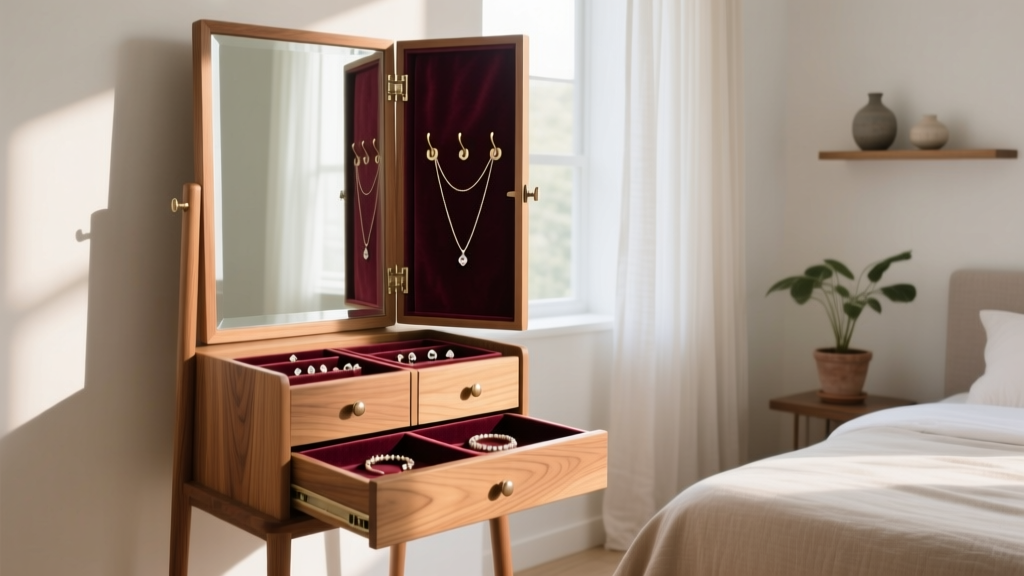
The Dual-Purpose Dilemma: Beyond Aesthetic Appeal
When shopping for a mirror stand with jewelry storage, consumers often prioritize aesthetic appeal and exterior finish over structural engineering. However, a full-length mirror armoire is a heavy, dynamic piece of furniture. The door alone must support the weight of the glass, the wood frame, and potentially up to ten pounds of metal jewelry. In 2026, the market is flooded with dual-purpose furniture, but distinguishing between a durable heirloom piece and a disposable flat-pack nightmare requires a deep understanding of material grades, hinge mechanics, and interior climate control. This guide breaks down the exact specifications you need to evaluate before making a purchase.
Core Construction: Frame Materials and Weight Tolerance
The structural integrity of your mirror stand begins with the frame material. Because the storage door is subjected to repetitive lateral stress every time it is opened and closed, the choice of wood composite is critical. Medium-Density Fiberboard (MDF) is ubiquitous in budget models, but it is highly susceptible to hinge tear-out. When heavy necklaces and brass cuffs are loaded onto the door, the dynamic weight can easily exceed 12 pounds. Over time, the screws anchoring the hinges into MDF will strip the fibers, causing the door to sag and the mirror to scrape against the interior compartments. According to Bob Vila's guide on furniture materials, while MDF offers a smooth surface for painted finishes, it lacks the tensile strength of solid wood or high-grade plywood for load-bearing hinges.
| Material | Hinge Retention | Humidity Resistance | Expected Lifespan |
|---|---|---|---|
| MDF (Medium-Density Fiberboard) | Poor (Prone to stripping) | Low (Swells if exposed) | 1-3 Years |
| Engineered Plywood (Baltic Birch) | Excellent | High | 5-10 Years |
| Solid Wood (Rubberwood/Oak) | Superior | Moderate to High | 10+ Years |
The Glass Itself: Mirror Grade and Desilvering Risks
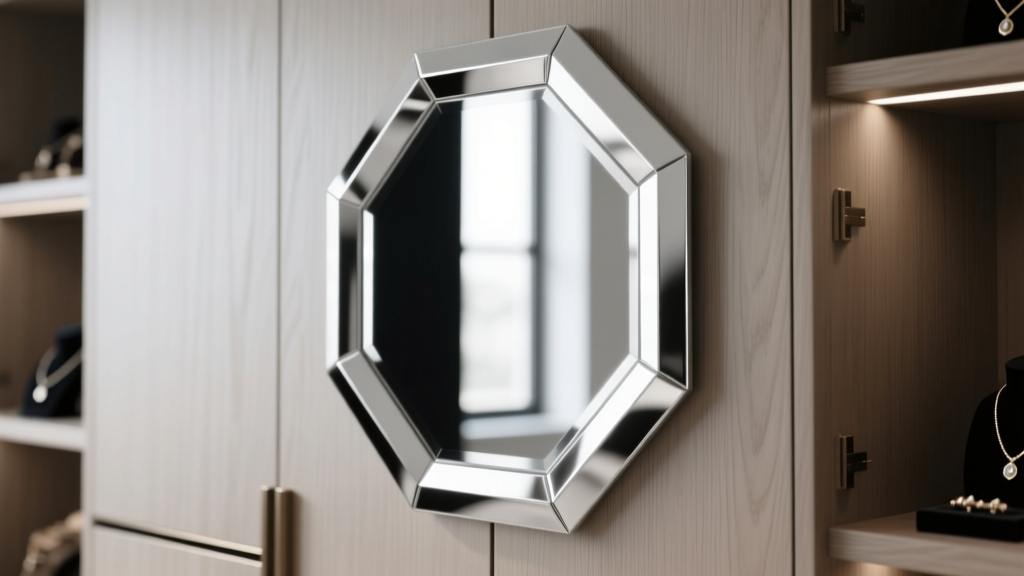
The mirror itself is not just a reflective surface; it is a laminated composite that can degrade if manufactured poorly. The most common failure mode in budget mirror stands is desilvering, where moisture penetrates the edge seal and oxidizes the reflective backing, creating ugly black creeping marks along the perimeter. To prevent this, insist on a copper-free, silver-backed mirror rather than an aluminum-backed one. Silver-backed mirrors offer superior reflectivity and, when treated with copper-free protective coatings, resist oxidation far better in high-humidity environments like master bathrooms or dressing rooms. Furthermore, look for a beveled edge that is at least 1/4-inch thick; this not only adds structural rigidity to the glass but also provides a premium, framing effect that elevates the overall design.
Interior Ergonomics: Anti-Tarnish Linings and Compartment Sizing
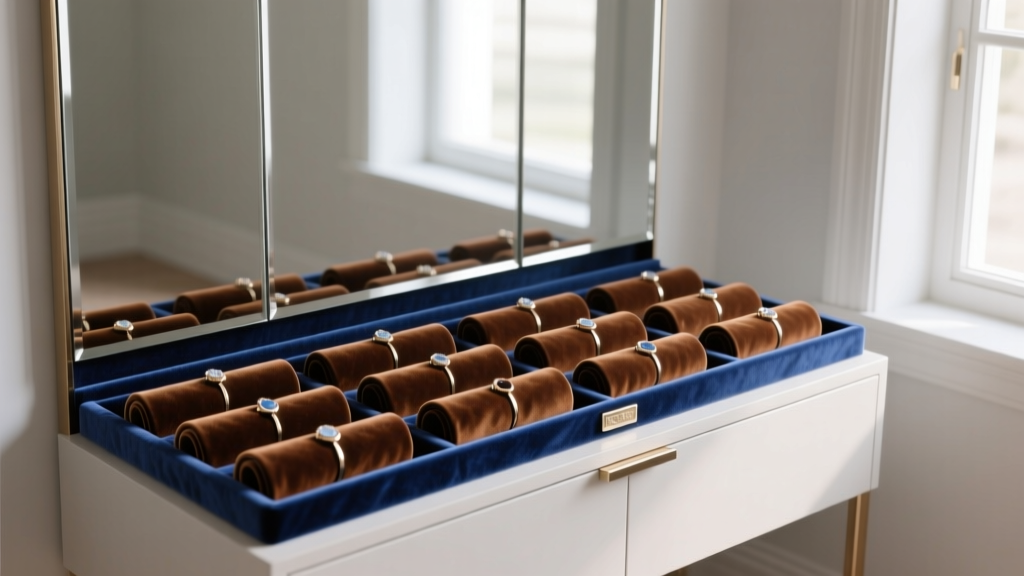
The interior of a mirror stand with jewelry storage must actively protect your collection from environmental damage. Silver, copper, and brass are highly reactive to sulfur compounds in the air, which form silver sulfide—the dark tarnish that ruins polished pieces. The Gemological Institute of America (GIA) emphasizes that proper storage environments are crucial for preventing chemical degradation of precious metals. Avoid models lined with standard untreated felt or cheap polyester, as these materials can trap moisture and off-gas volatile organic compounds (VOCs) that accelerate tarnishing.
Instead, look for interiors lined with Pacific Silvercloth or specially treated anti-tarnish flannel. These fabrics are embedded with microscopic silver particles that intercept and absorb sulfur gases before they reach your jewelry. Additionally, pay close attention to the ring rolls. Standard 15mm spacing will crush wide-band cocktail rings and men's signets; opt for organizers with 20mm to 25mm spacing to accommodate diverse ring profiles without stretching the velvet. Necklace hooks should be spaced at least 3 inches apart to prevent chains from tangling, and the drop length must accommodate opera-length necklaces (24 to 30 inches) without them pooling at the bottom of the compartment. For earrings, look for pierced earring grids with reinforced, tear-resistant mesh rather than rigid plastic slots that can bend and scratch delicate gold posts.
Hardware and Hinge Mechanics: The Hidden Failure Point
Hinges are the unsung heroes of any jewelry armoire. Standard zinc-alloy cabinet hinges will warp under the asymmetric load of a fully stocked door. For a full-length mirror stand, the hardware must include heavy-duty, cold-rolled steel European cup hinges, ideally featuring a soft-close pneumatic mechanism. Soft-close hinges are not merely a luxury; they prevent the door from slamming shut, which can violently jolt delicate jewelry, snap fragile clasp mechanisms, and cause gemstones to become loose in their prong settings. If the model features a swing-out or pull-out drawer system, ensure the drawer slides are rated for at least 35 pounds of dynamic load and utilize ball-bearing tracks for smooth, silent operation.
If the mirror stand includes integrated LED vanity lighting, verify the power delivery system. Hardwired units with internal step-down transformers are vastly superior to battery-operated LED strips, which suffer from voltage drops and color temperature shifts as the batteries deplete. Ensure the LED color temperature is adjustable between 3000K (warm) and 5000K (daylight) to accurately judge diamond brilliance and colored gemstone saturation under different lighting conditions.
2026 Market Pricing Tiers and Value Assessment
Understanding the 2026 pricing landscape will help you identify where manufacturers are cutting corners. Budget models ($45 to $85) almost exclusively use MDF frames, aluminum-backed mirrors, and untreated synthetic linings. These are suitable only for lightweight, inexpensive fashion jewelry. Mid-tier options ($95 to $165) typically upgrade to engineered plywood frames, silver-backed glass, and basic treated flannel linings, offering the best value for everyday fine jewelry collectors. Premium armoires ($180 to $350+) feature solid rubberwood or oak construction, integrated LED lighting with a Color Rendering Index (CRI) above 90 for accurate gemstone evaluation, and premium Pacific cloth interiors.
Final Inspection Checklist Upon Delivery
When your mirror stand arrives, conduct a rigorous inspection before assembly. Check the mirror edges with a flashlight for any micro-chips or early signs of desilvering. Open and close the door repeatedly to test the hinge tension; it should hold its position at a 45-degree angle without drooping. Finally, perform a scent test on the interior lining—any strong chemical or new plastic odor indicates the presence of unsealed adhesives or off-gassing synthetic fabrics that could harm your porous gemstones, like pearls and opals. By prioritizing structural engineering and material chemistry over superficial aesthetics, you will secure a mirror stand that safely preserves your collection for decades.


