Fixing Chips & Tarnish on a Hand Painted Jewelry Armoire
Learn how to troubleshoot common issues with a hand painted jewelry armoire, from fixing chipped paint to preventing interior tarnish and wood warping.

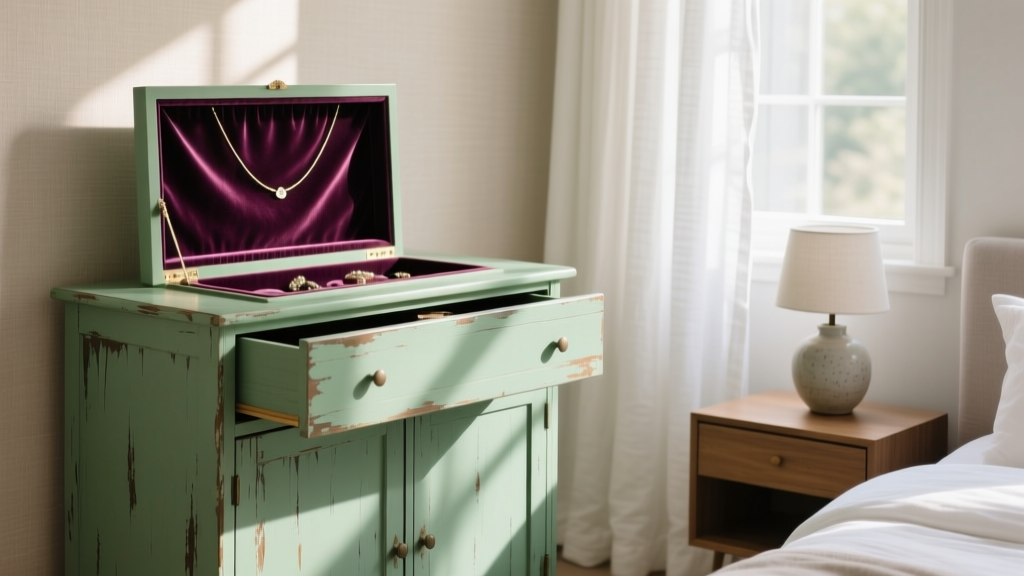
The Hidden Vulnerabilities of Hand Painted Furniture
A hand painted jewelry armoire is a stunning, artisan-crafted centerpiece for any bedroom or dressing area. Whether finished with milk paint, chalk paint, or layered acrylics, these pieces offer a bespoke charm that mass-produced MDF or particleboard organizers simply cannot match. However, the very techniques that give these armoires their unique character also introduce specific structural and chemical vulnerabilities. Unlike factory-baked enamel finishes, hand-applied paints and waxes are highly susceptible to micro-chipping, humidity-induced warping, and chemical off-gassing that can silently destroy your precious metals.
Troubleshooting these issues requires a deep understanding of both woodworking and jewelry conservation. In this guide, we will move beyond generic cleaning advice and explore the exact material grades, chemical interactions, and repair protocols needed to maintain your hand painted jewelry armoire in pristine condition while keeping your collection safe from environmental damage.
Troubleshooting Paint Chips and Surface Scratches
The most common complaint with hand painted furniture is edge chipping. Because chalk and milk paints lack the synthetic elastomers found in modern latex paints, they do not flex when the underlying wood (usually solid pine, birch, or high-density MDF) expands and contracts with seasonal temperature shifts. When a drawer is pulled, the friction and micro-impacts cause the rigid paint layer to fracture.
Step-by-Step Paint Repair Protocol
Do not attempt to cover chips with standard hardware store touch-up markers; the pigment load and binder ratio will result in a glossy, mismatched patch that stands out against a matte, hand-painted surface. Instead, follow this conservation-grade repair method:
- Clean the Area: Wipe the chipped edge with a lint-free cloth dampened with a TSP (Trisodium Phosphate) substitute. Avoid ammonia-based cleaners, which can degrade the underlying wax or polycrylic sealant.
- Feather the Edges: Use 400-grit wet/dry sandpaper to gently feather the hard edges of the chip. This creates a smooth transition zone so the new paint won't form a visible ridge.
- Color Match and Apply: Use high-pigment artist acrylics (like Golden or Liquitex) mixed to match the exact hue. Apply with a size 2 liner brush, dabbing rather than stroking to mimic the original brushwork texture.
- Seal the Repair: Once dry, seal the patch with a water-based polycrylic. Avoid oil-based polyurethane, which yellows over time and alters the paint color.
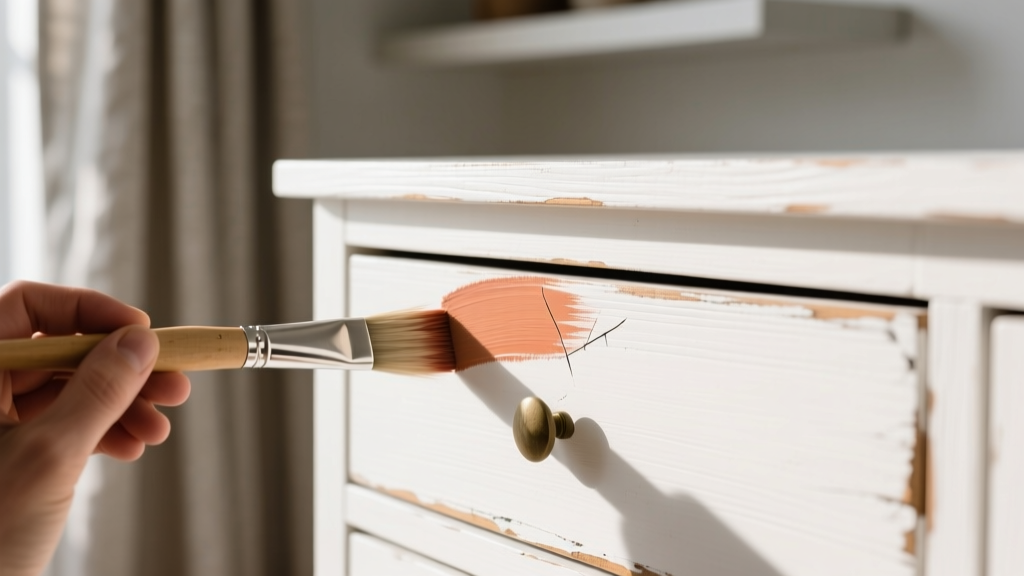
The Off-Gassing Problem: Why Your Jewelry is Tarnishing
If you notice your sterling silver turning black or your copper pieces developing a rapid patina shortly after storing them in a newly painted or refinished armoire, you are likely dealing with VOC (Volatile Organic Compound) and sulfur off-gassing. Many traditional wood sealants, particularly oil-based varnishes and certain synthetic waxes, release sulfur compounds and acidic vapors as they cure. According to the Gemological Institute of America (GIA), silver tarnish is primarily caused by a chemical reaction between silver and sulfur in the environment, forming silver sulfide.
When an armoire is sealed with the wrong topcoat, the enclosed drawer space acts as a concentration chamber for these gases, accelerating tarnish rates by up to 400% compared to open-air storage.
| Sealant Type | VOC / Sulfur Risk | Best Application in Jewelry Armoires |
|---|---|---|
| Beeswax / Paste Wax | Very Low | Exterior surfaces; provides a soft, matte, antique finish. |
| Water-Based Polycrylic | Low (once fully cured) | Interior drawer walls and high-use exterior tops. Non-yellowing. |
| Oil-Based Polyurethane | High (off-gasses solvents) | Avoid entirely for jewelry storage interiors. |
| Shellac (Dewaxed) | Moderate (alcohol solvent) | Excellent as a barrier coat over raw wood before applying chalk paint. |
The Fix: If your armoire is already sealed with a high-VOC finish, you must line the drawers with an active tarnish-inhibiting material. Standard felt or velvet will not stop sulfur gases. You must use Pacific Silvercloth or 3M Anti-Tarnish Strips. Pacific Silvercloth is embedded with microscopic silver particles that sacrifice themselves to absorb sulfur and moisture before it reaches your jewelry. Cut the cloth to fit the bottom of each drawer and secure it with acid-free double-sided tape.
Drawer Alignment and Hardware Friction
Hand painted armoires often suffer from sticky drawers. This is rarely a structural failure of the wood; rather, it is a consequence of the painting process itself. When an artisan paints an armoire, the wooden drawer rails and guides often receive multiple coats of paint. Each coat of chalk or milk paint adds roughly 0.5mm to 1mm of thickness. Across three coats, the clearance between the drawer and the rail is reduced by up to 6mm, causing the raw wood or painted surfaces to bind and grind against each other.
To troubleshoot this, remove the drawer and inspect the side rails. If you see thick, uneven paint buildup, use 220-grit sandpaper to carefully strip the paint off the contact points of the wooden rails only. Do not sand the visible exterior faces. Once the wood is bare on the friction tracks, rub the tracks generously with pure beeswax or paraffin wax. Never use silicone-based lubricants or WD-40, as these will migrate into the porous hand-painted finish, leaving permanent, unfixable grease stains that bleed through future paint layers.
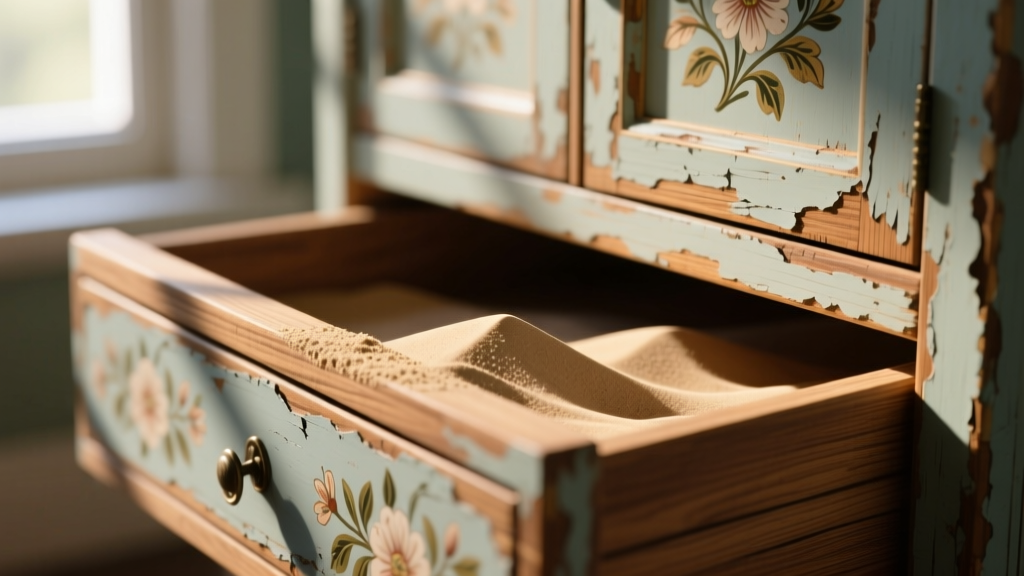
Humidity and Wood Warping in Painted Armoires
Wood is hygroscopic, meaning it absorbs and releases moisture from the air. In environments where relative humidity (RH) fluctuates wildly—such as a bedroom with an en-suite bathroom—the wood substrate of your armoire will expand and contract. While the wood moves, the rigid hand-painted finish does not. This differential movement results in microscopic cracking, known as crazing, which eventually leads to large flakes of paint peeling away.
Conservation experts at institutions like the Getty Conservation Institute emphasize that maintaining a stable microclimate is critical for preserving painted wooden artifacts. For a jewelry armoire, the ideal RH is between 45% and 55%.
Troubleshooting Humidity Damage:
- Interior Climate Control: Place renewable silica gel canisters (such as Eva-Dry mini dehumidifiers) inside the lower drawers. These absorb ambient moisture and can be recharged by plugging them into a wall outlet, ensuring your jewelry remains dry without introducing the heat of an electric dehumidifier rod, which can dry out and crack the wood.
- Exterior Protection: If your armoire is finished with a soft wax (like Annie Sloan Clear Wax), it offers virtually no moisture barrier. You must re-wax the exterior every 12 to 18 months. Apply a thin layer of wax, let it haze for 15 minutes, and buff it vigorously with a lint-free cotton cloth to create a hardened, water-resistant shell.
Preventative Maintenance Checklist
To ensure your hand painted jewelry armoire remains both a functional storage solution and a beautiful heirloom, implement this bi-annual maintenance routine:
- Inspect Hardware: Check brass or iron knobs and pulls. If they are rubbing against the painted drawer front, install small felt or leather bumpers on the back of the hardware to prevent metal-on-paint friction.
- Refresh Anti-Tarnish Linings: Replace 3M anti-tarnish strips every 6 months. If using Pacific Silvercloth, gently vacuum it with a brush attachment to remove dust that can inhibit its sulfur-absorbing properties.
- Dust Safely: Never use commercial aerosol furniture polishes (like Pledge) on hand painted surfaces. The solvents will dissolve the paint binder. Use a dry, electrostatic microfiber duster or a slightly damp cloth with distilled water.
By understanding the specific material science behind your hand painted jewelry armoire, you can troubleshoot issues before they cause permanent damage, ensuring your storage piece remains as flawless as the jewelry it holds.


