Styling The Modern Pegboard Jewelry Display: 2026 Trends
Discover 2026 trends for the modern pegboard jewelry display. Learn about acrylic panels, brass pegs, LED integrations, and boutique-style organization.

The Evolution of the Pegboard Jewelry Display
Once relegated to the garage workshop or the backroom of a retail craft store, the pegboard has undergone a radical aesthetic transformation. As we navigate the interior design landscape of 2026, the modern pegboard jewelry display has emerged as a cornerstone of the 'quiet luxury' dressing room. No longer just a utilitarian slab of painted fiberboard, today's iterations are architectural statements. They merge the modularity of retail visual merchandising with the bespoke elegance of high-end residential design.
The shift is driven by a desire for visible, accessible organization. Jewelry collectors are moving away from dark, compartmentalized velvet boxes where pieces tangle and tarnish, favoring open-air displays that double as wall art. However, executing this trend requires a deep understanding of material science, weight distribution, and spatial planning. A poorly executed pegboard will bow under the weight of heavy chain necklaces, while the wrong metal pegs can accelerate the oxidation of your sterling silver.
2026 Material Trends: Beyond Painted MDF
The standard 1/8-inch thick medium-density fiberboard (MDF) is officially obsolete in luxury closet design. The 2026 market is dominated by two distinct material categories, each offering unique structural and aesthetic benefits.
Cast Acrylic and Polycarbonate Panels
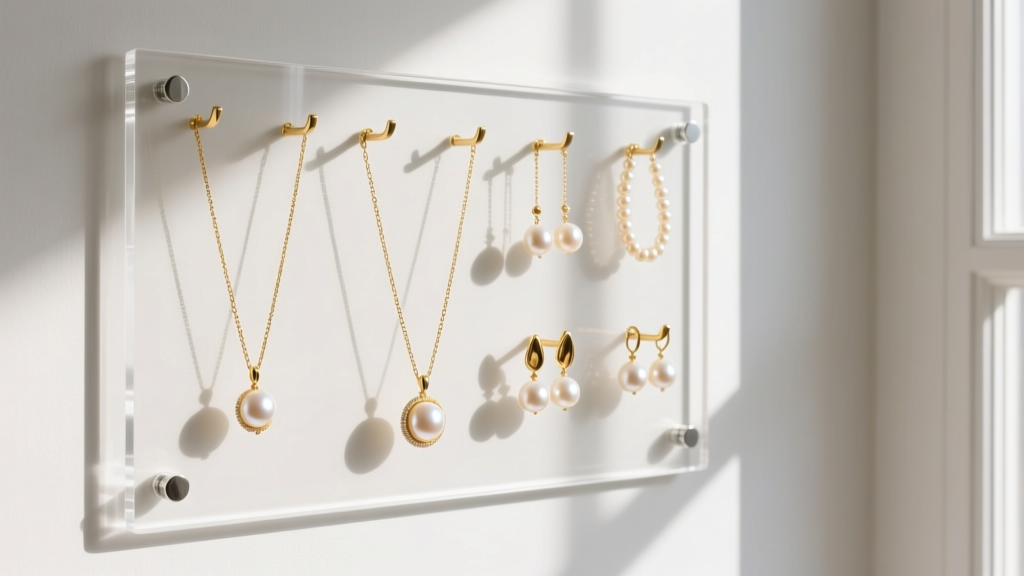
For a contemporary, gallery-like aesthetic, cast acrylic is the premier choice. Unlike extruded acrylic, which can harbor internal stresses and crack when drilled, cast acrylic offers superior optical clarity and structural integrity. For a jewelry display, you must specify a minimum thickness of 5mm (approximately 3/16-inch) to prevent bowing when loaded with heavy brass or gold chains. The holes are typically laser-cut to a precise 25mm metric spacing, offering a cleaner, more European look compared to the traditional 1-inch on-center (OC) spacing found in hardware stores.
Fluted Wood and Walnut Veneers
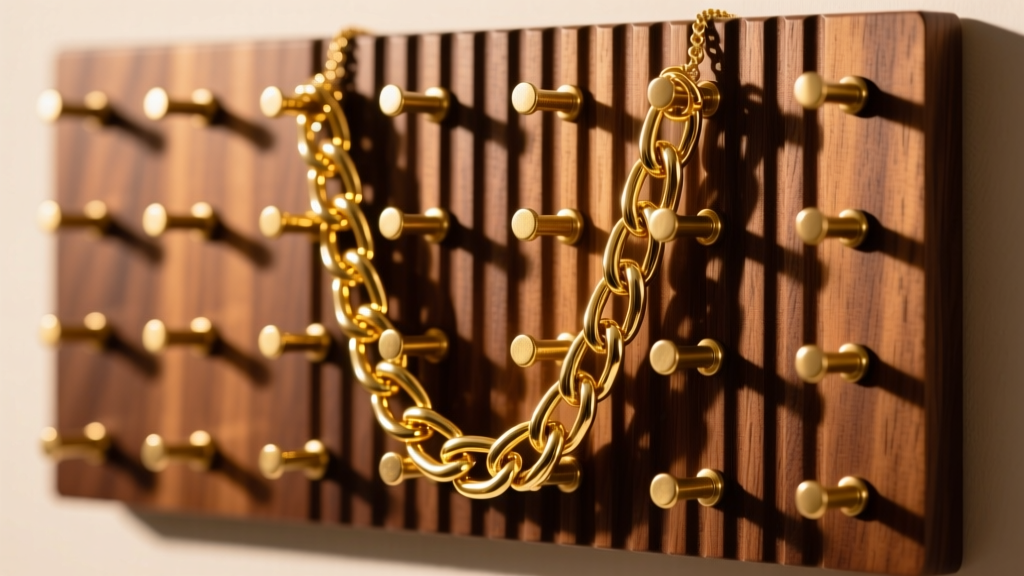
On the warmer end of the spectrum, fluted wood panels have taken over high-end closet designs. These panels feature a textured, ribbed face that hides the peg holes within the negative space of the flutes. According to recent spatial design reports featured in Architectural Digest, integrating natural wood grains into dressing areas grounds the space and reduces the clinical feel of a purely white room. When selecting wood boards, ensure the core is Baltic birch plywood rather than particleboard; plywood holds the shear weight of metal pegs far better without stripping the hole walls over time.
Hardware Upgrades: Pegs, Hooks, and Weight Capacities
The pegs themselves are where the E-E-A-T (Experience, Expertise, Authoritativeness, and Trustworthiness) of your installation truly shines. Standard steel pegs with a zinc coating will eventually rust and transfer iron oxide to your jewelry chains. In 2026, the focus is on inert, non-reactive metals and specialized polymers.
| Peg Material | Finish | Max Weight per Peg | Anti-Tarnish Properties | Best Use Case |
|---|---|---|---|---|
| Solid Brass | Unlacquered / Brushed | 15 lbs (6.8 kg) | Moderate (Requires periodic Renaissance Wax application) | Heavy statement chains, layered gold necklaces |
| Anodized Aluminum | Matte Black / Champagne | 8 lbs (3.6 kg) | High (Inert oxide layer prevents chemical reactions) | Everyday silver jewelry, delicate pendants |
| 316L Stainless Steel | Brushed Nickel | 20 lbs (9.0 kg) | High (Marine-grade corrosion resistance) | Heavy gemstone chokers, multi-strand pearl necklaces |
| Cast Acrylic | Clear / Frosted | 4 lbs (1.8 kg) | High (Non-reactive polymer) | Stud earrings, lightweight hoops, ring cones |
Pro-Tip for DIY Installers: If you are drilling your own wooden pegboard, always use a 9/32-inch drill bit for standard 1/4-inch pegs. This 1/32-inch wiggle room allows for natural wood expansion and contraction due to humidity changes, preventing the pegs from becoming permanently stuck or cracking the wood veneer.
Lighting and Anti-Tarnish Integrations
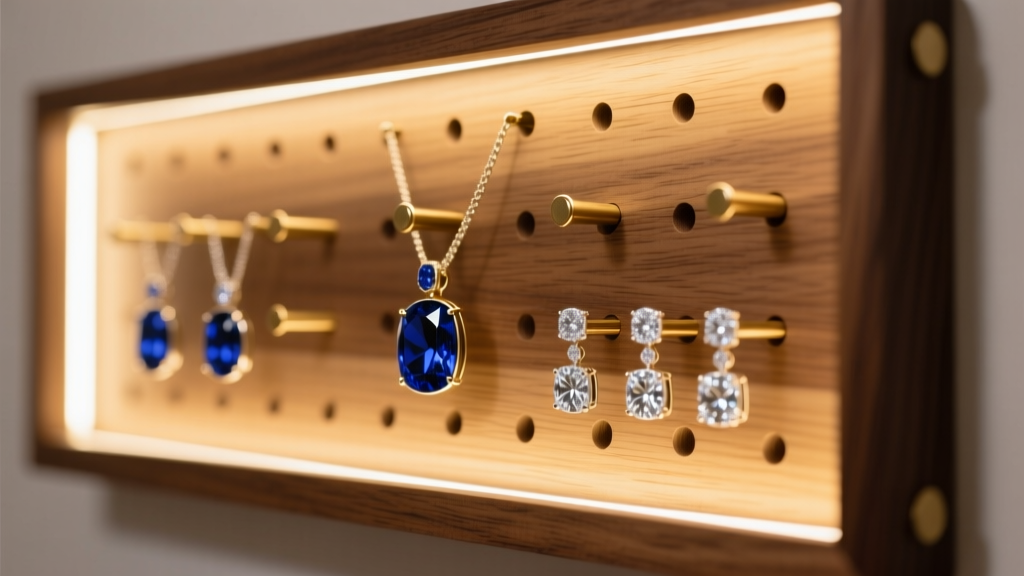
A pegboard jewelry display is only as effective as its lighting. Shadows cast by the pegs can obscure the details of your collection. The 2026 standard involves routing hidden LED channels behind the perimeter of the board, bouncing light off the wall to create a halo effect that illuminates the jewelry without causing glare on faceted gemstones.
When selecting LED strips, color temperature and Color Rendering Index (CRI) are paramount. The Gemological Institute of America (GIA) notes that lighting drastically alters the perceived color and brilliance of diamonds and colored gems. Opt for LED strips with a CRI of 95+ and a color temperature between 2700K and 3000K. This warm, high-fidelity spectrum accurately renders the fire in diamonds and the true saturation of sapphires and emeralds, unlike harsh 4000K daylight bulbs that can wash out delicate pastel stones like morganite or aquamarine.
To combat tarnish on an open-air display, integrate anti-tarnish chemistry into the board's construction. Lining the back of the pegboard with Pacific Silvercloth before mounting it to the wall creates a micro-environment that absorbs hydrogen sulfide and sulfur dioxide from the air. Alternatively, placing small, discreet 3M Anti-Tarnish strips behind the lower rows of pegs will protect your sterling silver pieces for up to six months before requiring replacement.
Layout Frameworks for Heavy vs. Delicate Pieces
Visual merchandising relies on the Gestalt principles of grouping and negative space. A cluttered pegboard looks chaotic; a well-zoned display looks curated. Adopt this three-tier framework for your layout:
- The Canopy Zone (Top 20%): Reserve this area for your longest pieces (24 to 30-inch chains, opera-length pearls, and lariat necklaces). This prevents the chains from overlapping and tangling with shorter pieces below. Use long, 4-inch brass hooks here to keep the chains away from the wall.
- The Focal Zone (Middle 50%): This is eye-level real estate. Display your most-worn everyday pieces, chokers, and statement earrings. Utilize specialized acrylic peg attachments that hold earring cards or small velvet busts, turning flat pegs into 3D display stands.
- The Anchor Zone (Bottom 30%): Heavy, structured pieces like cuff bracelets and wide bangles belong here. Use heavy-duty steel pegs angled slightly upward (at a 15-degree incline) to prevent the cuffs from sliding off. This zone also houses small, hook-on acrylic trays for rings and stud earrings, keeping tiny items from getting lost in the visual noise.
Sourcing and Pricing Guide
The investment required for a premium pegboard jewelry display varies wildly based on material and customization. Here is what you can expect to pay in the current market:
- Entry-Level (MDF & Steel): $30 - $60. Systems like the IKEA Skådis or basic hardware store panels. Requires heavy customization, painting, and upgrading the pegs to prevent rust.
- Mid-Tier (Acrylic & Aluminum): $120 - $250. Pre-drilled cast acrylic boards from specialized organization retailers. Excellent for modern, minimalist apartments. Often includes matching acrylic hooks and ring cones.
- Bespoke / Architectural (Fluted Wood & Brass): $400 - $900+. Commissioned from custom woodworkers on platforms like Etsy or specialized closet designers. Includes routed LED channels, premium brass hardware, and hidden French cleat mounting systems for seamless wall integration.
Ultimately, the modern pegboard jewelry display is an exercise in functional art. By prioritizing inert materials, high-CRI lighting, and strategic spatial planning, you transform a simple storage solution into a daily ritual of visual appreciation, ensuring your collection remains pristine, untangled, and brilliantly illuminated for years to come.


