The Ultimate Jewelry Box Book Buying Guide: What to Look For
Discover what to look for in a jewelry box book. Our buying guide covers anti-tarnish linings, binding durability, and the best compartment layouts.


The Rise of the Jewelry Box Book: Discretion Meets Design
In the evolving landscape of home organization and travel security, the jewelry box book has emerged as a highly sought-after storage solution. Blending the aesthetic appeal of a classic hardcover novel with the functional necessity of a premium jewelry organizer, these discreet containers offer a unique way to protect your valuables in plain sight. However, not all book-shaped organizers are created equal. Many mass-produced options prioritize the exterior illusion over interior protection, leading to tarnished metals, tangled chains, and broken hinges. As we move through 2026, discerning collectors and casual wearers alike must look beyond the faux-leather covers and evaluate the structural and chemical integrity of these storage vessels. This comprehensive buying guide will walk you through the critical specifications, material grades, and design features you must consider before investing in a jewelry box book.
Exterior Construction: Faux Spines vs. Hollowed-Out Books
The first decision you will face is the fundamental construction method of the box. There are two primary categories on the market: purpose-built boxes with faux spines, and actual hollowed-out books.
Purpose-Built Faux Book Boxes
These are engineered from the ground up as jewelry organizers, designed to mimic the dimensions and visual weight of a classic octavo or folio book. The primary advantage here is structural integrity. Because they are constructed using rigid MDF (medium-density fiberboard) or reinforced cardboard cores, they offer superior crush resistance. When shopping for these, look for exteriors wrapped in high-grade polyurethane (PU) leather rather than polyvinyl chloride (PVC). PU leather is more breathable, resists peeling in fluctuating humidity levels, and provides a more authentic, supple texture that closely resembles genuine full-grain leather.
Authentic Hollowed-Out Books
While undeniably charming and excellent for true concealment, hollowed-out vintage books pose significant risks to jewelry. The acidic nature of aging paper and the glues used in 20th-century bookbinding can off-gas volatile organic compounds (VOCs) that accelerate the tarnishing of sterling silver and degrade delicate gemstone settings. If you prefer an authentic hollowed-out book, ensure the interior cavity has been completely sealed with an archival-grade, acid-free barrier and lined with a separate, removable jewelry insert.
Evaluating Interior Linings and Tarnish Prevention
The interior lining is arguably the most critical component of any jewelry storage unit. According to the Gemological Institute of America (GIA), improper storage is a leading cause of preventable damage to both metals and porous gemstones like pearls and opals.
The Science of Anti-Tarnish Linings
Sterling silver tarnishes when it reacts with hydrogen sulfide present in the ambient air. A standard velvet or satin lining will not stop this chemical reaction. When evaluating a jewelry box book, look for linings that explicitly state they are treated with anti-tarnish properties. The gold standard in the industry is flannel embedded with microscopic particles of zinc or copper. These metals act as sacrificial anodes, meaning they react with the hydrogen sulfide before it can reach your silver jewelry. Hagerty, a renowned name in silver care, emphasizes that maintaining a micro-climate free of sulfur and excess moisture is paramount for long-term silver preservation. Avoid boxes that use cheap, dyed polyester linings, as the dyes themselves can sometimes contain sulfur compounds that actively promote tarnishing.
Padding Density and Scratch Prevention
For gold, platinum, and gemstone pieces, scratch prevention is the priority. Look for high-density memory foam padding beneath the microfiber or velvet surface. A good test is to press your thumb into the lining; it should yield slightly and bounce back immediately, providing a cushioned buffer that prevents heavier pieces from pressing into one another when the book is closed.
Hinge Mechanics and Closure Security
A book-shaped box is subjected to unique mechanical stress due to its elongated, heavy lid. The binding mechanism is where cheaper models inevitably fail.
Piano Hinges vs. Butt Hinges
Always inspect the hinge system. Budget models often use two small, single-point butt hinges glued or lightly screwed into the MDF core. Over time, the weight of the lid causes these hinges to pull away, resulting in a sagging lid that fails to close properly, exposing your jewelry to dust and air. High-quality jewelry box books utilize a continuous piano hinge that runs the entire length of the spine. This distributes the mechanical load evenly, ensuring the lid opens smoothly and remains perfectly aligned for decades.
Security Mechanisms
Because these boxes are designed to be left out on shelves or packed in luggage, secure closures are vital. Magnetic closures are sleek and maintain the illusion of a real book, but ensure the magnets are rare-earth neodymium magnets rather than weak ceramic ones. Neodymium magnets provide a firm, satisfying snap that will not pop open if the book is jostled in a suitcase. For high-value items, seek out models featuring a discreet, flush-mounted brass lock and key integrated seamlessly into the faux spine design.
Compartment Configurations: Finding Your Ideal Layout
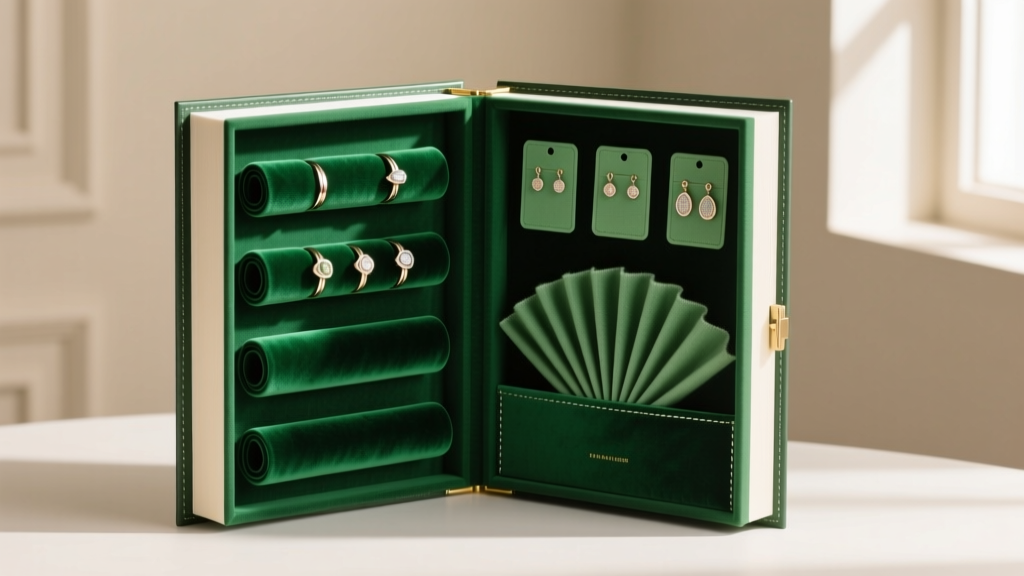
The internal architecture of a jewelry box book must match your specific collection. A common mistake is purchasing a box optimized for rings when your collection consists primarily of long pendant necklaces. Below is a breakdown of standard layouts and their ideal use cases.
| Compartment Type | Best For | What to Look For |
|---|---|---|
| Cylindrical Ring Rolls | Rings, small stud earrings | Individual plush dividers to prevent gemstones from scratching adjacent bands. |
| Button-Closure Earring Cards | Stud and dangle earrings | Reinforced buttonholes that won't tear after repeated use. |
| Necklace Hooks with Elastic Pouches | Long chains, pendants | An elastic catch pouch at the bottom to prevent the 'dreaded tangle' when the box is tilted. |
| Open Grid Trays | Brooches, watches, bangles | Adjustable or removable dividers to accommodate oversized pieces. |
Pro Tip: If you own long chains (24 inches or more), the 'elastic catch pouch' is non-negotiable. Without it, closing the book will cause the chain to slip off the hook and knot inside the compartment.
Sizing Guide: Octavo vs. Folio Dimensions
Jewelry box books generally mimic standard book sizes, which dictates their internal volume and portability.
- Standard Octavo (approx. 8" x 6" x 2"): The most common size. It is highly portable, fits easily into a carry-on suitcase, and mimics a standard paperback or small hardcover. Ideal for everyday wearers with a curated, minimalist collection.
- Large Quarto (approx. 10" x 8" x 2.5"): Offers roughly double the compartment space. Excellent for home use on a dresser or vanity. Mimics a large art book or coffee table book.
- Oversized Folio (approx. 12" x 9" x 3"): Designed for serious collectors. These heavy, substantial pieces often feature multi-tiered pull-out drawers hidden beneath the main compartment. They are strictly for home storage and are too bulky for travel.
Travel Considerations and Climate Control
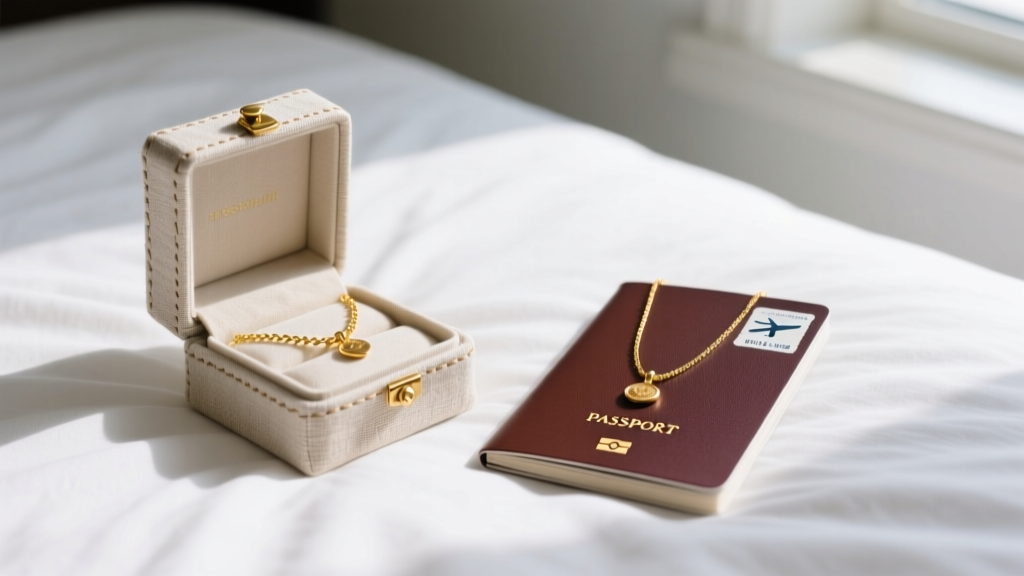
If you intend to use your jewelry box book for travel, weight and climate resilience become primary factors. PU leather and MDF cores can be surprisingly heavy. For frequent flyers, look for 'travel-specific' book boxes that utilize a rigid EVA (ethylene-vinyl acetate) foam core instead of wood. EVA foam is incredibly lightweight, water-resistant, and provides excellent shock absorption if your luggage is dropped. Furthermore, when traveling to humid climates, include a few silica gel desiccant packets in the larger open compartments to control moisture and protect porous stones like turquoise and pearls from humidity-induced cracking.
Maintenance and Longevity
To ensure your jewelry box book lasts for years, proper maintenance is required. Dust the faux-leather exterior with a dry microfiber cloth; avoid chemical leather cleaners, as they can strip the protective topcoat of PU leather and cause it to become sticky. For the interior, use a soft, dry brush (like a clean makeup brush) to sweep away dust and skin cells from the velvet crevices every few months. If your box features anti-tarnish zinc-embedded flannel, remember that the sacrificial metal particles eventually deplete. Most high-end anti-tarnish linings remain effective for about two to three years. After that, you can rejuvenate the box by placing anti-tarnish paper strips or charcoal tabs inside the compartments to continue absorbing sulfur compounds.
Final Thoughts on Selecting Your Organizer
A well-crafted jewelry box book is more than just a clever disguise; it is a meticulously engineered micro-environment designed to preserve your most cherished accessories. By prioritizing continuous piano hinges, PU leather exteriors, and chemically treated anti-tarnish linings, you can find a storage solution that offers both peace of mind and undeniable aesthetic charm. Evaluate your collection's specific needs, measure your available shelf or luggage space, and invest in a piece that marries the romance of a classic library with the precision of modern jewelry care.


