IKEA Jewelry Box Hacks: 2026 Trend Analysis & Custom Upgrades
Discover 2026 IKEA jewelry box hacks. Learn to upgrade basic storage with anti-tarnish tech, velvet liners, and quiet luxury styling for less.

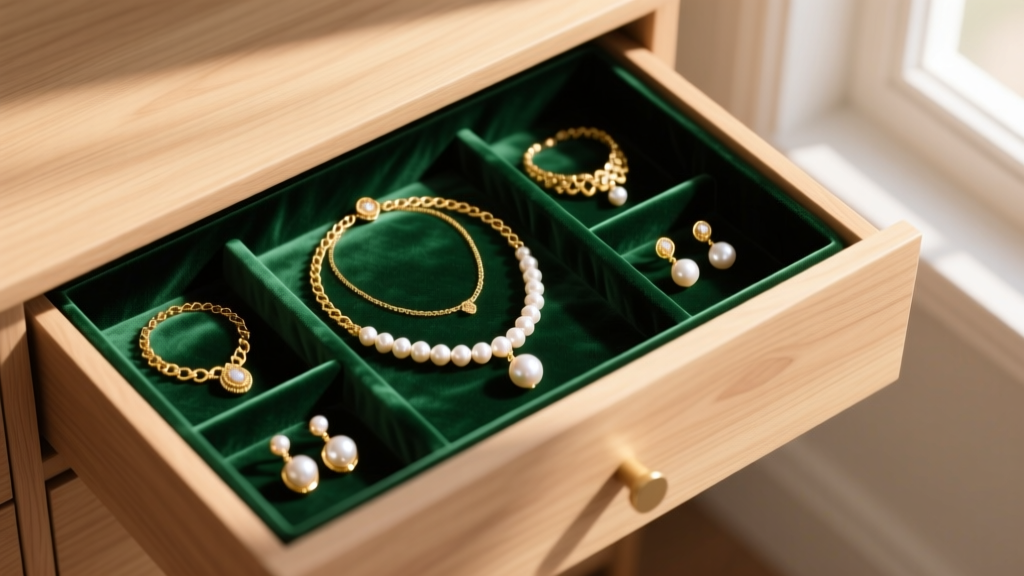
The concept of the traditional, monolithic jewelry armoire is rapidly fading. In 2026, the prevailing trend in high-end jewelry organization is modular, customizable, and surprisingly budget-friendly at its core. The search for the perfect IKEA jewelry box solution has evolved from a simple DIY hack into a sophisticated design movement. Collectors and minimalists alike are leveraging IKEA’s foundational storage units—transforming basic particleboard and birch veneer into bespoke, museum-grade display cases that rival custom-built cabinetry.
This shift is driven by the 'quiet luxury' aesthetic: a preference for understated, highly functional, and meticulously detailed interiors over ostentatious, mass-produced vanity pieces. By combining IKEA’s modular dimensions with premium aftermarket materials, jewelry enthusiasts are achieving archival-level storage at a fraction of the cost. Below, we analyze the current trends, material science, and execution frameworks for creating the ultimate hacked jewelry storage system.
The Anatomy of a 2026 IKEA Jewelry Box Hack
When collectors refer to an IKEA jewelry box today, they are rarely talking about a single, off-the-shelf product. Instead, they are referring to a curated ecosystem of IKEA organizers that serve as the 'chassis' for custom interiors. The most popular base units share three traits: shallow depths (preventing jewelry from piling up), modular sizing (allowing for drawer-insert configurations), and neutral finishes that accept custom hardware.
| IKEA Base Unit | Dimensions (Inches) | Material | Best Use Case | Approx. Cost |
|---|---|---|---|---|
| GODISHUS Drawer Insert | 14.5 x 19.5 x 2.5 | Solid Pine / MDF | Primary dresser integration; necklaces & bracelets | $15 - $20 |
| MOPPE Mini-Drawers | 16.5 x 12.5 x 7.5 | Untreated Solid Wood | Standalone vanity piece; rings & small studs | $25 - $30 |
| VARIERA Box | 11.75 x 11.75 x 3.25 | Bamboo / Veneer | Stackable countertop display; watches & brooches | $12 - $18 |
The trend for 2026 heavily favors the GODISHUS and VARIERA lines due to their clean, handle-less profiles, which allow the custom hardware to take center stage. According to IKEA's organizational catalog, modular bamboo and pine inserts remain top sellers, but the secondary market for custom-fitting these units has exploded.
Material Upgrades: Lining, Hardware, and Adhesives
The difference between a amateur DIY project and a luxury jewelry box lies entirely in the materials used to line the interior and the hardware used to open it.
The Velvet vs. Ultra-Suede Debate
Historically, crushed velvet was the default lining for jewelry boxes. However, crushed velvet traps dust and can exert micro-abrasive friction against soft stones. The 2026 standard is smooth panne velvet or archival-grade ultra-suede. Ultra-suede is particularly critical for porous gemstones. As noted by the Gemological Institute of America (GIA), pearls and opals require breathable, non-abrasive environments to prevent surface degradation and moisture trapping. Ultra-suede provides a lint-free, chemically inert surface that will not scratch 18k gold or damage nacre.
Hardware Swaps: The Quiet Luxury Touch
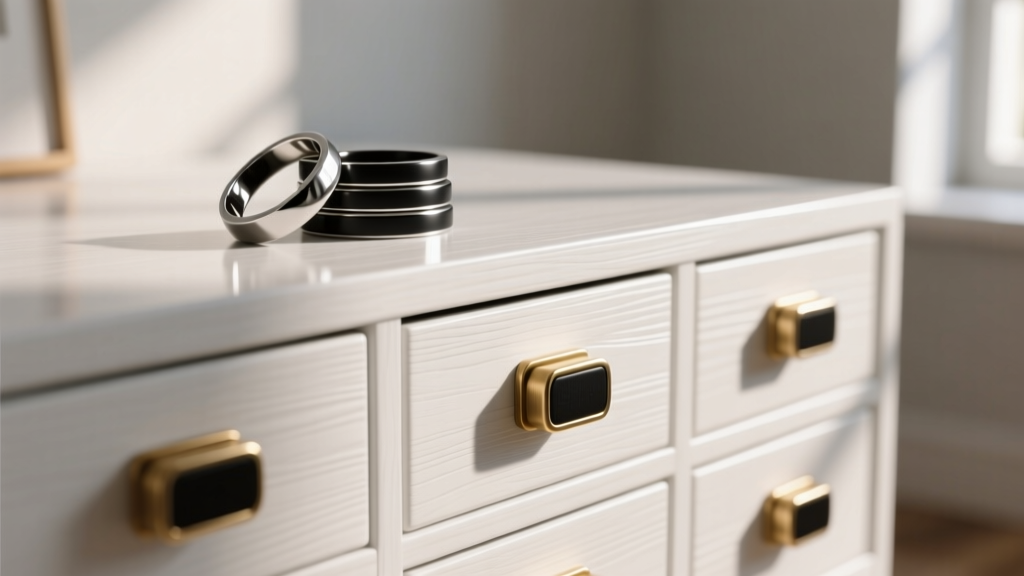
Standard IKEA knobs are functional but visually lightweight. The current trend involves swapping these for solid, unlacquered brass or bronze pulls. Unlacquered brass develops a living patina over time, adding a layer of bespoke character to the piece. When upgrading the MOPPE mini-drawers, collectors are drilling out the factory holes to accommodate 3-inch center-to-center architectural pulls from heritage brands, instantly elevating the perceived value of the unit from $30 to over $300.
The Science of Anti-Tarnish Integration
A beautiful jewelry box is useless if it destroys the collection inside it. Silver tarnishes due to a chemical reaction with hydrogen sulfide (H2S) in the ambient air, forming silver sulfide. To combat this, high-end hacks now integrate passive anti-tarnish technology directly into the sub-floor of the box.
Expert Rule of Thumb: Never place anti-tarnish strips in direct contact with porous gems like turquoise, lapis lazuli, or pearls. Always separate the chemical absorbers from the jewelry using a layer of acid-free tissue or a secondary felt barrier.
There are two primary methods for integrating anti-tarnish tech into an IKEA VARIERA or GODISHUS unit:
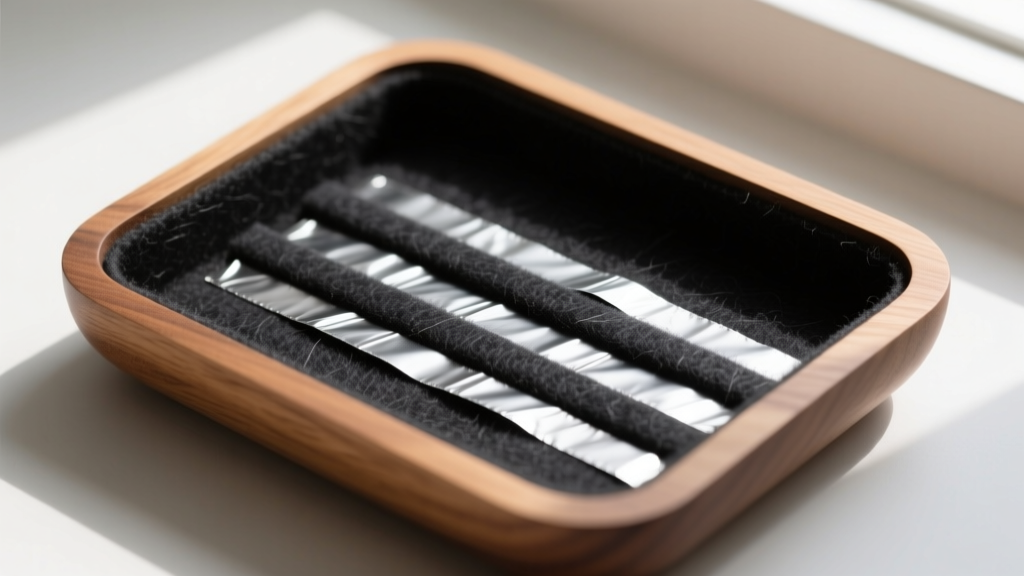
- 3M Anti-Tarnish Strips: These utilize a copper-based polymer that chemically binds to H2S gas before it can reach your silver. They are highly effective but have a strict lifespan. In a frequently opened drawer, they must be replaced every 3 to 6 months. In a sealed VARIERA box, they can last up to a year.
- Pacific Silvercloth: This is a premium flannel embedded with microscopic silver particles. The embedded silver acts as a sacrificial anode, tarnishing in place of your jewelry. According to the Silver Institute, this method is highly effective for long-term storage, though the cloth itself will eventually turn dark brown and require replacement.
The Sub-Floor Framework
To hide the anti-tarnish strips, professionals use a 'sub-floor' technique. First, a layer of 2mm EVA foam is cut to the exact dimensions of the IKEA drawer. The 3M strips are adhered to this foam base. Next, a secondary layer of 1/8-inch acid-free foam core is placed on top, followed by the ultra-suede or velvet wrapping. This ensures the jewelry never touches the chemical strips while allowing the strips to actively filter the air within the enclosed drawer space.
Step-by-Step: Converting the GODISHUS Drawer
If you are ready to build your own custom IKEA jewelry box ecosystem, follow this precise execution framework to ensure archival safety and aesthetic perfection.
- Prep and Sand: If using the untreated MOPPE or raw pine GODISHUS, lightly sand the interior with 220-grit sandpaper. Seal the wood with a water-based polyurethane to prevent natural wood acids from off-gassing onto your metals.
- Cut the Base: Measure the interior depth and width. Cut a piece of 1/4-inch MDF or foam core to serve as your rigid lining base.
- Apply Adhesive (Safely): Use 3M Super 77 Multipurpose Adhesive to bond your velvet or ultra-suede to the rigid base. Critical Warning: Spray adhesives contain volatile organic compounds (VOCs). You must let the adhesive cure and off-gas in a well-ventilated area for a minimum of 48 hours before introducing any jewelry, especially pearls, which can be permanently clouded by VOC exposure.
- Install Modular Dividers: Instead of gluing dividers, use acrylic or leather-wrapped modular inserts. This allows you to reconfigure the box as your collection grows or changes from chunky resin pieces to delicate diamond tennis bracelets.
- Mount the Hardware: Use a drill press or a careful hand drill with a brad-point bit to prevent splintering the IKEA veneer when installing your upgraded brass pulls.
Final Verdict: The Value of the Hack
The era of settling for flimsy, plastic-lined commercial jewelry boxes is over. By treating an IKEA jewelry box base as a blank canvas, collectors in 2026 are achieving museum-quality storage. The investment of time—roughly three to four hours per unit—and the cost of premium linings and solid brass hardware yield a final product that is not only visually stunning but chemically optimized to protect high-value assets. Whether you are storing inherited Victorian brooches or modern minimalist gold hoops, the customized IKEA hack remains the most intelligent, scalable storage solution on the market today.


