Choosing Wood for a Bandsaw Jewelry Box: Material Guide
Discover the best and worst wood species for crafting a bandsaw jewelry box. Compare acidity, stability, and Janka hardness for safe jewelry storage.

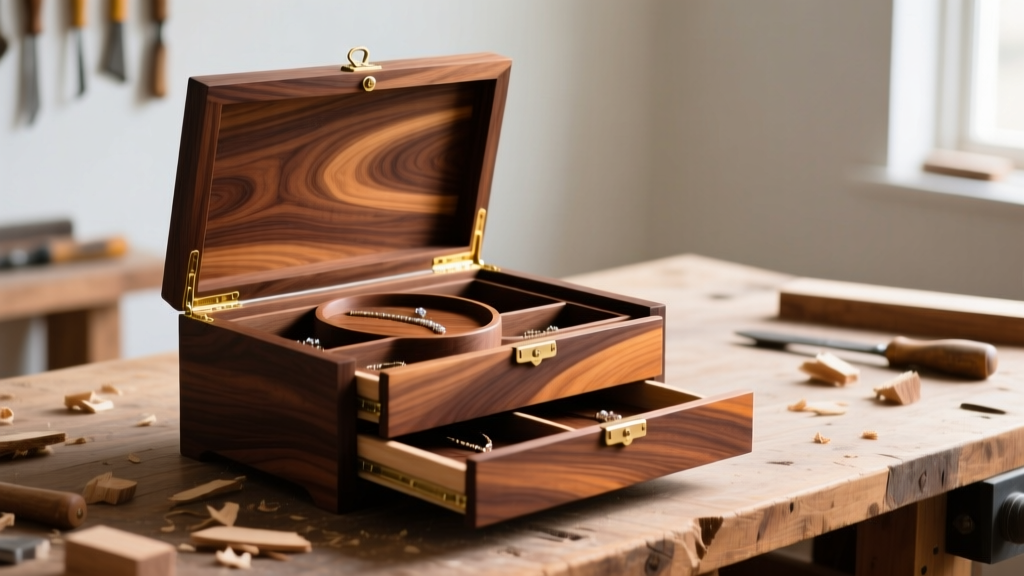
The Anatomy of a Bandsaw Jewelry Box
A bandsaw jewelry box is a marvel of woodworking engineering. Unlike traditional joinery that relies on glue, screws, or interlocking joints, a bandsaw box is carved from a single, solid block of wood. The craftsman slices off the front and back veneers, hollows out the interior to create hidden drawers, and then reattaches the veneers to conceal the seams. While this technique yields a stunning, sculptural piece of functional art, the material selection process is far more critical than in standard box-making. Because the entire structure moves as a single cross-grain unit, the wood’s inherent properties dictate not only the structural integrity of the drawers but also the chemical safety of the jewelry stored within.
Critical Wood Properties for Jewelry Safety
When selecting lumber for a bandsaw jewelry box, you must evaluate the material through two distinct lenses: woodworking stability and gemological safety. Wood is a hygroscopic, porous material that off-gases acids and resins, which can severely damage precious metals and organic gemstones.
Acidity and Tarnish Risks
Sterling silver is highly susceptible to tarnishing when exposed to sulfur and acidic environments. Woods with high tannic acid levels, such as oak and chestnut, create a micro-environment that accelerates the formation of silver sulfide. According to the American Gem Society, storing silver in acidic, unsealed wooden enclosures can cause severe blackening that requires aggressive, abrasive polishing to remove, thereby wearing away the silver plating over time.
Moisture Content and Off-Gassing
For a bandsaw box to function smoothly, the wood must be kiln-dried to a moisture content (MC) of 6% to 8%. If the wood is air-dried or improperly acclimated, the drawers will swell and jam inside the tight tolerances of the box cavity. Furthermore, wood with high moisture content will off-gas water vapor and volatile organic compounds (VOCs) as it dries, which can degrade the luster of pearls and opals. The Gemological Institute of America (GIA) warns that organic gems are highly porous; trapping them in a humid, off-gassing wooden drawer can cause irreversible clouding and structural weakening of the nacre.
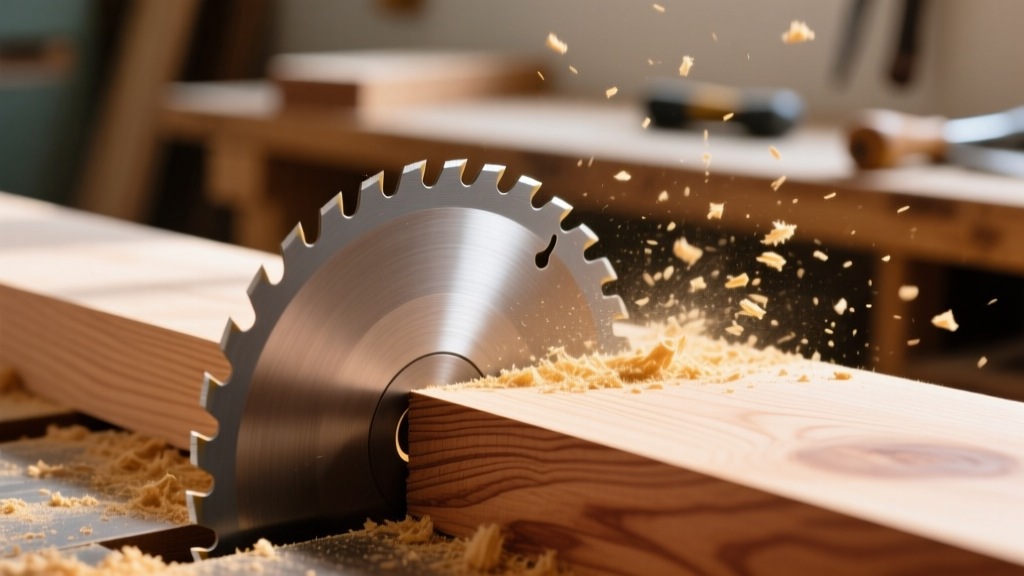
Material Comparison: The Best Woods for Bandsaw Boxes
To balance the need for tight bandsaw cutting radii, drawer durability, and chemical neutrality, certain domestic hardwoods stand out as superior choices. The USDA Forest Products Laboratory provides extensive data on wood mechanics, which we can adapt for jewelry storage applications.
| Wood Species | Janka Hardness (lbf) | Acidity / pH Profile | Drawer Stability | Jewelry Safety Rating |
|---|---|---|---|---|
| Black Walnut | 1,010 | Neutral (pH ~6.5) | Excellent | High |
| Hard Maple | 1,450 | Slightly Acidic (pH ~5.5) | Superior | High (if sealed) |
| American Cherry | 950 | Neutral to Mild (pH ~6.0) | Very Good | High |
| Honduran Mahogany | 900 | Neutral (pH ~6.8) | Excellent | Very High |
| Red Oak | 1,290 | Highly Acidic (pH ~3.5) | Poor (Open Pores) | Low (Avoid) |
Black Walnut is widely considered the gold standard for bandsaw jewelry boxes. Its moderate Janka hardness allows for clean, burn-free cuts on a bandsaw, while its natural oils are relatively stable and non-reactive once cured. Honduran Mahogany offers incredible dimensional stability, meaning the drawers will glide smoothly for decades regardless of seasonal humidity shifts. Hard Maple provides a bright, clean interior that makes finding small jewelry pieces easier, though its density requires sharp bandsaw blades to prevent scorching.
Woods to Avoid in Jewelry Storage
Not all beautiful woods are safe for jewelry. Avoid the following species when planning your bandsaw box:
- Red and White Oak: The high tannic acid content will aggressively tarnish silver and can react with copper alloys, causing green verdigris on brass or bronze findings.
- Pine and Cedar: These softwoods contain high levels of volatile terpenes and sap. The off-gassing can leave a sticky residue on gold and platinum, and the acidic sap will degrade pearl nacre.
- Teak and Rosewood: While prized in furniture making, these woods are saturated with natural oils and resins. These oils can bleed through finishes and stain silk jewelry pouches or cloud porous gemstones like turquoise and malachite.
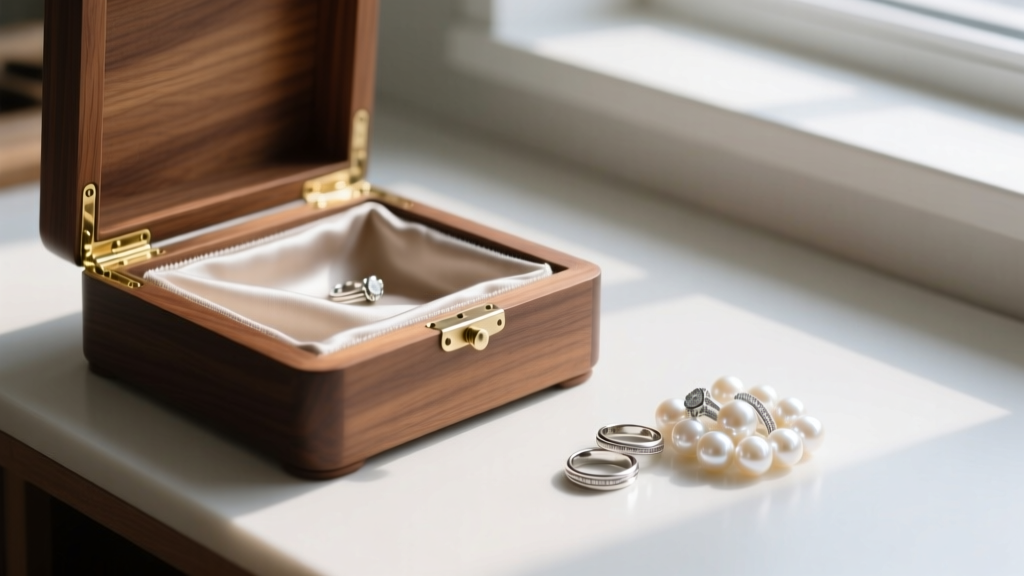
Bandsaw Blade Selection and Cutting Tight Radii
The material you choose also dictates your bandsaw setup. A bandsaw jewelry box requires cutting extreme compound curves and tight radii to form the drawer pulls and inner cavities. For dense woods like Hard Maple, a 1/4-inch, 4-TPI (teeth per inch) skip-tooth blade is ideal. The skip-tooth design provides larger gullets to clear sawdust efficiently, preventing the blade from binding and burning the wood. For softer woods like Cherry or Mahogany, you can step down to a 3/16-inch blade to achieve even tighter, more intricate drawer shapes. Always ensure your blade tension is properly calibrated; a loose blade will drift, resulting in drawers that are uneven and prone to jamming.
Lining and Finishing: Sealing the Wood
Even the safest woods require a proper finish to lock in residual acids and prevent moisture exchange. Avoid oil-based polyurethanes, which can take months to fully stop off-gassing VOCs. Instead, use dewaxed shellac (such as Zinsser SealCoat) as a sanding sealer. Shellac is a natural, non-toxic resin that dries in minutes, seals the wood pores completely, and creates an impermeable barrier between the wood and your jewelry. Top it with a water-based lacquer for durability.
Finally, line the drawer interiors with an anti-tarnish material. Pacific Silvercloth or acid-free felt treated with zinc carbonate will actively absorb atmospheric sulfur and moisture, ensuring that your sterling silver and delicate gemstones remain pristine inside your custom-crafted bandsaw jewelry box.


