Best Jewelry Organizer for Drawer: Budget & Value Guide
Discover the best jewelry organizer for drawer setups. We assess budget vs. premium inserts, materials, and tarnish resistance to maximize value.

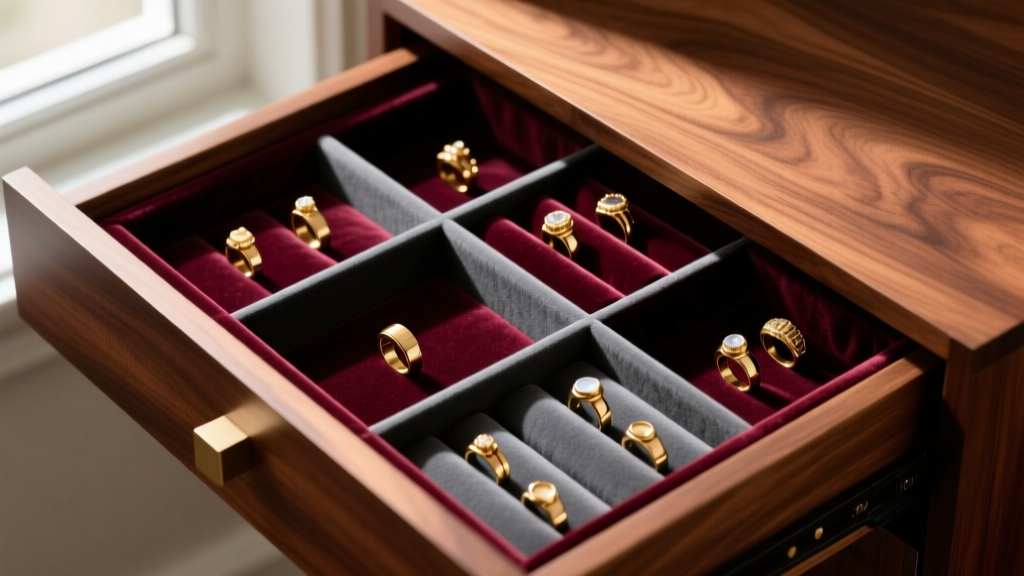
The Hidden Costs of Budget Drawer Inserts
When searching for the perfect jewelry organizer for drawer spaces, consumers are often lured by the low price tags of generic, mass-produced inserts. However, in the realm of jewelry preservation, the initial savings of a budget organizer can quickly be eclipsed by the cost of damaged, tarnished, or degraded pieces. To truly assess value, we must look beyond the surface aesthetics and examine the material science, structural integrity, and long-term preservation capabilities of drawer storage solutions.
The most pervasive issue with ultra-cheap drawer organizers—often priced under $15—is the use of low-grade Medium-Density Fiberboard (MDF) or particleboard as a base. According to National Park Service Museum Conservation guidelines, composite woods off-gas volatile organic compounds (VOCs), including trace sulfur and acidic vapors from urea-formaldehyde resins. When trapped in an enclosed drawer space, these vapors accelerate the formation of silver sulfide, causing sterling silver to tarnish at an alarming rate. A cheap organizer isn't just a neutral container; it can be an active catalyst for jewelry degradation.
Material Breakdown: What Are You Actually Paying For?
To make an informed budget and value assessment, you must understand the materials lining and constructing the organizer. The interior lining is particularly critical, as it maintains direct contact with your metals and gemstones.
| Material Type | Avg. Price Range | Tarnish Risk | Durability | Best Use Case |
|---|---|---|---|---|
| Flocking (Glued Fibers) | $8 - $15 | High (Traps Moisture) | Low (Sheds over time) | Costume jewelry, short-term travel |
| Standard PU Leather | $15 - $30 | Medium | Medium (Peels after 2-3 yrs) | Everyday wear, non-precious metals |
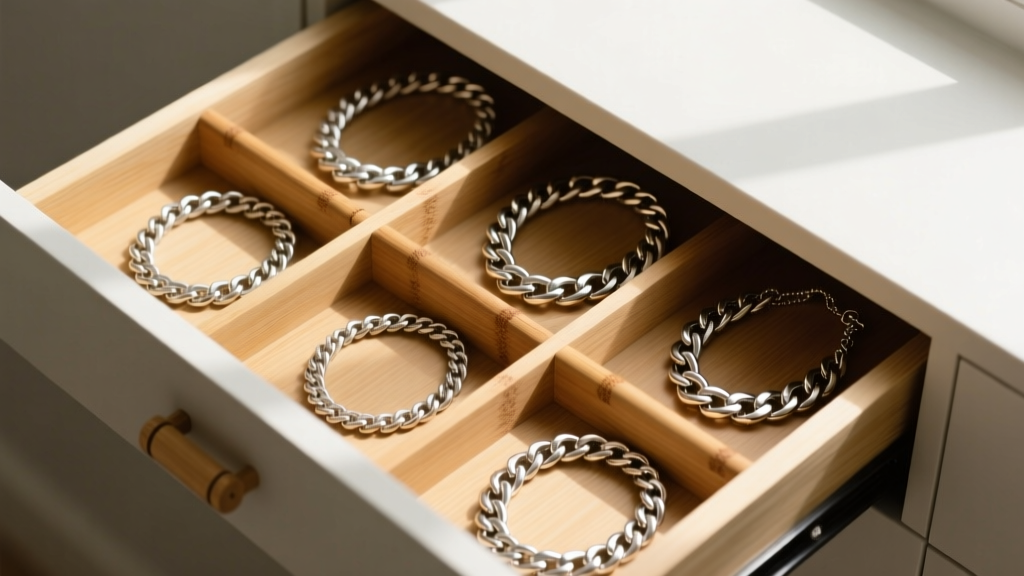
| Bamboo (Unlined) | $20 - $40 | Low | High | Chunky bracelets, watches, bangles |
| Woven Velvet / Suede | $35 - $70 | Low | High | Diamonds, gold, everyday fine jewelry |
| Pacific Silvercloth | $60 - $150+ | None (Anti-Tarnish) | Very High | Heirloom silver, high-carat gold, pearls |
The Flocking vs. Velvet Debate
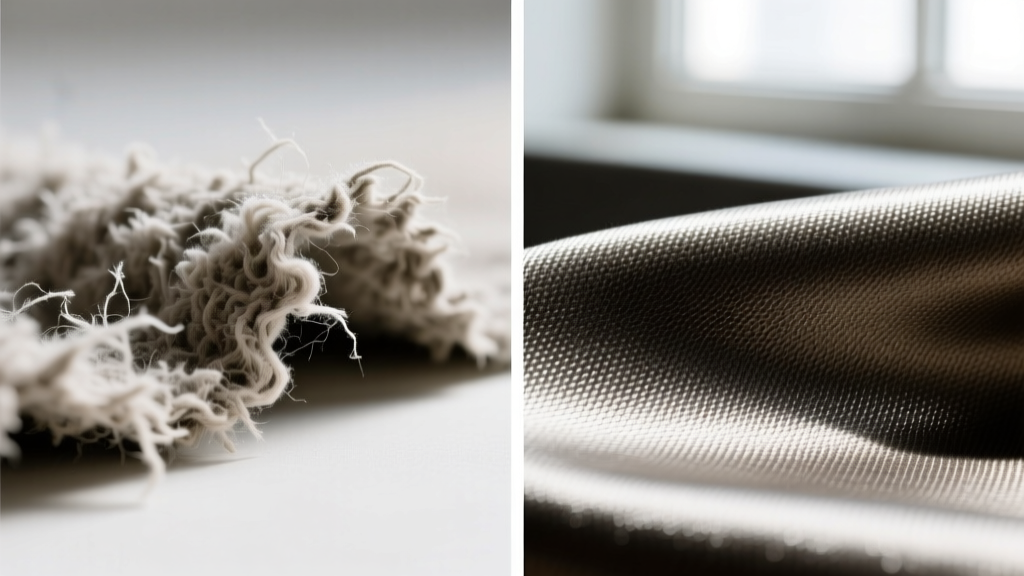
Many budget organizers use 'flocking'—a process where tiny nylon or polyester fibers are glued onto a cardboard or MDF base. While it looks plush initially, the adhesive dries out within 12 to 18 months. The fibers then shed, lodging themselves into the prongs of diamond rings and the intricate links of rope chains. Removing these fibers requires professional ultrasonic cleaning, which can cost $30 to $50 per piece, entirely negating the money saved on the organizer. Genuine woven velvet or tightly looped micro-suede, found in mid-tier options, eliminates this shedding risk entirely.
Budget vs. Premium: A Value Assessment Matrix
Value is not merely about finding the lowest price; it is about the intersection of cost, longevity, and protective capability. Here is how the market segments stack up in 2026.
Tier 1: The Budget Tier (Under $25)
What you get: Flocked MDF trays, basic acrylic dividers, or thin PU leather wrap rolls.
The Verdict: Acceptable only for fashion jewelry, stainless steel, or titanium pieces that are highly resistant to tarnishing and scratching. Avoid using these for porous gemstones like pearls or opals, as the off-gassing adhesives can damage their nacre and moisture content.
Tier 2: The Mid-Range Value Sweet Spot ($30 - $65)
What you get: Solid bamboo inserts, modular stackable trays with velvet lining, and adjustable acrylic compartments.
The Verdict: This is where the true value lies for the average consumer. Brands like Stackers or high-rated generic modular bamboo sets offer excellent customization. Bamboo is naturally resistant to warping and does not off-gas harmful sulfur compounds. Look for organizers that use formaldehyde-free adhesives and feature reinforced corner joints. The Jewelers of America recommends storing pieces separately to prevent Mohs hardness scale scratching; modular mid-range trays allow you to configure specific compartments for your 18k gold chains and 925 silver rings without them touching.
Tier 3: The Premium Investment ($80 - $200+)
What you get: Top-grain leather exteriors, suede or Pacific Silvercloth interiors, heavy brass hardware, and airtight sealing capabilities.
The Verdict: Essential for serious collectors, heirloom sterling silver, and high-jewelry pieces. Premium inserts often feature treated linings that actively absorb tarnish-causing gases before they reach the metal. The upfront cost is high, but the preservation of a $5,000 silver tea set or a vintage diamond necklace makes the ROI undeniable.
Anti-Tarnish Efficacy in Drawer Environments
Drawers are inherently problematic environments for fine metals. They are dark, often lack airflow, and can trap ambient humidity—especially if the dresser is located in a bedroom with an en-suite bathroom. When evaluating a jewelry organizer for drawer placement, anti-tarnish properties should heavily influence your budget allocation.
Pro-Tip: If you must use a budget MDF organizer for silver, line the bottom of the compartments with anti-tarnish tabs or activated charcoal strips. However, replacing these tabs every 3 to 6 months adds a recurring cost that eventually surpasses the price of a premium Pacific cloth-lined insert.
Pacific Silvercloth is the gold standard for silver storage. It is a 100% cotton flannel embedded with microscopic silver particles. These particles act as a sacrificial anode, tarnishing themselves so your jewelry does not. While organizers featuring genuine Pacific cloth command a premium price, they require zero maintenance and offer unparalleled protection, completely justifying the investment for silver-heavy collections.
How to Measure and Configure Your Drawer Space
Even the most expensive organizer is a poor value if it does not fit your specific hardware. Drawer dimensions vary wildly between vintage antique dressers and modern flat-pack furniture. Follow this precise framework to ensure a perfect fit:
- Measure the Interior, Not the Exterior: Use a steel tape measure to record the exact inside width, depth, and height of the drawer cavity. Deduct 0.5 inches from the width and depth to allow for smooth drawer operation and seasonal wood expansion.
- Check the Drawer Depth (Height): Standard dresser drawers offer 4 to 6 inches of vertical clearance. If your organizer features a lid or stacked trays, ensure you have at least 0.25 inches of clearance above the organizer so necklaces on tall posts do not get crushed against the drawer ceiling.
- Account for the Slides: Modern drawers often have side-mounted metal glides that intrude 0.5 to 0.75 inches into the drawer space on each side. Failing to account for this will result in an organizer that jams the drawer shut.
- Prioritize Modularity: Instead of buying one massive, fixed-grid tray, purchase a modular set. This allows you to mix a tray with 1.5-inch ring rolls (ideal for standard bands) alongside a tray with open 4-inch squares for chunky cuff bracelets and smartwatches.
Ring Roll Sizing: A Frequently Overlooked Detail
When assessing the value of a ring compartment, check the diameter of the ring rolls. Budget organizers typically feature narrow rolls designed for 2mm to 4mm wedding bands. If you collect wide signet rings, heavy cocktail rings, or men's bands that exceed 8mm in width, these narrow rolls will stretch, tear, and eventually fail to hold the rings securely. Mid-to-premium organizers feature wider, gusseted rolls or individual slotted pillows that accommodate rings up to 15mm wide without stressing the velvet seams. According to the Gemological Institute of America (GIA), improper storage that forces jewelry into tight spaces can loosen prongs over time, risking gemstone loss.
Final Verdict: Where to Spend and Where to Save
Ultimately, the best jewelry organizer for drawer setups depends entirely on your collection's composition. If your drawer primarily houses stainless steel, titanium, and resin fashion pieces, a $20 bamboo or acrylic divider set provides exceptional value and clean aesthetics. However, if your drawer holds 14k/18k gold, sterling silver, pearls, or diamonds, bypass the budget tier entirely. Investing $50 to $100 in a modular, velvet-lined, or Pacific cloth insert is not merely an organizational expense—it is a critical preservation strategy that protects the financial and sentimental value of your jewelry for decades to come.


