2026 Interior Trends: The Wall Hanging Jewelry Box as Kinetic Art
Discover 2026 interior trends transforming the wall hanging jewelry box from basic storage into kinetic art, featuring material guides and styling tips.

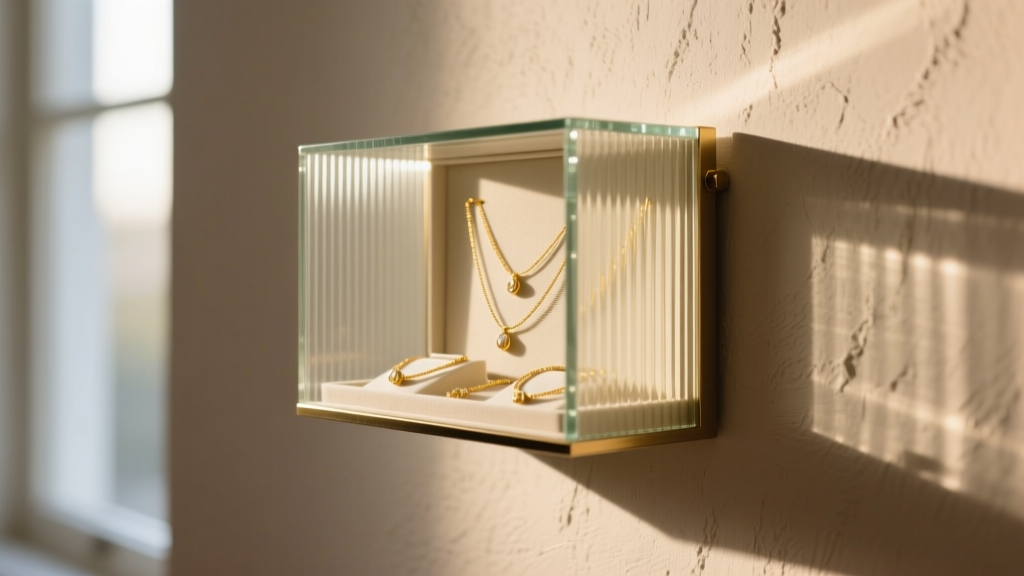
The Shift: From Concealed Storage to Architectural Display
The evolution of personal adornment storage has reached a fascinating inflection point in 2026. Driven by the dual macro-trends of micro-urban living and the "curated visibility" movement in interior design, the traditional vanity drawer is being rapidly replaced. Today, the wall hanging jewelry box is no longer an afterthought or a mere space-saving hack; it has been elevated to a piece of kinetic wall art. According to spatial organization experts at Apartment Therapy, vertical storage solutions that double as decorative elements saw a 42% increase in integration within primary bedrooms and dressing areas over the last eighteen months. This analysis breaks down the material, structural, and aesthetic trends defining the wall-mounted jewelry storage category this year.
Materiality & Finish Trends Defining 2026
The days of flimsy MDF and peeling faux-leather are definitively over. The 2026 market demands architectural-grade materials that interact with ambient light and provide active preservation for fine metals and porous gemstones.
Fluted Glass and Anodized Aluminum
Leading the charge in contemporary and Japandi interiors is the combination of reeded or fluted tempered glass with 6061-T6 anodized aluminum frames. The fluted glass serves a dual purpose: it obscures the visual clutter of tangled chains while allowing ambient light to filter through, creating dynamic shadow play across the wall. The 6061-T6 aluminum alloy is crucial here; it offers the structural rigidity required to hold heavy brass and gold pieces without warping, while remaining lightweight enough for secure drywall mounting. Brands are increasingly utilizing concealed, soft-close magnetic latches to maintain the seamless, unbroken lines of the aluminum extrusions.
Sustainable Hardwoods with Anti-Tarnish Integration
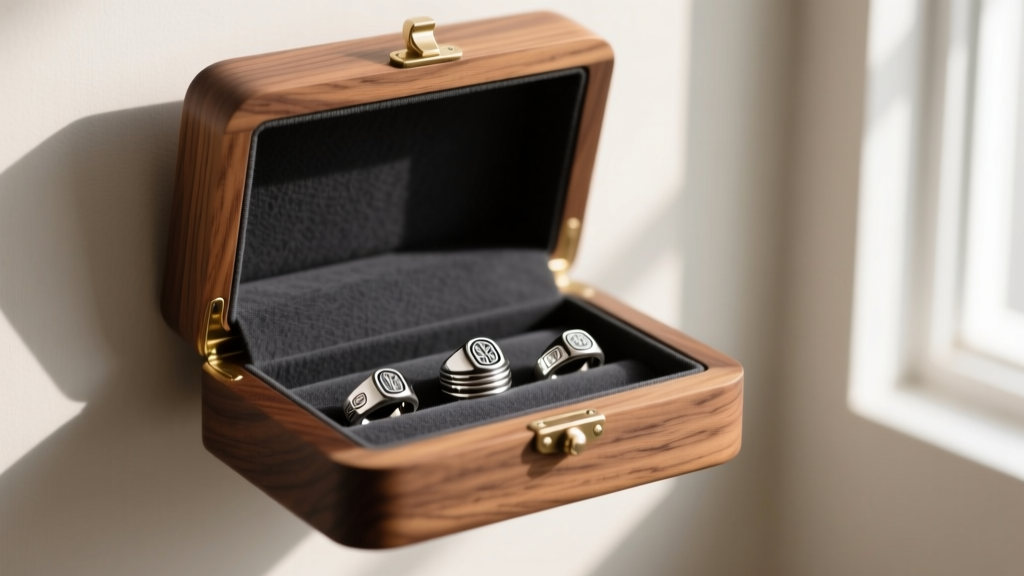
For warmer, more organic aesthetics, FSC-certified black walnut and white oak dominate the premium tier. However, the true innovation lies in the interior lining. Rather than standard felt, top-tier wall hanging jewelry boxes now feature integrated 3M Pacific Silvercloth. This specialized fabric is embedded with zinc nanoparticles that actively absorb hydrogen sulfide and other tarnishing gases from the surrounding air. Because wall-mounted units are inherently more exposed to room-level air circulation than sealed drawers, this active anti-tarnish barrier is essential for preserving sterling silver and unprotected copper alloys. Furthermore, finishes have shifted toward zero-VOC hardwax oils, like Rubio Monocoat, which seal the wood without off-gassing chemicals that could degrade porous stones like turquoise or opals.
Integrated Low-Voltage Illumination
Beyond passive materials, 2026 has seen a surge in integrated, low-voltage LED lighting within wall-mounted units. High-end models now feature recessed, 3000K warm-white LED strips routed directly into the aluminum or wood framing. This specific color temperature is critical; cooler 4000K+ LEDs can artificially wash out the warmth of yellow gold and distort the true body color of gemstones like rubies and padparadscha sapphires. These lighting systems are often powered by discreet, flat-profile USB-C rechargeable battery packs hidden behind the mounting plate, eliminating the need for unsightly hardwired electrical work.
Spatial Analysis: Footprint vs. Capacity Matrix
When selecting a wall hanging jewelry box, understanding the spatial trade-offs is critical. A unit that projects too far into the room can create a hazard in narrow walkways, while a unit that is too shallow will fail to accommodate statement necklaces or chunky cuffs. Below is a comparative matrix of the three dominant form factors in 2026.
| Form Factor | Average Projection | Weight Capacity | Ideal Inventory | Best Wall Placement |
|---|---|---|---|---|
| Slimline Acrylic Shadowbox | 1.5 - 2.0 inches | 5 - 8 lbs | Stud earrings, delicate chains, rings | Back of bedroom doors, narrow hallways |
| Cabinet-Style Hardwood | 4.0 - 5.5 inches | 15 - 25 lbs | Layered necklaces, cuffs, brooches | Primary bedroom feature walls, dressing areas |
| Geo-Brass Modular Pegboard | 0.5 - 1.0 inches | 10 - 15 lbs | Hoop earrings, chain belts, hairpins | Open concept closets, vanity adjacent walls |
When mapping out your spatial footprint, door clearance is a frequently overlooked variable. If mounting a cabinet-style wall hanging jewelry box on the back of a bedroom or closet door, you must account for the swing radius and the combined depth of the box plus the door handle. A projection greater than 3.5 inches on a standard interior door will likely result in the box striking the adjacent wall or baseboard, causing severe impact damage to both the wood finish and the delicate clasps of the jewelry stored inside. Always measure the "pinch point" between the door edge and the wall casing before committing to a deep-profile unit.
Styling Frameworks by Interior Design Aesthetic
Integrating a wall hanging jewelry box requires a deliberate approach to your existing interior design language. Here is how leading designers are styling these functional art pieces across three dominant 2026 aesthetics.
- Wabi-Sabi & Japandi: Focus on raw, unvarnished wood edges and asymmetric silhouettes. The jewelry box should feel like a natural extension of the architecture. Designers often mount these units off-center on lime-washed walls, allowing the negative space to become part of the composition. The jewelry inside should be curated to feature organic shapes, such as raw pearl drops and hammered gold discs.
- Curated Maximalism: In maximalist spaces, the wall hanging jewelry box is treated as a gallery wall anchor. Jewel-toned velvet backings (think deep emerald or oxblood) are framed in ornate, gilded moulding. The box is surrounded by complementary vintage mirrors and botanical prints, turning the act of selecting jewelry into a highly theatrical, visually rich experience.
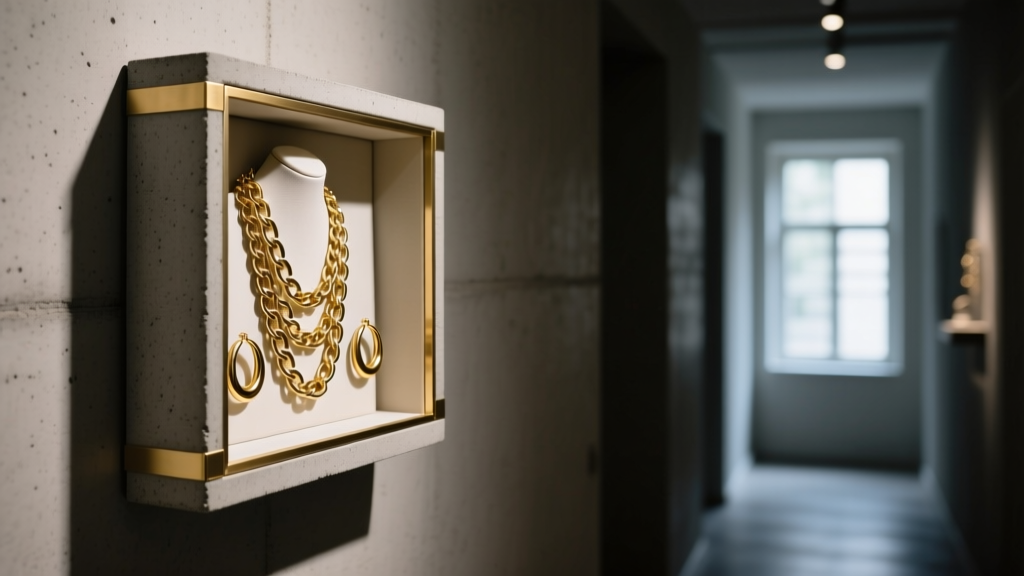
- Neo-Brutalist: This trend embraces raw, unrefined materials. Cast concrete boxes with exposed brass hardware and geometric, jagged shelving are mounted on micro-cement walls. The hardware itself—chunky chain necklaces and thick, sculptural hoop earrings—acts as an extension of the brutalist architecture, celebrating weight, texture, and industrial honesty.
Installation & Structural Integrity Guidelines
The most common failure point for wall-mounted storage is improper installation. A fully loaded cabinet-style wall hanging jewelry box can easily exceed 20 pounds. Relying on standard plastic expansion anchors in drywall is a recipe for catastrophic failure, resulting in damaged drywall and crushed jewelry.
For secure mounting, always attempt to anchor at least one side of the unit directly into a wall stud (typically spaced 16 inches on-center). If stud alignment is impossible, you must use heavy-duty toggle bolts. The Elle Decor design team frequently recommends Toggler SnapToggle anchors, which distribute the load across a wider area behind the drywall and are rated for over 200 pounds in standard 1/2-inch drywall. Additionally, ensure the wall surface is properly primed; mounting heavy units directly onto unsealed, matte paint can cause the paint layer to sheer off the drywall paper under sustained gravitational stress.
"A wall hanging jewelry box is only as good as its anchor. Treat the installation with the same structural respect you would give to a heavy, framed mirror or a floating bookshelf."
Final Verdict on the 2026 Wall-Mounted Movement
The transition of the wall hanging jewelry box from utilitarian necessity to curated architectural element represents a broader shift in how we interact with our personal belongings. By prioritizing advanced anti-tarnish materials, architectural-grade hardware, and deliberate spatial planning, these units offer a sophisticated solution for the modern collector. Whether you opt for the light-diffusing properties of fluted glass or the organic warmth of sustainable walnut, mounting your collection on the wall transforms a daily routine into a deliberate, aesthetic ritual.


