Wooden Jewelry Tray Guide: Best Wood Types & Finishes
Compare wood types for your wooden jewelry tray. Discover which hardwoods, finishes, and linings prevent tarnish and protect fine jewelry.

The Hidden Chemistry of Wood and Fine Jewelry
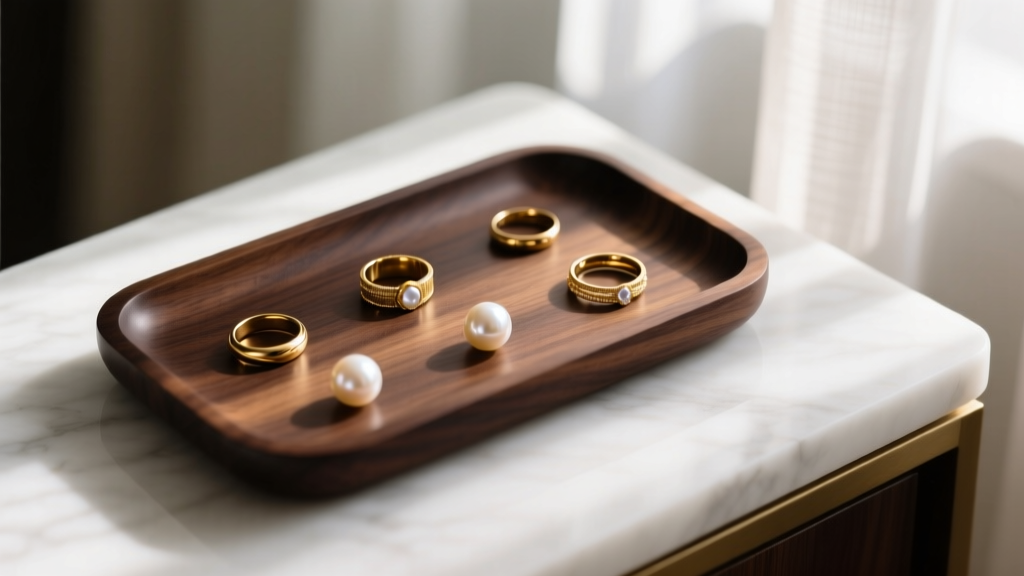
When selecting a wooden jewelry tray, most collectors focus purely on aesthetics—matching the wood stain to their bedroom vanity or dresser. However, from a materials science perspective, wood is a reactive, porous, and biologically active substance. Unlike inert materials such as glass, acrylic, or glazed ceramic, raw and improperly sealed wood continuously interacts with its environment. It absorbs ambient humidity, expands and contracts with temperature fluctuations, and, most critically, off-gasses volatile organic compounds (VOCs) and organic acids.
For fine jewelry, this chemical off-gassing can be catastrophic. Sterling silver, which contains 7.5% copper, is highly susceptible to acetic and formic acids emitted by certain wood species. These acids accelerate the formation of silver sulfide, manifesting as severe black tarnish. Similarly, organic gemstones like pearls and coral are composed of calcium carbonate, which can literally dissolve or lose its luster when exposed to acidic wood vapors over prolonged periods. According to the American Gem Society, proper storage environments must be chemically neutral to preserve the structural integrity of delicate gems. Understanding the material properties of your wooden jewelry tray is the first line of defense against irreversible jewelry damage.
Hardwood vs. Softwood: The Density and Durability Factor
The structural integrity of a wooden jewelry tray is dictated by the Janka hardness test, which measures the force required to embed a 0.444-inch steel ball halfway into a wood sample. For jewelry organization, density matters for two reasons: it prevents the wood from denting when heavy metal pieces (like solid gold chains or platinum watches) are dropped onto it, and it allows for precision-milled dividers that won't splinter over time.
Softwoods, such as pine or fir, are rarely suitable for high-end jewelry storage. Their low density makes them prone to micro-splinters that can snag delicate silk threading on pearl necklaces or scratch highly polished gold surfaces. Hardwoods, conversely, offer a glass-like finish when properly sanded and sealed. Below is a comparative breakdown of common wood species used in jewelry trays, analyzing their physical and chemical properties.
| Wood Species | Janka Hardness (lbf) | Relative Acidity (pH) | Tarnish Risk | Best Jewelry Use |
|---|---|---|---|---|
| Hard Maple | 1,450 | 4.5 - 5.5 (Mild) | Low (if sealed) | Rings, Diamonds, Gold |
| Black Walnut | 1,010 | 5.0 - 6.0 (Mild) | Low (if sealed) | Everyday Wear, Watches |
| White Oak | 1,360 | 3.0 - 4.0 (High) | High | Costume Jewelry Only |
| Eastern Red Cedar | 900 | 4.0 - 5.0 (Resinous) | High | Scented Drawer Liners Only |
| American Cherry | 950 | 4.5 - 5.5 (Mild) | Low (if sealed) | Pearls, Gemstones |
The Danger of Acidic Woods and Resinous Saps
Not all hardwoods are created equal. White Oak, despite its impressive Janka rating and beautiful grain, is notorious in the museum conservation world for its high tannin and acetic acid content. The USDA Forest Products Laboratory notes that oak off-gasses significant amounts of acetic acid, especially in enclosed, poorly ventilated spaces like a closed jewelry box or a deep tray stacked with other items. Storing sterling silver or copper-based alloys in an unsealed oak tray will result in rapid, aggressive tarnishing.
Cedar presents a different set of problems. While often marketed for its aromatic properties and moth-repelling qualities, cedar contains active resins and acidic oils. These oils can transfer onto porous gemstones like turquoise, opal, and lapis lazuli, permanently altering their color matrix. Furthermore, the sticky nature of cedar sap can attract microscopic dust and lint, creating an abrasive paste that micro-scratches polished metals. Cedar should be strictly avoided as a primary contact surface in any wooden jewelry tray designed for fine or heirloom pieces.
Sealants and Finishes: Creating a Neutral Barrier
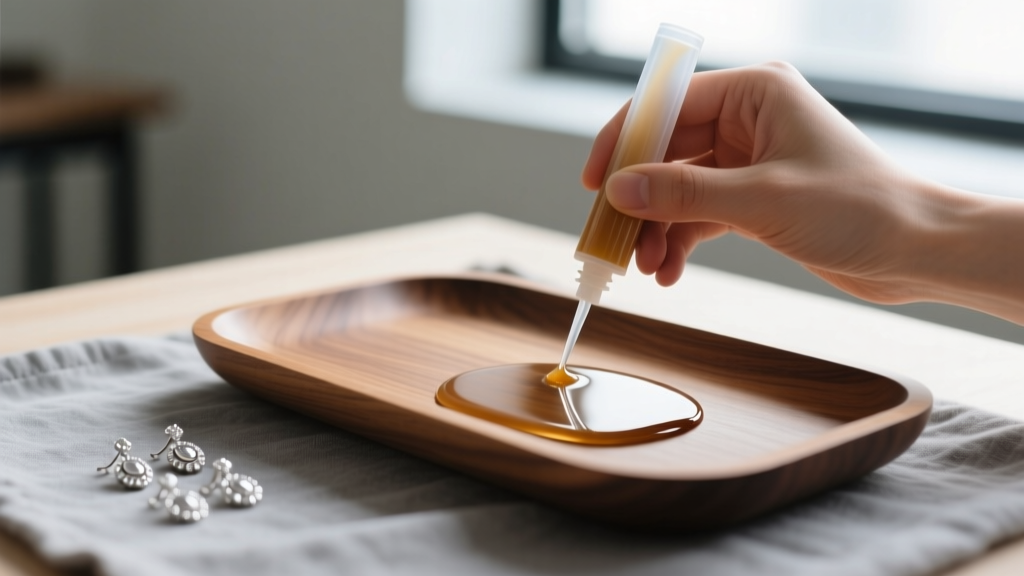
If you already own an oak or walnut wooden jewelry tray, or if you are commissioning a custom piece, the application of a proper sealant is non-negotiable. A high-quality finish encapsulates the wood fibers, trapping acidic vapors inside and creating an inert, neutral barrier between the reactive wood and your jewelry.
Top Finish Recommendations
- Water-Based Polyurethane: This is the gold standard for modern jewelry trays. It dries crystal clear (unlike oil-based polys that yellow over time), forms a hard, impermeable plastic-like shell, and completely blocks acetic acid off-gassing. Ensure it is fully cured for at least 14 days before introducing jewelry, as the curing process itself releases temporary VOCs.
- Dewaxed Shellac: A traditional, natural resin secreted by the lac bug. Shellac is an excellent odor and acid barrier, historically used in museum display cases. It is completely non-toxic once cured but is less resistant to moisture and alcohol-based perfumes, which can dissolve the finish if sprayed near the tray.
- Polymerized Tung Oil: While penetrating oils like raw linseed or standard tung oil do not create a sufficient vapor barrier on their own, polymerized (heat-treated) tung oil builds a mild surface film. It is safer for direct skin contact and offers a beautiful matte sheen, though it requires annual reapplication to maintain its protective qualities.
Lining Solutions for Ultimate Protection
Even with the best hardwood and a flawless polyurethane seal, the ultimate best practice for a wooden jewelry tray is the use of specialized linings. Wood is a hard surface; dropping a diamond ring onto a sealed walnut tray can still result in chipped girdles or bent prongs due to the impact force.
"Never rely solely on the wood finish to protect soft metals. A secondary, chemically treated textile layer is essential for absorbing ambient sulfur and preventing micro-abrasions on high-polish finishes."
For optimal results, line the compartments of your wooden jewelry tray with 3M Pacific Cloth or a specialized anti-tarnish flannel. These fabrics are impregnated with microscopic silver particles or zinc compounds that act as sacrificial anodes. They attract and neutralize sulfur and acidic gases in the air before those gases can reach your jewelry. Avoid standard felt or cheap velvet, which often contain sulfur-based dyes and acidic sizing agents that actually accelerate tarnishing.
Maintenance and Climate Control
Wood is hygroscopic, meaning it absorbs and releases moisture from the air. If your wooden jewelry tray is kept in a high-humidity environment like a master bathroom, the wood will swell, potentially cracking the polyurethane seal and exposing the acidic wood beneath. Conversely, in extremely dry, climate-controlled rooms, the wood may shrink and warp, causing glued dividers to separate.
To maintain the structural and chemical integrity of your tray, keep it in an environment with a stable relative humidity (RH) between 40% and 50%. Clean the surface only with a dry, lint-free microfiber cloth. Avoid commercial furniture polishes like Pledge, which contain silicone oils and solvents that can degrade the protective sealant over time, leaving a residue that transfers to your jewelry and dulls the brilliance of faceted gemstones. By respecting the material properties of wood and treating your tray as a specialized conservation tool rather than mere decor, you ensure your collection remains pristine for generations.


