Best Budget Photo Jewelry Box Options: 2026 Value Guide
Discover the true value of a photo jewelry box in 2026. We assess budget tiers, material grades, and anti-tarnish linings to help you buy smart.

The Anatomy of a Photo Jewelry Box: What Are You Paying For?
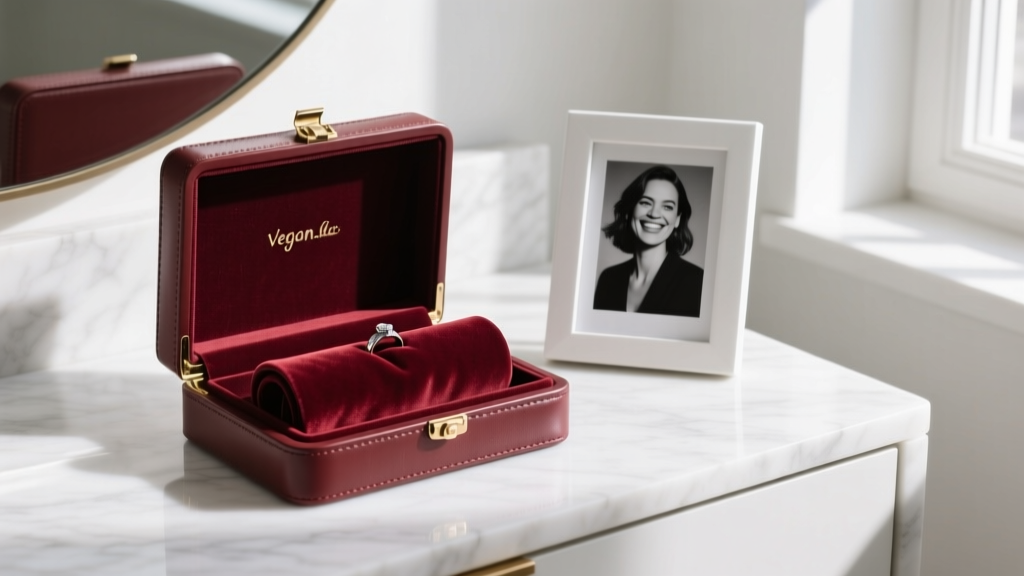
The photo jewelry box occupies a unique space in the world of accessories: it is equal parts sentimental keepsake and functional storage. Typically featuring a 4x6 or 5x7 picture frame integrated into the lid or the interior flap, these boxes are overwhelmingly popular as gifts for anniversaries, graduations, and holidays. However, from a strict jewelry preservation standpoint, the market is flooded with options that prioritize aesthetic novelty over material science. In 2026, as consumers become more educated about the long-term degradation of precious metals and gemstones, assessing the true value of a photo jewelry box requires looking past the decorative exterior and examining the structural integrity, chemical safety of the linings, and hardware longevity.
When you purchase a photo jewelry box, you are essentially paying for three distinct components: the outer shell and frame housing, the glazing (the transparent cover over the photo), and the interior micro-environment. Budget manufacturers often cut corners on the latter two, resulting in a beautiful box that actively accelerates the tarnishing of sterling silver or dries out organic gemstones. To determine if a specific model is a worthwhile investment or a disposable novelty, we must break down the material grades and pricing tiers currently dominating the market.
Budget vs. Premium: Material and Hardware Breakdown
The outer shell of a photo jewelry box dictates its physical durability and resistance to warping. Entry-level boxes are almost universally constructed from MDF (Medium-Density Fiberboard) wrapped in a PU (Polyurethane) leather or vinyl veneer. While MDF is cost-effective, it is highly susceptible to humidity fluctuations. If stored in a bathroom or a damp bedroom, the MDF core can absorb ambient moisture, swell, and cause the PU wrapping to peel at the seams. Furthermore, the photo frame housing on these budget models is often glued rather than routed, leading to the frame insert popping loose after a year of repeated opening and closing.
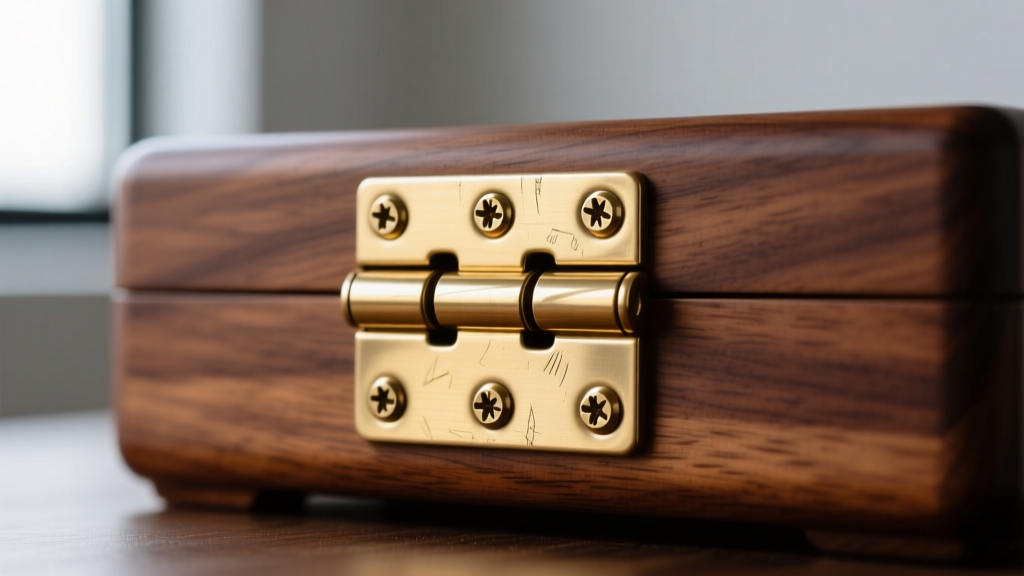
Premium options, typically starting around the $80 mark, utilize solid hardwoods like walnut, mahogany, or sustainably sourced bamboo. These materials are kiln-dried and sealed, providing a stable environment that will not off-gas harmful volatile organic compounds (VOCs) as synthetic adhesives do. The hardware is where the value gap becomes most apparent. Budget boxes use stamped zinc alloy hinges that lack tension control, causing the heavy lid to slam shut—a disaster for delicate chains left across the rim. Premium boxes feature solid brass piano hinges or soft-close hydraulic stays, ensuring smooth operation and protecting both the jewelry and the photo frame glass from impact shock.
| Feature | Budget Tier ($15 - $35) | Premium Tier ($80 - $150+) |
|---|---|---|
| Shell Material | MDF with PU Leather Wrap | Solid Walnut, Mahogany, or Bamboo |
| Photo Glazing | Standard Acrylic (PMMA) | UV-Treated Mineral Glass |
| Interior Lining | Polyester / Rayon Felt | Anti-Tarnish Treated Flannel / Suede |
| Hinge Hardware | Stamped Zinc Alloy | Solid Brass or Soft-Close Steel |
| Joinery | Hot Glue and Staples | Dovetail or Mortise and Tenon |
The Hidden Cost: Lining Quality and Tarnish Prevention
The most critical failure point in cheap photo jewelry boxes is the interior lining. Standard polyester or rayon felt is essentially a moisture trap. When you close the lid, ambient humidity is sealed inside the box. For sterling silver, this creates the perfect environment for a chemical reaction. Silver reacts with hydrogen sulfide (H2S) in the presence of moisture to form silver sulfide, the black crust we recognize as tarnish. According to the Jewelers of America, storing silver in unregulated, moisture-trapping environments is the primary cause of premature degradation.
High-value photo jewelry boxes utilize specialized linings, such as Pacific Silvercloth or zinc-impregnated flannel. These fabrics are engineered to act as sacrificial anodes; the embedded metal particles absorb and neutralize corrosive gases before they can reach your jewelry. While a budget box might save you $40 upfront, the cost of professional ultrasonic cleaning and polishing for a tarnished silver collection will quickly eclipse those savings. If you are strictly buying a budget MDF box, you must supplement it with silica gel desiccant packets and anti-tarnish strips (like 3M Silver Protector Strips) to create a safe micro-environment manually.
Glazing Matters: Acrylic vs. Glass Photo Frames
The transparent cover protecting your photograph is more than just a window; it is a chemical barrier. Budget manufacturers exclusively use injection-molded acrylic (PMMA) because it is lightweight and shatterproof during shipping. However, standard acrylic has two major drawbacks. First, it is highly prone to micro-scratching, which will make your cherished photo look cloudy and blurred within a few years of dusting. Second, and more importantly, lower-grade acrylics and the adhesives used to bind them can off-gas trace amounts of acidic VOCs.
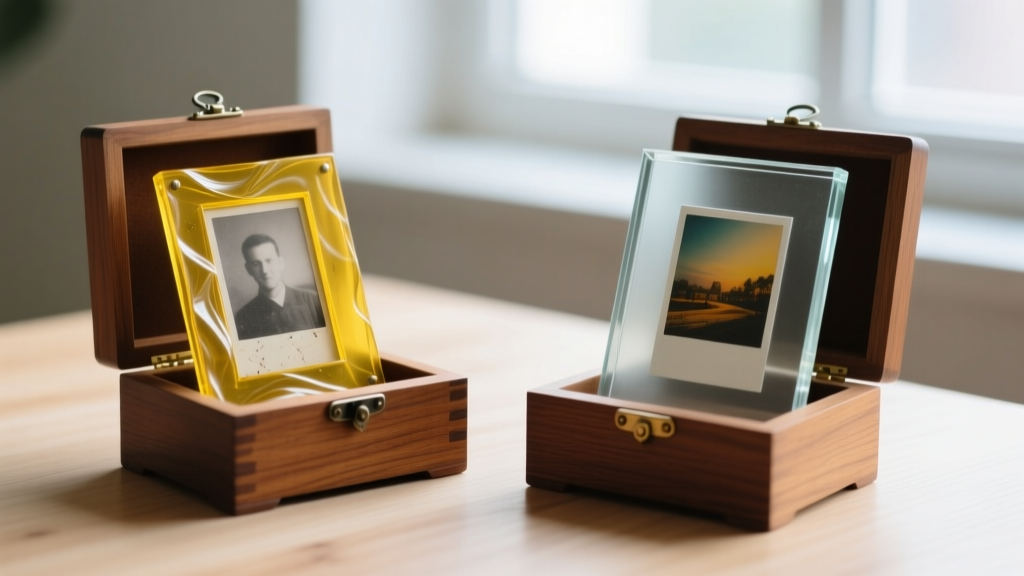
While these VOCs are harmless to humans in such small quantities, they can be devastating to organic gemstones. The Gemological Institute of America (GIA) notes that pearls are highly porous and sensitive to acidic environments, which can dissolve their nacre and destroy their luster. If you intend to store pearl necklaces or coral pieces in your photo jewelry box, investing in a model with genuine, UV-treated mineral glass glazing is non-negotiable. Glass is completely inert, will not off-gas, and provides superior optical clarity that will not yellow or scratch over time.
Real-World Pricing Tiers for 2026
To help you navigate the market, here is a realistic breakdown of what your money actually buys in the current landscape:
- The Novelty Tier ($15 - $35): Brands like SONGMICS and various unbranded Amazon imports dominate this space. You get a functional box with a PU leather exterior, acrylic photo frame, and basic ring rolls. Value Assessment: Great for a teenager's fashion jewelry or a quick, low-stakes gift. Do not store heirloom silver, pearls, or fine gold chains here without adding aftermarket anti-tarnish strips.
- The Mid-Tier Upgrade ($40 - $75): Brands like Reed & Barton (entry-level lines) and Mele & Co. offer better structural integrity. You will find wood-composite shells with real wood veneers, upgraded microfiber linings, and better hinge tension. Value Assessment: The sweet spot for everyday fine jewelry storage. The photo frames are still usually acrylic, but the interior environment is significantly safer for daily-wear gold and platinum.
- The Heirloom Tier ($85 - $200+): Premium makers like Wolf and high-end artisan woodworkers. Solid hardwoods, brass hardware, mineral glass photo frames, and chemically neutral suede or anti-tarnish flannel interiors. Value Assessment: Essential for serious collectors, vintage pieces, and organic gems. This is a true value investment that protects thousands of dollars in assets.
How to Evaluate Value Before You Buy
When shopping online, you cannot physically inspect the box. Use this checklist to read between the lines of product descriptions and customer reviews:
- Check the Glazing Specs: Search the description for the words 'glass' or 'mineral'. If it says 'shatterproof' or 'crystal clear' without specifying glass, it is acrylic.
- Inspect the Hinge Photos: Zoom in on user-uploaded review photos. Look for hinges screwed into the wood with multiple screws. If the hinge looks like it is merely glued or held by a single tiny pin, avoid it.
- Smell Test Reviews: Search the reviews for keywords like 'smell', 'odor', or 'chemical'. A strong off-gassing odor indicates the use of cheap formaldehyde-based glues in the MDF construction, which is terrible for jewelry preservation.
- Lining Material: Look for 'suede', 'microfiber', or 'anti-tarnish'. Avoid anything described simply as 'velvet' or 'fleece' unless it specifies that it is treated for silver storage.
Final Verdict: Is a Photo Jewelry Box Worth the Investment?
A photo jewelry box is absolutely worth the investment, provided you align your purchase with the actual value of the jewelry you intend to store inside it. If you are looking to house a $5,000 diamond necklace or a family heirloom pearl strand, the $100+ premium tier with glass glazing and anti-tarnish linings is a mandatory expense for asset protection. However, if you simply need a charming, personalized place to keep everyday gold hoops and fashion pieces, a well-reviewed $45 mid-tier box offers the perfect balance of sentimental beauty and practical utility. By understanding the materials and chemistry at play, you can select a photo jewelry box that honors your memories while fiercely protecting your treasures.