Wall Jewelry Holder Value Guide: Budget vs Premium Picks
Is a cheap wall jewelry holder worth the risk to your gems? We assess budget vs. premium materials, weight limits, and anti-tarnish value.

The True Cost of Budget Jewelry Storage
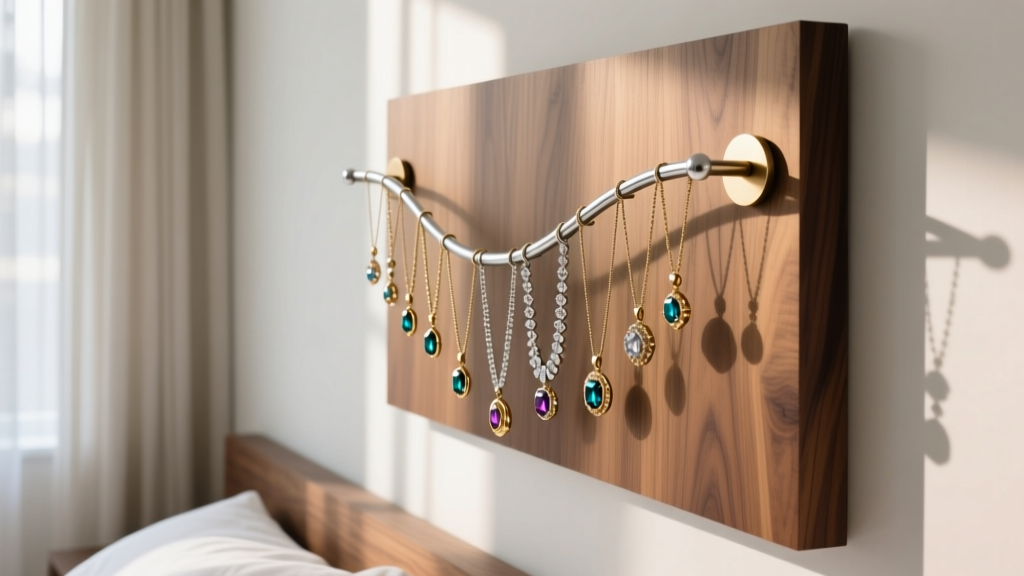
When organizing a growing collection, a wall jewelry holder seems like the ultimate space-saving solution. However, the market is currently flooded with ultra-cheap, direct-to-consumer organizers that prioritize aesthetics over structural integrity and material safety. As we evaluate the 2026 storage landscape, the divide between budget-friendly options and premium, heirloom-quality mounts has never been more pronounced. The initial savings of a $15 particleboard organizer can quickly evaporate when a failed drywall anchor sends your favorite pieces crashing to the floor, or when off-gassing adhesives accelerate the tarnishing of your sterling silver.
To determine the true value of a wall jewelry holder, we must look beyond the price tag. We need to assess the metallurgical quality of the hooks, the shear strength of the backing material, and the chemical neutrality of the finishes. In this comprehensive budget and value assessment, we break down exactly what you are paying for at every price tier and how to calculate the long-term ROI of your jewelry storage.
Material Breakdown: Budget vs. Mid-Range vs. Premium
The core value of any wall-mounted organizer lies in its base material and the hardware used to construct it. Below is a comparative analysis of the three primary market tiers.
| Material Class | Average Price | Max Load (Drywall) | Tarnish Risk | Expected Lifespan |
|---|---|---|---|---|
| Budget (MDF / Thin Wire) | $12 – $25 | 10 – 15 lbs | High (Glues/Zinc) | 1 – 3 Years |
| Mid-Range (Bamboo / Steel) | $30 – $60 | 25 – 35 lbs | Low (Sealed) | 5 – 8 Years |
| Premium (Hardwood / Brass) | $75 – $150+ | 50+ lbs (w/ toggles) | None (Inert) | Lifetime |
Budget Tier ($10–$25): MDF and Thin-Gauge Wire
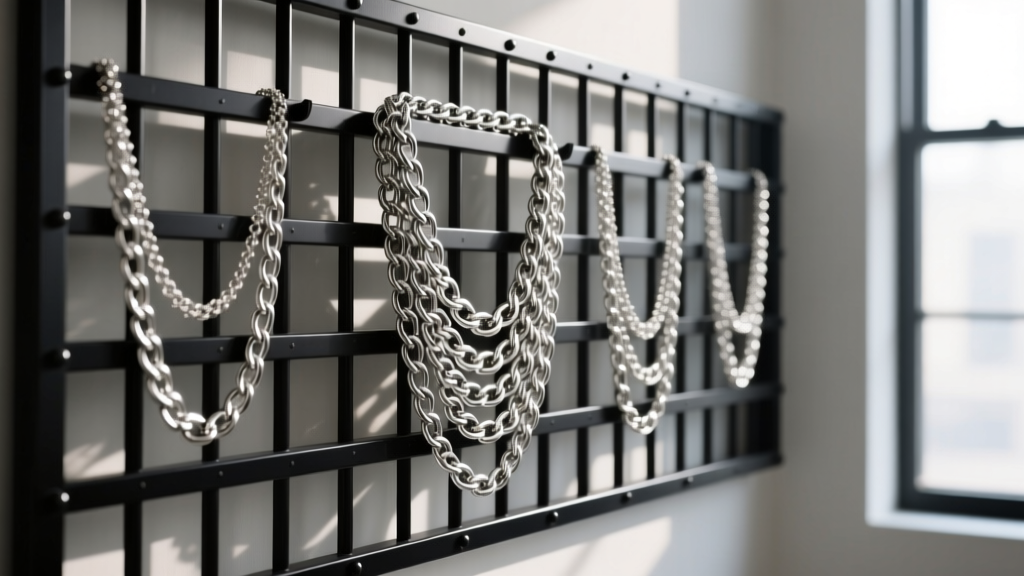
Budget wall jewelry holders are typically constructed from Medium-Density Fiberboard (MDF) or thin 18-gauge steel wire. While visually appealing in product photos, MDF lacks the internal tensile strength to hold screws securely over time. The hooks provided are usually cast zinc-alloy with a thin metallic spray coating. Once this coating chips, the reactive zinc core can transfer onto gold vermeil and silver, causing irreversible localized corrosion. Furthermore, 18-gauge wire grids will visibly sag and bend under the cumulative weight of heavy gemstone pendants and layered chain necklaces.
Mid-Range Tier ($30–$60): Bamboo and Powder-Coated Steel
The mid-range offers the best immediate value for the average collector. Bamboo is a highly sustainable, dense grass that holds wood screws significantly better than particleboard. When paired with powder-coated steel hooks, the risk of rust transfer is virtually eliminated. Powder coating creates a non-porous, inert barrier that protects both the metal hook and your jewelry. According to the Jewelers of America, keeping jewelry away from reactive, unsealed metals is a primary defense against premature tarnishing, making powder-coated mid-range options a smart, pragmatic investment.
Premium Tier ($75–$150+): Solid Hardwoods and Brass
Premium wall jewelry holders utilize solid hardwoods like walnut, cherry, or maple, finished with natural, jewelry-safe oils or water-based polyurethanes. The hooks are typically solid brass or stainless steel. Brass is inherently antimicrobial and highly resistant to the types of corrosion that destroy cheaper alloys. A solid hardwood backer not only supports immense weight but also allows for the repositioning of hooks without the wood crumbling or stripping out, offering unparalleled long-term value and adaptability as your collection evolves.
Structural Integrity: Anchors, Shear Force, and Drywall
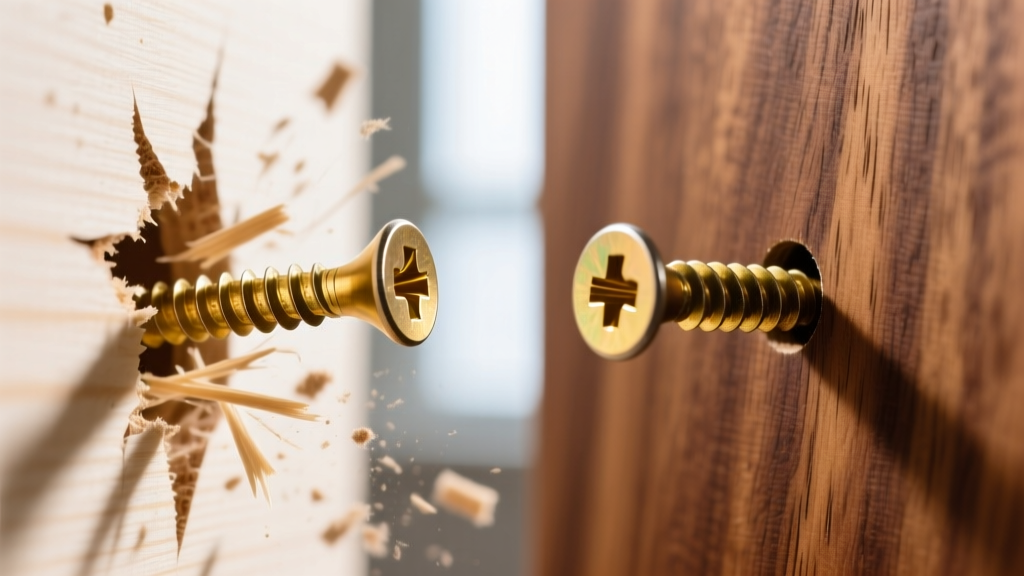
A common failure point in wall-mounted storage is not the organizer itself, but the mounting hardware. Many budget brands include cheap plastic expansion anchors rated for a static load of 15 pounds. However, jewelry storage involves dynamic loading.
When you pull a tangled necklace off a hook, the momentary shear force exerted on the anchor can spike to three or four times the static weight of the piece. If you have 20 necklaces averaging 50 grams each, your static load is roughly 2.2 pounds. But the repetitive yanking and tugging can easily generate 10+ pounds of dynamic shear force. Over a few months, plastic anchors loosen, the drywall crumbles, and the entire unit pulls away from the wall.
Expert Installation Tip: Discard the included plastic anchors. For any wall jewelry holder exceeding $40, invest in snap-toggle drywall anchors (rated for 50+ lbs in 1/2-inch drywall) or, ideally, mount the unit directly into a wooden wall stud using 2-inch #8 wood screws.
Chemical Off-Gassing and Tarnish Acceleration
The hidden enemy of budget storage is chemical off-gassing. Cheap MDF and plywood are bound together using urea-formaldehyde resins and sulfur-containing adhesives. The Gemological Institute of America (GIA) notes that sulfur compounds are the primary catalyst for silver sulfide formation—the black tarnish that ruins sterling silver. Storing your silver chains in an enclosed space or directly against off-gassing particleboard accelerates this chemical reaction.
Premium and high-quality mid-range holders avoid this by using solid woods and zero-VOC (Volatile Organic Compound) finishes. If you must use a budget MDF holder, you must line the backboard with anti-tarnish cloth or Pacific Silvercloth to create a chemical barrier between the wood glue and your precious metals. This added $15 cost negates the initial savings of the cheap organizer, further proving that mid-range or premium options offer superior long-term value.
The Value Matrix: Calculating Your Cost-Per-Wear Storage
To accurately assess the value of a wall jewelry holder, apply a simple Cost-Per-Wear Storage framework. Divide the cost of the organizer by the total replacement value of the jewelry it holds, then factor in the expected lifespan of the unit.
- The Fashion Jewelry Collector: If your collection consists primarily of plated brass, stainless steel, and acrylic pieces (Total Value: <$200), a $20 budget wire grid provides adequate value. The risk of chemical tarnishing is low, and the weight is minimal.
- The Fine & Semi-Fine Collector: If you own solid gold, sterling silver, or genuine gemstones (Total Value: $500–$5,000+), a $50 bamboo or $120 walnut holder is mandatory. The cost of replacing a single tarnished or dropped gemstone pendant will instantly eclipse the price difference between a budget and premium wall mount.
Ultimately, a wall jewelry holder is an insurance policy for your collection's accessibility and preservation. By prioritizing structural density, inert metals, and proper drywall anchoring over superficial aesthetics, you secure a storage solution that protects both your investment and your daily styling routine.


