How to Clean, Restore, and Maintain a Rustic Jewelry Box
Learn expert techniques to clean, restore, and maintain a rustic jewelry box. Protect reclaimed wood, antique hardware, and velvet interiors safely.

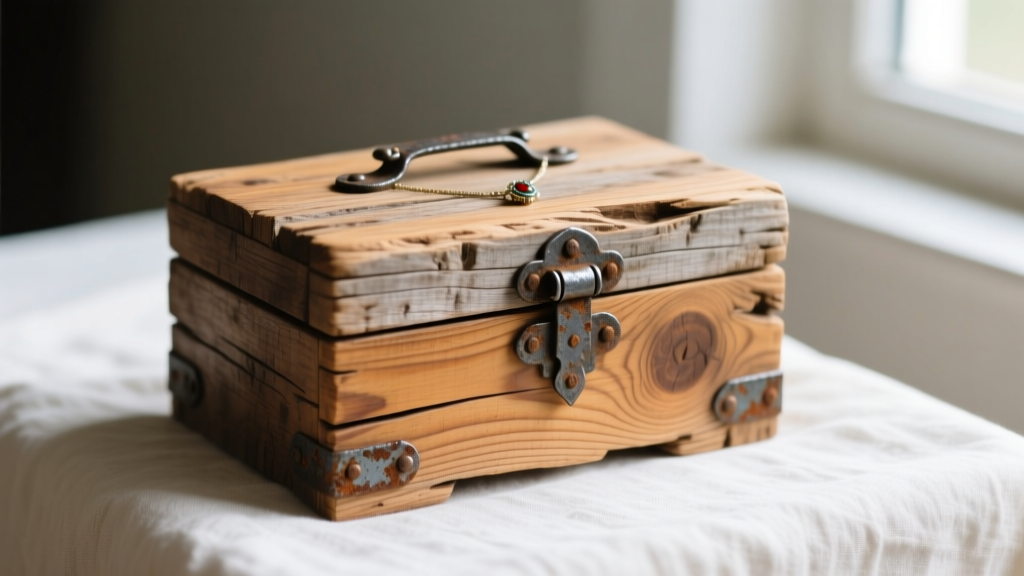
Owning a rustic jewelry box brings a sense of history, warmth, and organic texture to your vanity. Whether crafted from reclaimed barn wood, distressed pine, or salvaged cedar, these storage pieces require a fundamentally different care regimen than modern, high-gloss lacquered boxes. The very imperfections that give a rustic jewelry box its charm—open wood grain, oxidized hardware, and raw timber joints—also make it highly susceptible to environmental damage, moisture warping, and finish degradation.
As a jewelry storage specialist, I frequently see well-meaning owners ruin the patina of antique and rustic pieces by using harsh chemical polishes or excessive moisture. This comprehensive guide will walk you through the exact, museum-grade techniques required to clean, restore, and maintain your rustic jewelry box, ensuring it protects your precious metals and gemstones for generations to come.
Understanding Wood Types and Their Vulnerabilities
Before applying any solvent or wax, you must identify the wood species and the existing finish of your rustic jewelry box. Reclaimed woods are often highly porous and react unpredictably to water-based cleaners.
- Reclaimed Barn Wood (Pine/Fir): Extremely soft and porous. It often harbors decades of dust, soot, and oxidized oils in its deep grain. Over-wetting will cause the wood fibers to swell and splinter.
- Salvaged Oak: Dense and durable, but high in tannins. If exposed to alkaline cleaners or excessive water, oak will experience "tannin bleed," resulting in ugly black or purple stains that are nearly impossible to remove without oxalic acid.
- Aromatic Cedar: Often used for the interior or exterior of rustic boxes to naturally repel moths and insects. Cedar is soft and its natural oils can interfere with certain synthetic topcoats. It should never be sanded aggressively, as this destroys the aromatic terpenes.
Step-by-Step Exterior Wood Cleaning and Restoration
Forget commercial dusting sprays. Silicone-based polishes (like standard Pledge) create a microscopic, non-breathable film that traps dirt and prevents the wood from acclimating to humidity changes. According to finishing experts at Wood Magazine, silicone contamination is the number one enemy of future wood restoration.
Phase 1: Solvent Cleaning
To lift embedded grime without raising the wood grain, use VM&P Naphtha or odorless mineral spirits. Dampen a lint-free cotton cloth with the solvent and wipe the exterior in the direction of the grain. The naphtha will dissolve old, sticky waxes and skin oils without penetrating the wood cells. Allow it to flash off (evaporate) completely, which usually takes about 15 minutes.
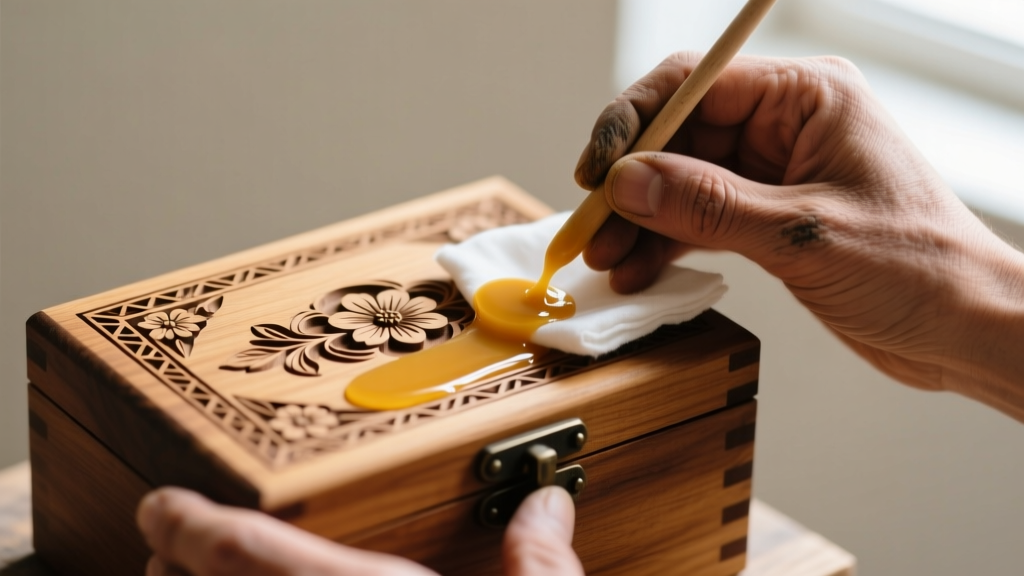
Phase 2: Nourishing and Sealing
Once clean and dry, the wood needs replenishment. For a truly rustic, matte-to-satin finish, apply a blend of beeswax and carnauba, such as Howard Feed-N-Wax or a dedicated microcrystalline wax. Apply a thin, even coat with a soft cloth, let it haze for 20 minutes, and buff it gently. This seals the open pores against humidity while enhancing the natural chatoyance of the reclaimed timber.
Caring for Antique and Distressed Hardware
The hardware on a rustic jewelry box—often blackened iron, forged steel, or oxidized brass—is integral to its aesthetic. The biggest mistake owners make is using abrasive metal polishes (like Brasso) to "clean" the hinges and clasps. This strips away the intentional patina and exposes raw metal to rapid flash-rusting.
The Canadian Conservation Institute recommends stabilizing historic metals rather than aggressively polishing them. If your iron hardware is actively flaking (red rust), you must halt the oxidation process.
| Hardware Material | Patina Status | Recommended Cleaning Agent | Protective Sealant |
|---|---|---|---|
| Blackened Iron / Steel | Stable / Dark | Dry microfiber brush | Renaissance Micro-Crystalline Wax |
| Iron / Steel | Active Red Rust | 0000 Steel Wool + Mineral Oil | Tannic Acid Rust Converter + Wax |
| Oxidized Brass | Verdigris (Green) | Cotton swab + Distilled Water | Renaissance Wax (Thin Layer) |
| Raw Copper | Tarnished Brown | Lemon Juice + Salt (Spot Only) | Beeswax Paste |
To apply Renaissance Wax, use a soft-bristled detailing brush to work the wax into the crevices of the hinges and lock mechanisms. This prevents moisture ingress and ensures the moving parts of your rustic jewelry box operate smoothly without squeaking.
Interior Lining and Fabric Maintenance
The interior of a rustic box is typically lined with velvet, suede, or raw felt to cushion jewelry and prevent scratching. Over time, these fabrics absorb dead skin cells, perfume aerosols, and ambient dust, which can accelerate the tarnishing of the silver and copper stored inside.
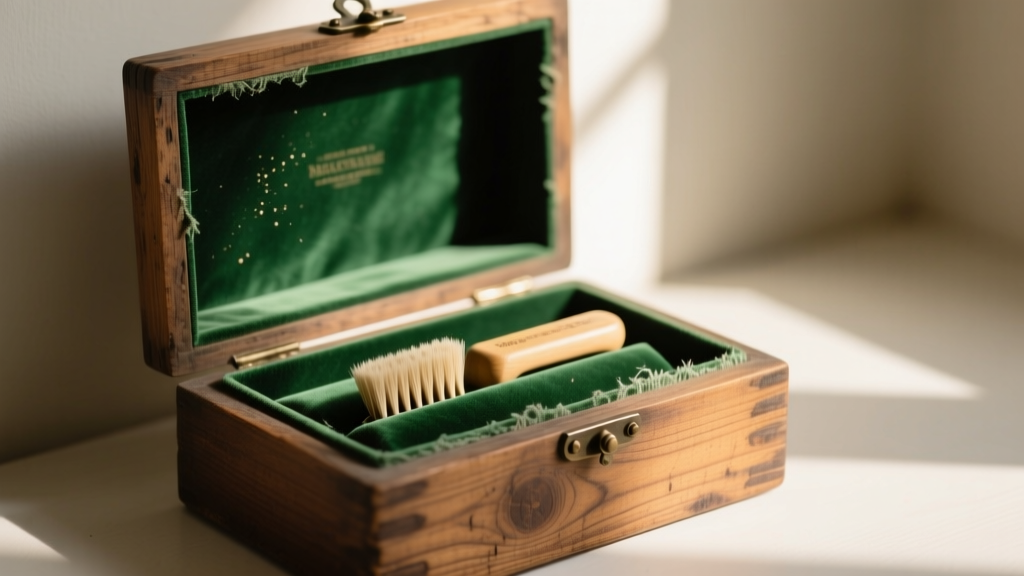
Dry Extraction Techniques
Never use liquid upholstery cleaners on jewelry box linings, as the moisture will seep into the underlying wood substrate, causing warping and hidden mold growth. Instead, use a vulcanized rubber sponge (often called a "soot sponge" or "dry cleaning sponge") to gently dab the velvet. The rubber lifts microscopic dust and oils out of the fabric pile without the need for water.
For stubborn spots, an art gum eraser can be rolled over the fabric. Follow up by vacuuming the interior compartments using a crevice tool wrapped in a piece of sheer nylon pantyhose to prevent accidentally sucking up small earrings or loose stones.
Environmental Control and Preventative Care
Wood is hygroscopic; it absorbs and releases moisture based on the surrounding environment. A rustic jewelry box, especially one made from reclaimed timber with mortise-and-tenon or dovetail joints, will expand and contract with seasonal humidity shifts.
- Humidity Target: Maintain a relative humidity (RH) of 40% to 50% in the room where the box is stored. Dropping below 30% RH in winter can cause the wood panels to shrink and split, while exceeding 65% RH invites wood-boring insects and mold.
- UV Protection: Keep the box out of direct sunlight. UV radiation breaks down the lignin in wood, turning rich, dark reclaimed oak into a washed-out, brittle gray.
- Airflow: Avoid storing the box flush against an exterior wall, which can transfer cold and condensation to the back panel of the box.
Troubleshooting Common Wood and Finish Failures
Sticky or Jammed Drawers
Reclaimed wood drawers often bind during high-humidity summer months as the wood swells. Do not force the drawer, as this will break the delicate wooden runners. Remove the drawer and rub a block of pure paraffin wax or unscented candle wax along the bottom edges of the drawer sides and the interior tracks. This provides dry lubrication without attracting dust like liquid oils do.
White Water Rings on the Finish
If a damp glass leaves a white ring on the top of your rustic jewelry box, the moisture is trapped inside the wax or shellac finish, not the wood itself. Gently rub the spot with a cloth dampened with mineral spirits to dissolve the damaged wax layer, then re-wax the entire top surface to ensure an even sheen.
Tarnish Transfer to Wood
If you store heavily oxidized silver or copper directly against the raw wood interior (without a fabric liner), the sulfur compounds can stain the wood dark gray. Always use a removable anti-tarnish cloth barrier between bare metals and raw, unsealed timber compartments.
By respecting the organic nature of the materials and avoiding harsh modern chemicals, your rustic jewelry box will continue to age gracefully, serving as both a functional sanctuary for your collection and a beautiful piece of functional art.


