How to Restore and Clean a Vintage Style Jewelry Box
Learn expert techniques to clean, restore, and maintain your vintage style jewelry box. Protect wood finishes, brass hardware, and velvet interiors.

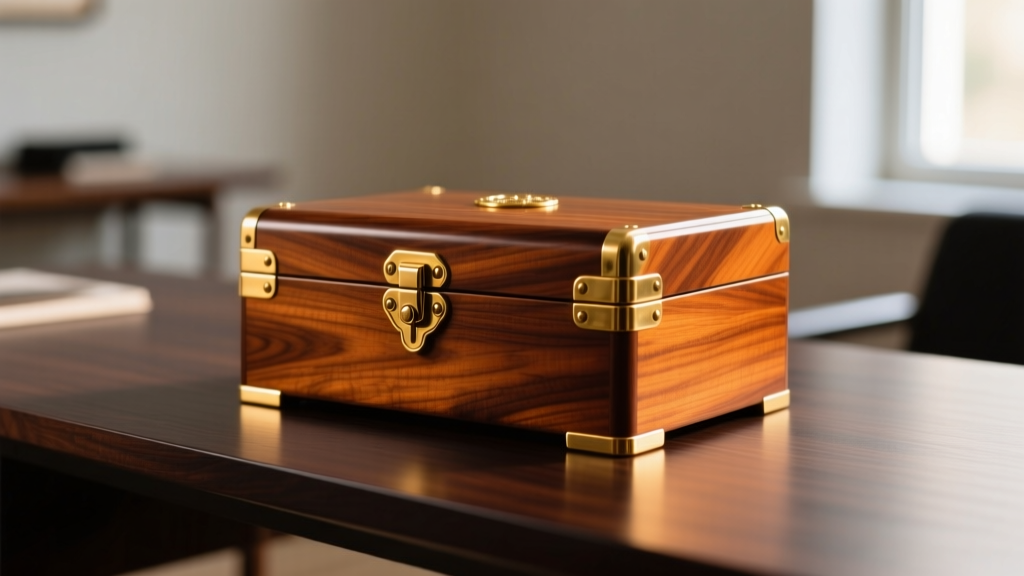
Owning a vintage style jewelry box is about more than just storing your precious metals and gemstones; it is about preserving a piece of functional art. Whether you have inherited a genuine mid-century mahogany valet or invested in a high-quality reproduction with retro aesthetics, these storage pieces require specialized care. The intersection of porous wood, reactive metal hardware, and delicate fabric linings creates a complex maintenance environment. Using the wrong chemical solvent can strip a 1920s shellac finish in seconds, while harsh metal polishes can permanently stain the surrounding wood veneer. This comprehensive guide provides museum-grade conservation techniques adapted for home use, ensuring your vintage style jewelry box remains a safe, beautiful haven for your collection for decades to come.
Understanding the Materials and Failure Modes
Before applying any solvents or polishes, you must identify the specific materials used in your box's construction. According to the Canadian Conservation Institute (CCI), misidentifying a surface coating is the leading cause of irreversible damage to antique wooden objects.
- Wood and Veneers: Common woods include walnut, mahogany, and burl wood. Failure modes include veneer delamination from excess moisture, UV fading, and alligatoring (cracking) of the topcoat.
- Hardware: Vintage boxes typically feature solid brass, bronze, or zinc alloy (pot metal) hinges and clasps. Brass tarnishes due to oxidation and skin oils, while pot metal can suffer from 'zinc pest' (crumbling due to internal corrosion).
- Interiors: Linings are usually cotton velvet, silk, or suede. These materials trap dust, skin cells, and acidic off-gassing from aging adhesives, which can transfer to your jewelry.
Step-by-Step Exterior Wood and Veneer Restoration
Identifying the Topcoat
Vintage boxes generally feature one of three finishes: shellac, nitrocellulose lacquer, or modern polyurethane. You can perform a spot test in an inconspicuous area (like the bottom edge) to determine the finish. Dab a cotton swab with denatured alcohol; if the finish becomes tacky, it is shellac. If alcohol does nothing, test a swab with acetone. If it dissolves, it is lacquer. If neither affects the finish, it is likely a modern polyurethane or varnish.
Safe Cleaning and Polishing Protocols
Avoid aerosol furniture polishes containing silicone. Silicone penetrates micro-cracks in the finish and creates a barrier that prevents future conservation-grade waxes from adhering. Instead, use mineral spirits (white spirit) on a soft, lint-free cotton cloth to gently lift decades of grime, old wax buildup, and nicotine residue. Work in small sections, wiping with the grain. Once the surface is clean and dry, apply a microcrystalline wax, such as Renaissance Wax, or a high-quality carnauba paste wax. Buff gently with a horsehair detailing brush to restore a deep, protective luster without altering the patina.
Reviving Tarnished Brass and Metal Hardware
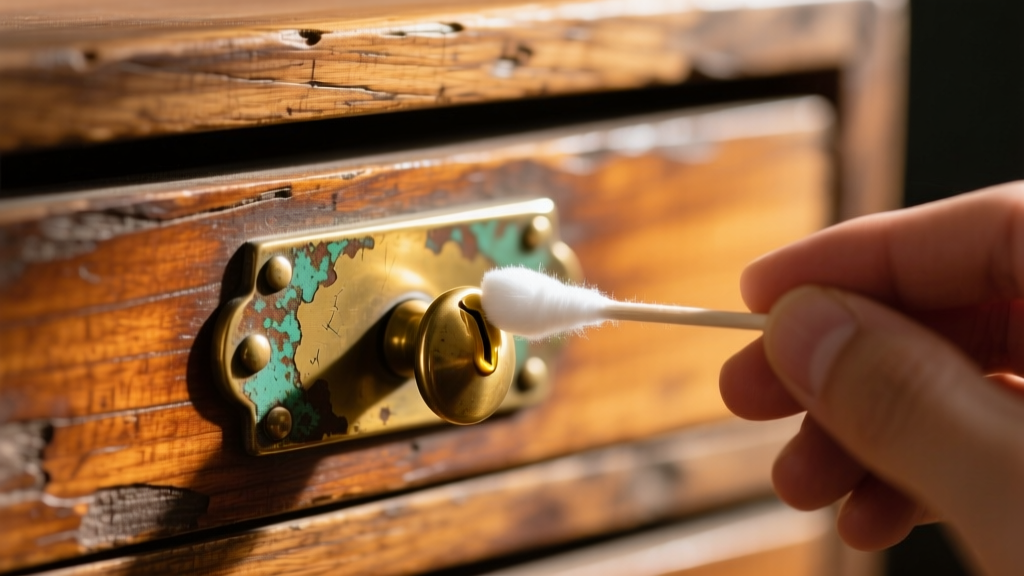
Cleaning the metal hardware on a vintage style jewelry box carries a high risk of collateral damage. Many commercial brass cleaners contain ammonia. If ammonia drips onto raw wood or penetrates a cracked veneer, it reacts with the wood tannins, creating permanent, dark black stains that are nearly impossible to remove without bleaching the wood.
The Masking and Polishing Technique
Always mask the wood immediately surrounding the hardware using low-tack painter's tape (like FrogTape Delicate Surface). For solid brass hardware, apply a non-ammonia polish like Wright's Brass Polish using a cotton swab for precise application. If the hardware has an original factory lacquer coat that is peeling, you must strip it entirely with acetone, polish the bare brass, and seal it with a thin layer of Renaissance Wax to prevent future oxidation.
| Cleaning Agent | Best For | Chemical Base | Risk to Wood |
|---|---|---|---|
| Wright's Brass Polish | Solid brass, routine tarnish | Mild surfactants, no ammonia | Low (if wiped promptly) |
| Brasso | Heavy oxidation on unlacquered brass | Ammonia, mild abrasives | High (causes tannin staining) |
| Renaissance Wax | Sealing polished metal, light dusting | Microcrystalline hydrocarbon | None (protects both metal and wood) |
| Bar Keepers Friend | Stainless steel or chrome accents | Oxalic acid | Extreme (will bleach and burn wood) |
Deep Cleaning Velvet, Suede, and Silk Interiors
The interior of a vintage style jewelry box acts as a micro-environment for your jewelry. Over time, velvet piles crush and trap microscopic debris, while silk can become brittle. Water is the enemy of vintage fabric linings; it causes water spots, crushes velvet fibers permanently, and can reactivate the animal-hide glues used to secure the fabric to the wooden substrate, causing the lining to pull away from the edges.
Dry Extraction Methods
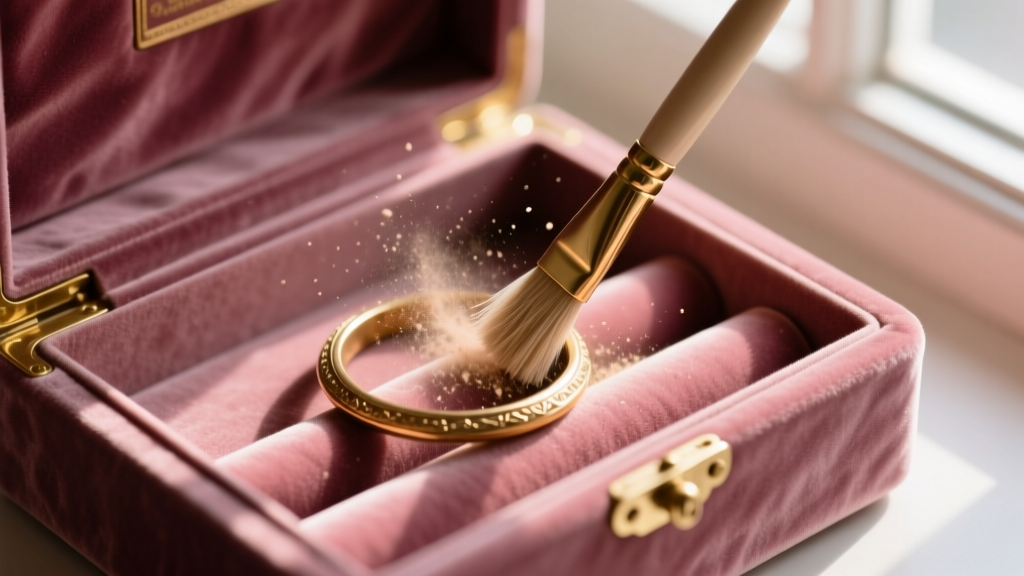
To lift embedded dust and skin oils from velvet ring rolls and necklace pillows, use a clean, white kneaded art eraser. Gently press and roll the eraser over the fabric; it will lift the grime without abrading the delicate fibers. Follow this by lightly brushing the velvet with a soft horsehair brush to restore the pile's upright orientation. For stubborn odors (like mustiness or old perfume), place the open box in a sealed plastic bin with an open box of baking soda or activated charcoal for 48 hours. Ensure the charcoal does not physically touch the fabric to avoid carbon dust transfer.
Upgrading the Anti-Tarnish Properties
Older vintage boxes were often lined with treated flannel or early anti-tarnish papers that have long since lost their efficacy. Silver tarnishes when it reacts with hydrogen sulfide in the air to form silver sulfide. To modernize your vintage style jewelry box without altering its historic interior, integrate passive anti-tarnish solutions.
- 3M Anti-Tarnish Strips: These small, treated paper strips absorb airborne sulfides. Tuck one into the corner of each drawer or compartment. They last for about 6 to 12 months depending on the ambient humidity and how often the box is opened.
- Pacific Silvercloth: If your box has a flat lid area or a large open well, drape a piece of Pacific Silvercloth over your items. This fabric is embedded with microscopic silver particles that sacrifice themselves to tarnish-causing gases before they reach your actual jewelry.
- Silica Gel Packets: Humidity accelerates both metal tarnish and wood warping. Place a few color-indicating silica gel packets in the bottom drawers to maintain a relative humidity (RH) of around 45-50%, which the National Park Service (NPS) identifies as the ideal range for mixed-material collections.
Critical Maintenance Mistakes to Avoid
When caring for a vintage style jewelry box, what you don't do is just as important as what you do. Avoid these common pitfalls:
- Using Glass Cleaner on Mirrors: Many vintage valet boxes feature interior lid mirrors. Spraying Windex directly onto the mirror allows liquid to seep behind the silvering, causing 'mirror rot' (black desilvering spots). Always spray the cloth, not the glass.
- Over-Oiling Moving Parts: If brass hinges squeak, do not use WD-40 or standard machine oil. These attract dust and will eventually seep into the surrounding wood, leaving a permanent dark grease stain. Use a microscopic drop of synthetic PTFE (Teflon) lubricant applied with a toothpick.
- Storing Pearls in Airtight Compartments: Pearls require a slight amount of moisture. Storing them in a sealed, dry vintage box can cause the nacre to crack and craze. Keep pearls in a soft, breathable silk pouch within the box, away from direct contact with metal polishes or acidic wood treatments.
By treating your vintage style jewelry box with the same respect and specialized care as the fine jewelry it holds, you ensure that both the storage piece and your collection remain pristine. Regular, gentle maintenance using conservation-approved materials will preserve the rich history and elegant functionality of your box for the next generation of collectors.


