Blaine's Jewelry Box: A 2026 Storage Trend Analysis
Explore the 2026 quiet luxury storage trend with our deep dive into Blaine's Jewelry Box, analyzing artisan joinery, anti-tarnish tech, and market value.

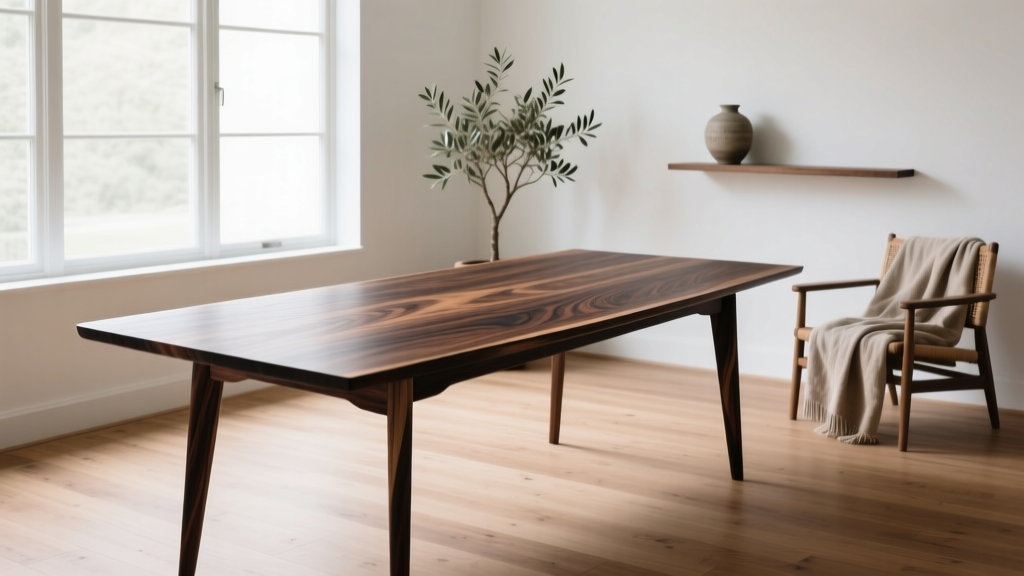
The Shift to Heirloom Storage: Why Blaine's Jewelry Box Dominates 2026
In the evolving landscape of luxury home organization, the year 2026 has definitively marked the end of the 'disposable acrylic' era. Collectors and everyday enthusiasts alike are pivoting toward bespoke, heirloom-grade storage solutions, and at the absolute epicenter of this movement is Blaine's Jewelry Box. What began as a niche custom woodworking studio has blossomed into a defining aesthetic and functional benchmark for the 'quiet luxury' storage trend. Rather than mass-produced, velvet-lined particle board or easily scratched lucite, modern collectors are demanding architectural integrity, advanced metallurgical protection, and sustainable material sourcing. This trend analysis deconstructs the anatomy of Blaine's Jewelry Box, exploring why artisan-crafted storage is no longer just a vessel for jewelry, but a critical component of asset preservation and interior design.
The 'Quiet Luxury' Storage Movement
The macro-trend of quiet luxury—characterized by understated elegance, exceptional craftsmanship, and an absence of loud branding—has fully permeated the jewelry storage market. Blaine's Jewelry Box exemplifies this ethos. Instead of ostentatious gold-plated locks and glossy polyurethane finishes, the brand focuses on the tactile experience of solid hardwoods, hand-rubbed hardwax oils, and precision-machined solid brass hardware. According to recent interior design market reports, high-net-worth individuals are increasingly treating their jewelry storage with the same reverence as their timepieces or fine art. A Blaine's box is not hidden in a closet; it is displayed on a primary suite vanity or dressing room island, serving as a functional sculpture that signals a deep respect for the valuables it houses.
Deconstructing the Craft: Materials and Joinery
To understand the premium pricing and extensive waitlists associated with Blaine's Jewelry Box in 2026, one must examine the underlying woodworking and material science. The structural integrity of a jewelry box dictates its lifespan, especially when subjected to the micro-climate fluctuations of a modern home.
Exotic Veneers vs. Solid Hardwoods
While many luxury brands rely on MDF (medium-density fiberboard) wrapped in exotic wood veneers to keep costs down and prevent warping, Blaine's commitment to solid, kiln-dried hardwoods sets it apart. The primary carcases are typically constructed from North American Black Walnut or Figured Hard Maple, meticulously acclimated to a moisture content of 6-8%. This precise moisture control is critical; wood that is too dry will crack in winter humidity drops, while wood that is too moist will warp and bind drawers in the summer. By utilizing traditional hand-cut dovetail joinery and mortise-and-tenon techniques for the internal drawer dividers, Blaine's boxes accommodate natural wood expansion and contraction without relying on metal fasteners or synthetic adhesives that can off-gas and damage sensitive gemstones over time.
The Anti-Tarnish Lining Standard
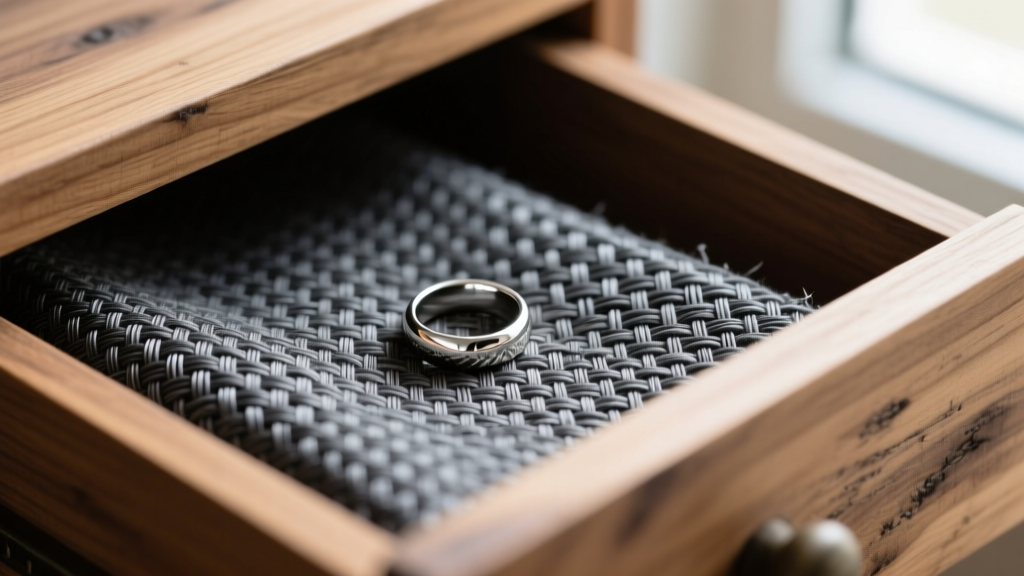
The most critical failure point in mass-market jewelry storage is the interior lining. Many brands use 'tarnish-resistant' felt, which is often just standard polyester treated with a temporary chemical wash that degrades within 18 months. Blaine's Jewelry Box utilizes genuine Pacific Silvercloth, a specialized material that actively intercepts tarnish-causing gases. According to the American Institute for Conservation (AIC), silver tarnish is primarily caused by hydrogen sulfide and sulfur dioxide in the ambient air, which react with silver to form silver sulfide. Pacific Silvercloth embeds microscopic silver particles into a 100% cotton flannel matrix. These embedded particles act as a sacrificial anode, absorbing the sulfur compounds before they can reach your jewelry. This means the lining itself will eventually turn brown, but your sterling silver and white gold will remain pristine for decades.
Blaine's vs. Mass-Market: A 2026 Specification Comparison
To contextualize the artisan premium, we must compare the technical specifications of a bespoke Blaine's Jewelry Box against both high-end mass-market alternatives and budget acrylic organizers. The data reveals a stark contrast in longevity and material safety.
| Feature | Blaine's Artisan Box | Premium Mass-Market (e.g., Wolf) | Budget Acrylic / Fast Fashion |
|---|---|---|---|
| Carcase Material | Solid Kiln-Dried Walnut/Maple | MDF with Exotic Veneer | Injection-Molded Polystyrene |
| Joinery | Hand-Cut Dovetails & Splines | Glued Miters & Pin Nails | Solvent Welding / Snap-Fit |
| Interior Lining | Pacific Silvercloth / Alcantara | Treated Poly-Felt / PU Leather | Standard Polyester Felt |
| Hardware | Solid Brass Quadrant Hinges | Plated Steel / Zinc Alloy | Integrated Plastic Hinges |
| Finish | Rubio Monocoat (Hardwax Oil) | Polyurethane / Lacquer | None (Gloss Mold Finish) |
| Est. Price Range | $1,200 - $3,500+ | $400 - $900 | $25 - $80 |
Functional Design: Solving the Modern Collector's Dilemma
A beautiful box is useless if it damages the collection it holds. The Gemological Institute of America (GIA) consistently warns against storing disparate gemstones and metals together due to the Mohs scale of mineral hardness. Diamonds, ranking at a 10, will effortlessly scratch the surface of 18k gold (which ranks around 2.5 to 3) or softer stones like opals and turquoise if they are allowed to touch in a shared compartment.
Watch Winders and Heavy Chain Management
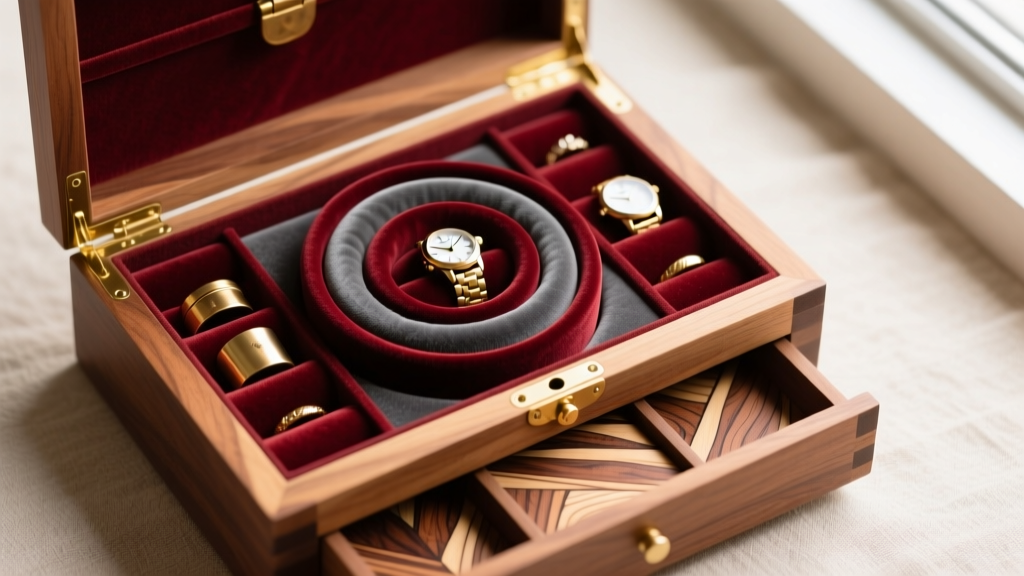
Blaine's Jewelry Box addresses these physical realities with hyper-specific interior architecture. The ring rolls are spaced precisely 1.2 inches apart, ensuring that even oversized cocktail rings cannot make contact with adjacent bands. For heavy chain management—a notorious pain point for collectors of layered gold necklaces—the boxes feature individual, felt-lined snake-chain drops that hang vertically, completely eliminating the friction and tangling that occurs when chains are laid flat in shallow drawers. Furthermore, the dedicated watch cuffs are dimensioned to accommodate modern oversized dive watches (up to 44mm case diameters) without requiring the user to unbuckle the leather straps, thereby preventing premature creasing and strap degradation.
Investment Value and Resale Market Trends
An emerging trend in 2026 is the secondary market for bespoke woodworking. Unlike mass-produced luxury boxes which lose 50% of their value the moment they are unboxed, a well-maintained Blaine's Jewelry Box holds its value remarkably well, and in some cases, appreciates. Because the studio operates on a limited-commission basis, secondary buyers are often willing to pay a 15% to 20% premium on platforms like 1stDibs or specialized horology forums to bypass the 8-month waitlist for a custom commission. The use of solid brass hardware, which develops a rich, living patina over time rather than flaking or peeling like plated alternatives, adds to the vintage appeal. Collectors view these boxes not as depreciating household goods, but as functional antiques in the making.
Final Verdict: Is the Artisan Premium Justified?
From a pure style and trend analysis perspective, Blaine's Jewelry Box is the definitive standard-bearer for the 2026 heirloom storage movement. The shift away from synthetic, mass-produced organizers toward sustainable, chemically safe, and structurally sound woodworking reflects a broader consumer awakening regarding asset preservation. When you factor in the cost of replacing tarnished silver, restringing knotted pearl necklaces, or polishing micro-scratches out of high-karat gold caused by improper storage, the initial investment in a Blaine's box quickly transitions from a luxury expense to a pragmatic insurance policy for your collection. For the serious collector who views their jewelry as both an art form and a financial asset, the quiet luxury of artisan joinery and advanced anti-tarnish technology is not just a trend—it is an absolute necessity.


