Master Your Rotating Jewelry Box: Step-by-Step Organization
Learn how to maximize space and prevent tangles with our step-by-step guide to organizing a rotating jewelry box for necklaces, rings, and earrings.

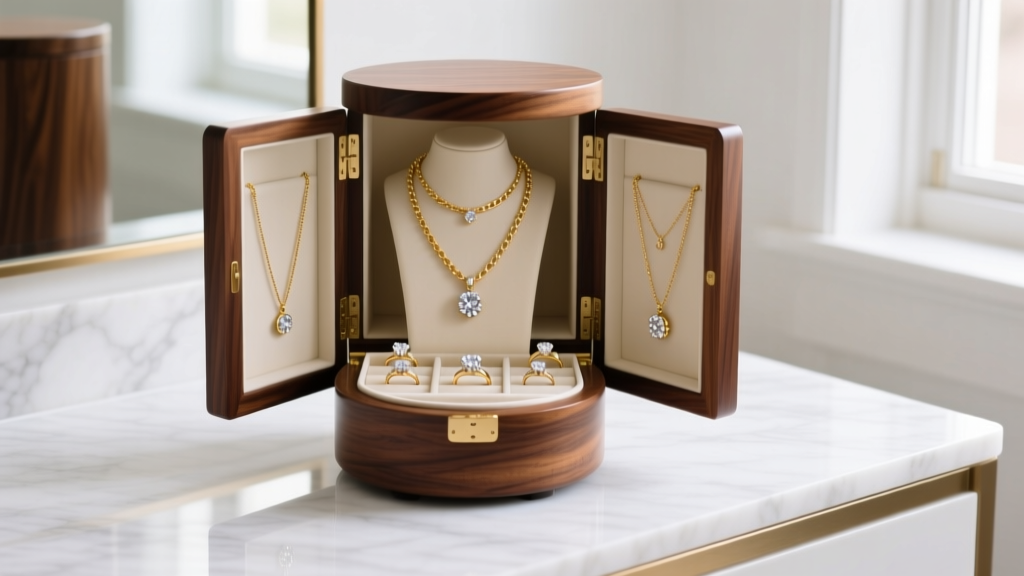
A rotating jewelry box is a masterpiece of functional storage, offering 360-degree access to your collection while minimizing the footprint on your vanity. However, the vertical nature of these carousels introduces unique organizational challenges. Improper weight distribution can cause the central bearing to warp, while overcrowded hooks lead to the dreaded chain tangle. In 2026, modern rotating towers feature advanced lazy-susan mechanics and specialized microfiber linings, but they still require a strategic approach to loading and maintenance.
This comprehensive, step-by-step guide will teach you how to audit, map, and maintain your rotating jewelry box to ensure smooth operation and pristine condition for your most valued pieces.
The Anatomy and Mechanics of a Rotating Tower
Before organizing, you must understand the physical limitations of your storage unit. Most mid-range to premium rotating jewelry boxes (priced between $80 and $250) are constructed from an MDF (Medium-Density Fiberboard) core wrapped in a wood veneer or PU leather. The critical component is the central rotating mechanism—typically a steel ball-bearing lazy susan or a high-density plastic bushing.
Steel bearings offer a smoother glide and support up to 35 pounds of dynamic weight, whereas plastic bushings are prone to micro-fractures if subjected to uneven, top-heavy loads. Understanding your box's core mechanics dictates how you will distribute your collection across its tiers.
Step 1: Audit and Categorize by Weight and Metal
Empty your rotating jewelry box completely. The first step to effective organization is categorizing your pieces not just by type, but by weight and metal composition. According to the Gemological Institute of America (GIA), storing different metals and gemstones together can lead to micro-scratches and galvanic corrosion if humidity is present.
- Heavy Items (Over 50g): Solid gold bangles, thick Cuban link chains, and chunky gemstone cuff bracelets.
- Medium Items (15g - 50g): Standard silver chains, hoop earrings, and cocktail rings.
- Lightweight Items (Under 15g): Delicate 14k gold lariat necklaces, diamond studs, and thin stacking rings.
Separate your sterling silver from your yellow and rose gold. Silver tarnishes faster and requires specific anti-tarnish environments, which we will address in Step 3.
Step 2: Strategic Zone Mapping and Weight Distribution
The most common failure mode of a rotating jewelry box is a "topple" or a warped central axis caused by top-heavy loading. You must map your zones from the bottom up to maintain a low center of gravity.
| Tier Level | Item Category | Weight Limit per Side | Hook/Storage Type |
|---|---|---|---|
| Base Drawers | Heavy bangles, watches, loose gemstones | N/A (Supported by base) | Velvet-lined dividers |
| Lower Carousel | Thick chains, statement necklaces | Max 200g per hook | Deep-set brass hooks |
| Middle Carousel | Standard pendants, drop earrings | Max 100g per hook | Standard steel hooks |
| Upper Carousel | Delicate chains, stud earrings | Max 50g per hook | Micro-slits and pin mounts |
Always balance the carousel. If you hang a heavy 18k gold chain on the front-left hook of the middle tier, place a similarly weighted item on the back-right hook to keep the rotational axis perfectly plumb.

Step 3: Implementing Anti-Tarnish and Humidity Control
Because rotating boxes are often open-air or feature slatted doors, your jewelry is exposed to ambient humidity and sulfur compounds in the air. The Jewelers of America emphasizes that proactive tarnish prevention is far superior to abrasive polishing, which removes microscopic layers of precious metal over time.
Integrating Tarnish Inhibitors
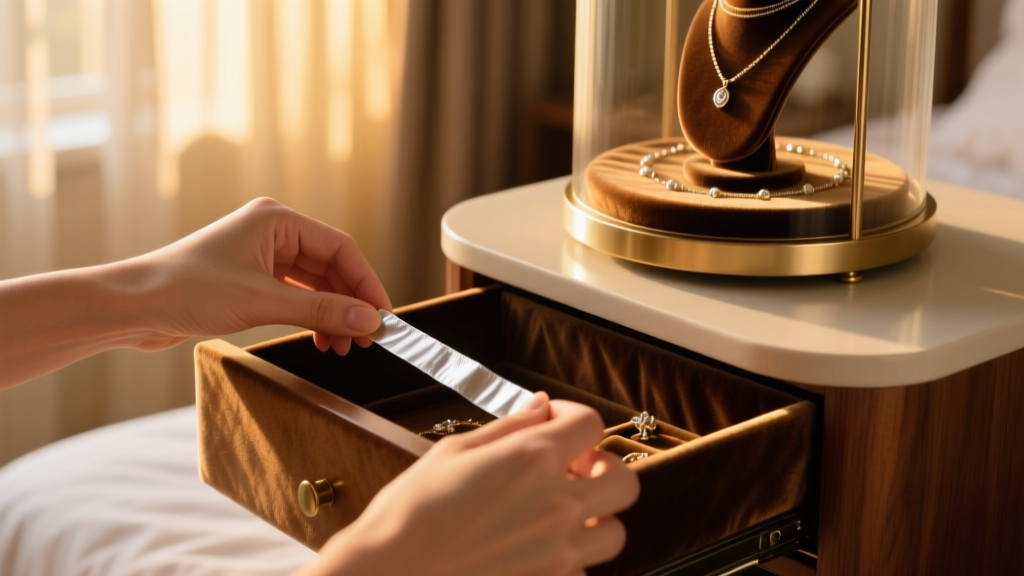
For the enclosed drawers at the base of your rotating tower, line the bottom with 3M Pacific Silvercloth. This specialized cotton fabric is embedded with microscopic silver particles that intercept and absorb sulfur gases before they reach your sterling silver jewelry. Cut the cloth to fit the drawer dimensions using pinking shears to prevent fraying.
For the open-air hanging tiers, tuck small, breathable silica gel desiccant packets into the structural corners of the carousel shelves. Replace these packets every six months to ensure they remain active and continue drawing moisture away from your pearl and opal pieces, which are highly susceptible to dehydration and cracking.
Step 4: Routine Maintenance and Bearing Care
A rotating jewelry box requires mechanical maintenance to preserve its signature smooth glide. Over time, dust, pet hair, and skin oils accumulate in the lazy-susan track, causing friction and squeaking.
Expert Tip: Never use WD-40 on a jewelry box bearing. The volatile solvents will degrade the wood veneer glue and leave a residue that attracts more dust. Instead, use a dry PTFE (Teflon) lubricant.
Every four months, lift the carousel slightly (if your model allows for track access) or use a can of compressed air to blow out the central bearing crevice. Apply a single drop of Super Lube PTFE synthetic grease to the ball track. Rotate the box slowly for two full minutes to distribute the lubricant evenly, then wipe away any excess with a lint-free microfiber cloth.
Troubleshooting Common Rotating Box Issues
Even with meticulous organization, you may encounter mechanical or structural quirks. Here is how to diagnose and fix the most prevalent issues:
1. The Carousel Wobbles During Rotation
Diagnosis: Uneven weight distribution or a warped MDF base caused by moisture exposure.
Fix: Rebalance your hanging items according to the Zone Mapping table above. If the wobble persists, check the four screws securing the lazy-susan plate to the wooden base. Tighten them with a Phillips-head screwdriver, ensuring not to overtighten and strip the MDF threads.
2. Doors Sag and Scrape the Shelves
Diagnosis: The brass piano hinges or side-mount hinges have loosened under the weight of the acrylic or glass door panels.
Fix: Remove the doors entirely. Fill the stripped screw holes with a mixture of wood glue and toothpicks. Let it cure for 24 hours, then re-drill pilot holes and reattach the hinges. This restores the structural bite of the screws.
3. Velvet Lining is Peeling or Fraying
Diagnosis: Degradation of the adhesive backing due to heat or age.
Fix: Carefully peel back the fraying velvet. Apply a thin, even layer of flexible fabric glue (such as Aleene's Fabric Fusion) to the MDF backing. Press the velvet down and use binder clips to hold it in place while it cures overnight.
Final Thoughts on Rotating Storage
Mastering your rotating jewelry box is about blending aesthetic display with mechanical sympathy. By respecting the weight limits of your hooks, balancing the central axis, and integrating modern anti-tarnish solutions, you transform a simple storage unit into a high-functioning vault. Take the time this weekend to audit your collection, remap your tiers, and service the bearing. Your jewelry will remain untangled, pristine, and effortlessly accessible for years to come.