Precious Moments Jewelry Box Buying Guide: 2026 Collector's Tips
Discover our 2026 Precious Moments jewelry box buying guide. Learn to evaluate porcelain quality, musical movements, and anti-tarnish storage solutions.

The Dual Nature: Collectible Art vs. Functional Storage
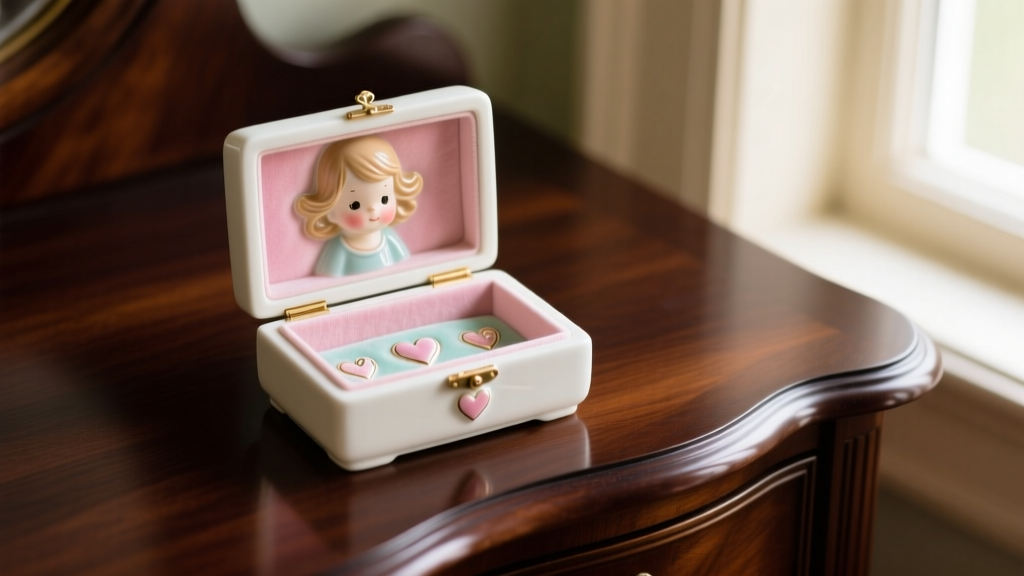
When browsing the secondary market or estate sales for a precious moments jewelry box, buyers are often caught between two distinct motivations: the emotional appeal of Samuel Butcher’s iconic teardrop-eyed porcelain art, and the practical need for jewelry organization. As we navigate the 2026 collectibles market, these ceramic and porcelain keepsakes continue to hold significant sentimental and monetary value. However, treating a delicate bisque porcelain figurine box as a daily-use jewelry organizer requires a deep understanding of material science, humidity control, and mechanical maintenance.
Unlike modern acrylic or vegan leather jewelry organizers, a Precious Moments piece was primarily engineered as a decorative art object. The jewelry storage aspect is often secondary. This buying guide will dissect exactly what to look for when evaluating these pieces, ensuring you secure a functional storage solution that won't compromise your precious metals or the structural integrity of the porcelain itself.
Material Inspection: Porcelain, Glaze, and Structural Integrity
The foundation of any authentic Precious Moments piece is its ceramic or porcelain body. When inspecting a potential purchase, you must first determine the finish type, as this dictates how the box will interact with your jewelry and the surrounding environment.
Bisque vs. High-Gloss Glaze
Many vintage Precious Moments boxes feature a bisque (unglazed) porcelain finish. While this provides the signature matte, skin-like texture of the figurines, bisque is inherently micro-porous. In humid environments, unglazed porcelain can absorb ambient moisture. If you store sterling silver or copper jewelry inside a bisque box kept in a humid bathroom or basement, the trapped moisture will accelerate oxidation and tarnishing.
Conversely, high-gloss glazed boxes offer a non-porous barrier. While easier to dust and less prone to absorbing moisture, glazed pieces are highly susceptible to 'crazing'—a network of fine cracks in the glaze that occurs when the ceramic body and the glaze expand and contract at different rates over decades of temperature fluctuations. When inspecting a glazed box, use a jeweler's loupe or your smartphone's macro lens to check the interior rim and lid edges for crazing, which can harbor dust and degrade the interior adhesive over time.
Interior Evaluation: Lining, Adhesives, and Tarnish Risks
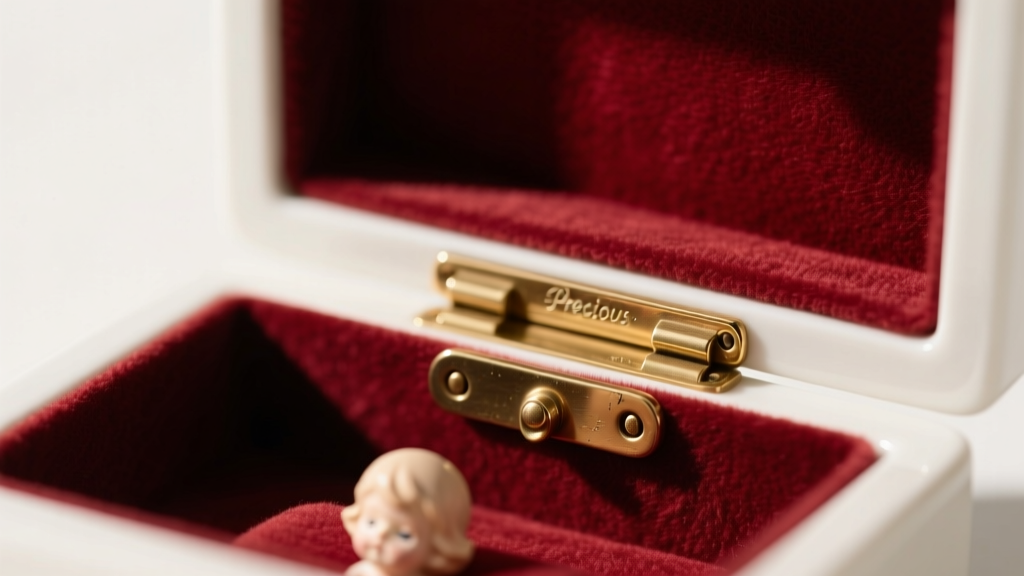
The interior of a Precious Moments jewelry box is where the piece transitions from art to functional storage. Most factory-original boxes from the 1980s and 1990s were lined with a thin layer of polyester felt or flocked paper, adhered directly to the ceramic base.
The Adhesive Breakdown Problem
A critical flaw in vintage ceramic jewelry boxes is the degradation of the lining adhesive. Over 20 to 30 years, the rubber-based glues used to secure the felt lining dry out, off-gas volatile organic compounds (VOCs), and turn into a sticky, acidic residue. If this degraded adhesive seeps through the felt, it can cause irreversible chemical burns on delicate gemstones like pearls and opals, and rapidly tarnish silver. When buying vintage, always press firmly on the interior lining. If it feels tacky, or if you detect a sharp, chemical odor, the box requires immediate professional relining before it is safe for jewelry storage.
Upgrading for Anti-Tarnish Protection
Because ceramic boxes do not 'breathe' like wood or fabric organizers, they can create a micro-climate that traps sulfur compounds and moisture. To safely store silver in a Precious Moments box, you must introduce an active anti-tarnish agent. We recommend placing a small square of 3M Pacific Silvercloth or a Hagerty anti-tarnish strip beneath the felt lining. These materials actively absorb airborne sulfides, neutralizing the primary catalyst for silver oxidation without altering the aesthetic of the vintage interior.
Musical Movements: The Sankyo 18-Note Mechanism
A significant percentage of Precious Moments jewelry boxes produced between 1981 and 2005 feature integrated musical movements, predominantly manufactured by the Sankyo Seiki corporation of Japan. The standard mechanism is the 18-note wind-up movement, usually playing recognizable lullabies or classical snippets like 'Für Elise' or 'Brahms' Lullaby'.
When testing a musical box on the secondary market, follow this strict evaluation protocol:
- The Winding Test: Gently turn the brass winding key on the underside. You should feel smooth, consistent resistance. Stop winding the moment you feel a hard stop. Forcing an overwound Sankyo movement will snap the mainspring, a repair that often costs more than the box's secondary market value.
- The Governor Check: As the music plays, listen for a rapid, erratic clicking sound or sudden tempo shifts. This indicates that the centrifugal governor (the fan that regulates the speed of the cylinder) is bent or lacking its original lubrication.
- The Stop-Pin Mechanism: Open and close the lid. The music should immediately cease when the lid is closed, triggered by a small brass stop-pin engaging the movement's lever. If the music continues with the lid shut, the pin is misaligned, which will drain the mainspring and cause mechanical fatigue.
Sizing and Capacity Matrix: What Actually Fits?
One of the most common mistakes buyers make is overestimating the storage capacity of figurine jewelry boxes. The sculptural nature of the lid and the thick porcelain walls severely limit the interior footprint. Below is a functional capacity matrix based on standard Precious Moments box dimensions.
| Box Style | Avg Interior Dimensions | Optimal Jewelry Types | Storage Warnings |
|---|---|---|---|
| Figurine Base (Small) | 2.5" x 2.0" x 1.5" | Stud earrings, single rings | Too shallow for drop earrings or pendants; chains will tangle. |
| Oval / Heart Hinged Box | 4.0" x 3.0" x 2.0" | Rings, hoop earrings, short chains | Curved walls reduce corner space; avoid storing rigid bangles. |
| Rectangular Music Box | 5.5" x 4.0" x 2.5" | Bracelets, long necklaces, brooches | |
| Lift-Lid Keepsake Chest | 6.0" x 4.5" x 3.5" | Watches, large statement pieces | Lid seals are often loose; high risk of dust ingress over time. |
Authenticating Your Precious Moments Piece
The secondary market is saturated with reproductions and 'Precious Moments-style' ceramics. Authenticating a genuine piece requires examining the maker's mark, typically stamped or painted on the underside of the base. According to antique valuation experts at Kovels, the authentic Precious Moments mark features the brand name in a specific script, often accompanied by a heart symbol or a production year code.
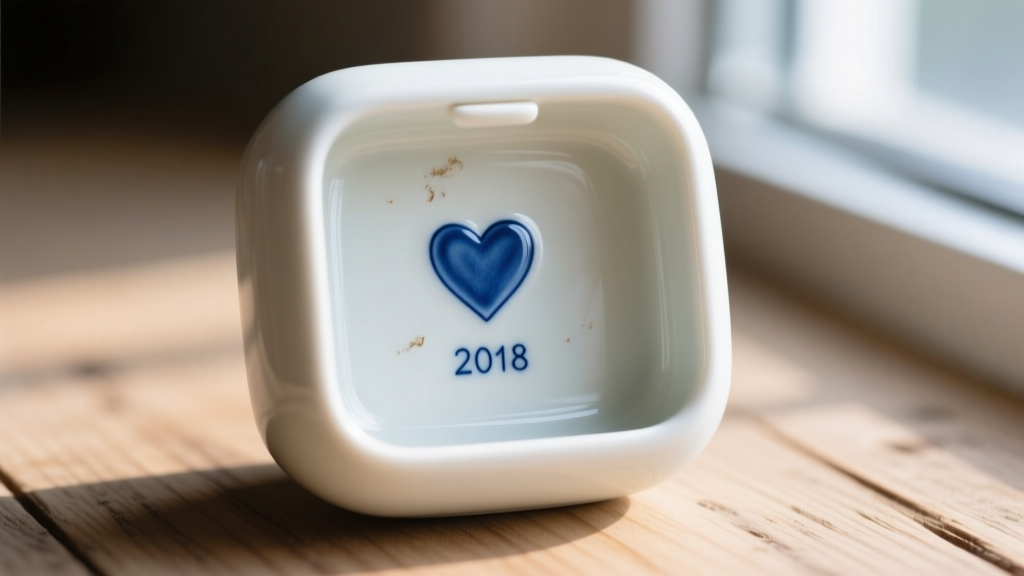
Starting in 1981, Precious Moments introduced annual production symbols to help collectors date their pieces. For example, a small heart indicates 1981, a bow tie indicates 1982, and a triangle indicates 1986. Later years feature more complex symbols, such as a chapel for 1993 or a specific leaf motif for the 2000s. Cross-referencing these stamps with databases like Replacements, Ltd. is crucial for verifying the age and provenance of vintage music boxes, which directly impacts their collectible value.
Maintenance and Humidity Control for Long-Term Storage
To preserve both the porcelain art and the jewelry within, environmental control is non-negotiable. Never store a Precious Moments jewelry box in direct sunlight; UV radiation will yellow the vintage polyester linings and fade the hand-painted bisque details. Furthermore, avoid placing the box near HVAC vents or exterior windows, as rapid temperature swings will stress the ceramic body and weaken the glue holding the musical movement to the base.
For long-term storage, place a small, non-acidic silica gel desiccant packet inside the box to manage ambient humidity, and polish your silver pieces with a microfiber cloth before sealing them inside. By respecting the material limitations and mechanical quirks of these beloved collectibles, you can safely utilize a Precious Moments jewelry box as both a cherished heirloom and a protective sanctuary for your most delicate accessories.


