Mannequin Jewelry Display: Technical Material & Design Guide
Explore the technical specifications, anti-tarnish fabrics, and structural engineering behind professional mannequin jewelry displays for retail and archives.

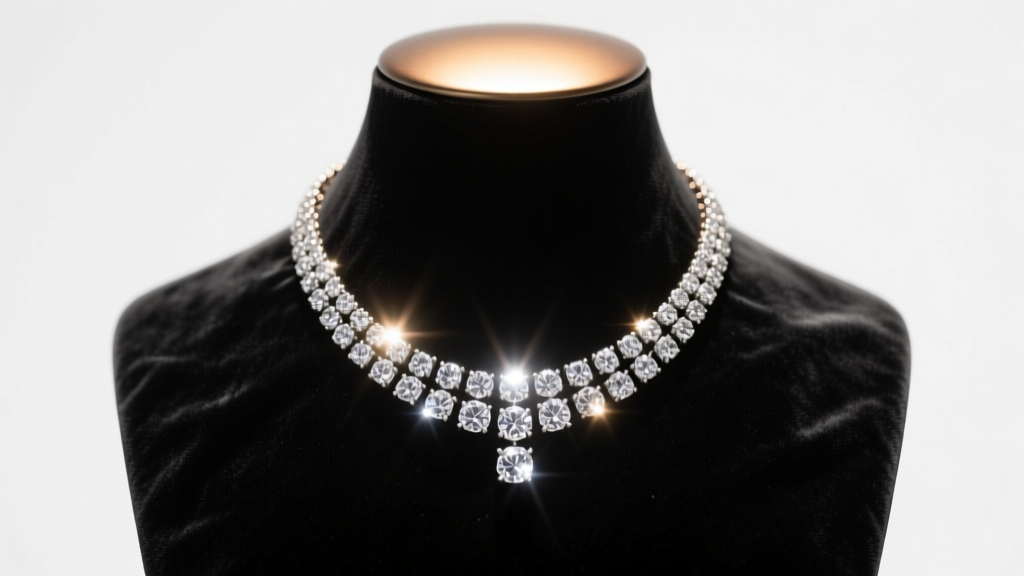
The Engineering Behind High-End Mannequin Jewelry Displays
In the realm of high-end retail and archival conservation, a mannequin jewelry display is far more than a passive prop; it is a highly engineered micro-environment. Standard acrylic or cheaply molded plastic busts often introduce volatile organic compounds (VOCs) that accelerate metal oxidation, while poorly calculated shoulder slopes subject heavy chains to destructive shear forces. For serious collectors, museum curators, and luxury boutique owners, selecting the correct display architecture requires a deep understanding of material science, ergonomic weight distribution, and optical lighting limits. This guide deconstructs the technical specifications required to protect and properly showcase fine jewelry.
Material Science: Core Foams and Off-Gassing Risks
The internal core of a jewelry bust dictates its archival safety. The most common failure mode in mid-tier displays is the use of standard polyurethane (PU) foam. Over time, PU foam degrades via hydrolysis, releasing acidic gases and sulfur compounds that react with silver and copper alloys to form silver sulfide (Ag2S) and copper oxide. This off-gassing can cause severe tarnishing on sterling silver and low-karat gold pieces within weeks, even in climate-controlled rooms.
Archival Alternatives: Polyethylene and Carved Basswood
To mitigate chemical degradation, professional-grade mannequin jewelry displays utilize chemically inert, closed-cell polyethylene (PE) foams, such as Ethafoam, or solid carved basswood. According to the American Institute for Conservation (AIC), closed-cell PE foams do not off-gas harmful plasticizers and remain structurally stable across a wide range of humidity levels. These cores are typically carved using CNC routers to achieve precise anatomical contours before being wrapped in barrier fabrics.
| Core Material | Archival Safety | Durability | Cost Factor |
|---|---|---|---|
| Polyurethane (PU) Foam | Poor (High VOC/Acid Off-Gassing) | Low (Degrades in 3-5 Years) | $ |
| Polyethylene (PE) Foam | Excellent (Chemically Inert) | High (Resists Compression) | $$$ |
| Carved Basswood | Good (Requires Sealing) | Exceptional (Generational) | $$$$ |
| Injection-Molded ABS | Moderate (Stable but Hard) | High (Impact Resistant) | $$ |
Surface Textiles: Anti-Tarnish Technologies
The outer layer of a mannequin jewelry display serves as the primary physical and chemical barrier between the environment and the jewelry. While standard velvet looks luxurious, it offers zero chemical protection. Professional displays rely on advanced metallurgical textiles.
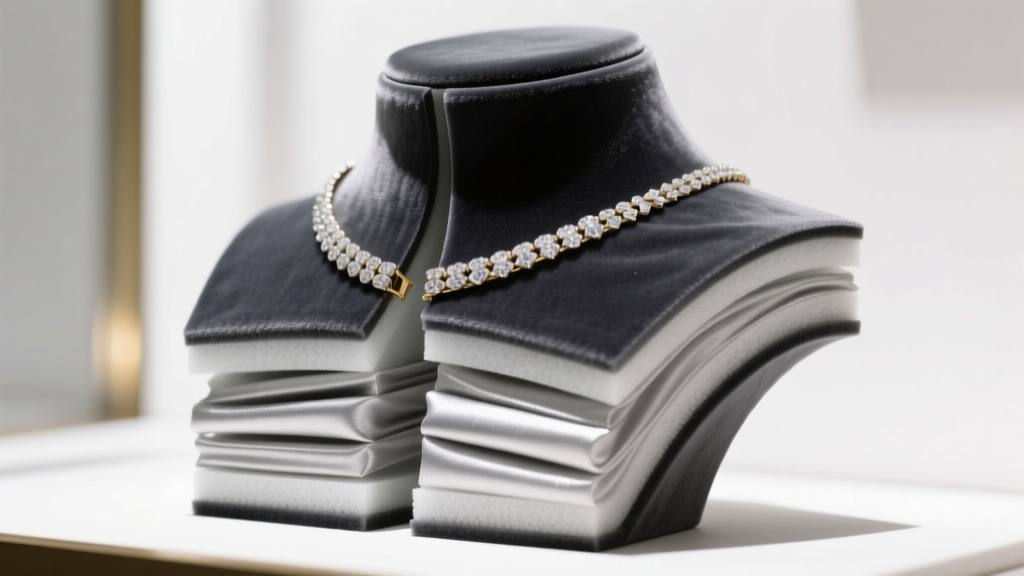
Pacific Silvercloth vs. Treated Microfiber
Pacific Silvercloth, a proprietary fabric originally developed by Hagerty, embeds microscopic silver particles directly into the cotton flannel weave. These particles act as sacrificial anodes; they oxidize and tarnish in place of the displayed jewelry, effectively neutralizing airborne hydrogen sulfide. However, this fabric has a finite lifespan. Once the embedded silver particles are fully oxidized—typically within three to five years in high-traffic retail environments—the fabric must be replaced, as it cannot be washed or chemically re-treated without destroying the active silver matrix.
Alternatively, modern archival microfibers are treated with proprietary zinc-based tarnish inhibitors. These fabrics absorb corrosive gases and are highly effective for protecting gold, platinum, and silver, though they require strict dry-cleaning protocols to maintain their chemical efficacy.
Structural Ergonomics: Shoulder Drop and Weight Distribution
The geometry of a mannequin bust directly impacts the physical integrity of heavy necklaces. Standard retail mannequins feature a shallow shoulder slope (approximately 15 to 20 degrees). When a heavy piece, such as a 150-gram solid gold chain or a multi-carat diamond riviere, is placed on this slope, gravity exerts continuous lateral shear force, pulling the chain toward the sternum.
When a heavy chain rests on a standard 20-degree shoulder slope, gravity exerts continuous lateral shear force on the clasp and bail. Over time, this leads to metal fatigue, prong loosening, and catastrophic bail failure. A contoured 45-degree clavicle shelf neutralizes this vector.
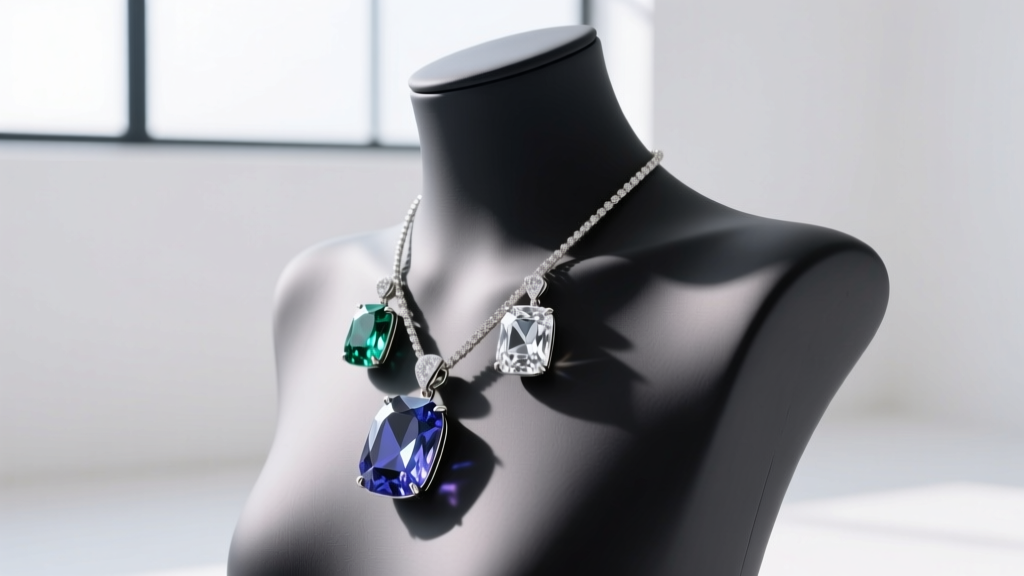
The Clavicle Shelf and Articulated Joints
High-end displays solve this physics problem by incorporating a pronounced 45-degree shoulder drop or a built-in 'clavicle shelf.' This anatomical contour catches the chain, distributing the weight evenly across the upper chest and eliminating downward drag on the pendant bail. For ultra-heavy high jewelry pieces, some custom fabricators utilize articulated silicone or memory-foam joints that can be manually adjusted to cradle specific necklace lengths, ensuring the centerpiece gemstone rests perfectly flat against the sternum without buckling.
Lighting Integration and UV Degradation Limits
How a mannequin jewelry display is illuminated is just as critical as its physical construction. Poor lighting not only misrepresents gemstone color but can cause irreversible thermal and photochemical damage to organic materials.
CRI, Lux Limits, and Thermal Management
Retailers must prioritize LED fixtures with a Color Rendering Index (CRI) of 95 or higher to ensure accurate color grading of sapphires, emeralds, and rubies. However, intensity must be strictly regulated. The Canadian Conservation Institute provides strict lux guidelines that must be adapted for jewelry displays:
- Diamonds, Rubies, Sapphires, and Platinum: Can tolerate up to 5000 lux, though 1000-2000 lux is preferred to reduce glare.
- Emeralds and Treated Gemstones: Limit to 300 lux to prevent thermal degradation of fracture-filling oils and resins.
- Organic Materials (Pearls, Amber, Ivory, Tortoiseshell): Strict limit of 50 lux. Prolonged exposure to higher lux levels causes severe dehydration, crazing, and irreversible yellowing.
Furthermore, UV output must be filtered to below 75 microwatts per lumen. Never integrate halogen or incandescent lighting directly into the base of a mannequin display, as the radiant heat will rapidly dry out the surrounding textiles and damage heat-sensitive gemstones like opals.
Sourcing Tiers and Archival Maintenance Protocols
Procuring the correct mannequin jewelry display requires matching your budget to your conservation needs. Below is a breakdown of the current market tiers for professional displays.
| Tier | Price Range | Core & Fabric Specs | Best Use Case |
|---|---|---|---|
| Commercial Entry | $25 - $60 | PU Foam / Standard Velvet | Short-term fashion jewelry, high-turnover costume pieces. |
| Boutique Mid-Tier | $90 - $250 | PE Foam Blend / Treated Microfiber | Independent jewelers, daily retail display of 14k/18k gold. |
| Museum Archival | $400 - $1,200+ | CNC Ethafoam / Pacific Silvercloth | Museums, high jewelry archives, auction house previews. |
Maintenance and Handling
To maintain the integrity of archival displays, never use aerosol jewelry polishes or glass cleaners near the bust, as overspray will clog the pores of the anti-tarnish fabric. Dust the surface weekly using a soft, natural-bristle conservation brush. If the display is used for human fittings or handled frequently, skin oils and cosmetic residues will quickly compromise the fabric's chemical inhibitors; in such cases, the outer textile sleeve must be professionally replaced every 18 to 24 months to ensure ongoing protection for your most valuable assets.


