Vintage London Leather Jewelry Box: Step-by-Step Restoration Guide
Learn how to authenticate, clean, and organize a vintage London leather jewelry box with expert restoration steps and anti-tarnish organization tips.

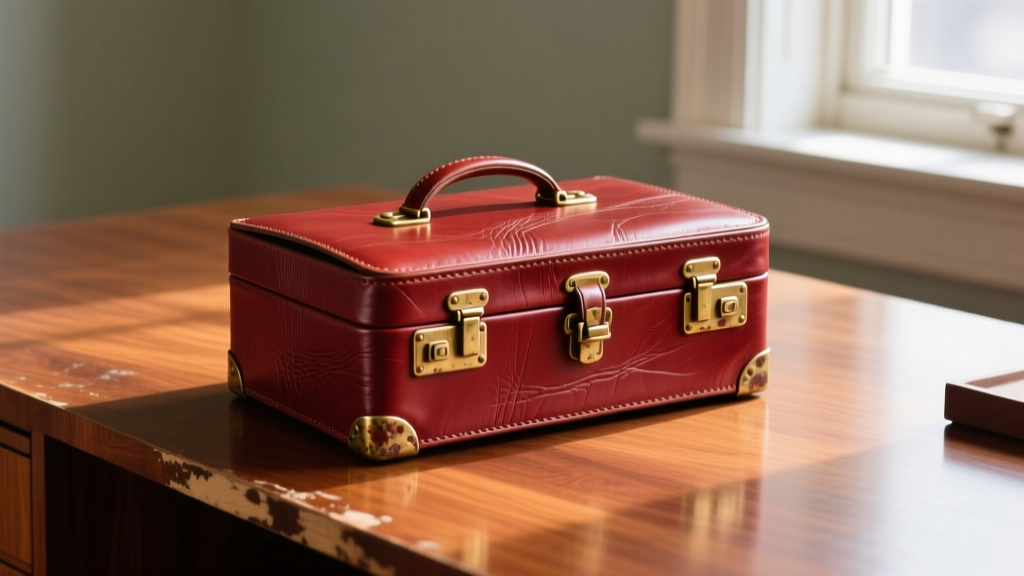
Owning a vintage London leather jewelry box is akin to holding a piece of British sartorial and horological history. Whether crafted by heritage houses like Asprey, Smythson, or Garrard & Co., or by master saddlers in the West End, these boxes were built using vegetable-tanned English bridle leather. However, decades of fluctuating humidity, improper storage, and the natural breakdown of mid-century linings can leave these masterpieces looking tired and functionally compromised.
This comprehensive, step-by-step guide will walk you through the meticulous process of authenticating, restoring, and modernizing the interior of a vintage London leather jewelry box, ensuring it safely houses your modern collection while preserving its historical patina.
Step 1: Authenticating and Assessing the Carcass
Before applying any cleaners, you must understand the anatomy of your box. True London-made boxes from the 1920s through the 1960s feature a wooden carcass—typically cedar or mahogany—constructed with dovetail joints. The leather is wrapped tightly over this frame and secured with hide glue.
Identifying Maker's Marks and Hardware
- Blind Stamping: Look for faint, heat-stamped logos on the bottom or inside the lid. Asprey often used a crown motif alongside their name.
- Gilt Lettering: Faded gold leaf on the top lid is common. Do not attempt to repaint this yourself; the uneven wear is a key indicator of authenticity.
- Stop-Hinges: High-end London boxes utilize solid brass stop-hinges designed to hold the lid open at exactly 90 or 110 degrees. Check for loose escutcheon pins (the small brass nails holding the hinge).
Step 2: The Leather Restoration Process
The most common mistake collectors make is treating antique English bridle leather like modern footwear or equestrian tack. Bridle leather is heavily stuffed with tallow and waxes during the tanning process. Using harsh saddle soaps will strip these essential oils, leading to irreversible cracking.
| Cleaning Agent | Chemical Profile | Verdict for Vintage Leather |
|---|---|---|
| Saddle Soap | Alkaline, high pH | Avoid: Strips historical tallow and waxes. |
| Renaissance Wax | Microcrystalline, neutral pH | Highly Recommended: Seals and protects without darkening. |
| Leather Honey | Heavy oil blend | Avoid: Over-softens rigid box leather, causing sagging. |
| Damp Microfiber | Water (pH 7) | Recommended: For initial surface dust and grime removal. |
Step-by-Step Cleaning Application
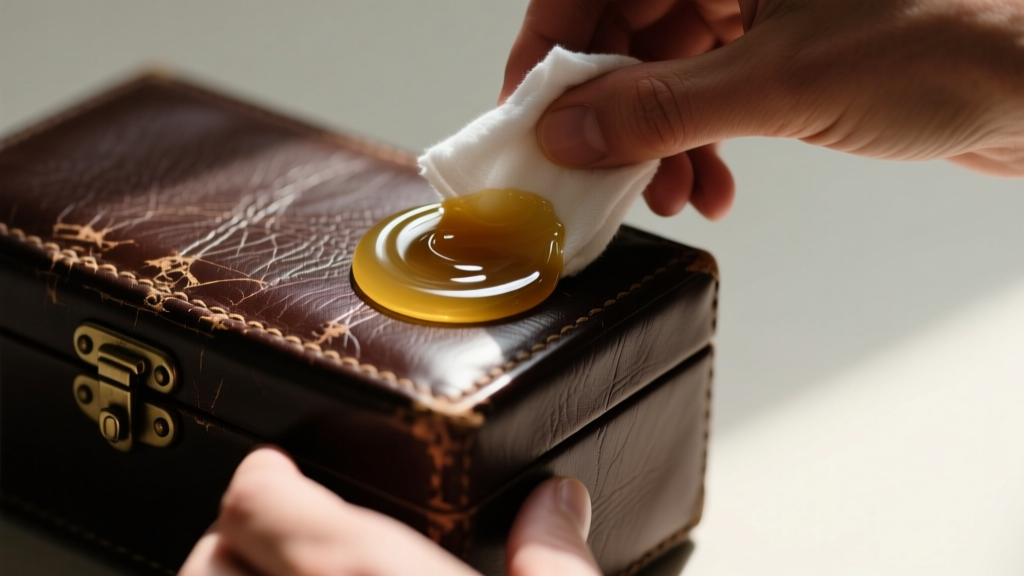
According to guidelines from the Leather Conservation Centre, less is always more when dealing with antique finishes. Begin by gently wiping the exterior with a barely damp microfiber cloth to lift surface dust. Allow it to dry completely for two hours.
Next, apply a thin, even layer of microcrystalline wax (such as Renaissance Wax) using a soft, lint-free cotton cloth. Work in small circular motions, focusing on scuffed corners and the handle. Let the wax haze for 20 minutes, then buff it to a soft, satin sheen. This creates a stable, moisture-resistant barrier that will not feed mold or attract dust.
Step 3: Hardware and Hinge Rehabilitation
London boxes typically feature solid brass or silver-plated hardware. Over time, brass develops a dark patina, while silver plate can flake if polished too aggressively.
- For Solid Brass: Use a mild, non-ammoniated brass polish. Apply with a cotton swab to avoid getting the polish on the surrounding leather, which can cause dark, oily stains.
- For Silver Plate: Use a specialized silver dip or a polishing cloth infused with jeweler's rouge. Never use abrasive pastes, as mid-century silver plating is often remarkably thin.
- Hinge Lubrication: If the lid squeaks or sticks, never use WD-40 or liquid oils, which will seep into the wood and leather. Instead, apply a microscopic drop of dry PTFE (Teflon) lubricant directly to the hinge pin using a toothpick.
Step 4: Re-Lining for Modern Anti-Tarnish Protection
This is arguably the most critical step for jewelry preservation. Vintage boxes were originally lined with silk, velvet, or acetate. As these mid-century synthetic and natural fibers degrade, they off-gas sulfur compounds and acidic vapors. As noted by the Gemological Institute of America (GIA), these off-gassed chemicals are the primary culprits behind rapid silver tarnishing and the degradation of porous gemstones like pearls and opals.
Upgrading to Pacific Silvercloth
To modernize the interior without destroying the box's structural integrity, carefully peel back the degraded lining using a plastic spudger. Remove old hide glue residue with a gentle citrus-based adhesive remover. Replace the old fabric with Pacific Silvercloth—a 100% cotton flannel embedded with microscopic silver particles that intercept and neutralize tarnishing gases before they reach your jewelry.
Expert Tip: Never use standard craft glue to attach the new anti-tarnish lining. Use a pH-neutral, acid-free archival adhesive or double-sided archival tape to ensure the glue itself does not off-gas and tarnish your metals.
Step 5: Strategic Organization for Heavy Modern Pieces
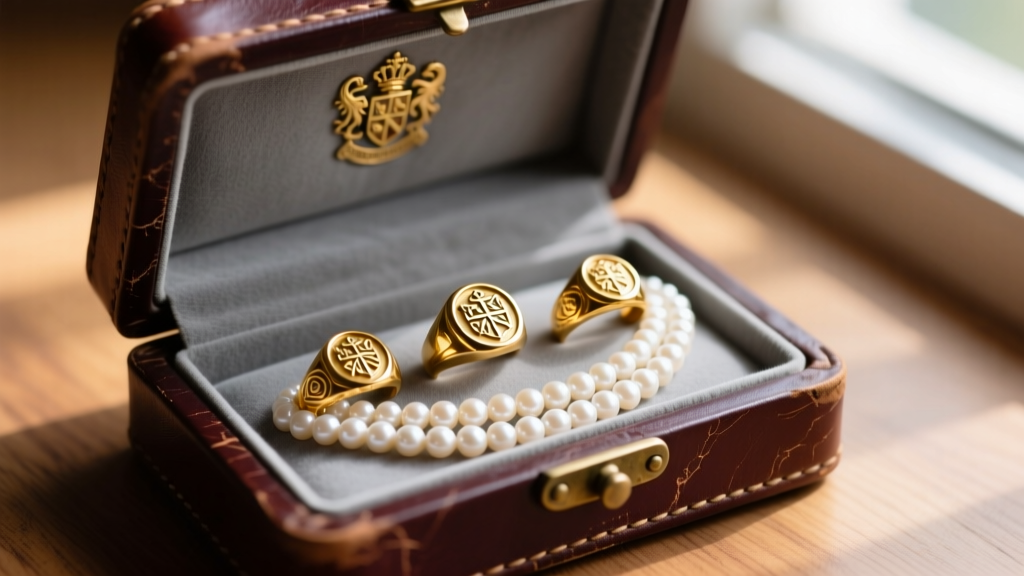
Vintage London boxes were designed for the jewelry of their era: delicate brooches, single-strand pearls, and modest gold chains. Today's collections often feature heavy, solid-good curb chains and oversized signet rings that can warp vintage wooden dividers and stress the stop-hinges.
Weight Distribution Mapping
- Bottom Tier (Heavy Items): Store solid gold chains, heavy bangles, and large signet rings in the deepest bottom compartment. Keeping the heaviest items at the base lowers the center of gravity, preventing the box from tipping when the lid is open.
- Middle Drawers (Medium Items): Reserve these for stud earrings, cocktail rings, and lighter chain bracelets. Use acid-free tissue paper to pad rings that are too small for the vintage ring rolls.
- Top Lid (Delicate Items): The lid is the most vulnerable area. Store only lightweight, scratch-prone items here, such as pearl necklaces or opal pendants. Ensure the lid's fabric is taut so items do not fall out when closing.
Long-Term Maintenance Schedule
To keep your vintage London leather jewelry box in museum-quality condition, establish a bi-annual maintenance routine. Every six months, lightly buff the exterior with a dry cotton cloth to remove dust. Reapply microcrystalline wax only once every two to three years, or if the leather begins to look dry and matte. Finally, replace the 3M anti-tarnish strips hidden beneath the lining every 12 months to ensure your metals remain brilliantly polished and ready to wear.


