Best Spinning Jewelry Display Materials: Wood, Metal & Acrylic
Compare acrylic, wood, and metal spinning jewelry displays. Learn which material prevents tarnish, supports heavy necklaces, and fits your space.

The Engineering of Rotation: Why Material Dictates Longevity
When selecting a spinning jewelry display, most collectors focus on tier count or footprint. However, the structural material dictates not only the lifespan of the organizer but the chemical safety of your collection. In 2026, display manufacturing has evolved, yet the fundamental chemistry between storage surfaces and precious metals remains unchanged. A rotating carousel introduces unique physical stresses—centrifugal sway and friction at the pivot points—that demand specific material grades. More importantly, the surface chemistry of the display can accelerate oxidation, scratch soft alloys, or generate static that attracts abrasive dust to porous gemstones.
According to the Gemological Institute of America (GIA), improper storage environments are a leading cause of preventable gemstone and metal degradation. Let us break down the three dominant materials used in spinning jewelry displays and evaluate their properties, failure modes, and ideal use cases.
Acrylic (PMMA): Optical Clarity vs. Static Risks
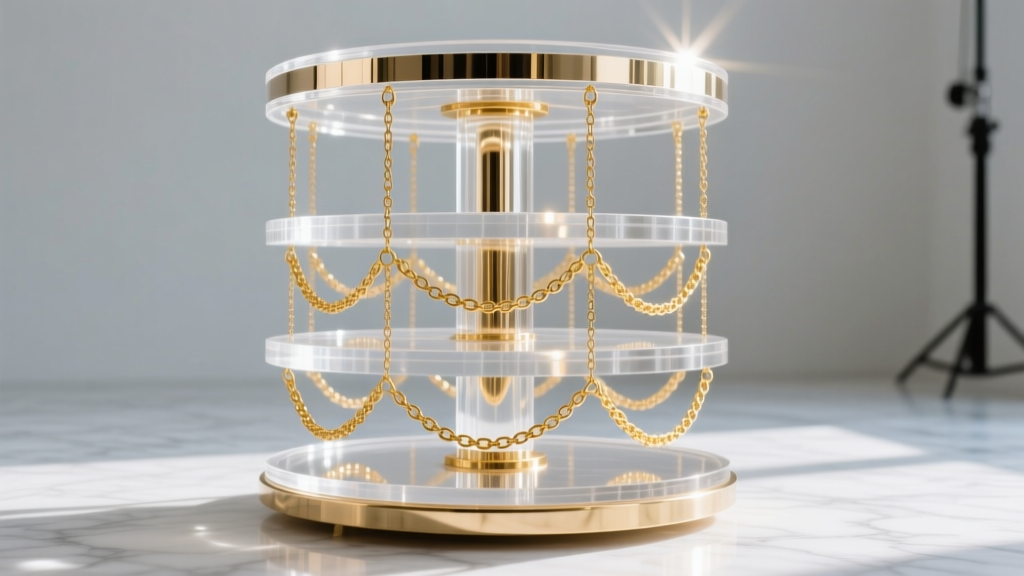
Acrylic, specifically Polymethyl Methacrylate (PMMA), is the go-to material for modern, minimalist spinning displays. However, not all acrylic is created equal. Budget carousels use extruded acrylic, which is prone to micro-scratching and yellowing under UV exposure. Premium displays utilize cast acrylic, offering superior optical clarity, UV resistance, and a harder surface that resists the abrasion of metal clasps swinging during rotation.
The Static Electricity Problem
The hidden danger of acrylic spinning displays is triboelectric charging. As the acrylic tiers rotate through dry indoor air (especially in winter or climate-controlled rooms), they generate a static charge. This static acts as a magnet for household dust. If your display holds porous, organic gems like pearls, coral, or turquoise, this dust accumulation can become embedded in the stone's microscopic pores, dulling their luster over time. Expert Fix: Wipe acrylic tiers weekly with an anti-static guard spray (like Novus Plastic Clean & Shine) to neutralize the charge without leaving a chemical residue that could harm silver.
Wood and MDF Veneers: Aesthetics vs. Off-Gassing
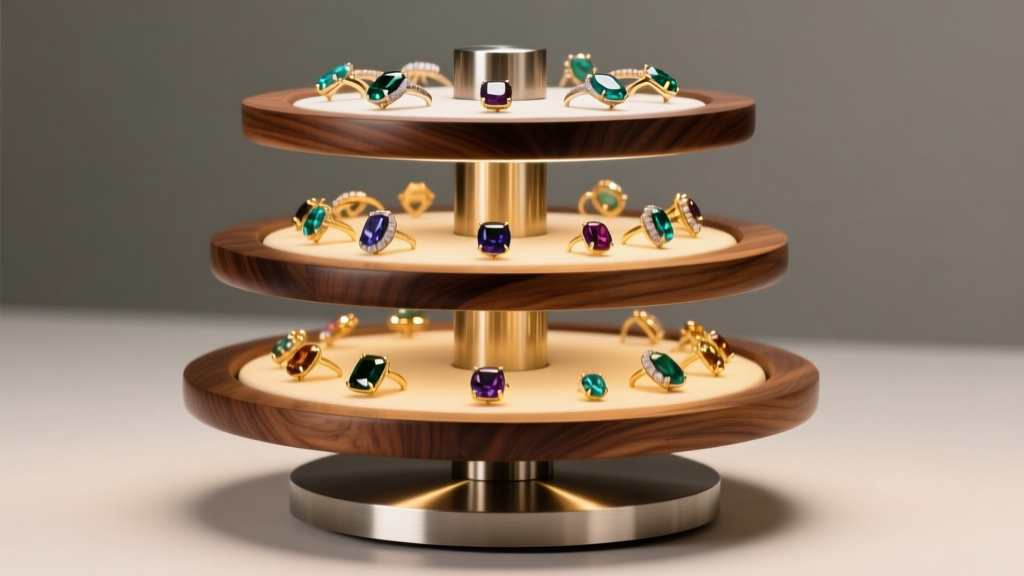
Wooden spinning jewelry displays offer a classic, heavy aesthetic that provides a low center of gravity, preventing tip-overs when loaded with heavy beaded necklaces. But the chemical composition of the wood and its adhesives requires strict scrutiny.
The MDF Off-Gassing Threat
Many mid-tier rotating displays are constructed from Medium-Density Fiberboard (MDF) wrapped in a wood-grain vinyl. MDF is bound using urea-formaldehyde resins. As these resins degrade, they off-gas sulfur compounds and acidic vapors. In a confined space, these vapors react with the copper and silver in your jewelry, rapidly forming silver sulfide (tarnish). If you buy an MDF spinning display, you must seal the raw, unveneered edges with a water-based polyurethane and line the tiers with acid-free, anti-tarnish flannel.
Solid Hardwoods: Oak, Walnut, and Maple
Solid hardwoods are vastly superior but still contain natural tannins and wood acids. Oak, for instance, has high tannic acid levels that can corrode copper and brass findings on contact. The Smithsonian Museum Conservation Institute advises against storing sensitive metals near unsealed organic materials. Always ensure your solid wood spinning display is sealed with a fully cured, inert finish like acrylic lacquer or water-based polyurethane before placing bare jewelry on it.
Powder-Coated Steel and Aluminum: Heavy-Duty Carousels
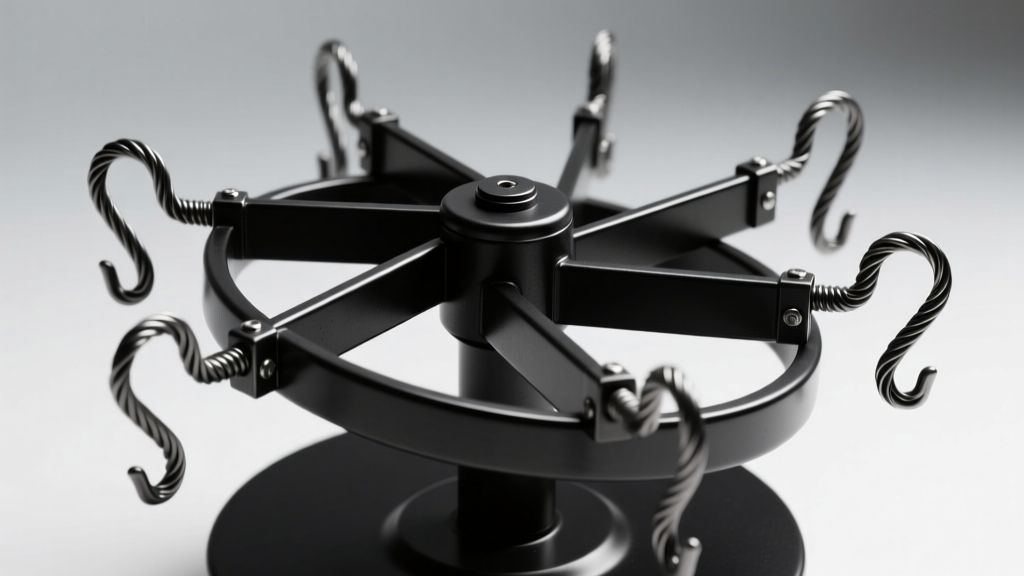
For high-volume collections, metal spinning jewelry displays provide the highest tensile strength. The central spindle of a fully loaded carousel bears significant shear stress; a 12-gauge steel rod will remain perfectly plumb, whereas aluminum or plastic spindles may warp over time, causing the tiers to wobble and tangle chains.
Coating Integrity and Rust Risks
Steel displays must be protected from oxidation. Premium manufacturers use thermoset powder coating applied at 2 to 3 mils of thickness. This creates a continuous, non-porous shell that is chemically inert and safe for direct contact with gold and silver. However, if the powder coating chips at the weld points (a common failure mode in cheap imports), the exposed carbon steel will rust. This rust can easily transfer to porous stones or stain light-colored pearls. Aluminum carousels eliminate the rust risk entirely and are naturally oxidation-resistant, but they lack the sheer mass required to anchor a display holding heavy, multi-strand statement necklaces.
Material Comparison Matrix
| Material | Tarnish / Chemical Risk | Weight Capacity (Per Tier) | Scratch Resistance | Best Jewelry Type |
|---|---|---|---|---|
| Cast Acrylic (PMMA) | Low (Static dust risk) | 1.5 - 3 lbs | Moderate | Daily wear gold, minimalist chains |
| Solid Hardwood (Sealed) | Very Low (If sealed) | 4 - 6 lbs | High | Heavy beaded necklaces, cuffs |
| MDF with Vinyl Wrap | High (Off-gassing) | 3 - 5 lbs | Low (Peeling risk) | Costume jewelry, fashion pieces |
| Powder-Coated Steel | None (If unchipped) | 5 - 8 lbs | Very High | Large collections, heavy pendants |
| Anodized Aluminum | None | 2 - 4 lbs | Moderate | Lightweight earrings, travel setups |
Surface Treatments and Flocking: The Hidden Variables
The base material is only half the equation. The surface treatment of the spinning jewelry display tiers dictates direct-contact safety. Flocking (the fuzzy velvet-like coating) is popular for preventing items from sliding off rotating tiers. However, cheap flocking adhesives often contain plasticizers that can melt into and degrade soft plastics, Bakelite, or vintage celluloid jewelry. Furthermore, low-grade synthetic flocking traps moisture, creating a micro-climate that accelerates silver oxidation.
For high-end collections, look for spinning displays that utilize microfiber-lined MDF or silicone-padded metal tiers. Platinum-cure silicone is entirely chemically inert, off-gasses nothing, and provides excellent grip without generating static or trapping humidity.
Final Verdict: Matching Material to Your Collection
Choosing the right spinning jewelry display requires aligning the material properties with your specific collection's vulnerabilities. If you primarily store modern, solid gold and platinum pieces, a cast acrylic display offers beautiful visibility, provided you manage static dust. For collectors of heavy, artisan-crafted silver and beaded necklaces, a sealed solid walnut or maple carousel provides the necessary structural anchor and aesthetic warmth. Finally, for high-volume, mixed-metal collections, a 12-gauge powder-coated steel spinning display remains the undisputed champion of durability and chemical safety.
Maintenance Protocols for Rotating Displays
- Acrylic: Clean only with a microfiber cloth and a dedicated plastic cleaner. Never use ammonia-based glass cleaners, which will cause crazing (micro-fractures) in the acrylic over time.
- Wood: Dust with a soft brush. Reapply a thin coat of paste wax to the base annually to maintain the moisture barrier and protect the wood from ambient humidity fluctuations.
- Metal: Inspect weld points and hook tips every six months. If you spot a chip in the powder coating, seal it immediately with a dab of clear enamel nail polish to prevent subsurface rust from blooming and staining your jewelry.
Always inspect the pivot bearings of any rotating display. A sealed, stainless-steel ball-bearing mechanism will ensure smooth, vibration-free rotation for decades, preventing the micro-vibrations that cause delicate chains to slip, tangle, and ultimately snap under their own swinging momentum. By prioritizing material science over mere aesthetics, you ensure your spinning jewelry display acts as a true preservation tool rather than an accidental catalyst for damage.


