Antique Jewelry Armoire Materials: Wood & Lining Guide
Discover how wood types, linings, and finishes in an antique jewelry armoire impact preservation. Compare materials and prevent tarnish.

The Hidden Chemistry of Antique Furniture
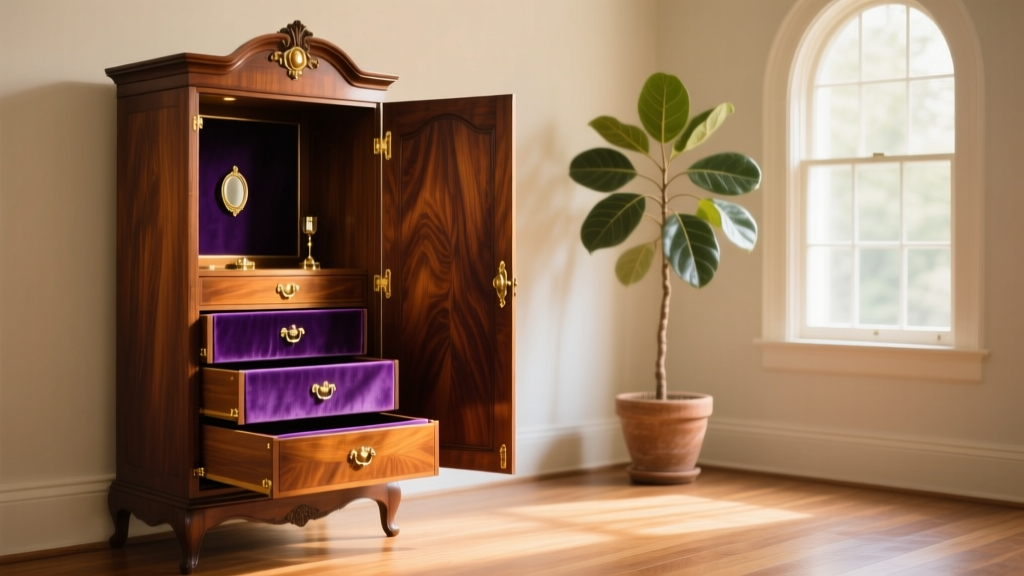
When collectors and enthusiasts invest in an antique jewelry armoire, the primary focus is often on the aesthetic appeal: the patina of the wood, the intricacy of the carved motifs, and the historical provenance of the piece. However, from a preservation standpoint, the material properties of the armoire dictate the microclimate your jewelry will inhabit for decades. Unlike modern, inert plastic or powder-coated steel organizers, antique woods, traditional finishes, and historical linings are active, breathing materials. They expand, contract, and most importantly, off-gas volatile organic compounds (VOCs) that can wreak havoc on precious metals and organic gemstones.
The core issue with antique storage is acidic off-gassing. Wood naturally contains tannins, resins, and organic acids. When confined in the enclosed, poorly ventilated drawers of an armoire, these compounds concentrate. According to the Getty Conservation Institute, enclosed microenvironments with high concentrations of acetic and formic acids can accelerate the tarnishing of sterling silver and the corrosion of copper alloys like brass and bronze. Understanding the specific material composition of your antique armoire is the first step in mitigating these chemical risks.
The Oddy Test and Material Stability
Museum conservators rely on the Oddy Test, an accelerated aging procedure developed by Andrew Oddy at the British Museum, to determine if storage materials are safe for artifacts. While you are unlikely to run an Oddy Test in your home, you can apply its underlying principles. The test evaluates materials based on their off-gassing of sulfur compounds, chlorides, and organic acids. Woods like oak and cedar consistently fail these tests in their raw state due to high tannic acid and aromatic oil content, respectively. Therefore, the species of wood used in your armoire, combined with its interior finish, is a critical variable in jewelry preservation.
Comparative Analysis: Core Wood Species
Different hardwoods possess distinct cellular structures, moisture exchange rates, and chemical profiles. The Forest Products Laboratory provides extensive data on wood shrinkage and stability, which directly correlates to how well an armoire maintains a stable internal humidity level. Below is a comparative breakdown of the most common woods used in 18th and 19th-century armoires.
| Wood Species | Tannin / Acid Level | Dimensional Stability | Preservation Risk | Ideal Use Case |
|---|---|---|---|---|
| Mahogany | Low to Moderate | Excellent | Low (if properly sealed) | High-value metals, pearls |
| Walnut | Moderate | Very Good | Low to Moderate | Everyday gold and platinum |
| Oak (White/Red) | Very High | Moderate | High (severe tarnish risk) | Costume jewelry only (unless retrofitted) |
| Cedar | Low (High Oils) | Good | High (oils damage organics) | Textiles, never pearls or silver |
| Rosewood | Moderate | Excellent | Moderate (resin bleed risk) | Hard gemstones, gold |
Mahogany and Walnut: The Collector's Standards
Mahogany has long been the gold standard for fine antique furniture, including jewelry armoires. Its interlocking grain provides exceptional dimensional stability, meaning the drawers will not warp or stick significantly with seasonal humidity fluctuations. More importantly, mahogany has a relatively low tannin content compared to oak. When finished with traditional shellac, it creates an incredibly stable, low-VOC environment. Walnut is another excellent choice, prized for its rich, dark grain. While slightly more porous than mahogany, a well-maintained walnut armoire with intact interior seals provides a highly protective environment for gold, platinum, and hard gemstones like diamonds and sapphires.
The Oak and Cedar Trap
Oak is notoriously problematic for silver storage. White and red oak contain high levels of tannic acid. In the presence of ambient moisture, oak off-gasses acetic acid, which rapidly accelerates the formation of silver sulfide (tarnish) and causes copper alloys to develop destructive verdigris. Cedar, while famous for repelling moths, contains thujopsene and other aromatic oils. These oils are highly reactive and can permanently stain porous organic gemstones like pearls, coral, and turquoise, while also degrading the structural integrity of silk threads used in pearl necklaces.
Interior Linings: The True Point of Contact
The wood of the armoire provides the structural shell, but the interior lining is the material in direct contact with your jewelry. Historically, cabinetmakers lined fine armoires with silk, suede, or cotton velvet. While luxurious, these historical materials are often detrimental to modern preservation standards.
Why Traditional Silk and Velvet Fail
Silk is a protein fiber that degrades over time, especially when exposed to light and fluctuating humidity. As it degrades, it shatters and releases acidic byproducts that can etch soft metals and damage pearls. Furthermore, the metallic threads often used in antique silk brocades can cause galvanic corrosion if they come into contact with moisture and your jewelry. Velvet, particularly the rayon or synthetic blends popular in mid-century restorations, is highly hygroscopic. It traps ambient moisture against the surface of the jewelry, creating a localized high-humidity microclimate that invites tarnish and, in extreme cases, mold growth on organic materials.
Modern Upgrades for Antique Interiors
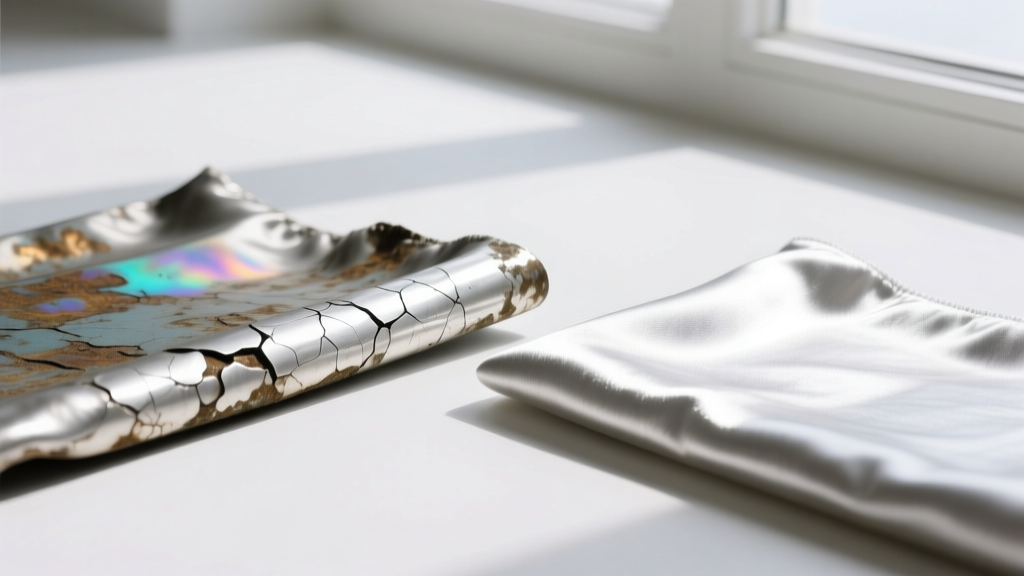
The American Institute for Conservation strongly recommends using inert, unbleached, and unsized materials for artifact storage. If you acquire an antique armoire, the most impactful preservation upgrade you can make is replacing the degraded historical linings. The optimal choice is a heavy, unbleached cotton flannel that has been treated with a tarnish-inhibiting compound, such as Pacific Silvercloth. These materials actively absorb and neutralize hydrogen sulfide and other corrosive gases before they reach the metal surface. For compartments holding pearls or opals, which require a slight amount of ambient moisture to prevent cracking, untreated, acid-free archival cotton rag paper or unbleached muslin is the superior choice.
Restoration Tip: Never use modern adhesive sprays or rubber-based glues to attach new linings to antique wood. These adhesives off-gas sulfur and plasticizers that will ruin your jewelry and permanently stain the antique wood. Instead, use archival-quality double-sided tape or mechanical fasteners like rust-free brass tacks to secure the new fabric.
Finishes, Hardware, and Structural Integrity
The exterior finish of an antique armoire plays a surprising role in interior preservation. Traditional French polish, which consists of multiple thin layers of shellac dissolved in alcohol, is one of the best barrier coatings available. Shellac effectively seals the wood pores, trapping internal tannins and acids while preventing external humidity from penetrating the wood grain. Conversely, modern polyurethane finishes, while durable, can sometimes trap moisture within the wood if applied incorrectly, leading to internal warping and localized mold growth inside the drawers.
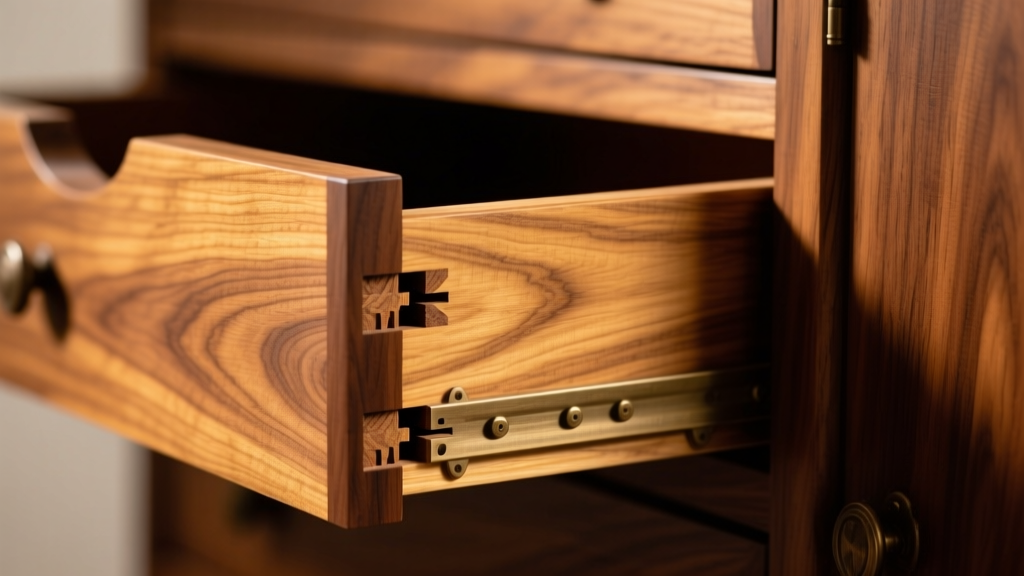
Hardware is another critical consideration. Original solid brass hinges, pulls, and lock mechanisms are highly desirable. However, if the armoire has been retrofitted with cheap, plated steel or zinc hardware, these metals can rust in humid environments. Rust spores can migrate into the drawers and stain both the linings and your jewelry. Always inspect the magnetic properties of the hardware; a magnet will stick to plated steel but not to solid brass or bronze. Additionally, examine the drawer joinery. Hand-cut dovetails indicate a high-quality, structurally sound piece that will keep drawers square and prevent the seams from opening, which maintains a tighter internal microclimate.
Final Verdict on Material Selection
Purchasing an antique jewelry armoire is an exercise in balancing historical beauty with material science. A 19th-century mahogany armoire with an intact shellac finish and newly installed anti-tarnish flannel linings offers a superior, chemically stable environment that rivals modern high-end safes. Conversely, an oak armoire with original, degraded silk linings is a chemical hazard to fine silver and organic gems. By critically evaluating the wood species, understanding the chemistry of the finishes, and proactively upgrading the interior linings with archival-grade materials, you can safely preserve your collection while enjoying the timeless elegance of antique craftsmanship.


