Vintage Clothing Online Store Timeless Pieces Jewelry Thrift Storage
Discover how to protect and organize vintage clothing online store timeless pieces jewelry thrift finds with our expert anti-tarnish storage guide.

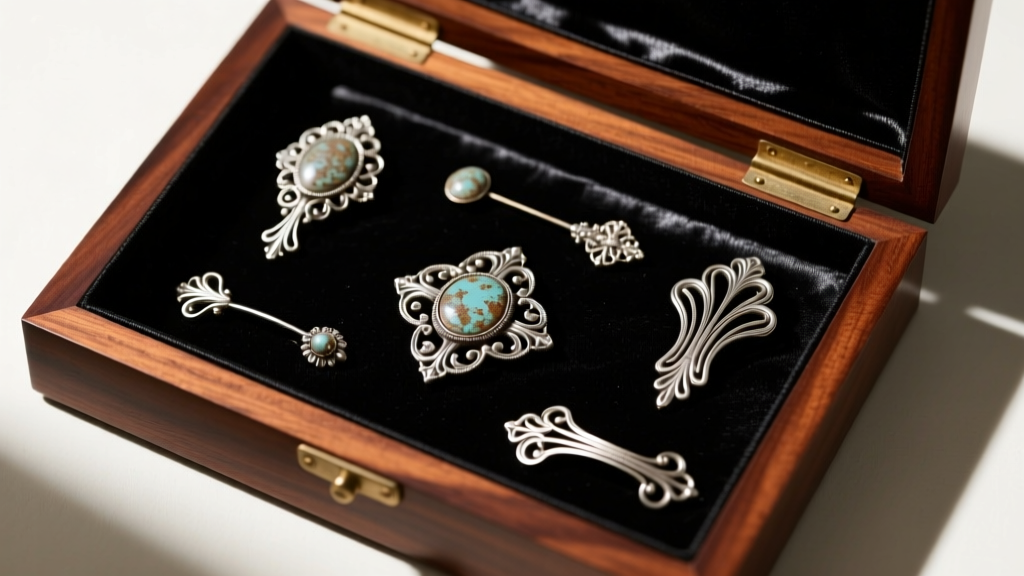
The thrill of the hunt is undeniable. Whether you are curating a personal collection or sourcing inventory from a vintage clothing online store, timeless pieces jewelry thrift hauls offer unparalleled character and history. However, pre-loved jewelry comes with unique vulnerabilities. Decades of wear, mixed metal compositions, and porous antique gemstones require a highly specialized approach to organization. Standard commercial jewelry boxes often accelerate the degradation of vintage finds through off-gassing plastics and abrasive linings.
This comprehensive buying guide details exactly what to look for when investing in archival-quality storage solutions for your thrifted treasures, ensuring they survive another century.
The Hidden Dangers of Standard Commercial Organizers
Most mass-market jewelry organizers are manufactured using Polyvinyl Chloride (PVC) plastics and synthetic glues. While perfectly adequate for modern, mass-produced stainless steel or titanium jewelry, these materials are catastrophic for vintage pieces. Over time, PVC degrades and releases hydrochloric acid gas. According to the Smithsonian Museum Conservation Institute, this off-gassing causes rapid, irreversible corrosion on antique silver, copper alloys, and delicate pearl nacre.
Furthermore, the synthetic velvet linings in cheap boxes are often treated with optical brighteners and formaldehyde-based dyes that can chemically react with the porous surfaces of vintage turquoise, coral, and malachite. When buying storage for thrifted jewelry, your first rule is to strictly avoid PVC and unverified synthetic textiles.
Material Matters: Archival Liners for Antique Metals
When evaluating the interior of a potential storage box or roll, the liner material is your primary defense against silver sulfide formation (tarnish). For vintage sterling silver and gold vermeil, you need materials that either absorb sulfur gases or provide an inert barrier.
Pacific Silvercloth and Treated Flannels
Pacific Silvercloth is the gold standard for vintage silver storage. Unlike standard anti-tarnish strips that need replacing every six months, this specialized cotton flannel is embedded with thousands of microscopic silver particles. These embedded particles act as a sacrificial anode—they tarnish instead of your vintage jewelry. A high-quality storage box lined with genuine Pacific Silvercloth can protect 19th-century coin silver and delicate Edwardian filigree for up to a decade without needing replacement.
Unbuffered Acid-Free Tissue
For vintage pieces featuring mixed media, such as Art Deco paste (lead glass) combined with base metals, unbuffered acid-free tissue paper is essential. Buffered tissue contains calcium carbonate, which is great for plant-based textiles but can cause chemical abrasion on vintage glass and certain gemstones over prolonged contact.
Caring for Vintage Plastics: Bakelite, Celluloid, and Lucite
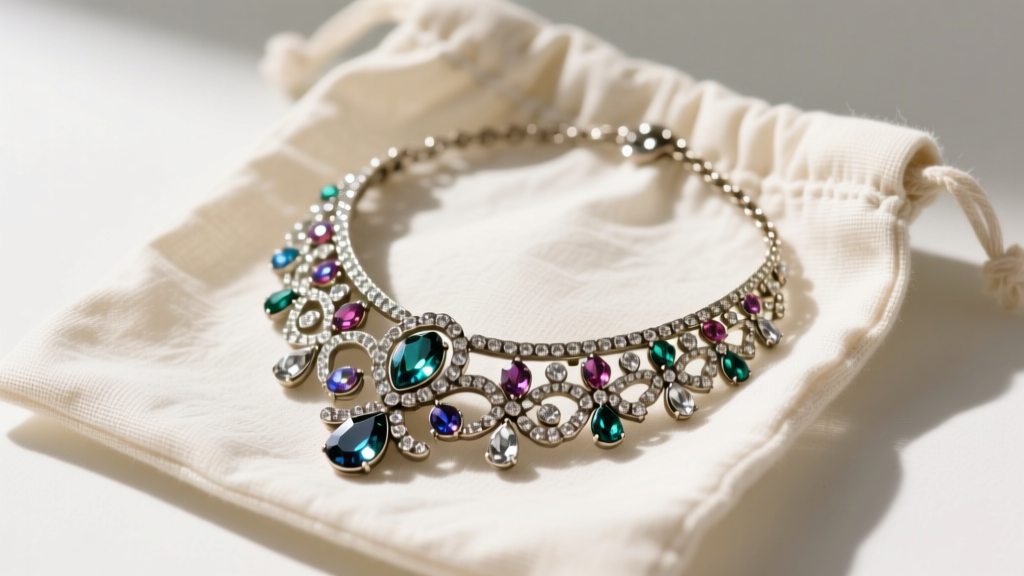
Thrift stores are treasure troves for mid-century plastic jewelry. Bakelite (phenol formaldehyde), Celluloid (nitrocellulose), and Lucite (acrylic) were heavily used from the 1920s through the 1960s. Storing these materials requires a counter-intuitive approach: they must breathe.
Celluloid, in particular, is notorious for 'celluloid disease'—a chemical breakdown where the material off-gasses nitric acid, which then attacks the plastic itself and any metal it touches. If you seal vintage celluloid or early Bakelite in an airtight polyethylene bag, the trapped gases will cause the jewelry to melt, warp, or shatter.
The Breathability Requirement
When buying storage for vintage plastics, look for:
- Archival Cotton Pouches: Untreated, unbleached muslin or cotton bags allow gases to dissipate safely.
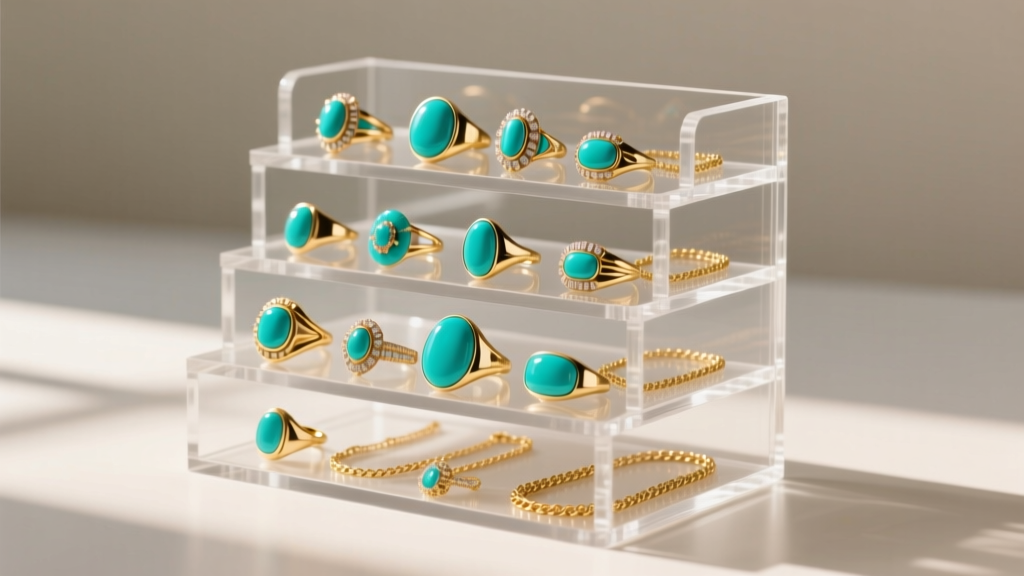
- Open-Air Display Stands: Acrylic (PMMA) display risers are inert and safe for Lucite and Bakelite, provided the room has adequate air circulation.
- Compartmentalized Wooden Boxes: Ensure the wood is sealed with an inert polyurethane or water-based acrylic sealant, as raw cedar or oak emit natural acids that can cloud vintage plastics.
Compartmentalization: Protecting Delicate Antique Clasps
Victorian and Edwardian jewelry often features intricate, fragile clasps like the C-clasp, trombone clasp, or early spring-ring mechanisms. Tossing these pieces into a communal bin guarantees that heavy brass brooches will crush delicate gold-filled chains and snap fragile hinge pins.
Sizing Your Compartments
When shopping for an organizer, measure the internal dividers. Vintage sautoir necklaces and long opera-length pearl strands require individual, elongated channels at least 12 inches in length to prevent the silk thread from stretching or kinking. For heavy Victorian chatelaines and large cameo brooches, look for modular, adjustable dividers that can accommodate items up to 4 inches in diameter without forcing them against the box walls.
Gemstone Porosity and Climate Control
The Gemological Institute of America (GIA) emphasizes that organic and porous gemstones require specific humidity levels to prevent structural failure. This is especially true for vintage pieces where the stones may already have micro-fissures from decades of wear.
| Gemstone Type | Common Vintage Eras | Ideal Storage Environment | Materials to Avoid |
|---|---|---|---|
| Opal (Solid & Doublet) | Art Nouveau, 1970s | 40-50% Humidity, dark cotton pouches | Silica gel packets, airtight plastic, direct heat |
| Turquoise & Coral | Native American, 1960s | Breathable cloth, separate from harder gems | Ultrasonic cleaners, chemical-treated linings |
| Pearls (Natural & Cultured) | Victorian, Edwardian | Soft unbleached silk, slight humidity | PVC plastics, airtight safes, cotton (dries out) |
| Paste (Lead Glass) | Georgian, Art Deco | Acid-free tissue, individual slots | Communal bins, hard plastic dividers |
The Silica Gel Myth
Many collectors mistakenly throw silica gel desiccant packets into their vintage jewelry safes to prevent tarnish. While low humidity slows silver sulfide formation, it will rapidly dehydrate vintage opals, tortoiseshell, and ivory, leading to severe crazing (spiderweb cracking) and catastrophic structural failure. If you must control humidity in a safe, use a two-way humidity control pack specifically designed for organic materials, maintaining a strict 45% relative humidity.
Final Checklist for Sourcing Storage
Before purchasing any storage solution for your vintage clothing online store timeless pieces jewelry thrift inventory, run it through this expert checklist:
- The Sniff Test: If a new box smells strongly of chemicals, glue, or 'new car,' it is off-gassing volatile organic compounds (VOCs). Let it air out for weeks in a ventilated garage before use, or return it.
- The Magnet Test: Ensure internal hinges and clasps are made of brass or stainless steel, not cheap plated iron that will rust and stain your vintage textiles and porous stones.
- The Plastics Code: If buying clear acrylic stackers, verify they are made of Polypropylene (PP, recycling code 5) or Polyethylene (PE, code 2 or 4). Never use PVC (code 3) or Polystyrene (code 6) for long-term archival storage.
- Seam Inspection: Check for rough, unfinished seams in wooden or acrylic boxes that could snag delicate 19th-century lace motifs or filigree wirework.
Investing in archival-grade storage is not merely an organizational choice; it is an act of historical preservation. By understanding the specific chemical and physical needs of thrifted and vintage jewelry, you ensure that these timeless pieces remain intact, beautiful, and wearable for generations to come.


