Technical Guide to Choosing the Best Mens Wood Jewelry Box
An expert technical deep dive into selecting a mens wood jewelry box, covering timber stability, joinery methods, and anti-tarnish interior linings.

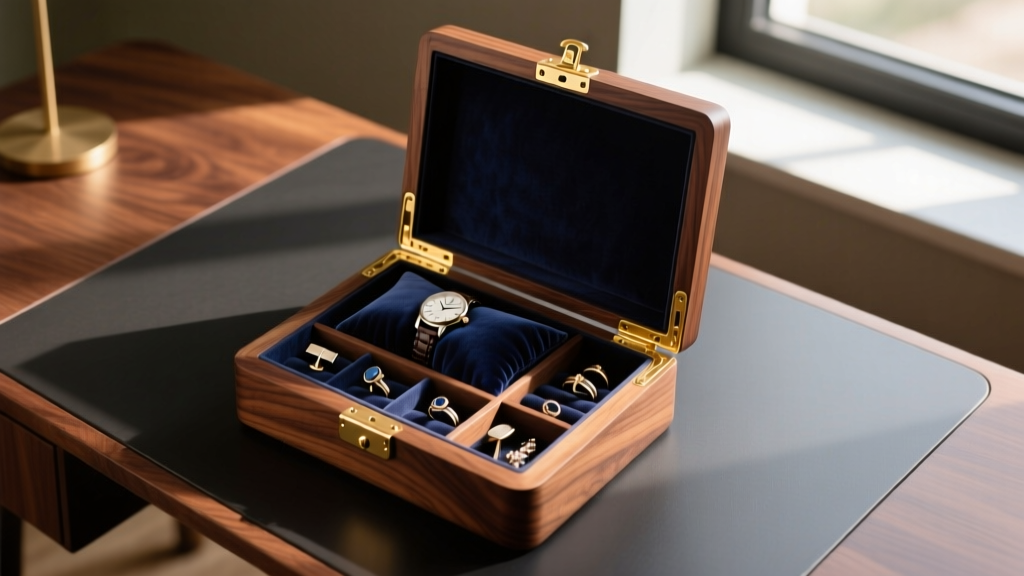
For the modern gentleman, a mens wood jewelry box is far more than a simple repository for wristwatches and cufflinks. It is a precision environment designed to protect high-value mechanical timepieces, precious metals, and gemstones from the silent threats of humidity, UV degradation, and galvanic corrosion. While mass-market options often rely on MDF (Medium-Density Fiberboard) wrapped in thin veneers, a true heirloom-grade storage solution demands an understanding of timber physics, traditional joinery, and archival-grade interior linings.
This technical guide dissects the material science and engineering specifications you must evaluate when investing in a premium wooden storage solution for your collection.
Timber Selection and Dimensional Stability
The structural integrity of any wooden enclosure relies on the hygroscopic nature of the timber used. Wood naturally absorbs and releases moisture based on the ambient relative humidity (RH). If the wood expands and contracts too aggressively, it will warp, crack, or force joints apart. When evaluating a mens wood jewelry box, the Janka hardness rating and the Tangential-to-Radial (T/R) shrinkage ratio are the critical metrics to consider.
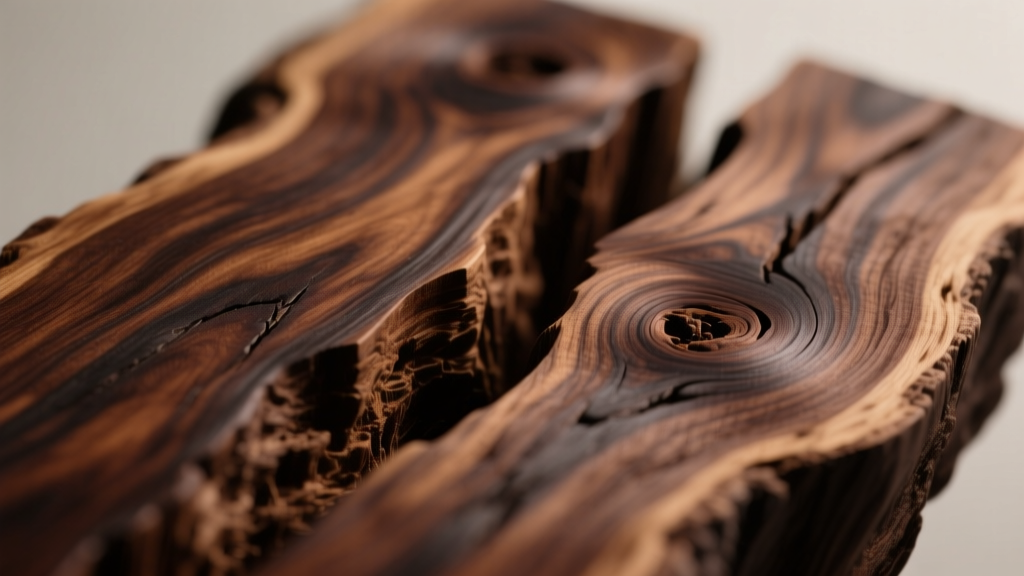
According to the Wood Database, a premier resource for timber specifications, different hardwoods offer vastly different stability profiles. A high-quality box should utilize kiln-dried hardwoods stabilized to an 8-12% moisture content.
- American Black Walnut (Juglans nigra): Janka hardness of 1,010 lbf. Highly prized for its rich, dark heartwood and excellent dimensional stability. It resists warping better than many denser woods, making it the gold standard for luxury boxes.
- Hard Maple (Acer saccharum): Janka hardness of 1,450 lbf. Extremely durable and features a tight, closed grain that resists dust accumulation. However, it is more prone to movement in high-humidity environments if not properly sealed.
- Honduran Mahogany (Swietenia macrophylla): Janka hardness of 800 lbf. While softer, its T/R shrinkage ratio is exceptionally low, meaning it is virtually immune to warping. It is a traditional choice for maritime and high-humidity storage.
Joinery Techniques: Mechanical vs. Adhesive
The corners of a wooden box bear the brunt of structural stress. Mass-produced boxes typically rely on simple butt joints secured with glue and brad nails, which inevitably fail as the wood undergoes seasonal expansion and contraction. Expert craftsmanship requires mechanical interlocking joinery that accommodates wood movement while maintaining rigid alignment.
When inspecting a potential purchase, look for the following traditional joinery methods:
- Through Dovetails: The strongest and most visible joint. The flaring 'tails' and 'pins' mechanically lock the boards together. Even if the adhesive fails, the joint holds.
- Mitre Joints with Splines: Offers a clean, continuous grain wrap around the corners. A hardwood or contrasting spline is inserted into a slot cut across the miter to provide long-grain glue surface and mechanical shear strength.
- Box Joints (Finger Joints): Utilizes interlocking square fingers. While not as aesthetically refined as dovetails, it provides immense glue surface area and excellent structural rigidity for heavier, larger watch safes or multi-tiered chests.
Interior Linings and the Chemistry of Tarnish
The interior environment of a mens wood jewelry box is where the actual preservation occurs. Sterling silver and copper alloys are highly susceptible to tarnishing—a chemical reaction triggered by hydrogen sulfide and sulfur dioxide in the air. Furthermore, certain woods, particularly Oak, naturally emit acetic acid vapors that can aggressively corrode metals and damage watch dials over time.
To combat this, premium boxes utilize specialized barrier linings. Standard felt or cheap polyester can trap moisture and off-gas volatile organic compounds (VOCs) from their manufacturing dyes. Instead, seek out Pacific Silvercloth or similar embedded tarnish-inhibiting fabrics. These materials are embedded with microscopic silver particles that act as a sacrificial anode; the silver in the cloth tarnishes preferentially, neutralizing the corrosive gases before they reach your jewelry. The Gemological Institute of America (GIA) strongly recommends storing silver in specially treated, airtight, or anti-tarnish environments to prevent the need for abrasive polishing, which removes microscopic layers of the precious metal.
Hardware Engineering: Hinges and Security
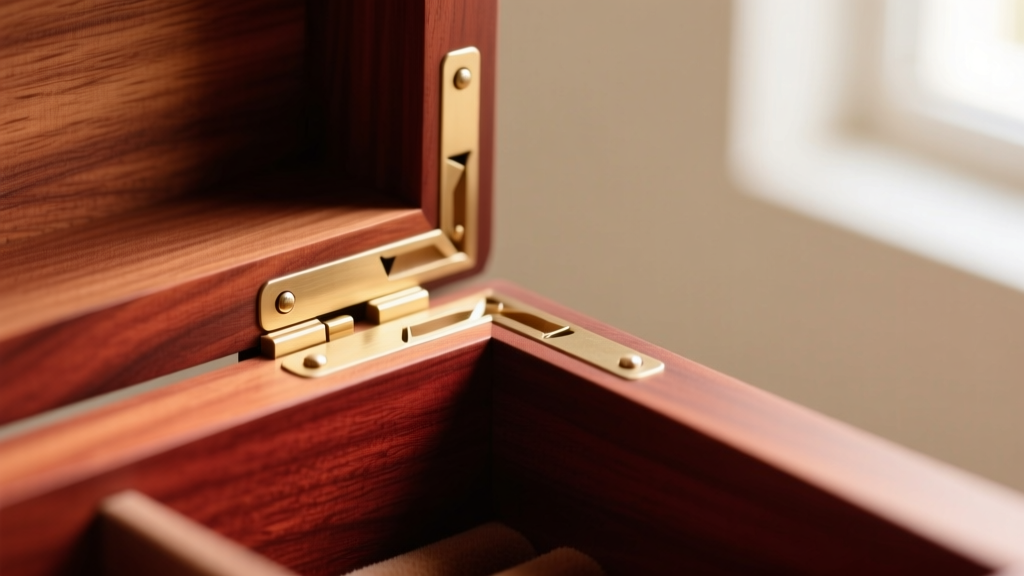
The hardware on a wooden box must support the weight of the lid and withstand thousands of articulation cycles. Stamped steel hinges with friction-fit pins will eventually sag, causing the lid to misalign and stress the wood.
Look for solid extruded brass hinges featuring a swaged leaf design (where the metal is bent around the pin to reduce the gap between the lid and the base). For heavier multi-tier boxes, brass quadrant stays or piano hinges are mandatory to distribute the load and prevent the lid from hyperextending and snapping backward.
Comparative Analysis of Market Tiers
Understanding the technical compromises made at different price points will help you identify true value versus superficial marketing.
| Specification | Mass Market ($40 - $90) | Boutique / Artisan ($250 - $600) | Bespoke / Heirloom ($800+) |
|---|---|---|---|
| Core Material | MDF with paper veneer | Solid kiln-dried hardwoods | Air-dried, quarter-sawn exotics |
| Joinery | Glue and brad nails | Splined mitres or box joints | Hand-cut through dovetails |
| Interior Lining | Synthetic suede / cheap felt | Anti-tarnish treated flannel | Archival Pacific Silvercloth |
| Hardware | Stamped steel, plated | Solid cast brass | Machined brass, swaged leaves |
| Finish | Polyurethane spray (thick) | Hand-rubbed tung oil or wax | French polish (shellac) |
Maintenance and Climate Control Protocols
Even the finest mens wood jewelry box requires proper environmental management. Keep the box out of direct sunlight to prevent UV degradation of both the wood finish and the interior fabrics. Maintain the room's relative humidity between 40% and 50%. If the humidity drops below 35%, the wood will lose moisture and crack; if it exceeds 60%, you risk mold growth on leather watch straps and accelerated metal oxidation.
For the exterior finish, avoid commercial aerosol dusting sprays that contain silicones, which build up and ruin the patina. Instead, apply a thin coat of microcrystalline wax (such as Renaissance Wax, the standard used by the British Museum for conservation) once a year to protect the timber from fingerprints and ambient moisture.
By prioritizing timber stability, mechanical joinery, and chemically inert linings, you ensure that your storage solution actively preserves the horological and metallurgical integrity of your collection for generations.


