Jewelry Display Table Buying Guide: What to Look For
Discover what to look for in a jewelry display table. Our expert buying guide covers materials, lighting, anti-tarnish surfaces, and retail layouts.

The Evolution of the Jewelry Display Table in 2026
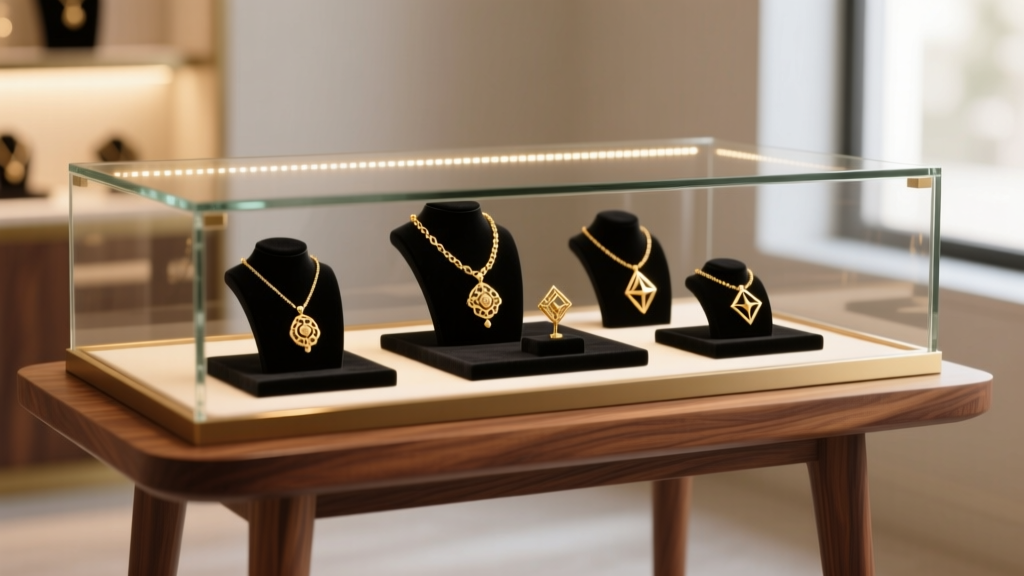
In the modern retail and private studio environment, a jewelry display table is no longer just a flat surface; it is a critical conversion tool and a preservation chamber. As hybrid retail spaces and home-based bespoke studios continue to dominate the 2026 market, the line between functional storage and visual merchandising has blurred. Choosing the right table requires a deep understanding of material science, optical physics, and retail ergonomics. Whether you are outfitting a high-end boutique or a luxury home studio, the wrong table can accelerate tarnishing, obscure gemstone brilliance, and create physical barriers between your client and your inventory.
This comprehensive buying guide strips away the aesthetic fluff and focuses on the structural, chemical, and optical specifications you must demand from a jewelry display table manufacturer.
Ergonomics and Dimensions: Sizing Your Surface
The dimensions of your table dictate the flow of customer interaction. According to retail layout experts at Shopify, the physical barrier between the merchant and the buyer can significantly impact sales velocity. Your table height must match the transaction style of your business.
| Table Configuration | Ideal Height | Standard Depth | Primary Use Case |
|---|---|---|---|
| Seated Consultation | 30 inches | 24 - 30 inches | High-end bespoke, private viewings, custom design consultations. |
| Standard Retail | 36 inches | 30 - 36 inches | Walk-in boutiques, craft fairs, accessible browsing. |
| Standing Vitrine | 40 - 42 inches | 20 - 24 inches | High-traffic malls, quick-browse impulse purchases, gallery spaces. |
For seated consultation tables, ensure the underside features a recessed knee clearance of at least 24 inches high and 18 inches deep. This allows you and your client to sit comfortably opposite one another without the table's base or storage drawers obstructing legroom, fostering a more intimate and collaborative design experience.
Surface Materials: Beyond Basic Velvet
The surface material of a jewelry display table interacts directly with your inventory. While traditional velvet looks luxurious, it is a magnet for dust, skin oils, and moisture. In 2026, top-tier display tables utilize advanced anti-tarnish textiles and specialized polymers.
The Danger of MDF and Off-Gassing
One of the most critical, yet frequently overlooked, aspects of buying a display table is the substrate beneath the fabric or glass. Many budget-friendly tables are constructed from Medium-Density Fiberboard (MDF). MDF is manufactured using urea-formaldehyde resins. Over time, especially in fluctuating humidity, MDF off-gasses sulfur compounds and formaldehyde. These gases are trapped under glass vitrines or within fabric-lined drawers, creating a micro-climate that rapidly oxidizes sterling silver and degrades porous gemstones like pearls and opals.
Expert Rule: Always specify solid hardwood (like walnut, maple, or oak) or powder-coated aluminum frames for your display table. If a wood composite must be used, ensure it is sealed with a water-based, low-VOC polyurethane barrier to prevent chemical off-gassing.
Anti-Tarnish Textiles and Pacific Silvercloth
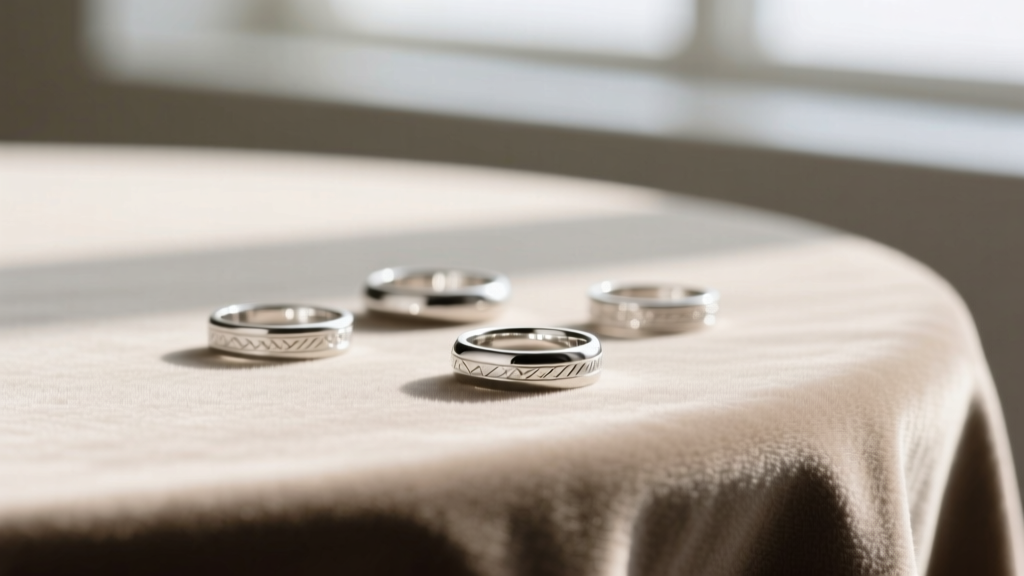
For open-air tables without glass enclosures, the fabric must actively protect the jewelry. Look for tables upholstered in Pacific Silvercloth or equivalent micro-suede embedded with fine silver particles. These materials work by intercepting hydrogen sulfide in the ambient air, tarnishing the microscopic silver particles in the fabric instead of your inventory. The fabric should be lint-free, tightly woven, and possess a matte finish to prevent glare under overhead retail lighting.
Illumination: CRI, Kelvins, and Heat Management
Lighting integrated into a jewelry display table can make or break a sale. The goal is to maximize scintillation (sparkle) without introducing heat that could damage sensitive stones. Halogen bulbs are entirely obsolete in modern display furniture due to their high heat output and UV radiation.
According to the Gemological Institute of America (GIA), the appearance of a diamond is profoundly affected by the lighting environment. When selecting a table with built-in illumination, demand the following specifications:
- Color Rendering Index (CRI): Must be 95 or higher. A high CRI ensures that the subtle color distinctions in fancy colored diamonds, sapphires, and emeralds are rendered accurately, rather than washed out.
- Color Temperature (Kelvins):
- 3000K (Warm White): Best for yellow gold and rose gold, enhancing their rich, warm tones.
- 4000K - 5000K (Neutral to Cool White): Ideal for platinum, white gold, and diamonds, providing the crisp contrast needed to highlight brilliance.
- 3500K (Mixed Inventory): The safest compromise if your table will host a mix of metals and gemstones.
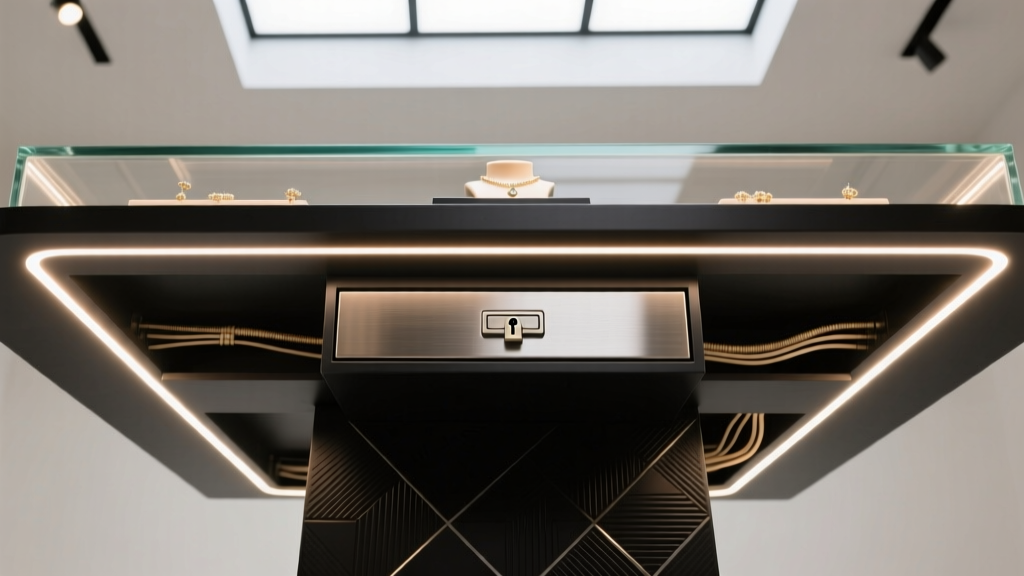
- Heat Dissipation: Ensure the LED strips are housed in aluminum extrusion channels with acrylic diffusers. This acts as a heat sink, pulling thermal energy away from the display surface and preventing the glass vitrine from warming up.
Security Features for High-Value Inventory
If your table includes a glass vitrine top or integrated storage drawers, security hardware must be robust yet invisible to the customer. Standard hardware store padlocks or cheap cam locks detract from the luxury experience and offer minimal protection.
For glass-topped tables, the glass must be tempered and at least 10mm (3/8 inch) thick to prevent bowing over wide spans and to resist impact. The hinges should be concealed pneumatic stays that hold the heavy glass lid open at a 60-degree angle, preventing accidental slamming that could shatter the glass or crush a client's fingers. For locking mechanisms, look for tables equipped with RFID electronic locks or high-security tubular cam locks (like those made by Abloy) that can be opened with a single master key but are virtually impossible to pick or drill.
Modularity for Pop-Ups and Trade Shows
For jewelers who travel to trade shows, craft fairs, or host temporary pop-up shops, a static, heavy hardwood table is a logistical nightmare. The 2026 market has seen a surge in modular, flight-case-integrated display tables. When shopping for a travel-friendly display table, look for the following features:
- Telescoping Aluminum Legs: Allows the table to adjust from a 30-inch seated height to a 42-inch standing height without requiring tools.
- Reversible Tabletop Inserts: A tabletop that features a mirrored surface on one side and anti-tarnish micro-suede on the other, allowing you to adapt to different lighting conditions and inventory types on the fly.
- Integrated Cable Management: Internal channels running down the legs to hide power cords for LED strips, ensuring a clean, professional look even in convention centers with floor-level power outlets.
Final Verdict: Matching the Table to Your Inventory
Investing in a premium jewelry display table is an investment in your brand's perceived value and your inventory's longevity. If you specialize in high-carat diamonds and platinum, prioritize a 42-inch standing vitrine with 5000K, CRI 95+ edge-lit LED panels. If your focus is artisanal silver and organic gemstones, a 30-inch seated consultation table crafted from solid walnut, lined with Pacific Silvercloth, and devoid of MDF substrates is non-negotiable. By focusing on material chemistry, precise ergonomics, and optical-grade lighting, you will create a presentation space that respects the craft and captivates the collector.


