Troubleshooting Your Ethan Allen Jewelry Armoire: Fixes & Care
Discover expert troubleshooting tips for your Ethan Allen jewelry armoire. Fix sticky drawers, jammed locks, and lining issues to protect your collection.

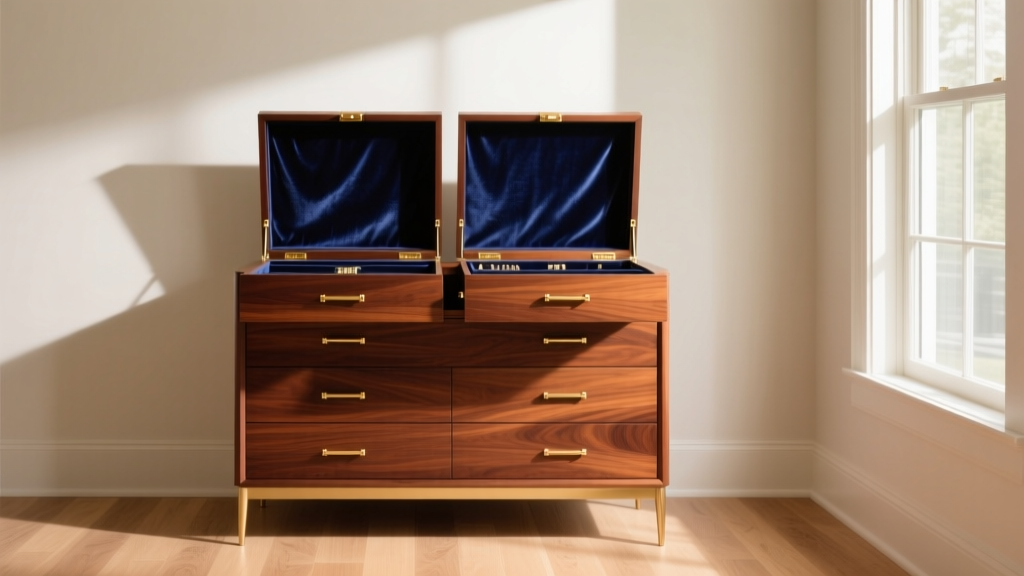
The Anatomy of an Heirloom: Understanding Your Armoire
Owning an Ethan Allen jewelry armoire is an investment in heirloom-quality craftsmanship. Renowned for utilizing solid hardwoods like maple, cherry, and mahogany, these pieces are typically finished with durable catalyzed lacquers and feature traditional English dovetail joinery. However, even the finest furniture is subject to the laws of physics and chemistry. Over time, environmental fluctuations, mechanical wear, and degrading interior materials can compromise both the functionality of the armoire and the safety of the precious metals and gemstones stored within.
This comprehensive troubleshooting guide addresses the most common issues encountered with vintage and modern Ethan Allen jewelry armoires. By understanding the material science behind these problems, you can implement targeted, conservation-grade solutions that restore your piece to pristine condition without damaging its structural integrity or resale value.
Problem 1: Sticky Drawers and Wood Expansion
Wood is a hygroscopic material, meaning it continuously absorbs and releases moisture from the surrounding air to reach Equilibrium Moisture Content (EMC). According to the USDA Forest Products Laboratory, indoor furniture is typically milled to a Moisture Content (MC) of 6-8%. If your home's relative humidity (RH) spikes above 60% during summer months, the wood fibers swell, particularly in the tangential direction, causing drawers to bind against their frames.
Diagnosing the Swell
Before attempting to force a stuck drawer, which can snap the delicate wooden center guides or strip the joinery, measure the ambient humidity. If the RH is high, run a dehumidifier in the room for 48 hours to allow the wood to contract naturally. If the drawer remains sticky after the humidity drops to an ideal 40-45% RH, the issue is likely mechanical friction or a warped track.
The Wax Solution: What to Use and What to Avoid
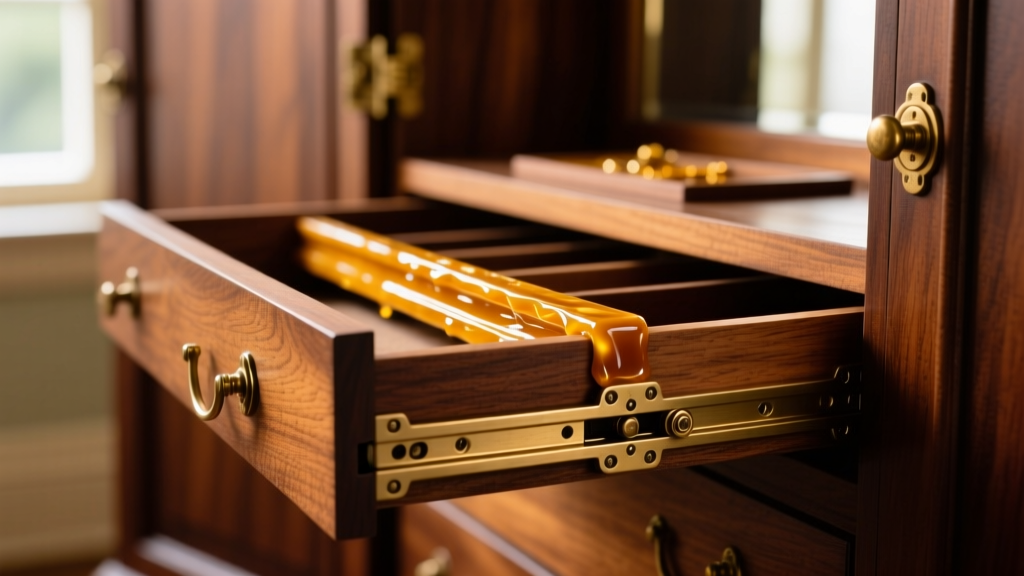
To restore smooth operation, lubricate the wooden glide tracks and the bottom edges of the drawer sides. Never use silicone sprays, WD-40, or petroleum jelly. These products penetrate the wood grain, degrade the catalyzed lacquer finish, and attract abrasive dust particles that will eventually score the wood.
- Best Practice: Apply a thin layer of pure beeswax or a specialized furniture paste wax (like Minwax or Howard) using a soft lint-free cloth. Buff it into the tracks until it feels slick.
- For Metal Glides: If your newer Ethan Allen armoire features side-mounted metal ball-bearing glides, use a dry PTFE (Teflon) spray. Wipe away any excess to prevent dripping onto your jewelry.
Problem 2: Accelerated Tarnish and Lining Off-Gassing
One of the most insidious problems in older jewelry armoires (particularly those manufactured between the 1980s and early 2000s) is rapid, unexplained tarnishing of sterling silver and copper pieces. Sterling silver is an alloy composed of 92.5% silver and 7.5% copper. The copper is highly reactive to sulfur compounds.
Many vintage armoires utilized synthetic velvet linings backed with rubberized adhesives. As these adhesives age and break down, they off-gas hydrogen sulfide and chloride compounds. When trapped in the confined, dark space of a drawer, these gases react with the copper in your sterling silver, forming black copper sulfide tarnish at an accelerated rate. The American Institute for Conservation strictly advises against storing silver in contact with acidic or sulfur-emitting materials.
Lining Materials Comparison
| Material | Anti-Tarnish Properties | Archival Safety | Best Use Case |
|---|---|---|---|
| Standard Synthetic Velvet | Poor (Traps moisture) | Low (Adhesives off-gas) | Costume jewelry, non-reactive metals |
| 100% Cotton Flannel | Good (Breathable) | High (If washed/unbleached) | Everyday silver storage |
| Pacific Silvercloth | Excellent (Embedded silver) | Very High | Heirloom silver, long-term storage |
| Acid-Free Polyethylene Foam | Excellent (Inert) | Museum Grade | High-end gemstones, antique pieces |
Re-Lining with Archival Materials
If your armoire's lining is degrading or causing tarnish, it must be replaced. Carefully pry up the old fabric and scrape away residual glue using a plastic putty knife to avoid scratching the wood base. For the new adhesive, use an acid-free, pH-neutral PVA (Polyvinyl Acetate) glue, such as Lineco Neutral pH Adhesive. Apply the glue sparingly with a foam brush, lay down your new Pacific Silvercloth or unbleached cotton flannel, and use weighted, wax-paper-covered blocks to press it flat while it cures for 24 hours.
Problem 3: Jammed Locks and Sagging Hinges
Ethan Allen armoires frequently feature decorative brass hardware, including tubular drawer locks and drop-front desk hinges. Over time, these mechanical components fail due to improper lubrication or structural stress.
Safe Lubrication for Antique-Style Locks
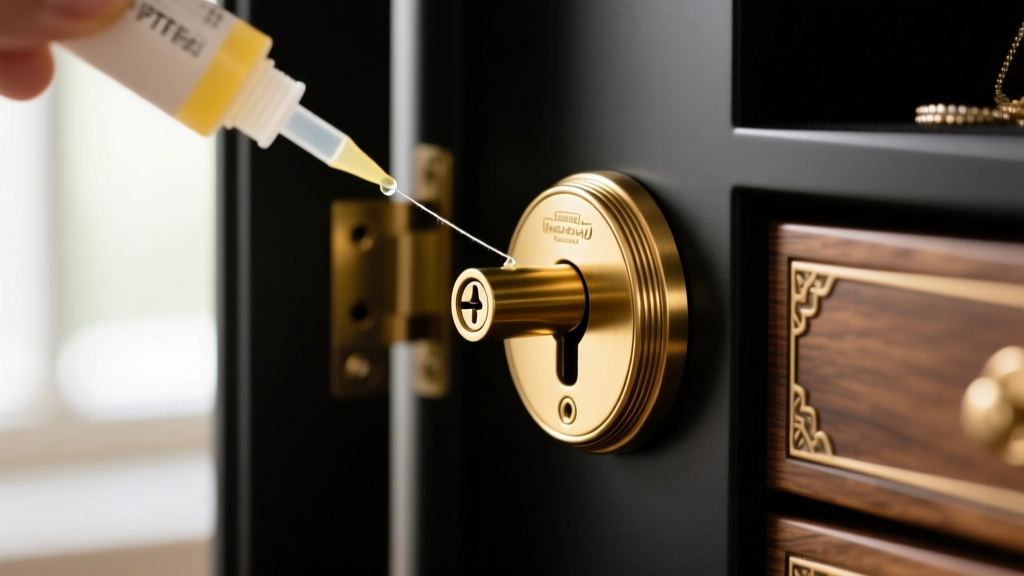
The standard advice for sticky locks is to use graphite powder. However, in humid environments, graphite absorbs moisture and turns into a thick, abrasive sludge that will permanently jam the delicate brass tumblers inside your armoire's lock.
Expert Tip: Instead of graphite, use a PTFE-based dry lubricant. PTFE is completely inert, repels moisture, and leaves a microscopic, non-stick film that won't attract dust or gum up the internal pins. Apply a micro-drop via the precision straw, insert the key, and turn it gently three times to distribute the fluid.
Fixing Stripped Hinge Screws
Drop-front armoire lids place immense torque on their hinges. If the screws begin to pull out of the wood, simply tightening them will only strip the hole further. The common DIY hack of stuffing toothpicks into the hole with wood glue is a temporary fix that will fail; toothpicks are made of soft pine and lack the shear strength to hold heavy hardwood lids.
The Professional Fix: Drill out the stripped hole using a bit matching the diameter of a hardwood dowel (usually 1/4 or 3/8 inch). Coat a solid oak or maple dowel in Titebond III Ultimate Wood Glue, tap it into the hole, and let it cure overnight. Once flush, drill a new pilot hole slightly smaller than your brass screw's root diameter, and reattach the hinge. This restores the structural integrity to better-than-factory levels.
Preventative Maintenance Matrix
To ensure your Ethan Allen jewelry armoire remains functional and safe for your collection, adhere to this seasonal maintenance schedule:
- Spring (Humidity Prep): Check room hygrometer. Ensure RH is between 40-50%. Re-apply paste wax to wooden drawer tracks before the summer swell.
- Summer (Tarnish Check): Inspect silver pieces stored in the bottom drawers (where heat and off-gassing pool). Replace anti-tarnish strips every 6 months.
- Fall (Hardware Audit): Tighten all exterior brass pulls and hinges. Clean brass with a non-abrasive, ammonia-free polish to preserve the original lacquer coating on the hardware.
- Winter (Dryness Defense): Indoor heating drops RH below 30%, risking wood cracking. Use a room humidifier to maintain 40% RH. Never place the armoire directly in front of a heat vent or wood stove.
Final Thoughts on Preservation
Troubleshooting an Ethan Allen jewelry armoire requires a balance of mechanical know-how and an understanding of material chemistry. By avoiding harsh chemical lubricants, replacing toxic vintage linings with archival-grade textiles, and respecting the hygroscopic nature of solid hardwoods, you can preserve both the furniture and the invaluable jewelry collection it houses. Treat your armoire not just as a storage box, but as a micro-climate vault that requires careful, informed stewardship.


