White Jewelry Box Materials: A Guide to Tarnish Prevention
Discover how exterior and interior materials in a white jewelry box affect tarnish. Compare leather, acrylic, and MDF for safe storage.

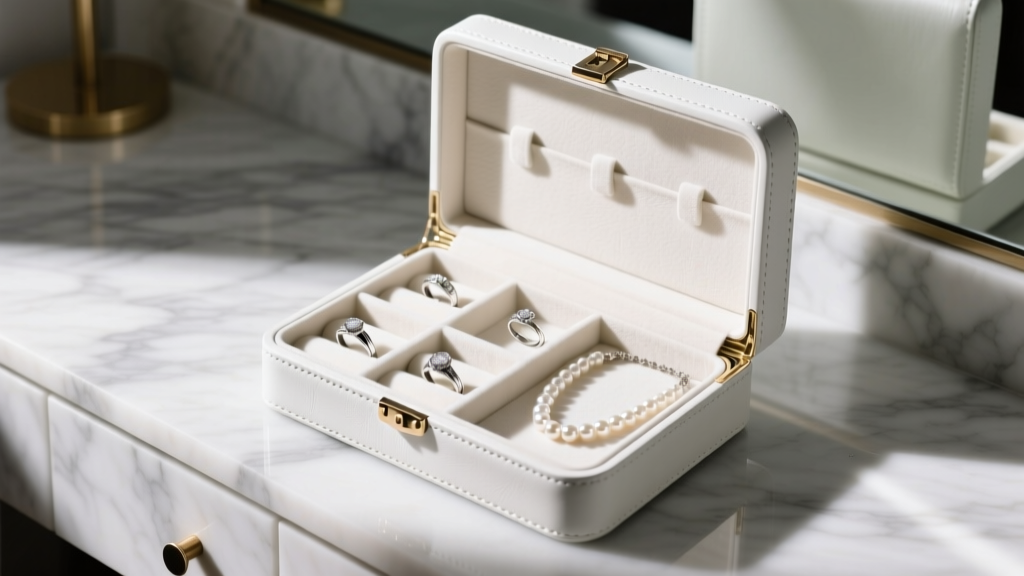
The aesthetic appeal of a white jewelry box is undeniable. It evokes a sense of cleanliness, modern luxury, and minimalist organization. However, from a materials science perspective, the color white in jewelry storage presents unique chemical and structural challenges. The dyes, bleaching agents, and base substrates required to achieve a pristine white finish can sometimes introduce volatile organic compounds (VOCs) or sulfur-bearing byproducts that accelerate the oxidation of precious metals. In the 2026 luxury storage market, discerning collectors are no longer just looking at the exterior finish; they are scrutinizing the chemical inertness of the materials touching their most vulnerable pieces.
This guide provides a deep-dive technical comparison of the materials used to construct white jewelry boxes, evaluating their exterior durability, interior off-gassing properties, and overall efficacy in preventing tarnish and moisture damage.
The Chemistry of Tarnish and Storage Materials
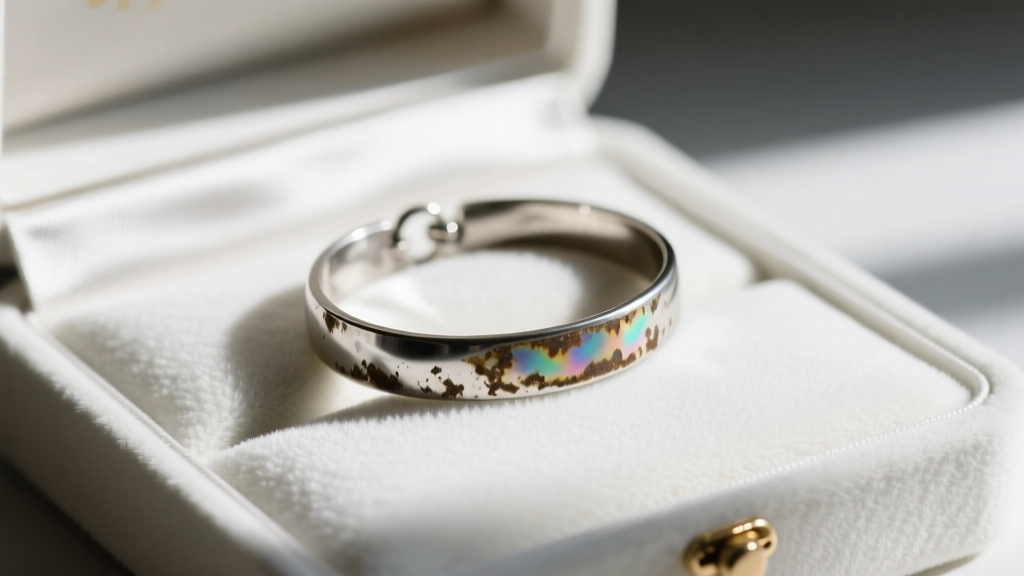
Tarnish on silver and copper alloys is primarily caused by a chemical reaction with hydrogen sulfide (H2S) and sulfur dioxide (SO2) in the presence of moisture. According to the Gemological Institute of America (GIA), even trace amounts of sulfur compounds trapped in the adhesives, dyes, or synthetic leathers of a storage box can create a localized microclimate that rapidly degrades metals. Furthermore, improper humidity control within a sealed box can lead to the corrosion of karat gold alloys and the dehydration of organic gems like pearls and opals.
When evaluating a white jewelry box, you must assess two distinct material zones: the exterior shell (which dictates structural integrity and ambient off-gassing) and the interior lining (which dictates direct contact safety).
Exterior Material Breakdown: Durability and Off-Gassing
The outer shell of a white jewelry box is typically constructed from one of three primary materials, each with distinct chemical profiles.
PU Leather vs. Genuine Leather
White polyurethane (PU) leather is the most common material for mid-range boxes. While modern 2026 PU formulations are vastly superior to early PVC alternatives, cheaper PU leathers often rely on sulfur-based vulcanizing agents or formaldehyde-releasing preservatives during the tanning and coating process. If a white PU leather box emits a distinct 'chemical' or 'sweet' odor upon opening, it is actively off-gassing VOCs that will tarnish silver within weeks.
Conversely, white genuine leather is usually chrome-tanned or vegetable-tanned. Chrome-tanned white leather can retain residual salts and sulfur compounds from the bleaching process required to achieve a stark white hue. Vegetable-tanned white leather is significantly safer for jewelry but is rare and expensive, as achieving a pure white finish without harsh chemical bleaches is difficult.
Coated MDF and Solid Wood
Many rigid white jewelry boxes are crafted from Medium-Density Fiberboard (MDF) coated in a white lacquer or melamine foil. The core danger of MDF lies in its urea-formaldehyde resin binders. If the white exterior coating is scratched, or if the interior is not hermetically sealed with an inert barrier, formaldehyde and acidic vapors will seep into the storage compartments. Solid wood painted with zero-VOC, water-based white acrylic enamel is a vastly superior, chemically inert alternative, though it commands a premium price point.
Acrylic and Resin Options
Cast acrylic (PMMA) is entirely chemically inert and does not off-gas at room temperature. A white acrylic jewelry box—often achieved through a frosted or opaque white pigment suspension—is arguably the safest exterior material for preventing chemical tarnish. However, acrylic is highly susceptible to static electricity, which attracts dust and particulate matter that can cause micro-scratches on soft metals like high-karat gold.
Interior Linings: Where the Real Damage Happens
The interior lining is the most critical factor in jewelry preservation. A white exterior means nothing if the interior is lined with acidic materials.
Standard Velvet vs. Microfiber
Traditional white velvet is often woven from cotton or rayon blends that are treated with optical brighteners and sulfur-based dyes to achieve a brilliant white color. These treatments lower the pH of the fabric, making it acidic. Over time, acidic fabrics will pit and corrode silver and copper. Untreated, unbleached white microfiber is a much safer alternative, as it is synthetically derived and generally pH-neutral.
Anti-Tarnish Cloth Integration
The gold standard for interior lining is Pacific Silvercloth or equivalent anti-tarnish flannel. These fabrics are embedded with microscopic silver particles that act as a sacrificial anode, capturing and neutralizing hydrogen sulfide gases before they reach your jewelry. Finding a white jewelry box lined with genuine anti-tarnish cloth is rare, as the embedded silver particles typically give the fabric a grey or brownish hue. If a box claims to have 'white anti-tarnish lining,' verify that it utilizes a modern carbon-impregnated polymer rather than traditional silver-embedded flannel.
The Hidden Enemy: Cardboard Backing
In many mass-produced white jewelry boxes, the plush lining is glued directly onto a cardboard or recycled paper substrate. Paper products contain lignin and sulfur compounds from the wood-pulping process. As the paper degrades, it releases acidic gases that permeate the thin fabric lining. High-end boxes will use acid-free foam core or inert polyethylene boards as the structural backing beneath the fabric.
Material Comparison Matrix
| Material Component | Tarnish Risk | Moisture Resistance | Best Use Case |
|---|---|---|---|
| White PU Leather (Low-Grade) | High (VOC off-gassing) | High | Costume jewelry only |
| White Solid Wood (Zero-VOC Paint) | Very Low | Moderate | Heirloom metals, pearls |
| Frosted White Acrylic (PMMA) | None (Inert) | High | Diamonds, platinum, gold |
| White Cotton Velvet (Bleached) | High (Acidic pH) | Low (Traps moisture) | Short-term display only |
| Carbon-Impregnated White Flannel | Very Low (Absorbs H2S) | Moderate | Sterling silver, copper |
Environmental Controls for White Storage Units
Even the most chemically inert white jewelry box requires active environmental management to protect sensitive pieces. The London Assay Office emphasizes that controlling relative humidity (RH) is just as vital as eliminating sulfur sources.
Desiccants and Humidity Buffers
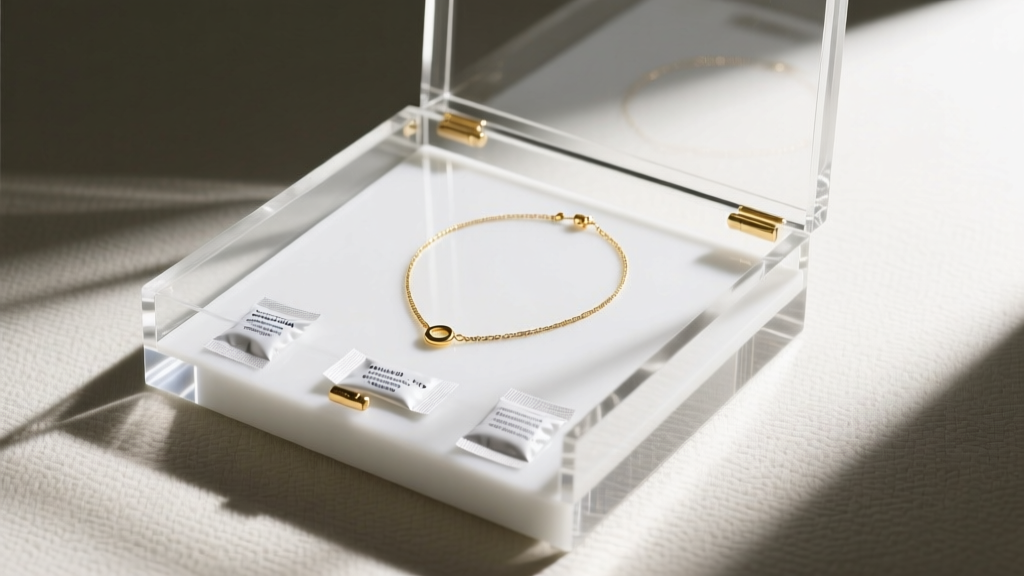
For organic gems like pearls, opals, and turquoise, the interior RH of your jewelry box should be maintained between 40% and 50%. Standard silica gel packets will aggressively pull moisture from the air, potentially dropping the RH below 30% and causing opals to craze or pearls to crack. Instead, use two-way humidity control packets (like Boveda 49%) specifically designed to maintain a precise 49% RH.
Activated Carbon and 3M Anti-Tarnish Strips
If your white jewelry box lacks an anti-tarnish interior lining, you can retrofit it. Place 3M anti-tarnish tabs or small sachets of activated bamboo charcoal in the corners of the box. These materials adsorb ambient sulfur compounds and VOCs, effectively creating a purified microclimate within the storage space. Replace these strips every six months to maintain efficacy.
Maintenance and Cleaning Protocols
Maintaining the pristine white exterior of your jewelry box requires specific cleaning agents that will not compromise the structural integrity or introduce harmful chemicals to the interior.
- For White PU and Genuine Leather: Never use alcohol-based cleaners or harsh degreasers, which will strip the protective topcoat and accelerate the breakdown of the polyurethane or leather fibers. Use a pH-balanced leather cleaner followed by a light application of white beeswax to seal the pores.
- For White Acrylic: Avoid ammonia-based glass cleaners (like Windex), which will cause micro-crazing and clouding in PMMA. Use a dedicated acrylic cleaner and a ultra-fine microfiber cloth to prevent static buildup and scratching.
- For White Lacquered Wood: Dust with a dry, lint-free cloth. If a spill occurs, wipe immediately with a barely damp cloth and dry instantly to prevent the white lacquer from yellowing or lifting.
Conclusion
Selecting a white jewelry box is an exercise in balancing visual minimalism with chemical pragmatism. By prioritizing inert exterior materials like solid wood with zero-VOC finishes or cast acrylic, and ensuring the interior utilizes pH-neutral microfiber or carbon-impregnated linings over acid-bleached velvets, you can achieve the bright, modern aesthetic you desire without sacrificing the metallurgical integrity of your collection. Always verify the substrates hidden beneath the fabric, and actively manage the interior microclimate to ensure your jewelry remains as pristine as the box that houses it.


