Beginner Guide: Choosing the Best Vanity With Jewelry Storage
Discover how to choose the perfect vanity with jewelry storage. Learn about anti-tarnish linings, compartment sizes, and organization.

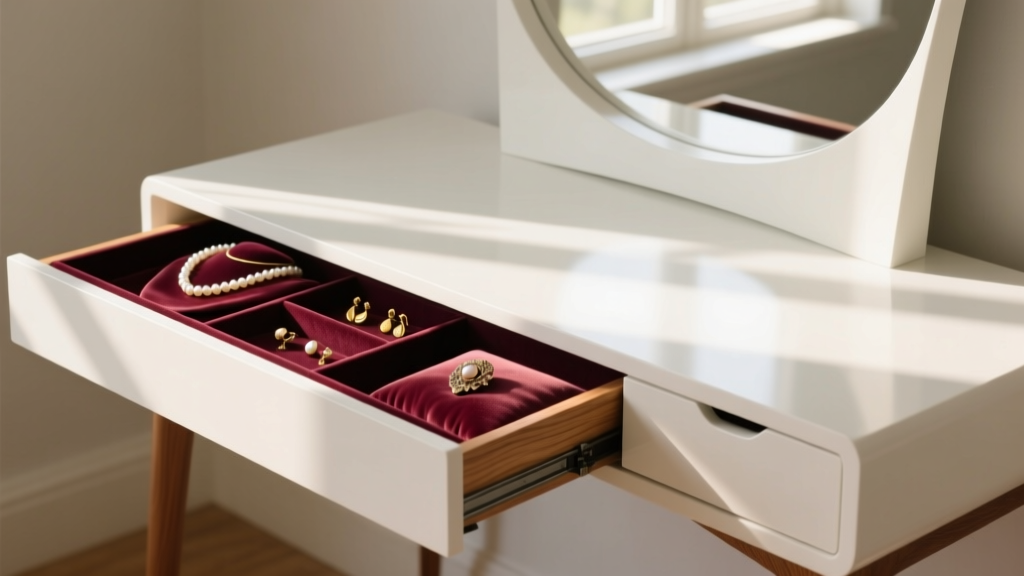
Upgrading your bedroom or dressing area with a dedicated vanity with jewelry storage is one of the most impactful organizational decisions you can make. For beginners, the sheer volume of options—ranging from basic mirrored desks with shallow drawers to bespoke solid-wood armoires—can be overwhelming. More importantly, not all storage is created equal; the wrong environment can accelerate silver tarnishing, tangle delicate chains, and cause micro-scratches on softer gemstones.
This beginner-friendly explainer breaks down the exact material grades, compartment dimensions, and organizational frameworks you need to evaluate when shopping for a vanity. By understanding the science of jewelry preservation, you can invest in a piece of furniture that protects your collection while streamlining your daily routine.
Why Your Jewelry Needs a Dedicated Vanity Space
Before diving into product specifications, it is crucial to understand why tossing your accessories into a standard desk drawer or a bathroom counter is detrimental. Jewelry degradation generally falls into two categories: chemical and mechanical.
Chemically, sterling silver reacts with hydrogen sulfide and moisture in the air to form silver sulfide, the black tarnish layer commonly seen on neglected pieces. Mechanically, the Gemological Institute of America (GIA) warns against storing pieces of varying hardness together. The Mohs scale of mineral hardness dictates that a diamond (hardness of 10) will easily scratch a pearl (hardness of 2.5 to 4.5) or even 14k gold (hardness of 2.5 to 3) if they are jumbled in the same compartment. A properly configured vanity mitigates both risks through specialized linings and physical separation.
Key Features to Look for in a Vanity With Jewelry Storage
When evaluating a vanity, look past the aesthetic exterior and focus on the interior architecture. The best vanities integrate specific organizational zones designed around standard jewelry dimensions.
Lining Materials: Beyond Standard Velvet
Most entry-level vanities (priced between $150 and $300) use standard EVA foam wrapped in untreated polyester velvet. While this looks plush, untreated velvet traps ambient moisture and does nothing to stop chemical tarnishing. For mid-tier to high-end vanities ($400 to $1,200+), look for anti-tarnish treated flannel or Pacific Silvercloth. These materials are embedded with fine silver particles or zinc that act as sacrificial anodes, absorbing sulfur compounds from the air before they can reach your jewelry.
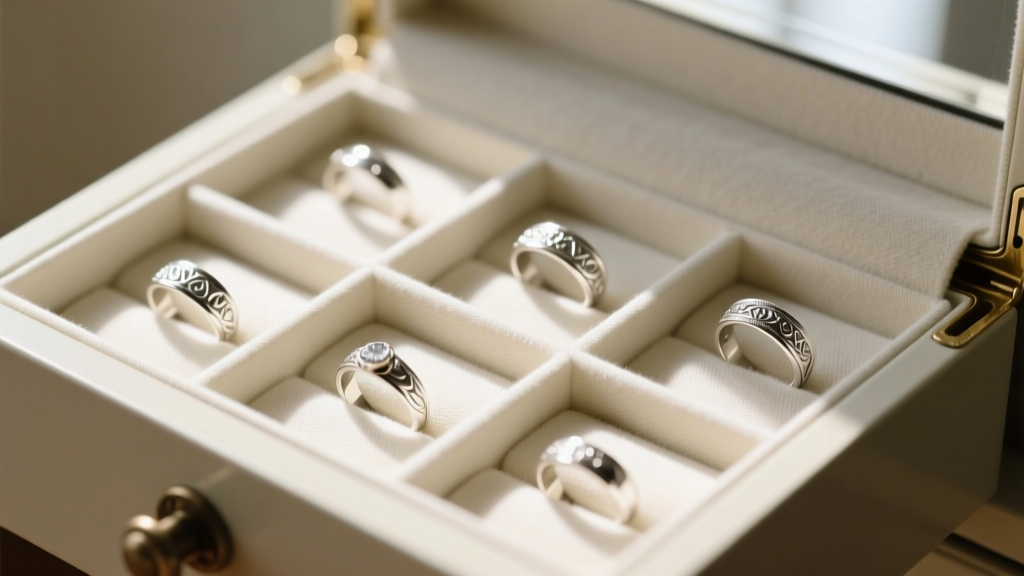
Compartment Dimensions and Ergonomics
A well-designed vanity drawer will feature modular or fixed inserts with precise dimensions:
- Ring Slots: Should measure at least 1.25 x 1.25 inches to accommodate wide-band rings or cocktail rings without crushing the prongs.
- Watch Pillows: Ideal dimensions are 3 x 2 inches, providing enough tension to keep watch clasps closed without overstressing the leather straps.
- Necklace Drops: If the vanity features a pull-out tray with hooks, the drop distance (from hook to drawer floor) must be a minimum of 14 inches. Anything shorter will cause longer chains (like 18-inch or 20-inch pendants) to pool at the bottom and tangle.
Standard Vanity Jewelry Drawer Dimensions
To help you benchmark your options, refer to the comparison table below. This data reflects standard industry specifications for vanities featuring dedicated top-drawer jewelry inserts.
| Tier / Price Range | Drawer Depth | Lining Material | Best For |
|---|---|---|---|
| Entry ($150 - $300) | 2.5 to 3 inches | Untreated Velvet / EVA Foam | Fashion jewelry, daily-wear stainless steel, acrylics |
| Mid-Tier ($400 - $800) | 3 to 4 inches | Treated Anti-Tarnish Flannel | Sterling silver, 14k gold, semi-precious stones |
| Premium ($1,000 - $2,500+) | 4 to 6 inches | Pacific Silvercloth / Suede | Fine jewelry, high-carat diamonds, estate pieces, luxury watches |
How to Configure Your Vanity Drawers for Maximum Protection
Buying the right vanity is only half the battle; configuring it correctly is where true preservation happens. Follow these three structural rules when organizing your new vanity.
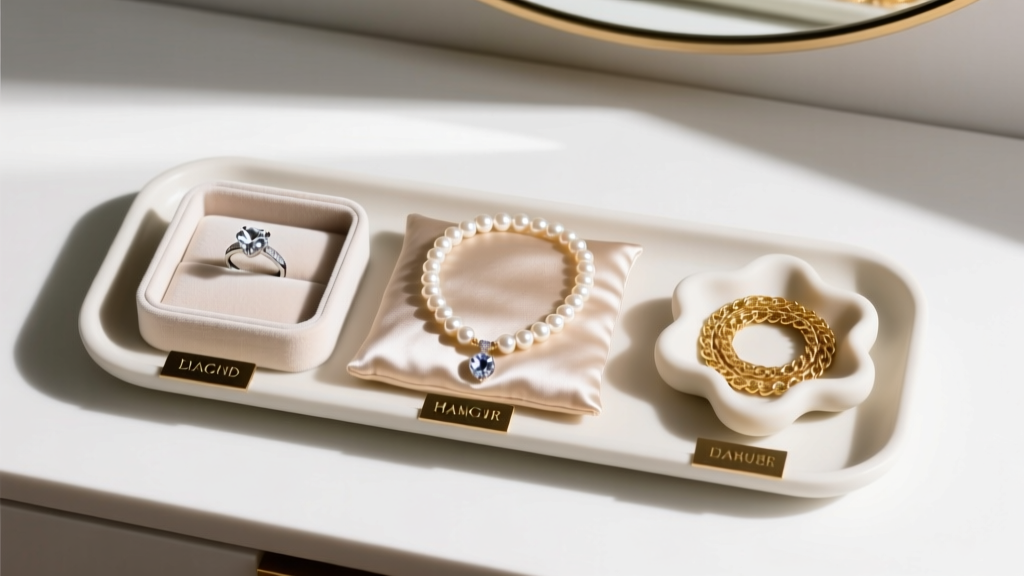
Rule 1: The Mohs Scale Separation
Never mix hard gemstones with soft materials in the same open tray. Dedicate one drawer or specific partitioned zone exclusively for diamonds, sapphires, and rubies (Mohs 8-10). Create a separate, plush-lined zone for organic gems like pearls, coral, and amber. According to Jewelers of America, organic gems are highly porous and susceptible to both scratching and chemical damage from perfumes, making isolated, breathable storage essential.
Rule 2: The Clasp Protocol
Always store necklaces and bracelets with their clasps securely fastened. If a chain breaks or the clasp opens inside the drawer, the microscopic loops of the chain can easily hook onto the prongs of a nearby ring, leading to bent settings or lost stones when you pull them apart.
Rule 3: Weight Distribution
Heavy items, such as solid gold bangles, chunky chain links, and steel watches, should be stored in the lower or deeper sections of the vanity drawer. Lighter items, like delicate gold vermeil chains and hollow hoop earrings, belong in the shallow, top-tier inserts to prevent them from being crushed when the drawer is opened and closed.
Maintenance and Anti-Tarnish Upgrades
Even the best vanity with jewelry storage requires periodic maintenance to maintain an optimal micro-climate for your accessories.
- Silica Gel Packets: Place 2-3 small silica gel packets in the corners of your jewelry drawers to absorb excess ambient humidity. Replace them every 6 months.
- Activated Charcoal: For drawers that house silver, a small muslin bag of activated charcoal can help absorb airborne pollutants and sulfur compounds.
- Linings Replacement: Anti-tarnish cloths lose their efficacy over time as the embedded metals become saturated. If your vanity has removable inserts, plan to replace the lining fabric every 2 to 3 years.
Common Beginner Mistakes to Avoid
As you transition to a dedicated vanity setup, avoid these frequent pitfalls that can undo your organizational efforts:
- Storing in High-Humidity Zones: Never place your jewelry vanity in a bathroom or directly adjacent to a shower. The drastic fluctuations in temperature and humidity will rapidly degrade both the wood of the vanity and the metals inside it.
- Using Rubber Bands: Never use rubber bands to bundle jewelry or secure watch straps. As rubber degrades, it releases sulfur gases that cause aggressive, localized tarnishing on silver and gold, and the melted residue is nearly impossible to remove from porous gemstones.
- Overcrowding Drawers: A drawer that is too full forces you to dig for pieces, increasing the risk of mechanical damage. If your collection outgrows your vanity's built-in inserts, invest in stackable, acrylic modular trays that sit neatly inside the existing drawer space.
Investing in a high-quality vanity with jewelry storage is an investment in the longevity of your collection. By prioritizing anti-tarnish materials, respecting gemstone hardness scales, and maintaining a stable environment, your vanity will serve as both a beautiful functional centerpiece and a secure vault for your most cherished pieces.


