The Vintage Japanese Lacquer Jewelry Box: 2026 Style Trends
Discover 2026 trends for the vintage Japanese lacquer jewelry box. Learn to authenticate urushi, decode maki-e techniques, and preserve your collection.

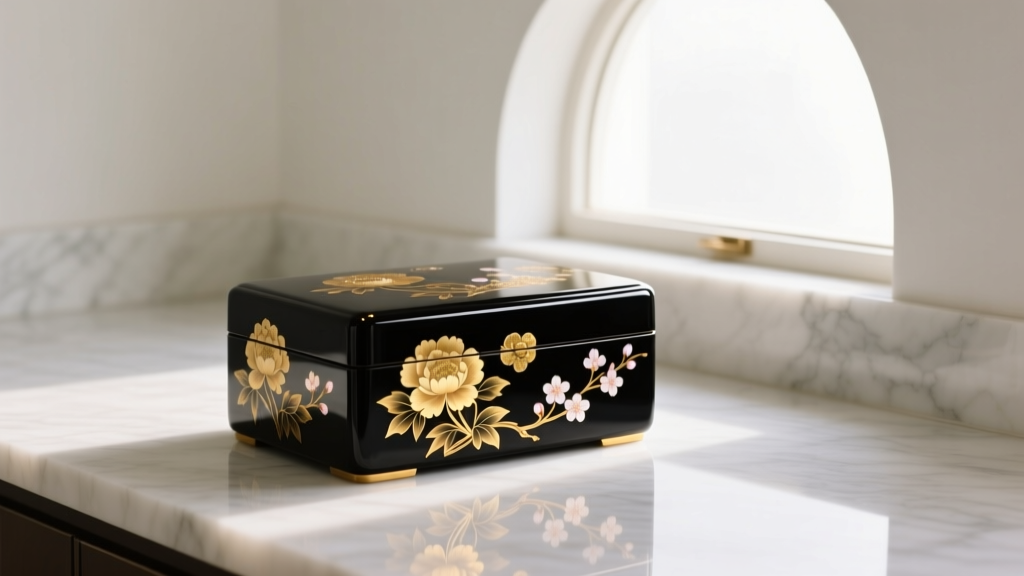
As interior design in 2026 pivots away from sterile minimalism toward 'Heritage Maximalism' and evolved Japandi aesthetics, the vintage Japanese lacquer jewelry box has emerged as a highly coveted functional art piece. No longer relegated to dusty antique shelves, these masterworks of urushi craftsmanship are being integrated into modern vanities as statement storage solutions. But beyond their undeniable visual appeal, what makes these boxes so special, and how can modern collectors navigate the complexities of authentication, valuation, and preservation?
Whether you are storing high-carat gold heirlooms or everyday silver staples, understanding the material science and historical context of Japanese lacquerware is essential. This guide breaks down the anatomy, market trends, and preservation protocols for vintage lacquer jewelry storage.
The Chemistry of Urushi: More Than Just Paint
To appreciate a vintage Japanese lacquer jewelry box, one must understand that true urushi is not a paint or a varnish; it is a living, breathing sap harvested from the Toxicodendron vernicifluum tree. According to the Metropolitan Museum of Art, the sap contains urushiol, the same irritant found in poison ivy. In its liquid state, it is highly toxic, but once cured, it becomes one of the most durable, non-reactive organic materials on earth.
Unlike modern polyurethanes that dry through solvent evaporation, urushi polymerizes by absorbing moisture from the air. This requires a highly controlled environment with 70% to 80% relative humidity. The resulting chemical bonds create a surface that is impervious to water, resistant to acids and alkalis, and entirely non-off-gassing—making it an exceptionally safe environment for storing sensitive gemstones and precious metals.
Synthetic Imposters vs. Hon-Urushi
In the 2026 antique market, distinguishing between hon-urushi (pure lacquer) and mid-century synthetic imitations is critical. Synthetic 'japanning' or cashew-nut shell liquid (CNSL) lacquers were heavily used in the post-WWII Showa era to meet Western export demand. Pure urushi exhibits a deep, translucent warmth and a subtle, hand-rubbed luster that synthetic coatings cannot replicate. Under a jeweler's loupe, synthetic finishes often show uniform brush strokes or spray stippling, whereas authentic hand-burnished urushi will reveal microscopic, overlapping polishing lines from charcoal and deer horn ash.
Decoding the Decorative Techniques: Maki-e and Raden
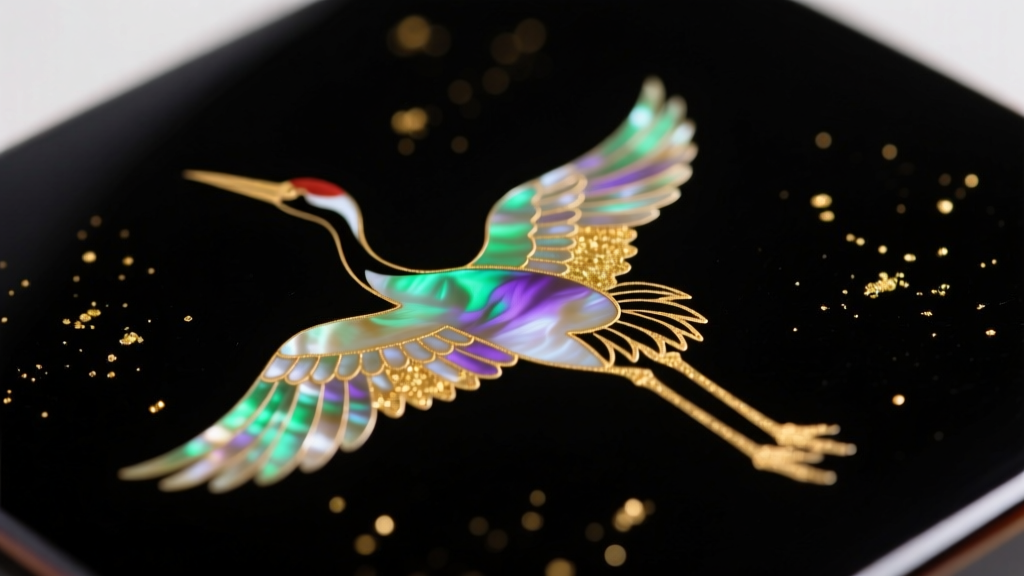
The value of a vintage Japanese lacquer jewelry box is largely dictated by its decorative technique. Master artisans spent decades perfecting methods that transformed simple wooden substrates into breathtaking canvases. Below is a comparative framework of the most common techniques you will encounter in the vintage market.
| Technique | Description & Materials | Visual Characteristics | Market Rarity |
|---|---|---|---|
| Maki-e | 'Sprinkled picture.' Gold or silver powder applied to wet lacquer. | Metallic motifs flush with or slightly raised above the dark background. | High (Especially Takamaki-e / high relief) |
| Raden | Inlay of abalone, nautilus, or pearl oyster shells. | Iridescent, color-shifting geometric or naturalistic patterns. | Medium to High |
| Chinkin | Incised lines filled with gold leaf or powder. | Fine, delicate linear drawings that catch the light. | Medium |
| Togidashi | Burnished lacquer. Maki-e covered in layers of black lacquer, then polished away. | Ghostly, smooth metallic designs perfectly flush with the surface. | Very High |
For a deeper dive into the historical evolution of these techniques, the Victoria and Albert Museum offers an extensive archive of Edo and Meiji period lacquerware, highlighting how the shift from samurai patronage to Western export markets altered the complexity of jewelry box designs.
2026 Valuation Guide: Eras and Pricing Tiers
The pricing of vintage Japanese lacquer jewelry boxes has seen a 22% year-over-year increase as collectors seek authentic, handcrafted storage solutions. Valuation depends heavily on the era of production, the complexity of the kanamono (metal fittings), and the condition of the interior silk linings.
- Late Showa Era (1960s–1980s): $150 – $400. Often featuring simpler, stamped brass hardware and CNSL or mixed lacquers. Excellent for daily use, but lacking investment-grade artistry.
- Taisho to Early Showa (1912–1940s): $800 – $2,500. The sweet spot for collectors. These boxes frequently feature exquisite Raden and Maki-e combinations, heavy copper-gilt hinges, and multiple tiered drawers designed originally for kanzashi (hairpins) and inro.
- Meiji Era (1868–1912): $3,500 – $15,000+. Museum-quality export pieces. Often signed by master studios like Shibata Zeshin. These feature nashiji (pear-skin gold flake) interiors and elaborate, multi-layered takamaki-e landscapes.
Preservation and Jewelry Storage Best Practices
While urushi is incredibly resilient, it is not invincible. The primary enemy of a vintage Japanese lacquer jewelry box is ultraviolet (UV) light. Prolonged exposure to direct sunlight causes the lacquer to lose its gloss, eventually leading to 'chalking' and micro-fissures. Always position your box on a vanity that receives only indirect, ambient light.
Humidity Control and Structural Integrity
Because urushi cures via moisture absorption, it remains somewhat hygroscopic. The American Institute for Conservation recommends maintaining a stable relative humidity (RH) between 45% and 55% for organic artifacts. If your home's winter heating drops the RH below 30%, the wooden core of the box will shrink, causing the rigid lacquer shell to crack or delaminate. Invest in a small, digital hygrometer to monitor the room, and use a localized humidifier during dry months.
Upgrading the Interior for Modern Jewelry
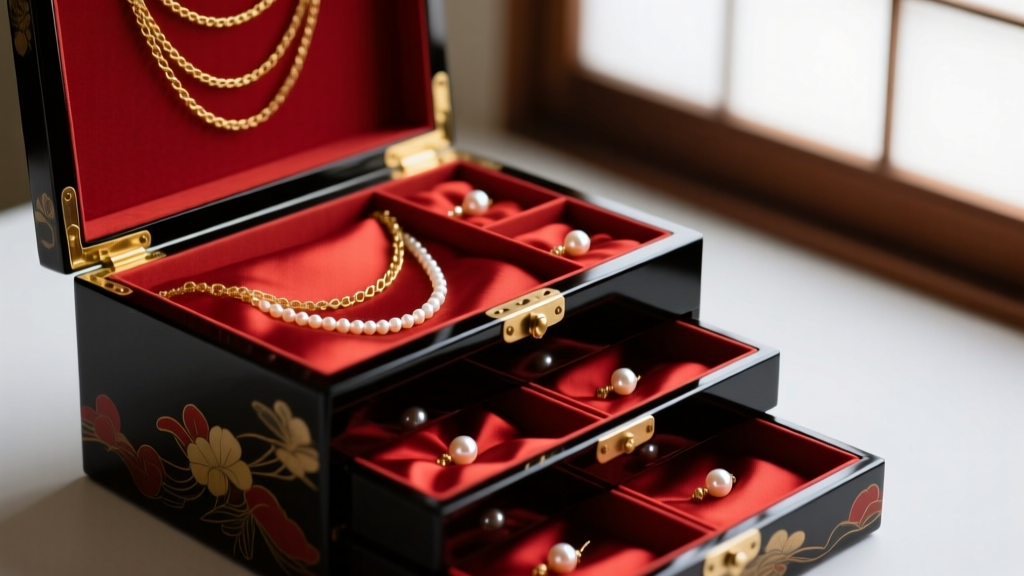
Vintage boxes were traditionally lined with woven silk or cotton velvet. While beautiful, vintage silk dyes often contain acidic mordants and sulfur compounds that will rapidly tarnish sterling silver and react with porous gems like pearls and turquoise. Actionable Upgrade: Carefully remove the degraded vintage silk using a plastic spudger to avoid scratching the interior lacquer. Replace it with modern, anti-tarnish Pacific Silvercloth or acid-free, unbleached cotton flannel. Use a reversible, conservation-grade wheat starch paste for adhesion, ensuring the modification can be undone by future conservators without damaging the original wooden substrate. This simple upgrade bridges the gap between 19th-century artistry and 2026 jewelry preservation science, allowing you to safely store your most vulnerable silver and gold pieces in a breathtaking historical artifact.


