Vintage Japanese Black Lacquer Jewelry Box: Material Guide
Discover the material properties of a vintage Japanese black lacquer jewelry box. Compare authentic urushi to modern synthetics for optimal jewelry care.

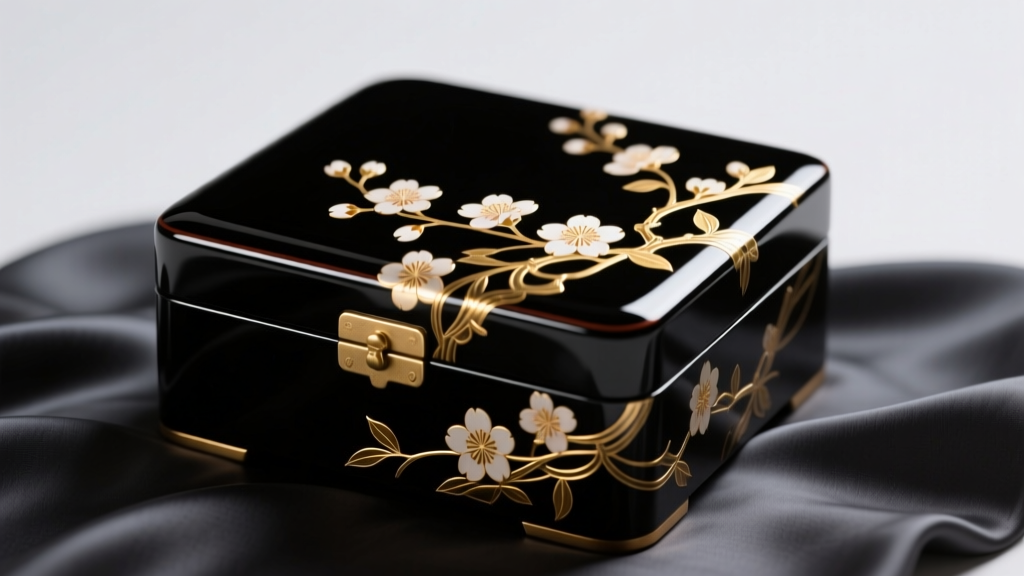
For serious jewelry collectors, storage is not merely about keeping pieces untangled; it is about chemical preservation, humidity control, and material inertness. Among the most coveted storage solutions in the antique market is the vintage Japanese black lacquer jewelry box. However, not all lacquer is created equal. The difference between authentic Edo or Meiji period urushi and mid-century export synthetics drastically impacts how well your silver, pearls, and gemstones are preserved over time.
In this comprehensive material guide, we deconstruct the anatomy of vintage Japanese lacquerware, comparing traditional sap-based polymers to modern alternatives, and analyze the specific wood cores and interior linings that dictate a box's archival quality.
The Allure of Urushi: Understanding Authentic Japanese Lacquer
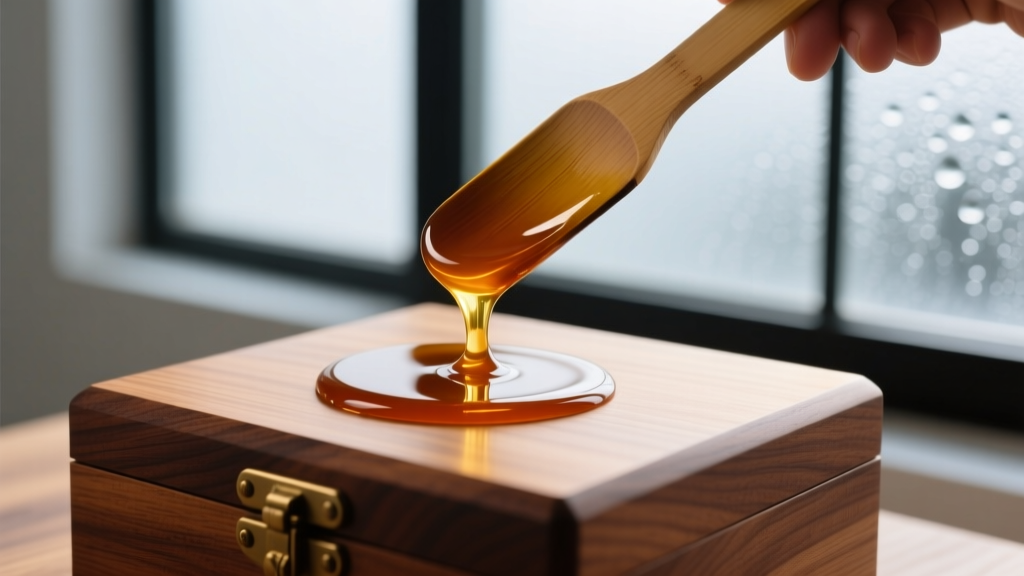
True Japanese lacquer, known as urushi, is not a paint or a varnish in the Western sense. It is the toxic sap of the Toxicodendron vernicifluum tree. When harvested and applied to a wooden substrate, urushi does not dry through evaporation. Instead, it undergoes a complex enzymatic polymerization process. The enzyme laccase requires a highly specific environment—typically 75% to 85% relative humidity and temperatures between 25°C and 30°C—to catalyze the hardening of urushiol into an incredibly durable, inert plastic-like shell.
From a jewelry storage perspective, fully cured urushi is a miracle material. It is entirely impervious to water, highly resistant to acids and alkalis, and most importantly, it emits zero volatile organic compounds (VOCs) or sulfur gases once cured. This makes an authentic vintage Japanese black lacquer jewelry box an ideal environment for storing sterling silver, which is highly susceptible to sulfur-induced tarnishing (silver sulfide formation).
Material Comparison: Authentic Urushi vs. Modern Synthetic Lacquers
When shopping for a vintage Japanese black lacquer jewelry box, buyers frequently encounter pieces from the 1960s and 1970s designed for the Western export market. These often utilize synthetic lacquers or cashew-nut shell liquid (CNSL) derivatives. Below is a material comparison to help you identify what you are purchasing and how it affects your jewelry.
| Material Type | Base Origin | Curing Mechanism | Off-Gassing Risk | Typical Era / Price |
|---|---|---|---|---|
| Authentic Urushi | Tree Sap (Toxicodendron) | Enzymatic Polymerization (Humidity) | None (Zero sulfur/VOCs) | Pre-1940s / $300 - $2,000+ |
| Cashew Lacquer | Cashew Nut Shell Liquid | Oxidation / Heat Curing | Low (Minimal off-gassing) | 1950s-1970s / $80 - $250 |
| Polyurethane / Synthetic | Petrochemical Resins | Solvent Evaporation / Chemical Catalyst | Moderate to High (Trapped solvents) | 1980s-Present / $30 - $100 |
According to conservation research published by the Getty Conservation Institute, synthetic resins can trap unreacted solvents that slowly off-gas over decades. In an enclosed jewelry box, these trace chemicals can accelerate the oxidation of copper alloys and degrade the nacre on natural pearls. Authentic urushi, by contrast, provides a chemically dead, stable barrier.
The Wood Core: Hinoki, Paulownia, and MDF
The lacquer is only the exterior skin; the structural integrity and moisture-regulating properties of a vintage Japanese black lacquer jewelry box depend entirely on its wooden core (kiji). Traditional artisans utilized specific woods for their dimensional stability and pest-resistant properties.
Paulownia (Kiri)
Paulownia is the gold standard for Japanese storage. It is exceptionally lightweight, warp-resistant, and hygroscopic. In high-humidity environments, paulownia absorbs ambient moisture, swelling slightly to create an airtight seal that protects the interior from rapid humidity fluctuations. This makes it superb for storing opals and emeralds, which can crack or craze if subjected to sudden drops in ambient humidity.
Hinoki (Japanese Cypress)
Hinoki is prized for its high natural oil content and distinct aromatic compounds, notably hinokitiol. These oils act as a natural fungicide and insect repellent. A vintage box with a hinoki core offers passive protection against mold and textile-eating pests that might otherwise target the interior silk linings.
MDF and Particleboard (The Export Era Compromise)
During the mid-century economic boom, mass-produced export boxes frequently substituted traditional timber with MDF (Medium-Density Fiberboard). While MDF provides a perfectly smooth surface for synthetic lacquers, it is highly susceptible to catastrophic swelling if the lacquer surface is chipped and moisture penetrates the core. Furthermore, the urea-formaldehyde resins used in vintage MDF can off-gas trace amounts of formic acid, which is highly corrosive to lead-based solders and low-karat gold alloys.
Interior Linings and Tarnish Prevention
The interior of a vintage Japanese black lacquer jewelry box is traditionally lined with silk (kinu), specifically a tightly woven crepe or satin weave. From a modern conservation standpoint, vintage silk is vastly superior to the synthetic velvets and polyurethane foams found in contemporary commercial jewelry boxes.
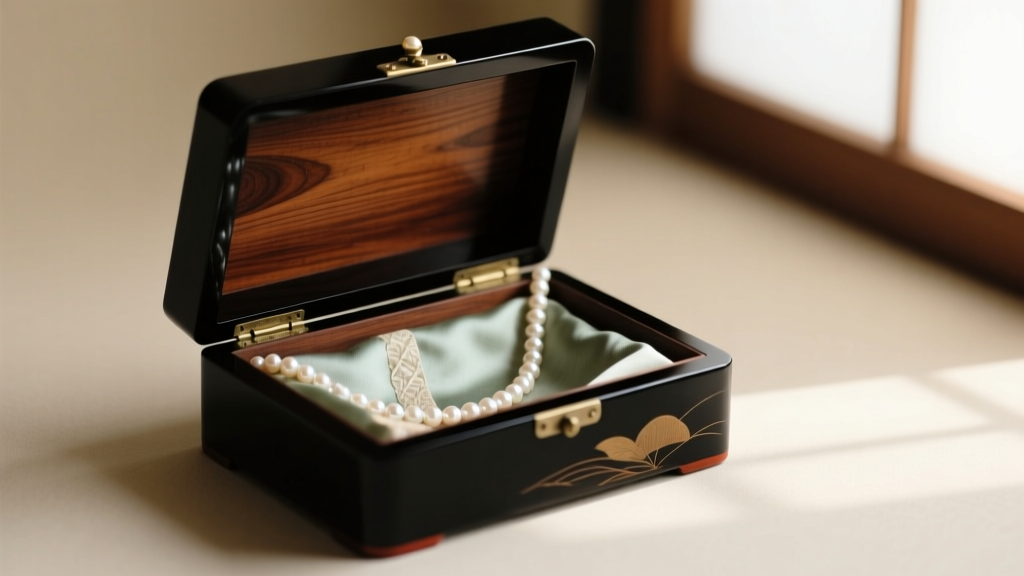
Modern velvet is often dyed using sulfur-based mordants and backed with synthetic latex adhesives. The Metropolitan Museum of Art frequently notes in its textile conservation guidelines that modern commercial velvets are a primary culprit in the rapid tarnishing of museum-grade silver. Vintage Japanese silk, dyed with natural or early stable synthetic dyes and adhered with rice paste (noribari), contains no reactive sulfur. If you are storing unrhodium-plated white gold or high-purity silver, an intact vintage silk interior is a premier choice for long-term archival storage.
Authentication and Conservation of Vintage Pieces
Identifying a genuine vintage Japanese black lacquer jewelry box requires examining both the decorative techniques and the structural wear patterns. Look for the following hallmarks of authenticity:
- Maki-e (Sprinkled Picture): Authentic pieces feature gold or silver powder suspended within the lacquer layers, polished to a mirror finish. Faux maki-e will sit on top of the surface and feel raised or textured to the touch.
- Raden (Mother of Pearl Inlay): High-quality vintage boxes use micro-thin slices of abalone shell inlaid into the lacquer. The shell should be flush with the surrounding black surface, not glued on top.
- Crazing vs. Chipping: Authentic urushi is flexible. If a box is dropped, urushi tends to dent or chip cleanly. Synthetic lacquers, being brittle, will exhibit spider-web crazing or flaking around the metal hinges.
"When storing lacquerware, avoid prolonged exposure to ultraviolet light, which degrades the urushiol bonds and causes the deep black finish to fade to a translucent, muddy brown. Maintain an ambient relative humidity of 50-60% to prevent the wooden core from contracting and delaminating the lacquer skin."
Final Verdict: Sourcing Your Vintage Japanese Black Lacquer Jewelry Box
Investing in a vintage Japanese black lacquer jewelry box is an exercise in acquiring functional art. For collectors of antique silver, natural pearls, and high-carat gold, the chemical inertness of authentic urushi and the moisture-buffering properties of a paulownia core offer a level of passive preservation that modern, mass-produced plastic and velvet organizers simply cannot match.
When sourcing, prioritize pre-1950s pieces with verified urushi finishes and intact silk interiors. While the initial investment may range from $300 to over $1,000 for museum-quality examples, the unparalleled material properties ensure that both the box and the heirlooms it protects will survive for generations to come.


