Vintage Jewelry Box Wood: Species, Joinery & Preservation Guide
Master the evaluation of vintage jewelry box wood. Learn about species acidity, joinery dating, and archival lining protocols for safe storage.

The Chemistry of Antique Storage: Why Wood Selection Matters
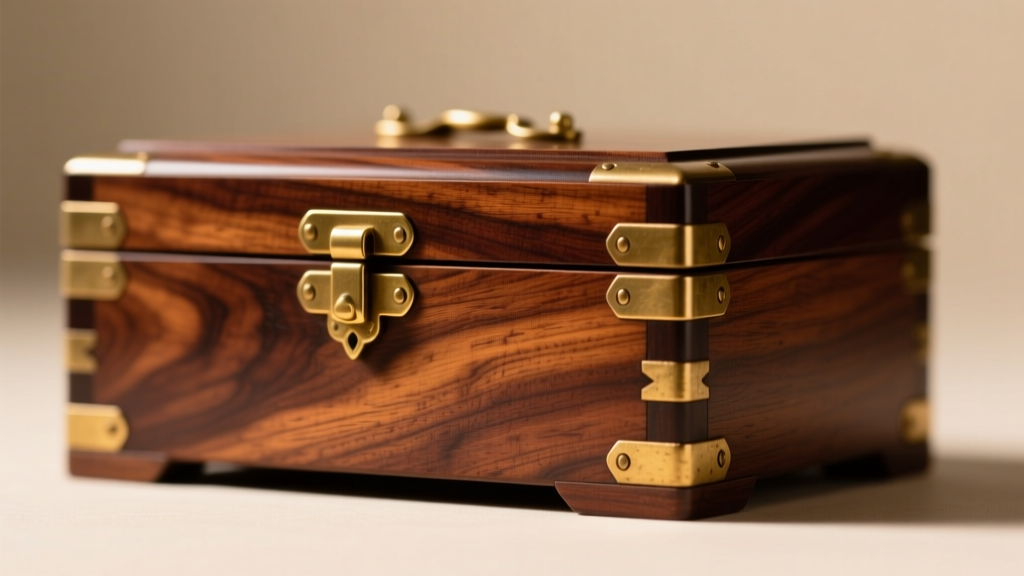
When collecting or restoring antique storage, the aesthetic appeal of a vintage jewelry box wood exterior often overshadows a critical scientific reality: wood is a reactive, off-gassing organic material. For horologists, gemologists, and estate jewelry collectors, understanding the chemical interaction between timber and precious metals is paramount. According to conservation protocols established by the Getty Conservation Institute, untreated or improperly sealed woods emit volatile organic compounds (VOCs), primarily acetic and formic acids, which accelerate the corrosion of silver, copper, and lead alloys.
The phenomenon of silver sulfide (Ag2S) formation—commonly known as tarnish—is drastically accelerated in the micro-climate of a closed wooden box. While modern jewelry boxes utilize engineered MDF with inert foil barriers, vintage pieces rely entirely on the natural properties of the timber and the integrity of historical finishes. Evaluating a vintage piece requires a dual-lens approach: assessing the structural joinery for historical accuracy, and testing the interior environment for archival safety.
Identifying Wood Species and the Oddy Test Protocol
Not all vintage jewelry box wood species are created equal. The British Museum developed the 'Oddy Test' in 1973 to accelerate the aging process of materials in enclosed spaces, categorizing woods based on their corrosive off-gassing. When examining an antique box, identifying the primary and secondary woods is your first step in determining its safety for long-term precious metal storage.
Wood Species Safety Matrix
| Wood Species | Janka Hardness (lbf) | Tannin / Acid Profile | Archival Safety Rating |
|---|---|---|---|
| Honduran Mahogany | 800 | Low tannins, minimal acetic off-gassing | Excellent (Permanent) |
| Black Walnut | 1,010 | Moderate tannins, juglone presence | Good (Requires Sealing) |
| Brazilian Rosewood | 2,440 | High natural oils, low acidity | Excellent (Permanent) |
| Red Oak / White Oak | 1,290 - 1,360 | Extremely high tannins and acetic acid | Poor (Corrosive to Silver) |
| Eastern White Pine | 380 | High resin, moderate terpene off-gassing | Fair (Secondary Wood Only) |
As the matrix illustrates, oak is highly problematic for antique jewelry storage. The high concentration of tannins and acetic acid in oak will cause rapid pitting in sterling silver and induce 'bronze disease' in copper-alloy vintage watch cases. Mahogany and rosewood, conversely, have been the gold standard for high-end vintage jewelry boxes due to their dimensional stability and relatively inert chemical profiles once properly cured and finished.
Joinery Techniques: Dating Your Vintage Box
The structural integrity of a vintage jewelry box wood carcass relies on traditional joinery, which also serves as a vital clue for dating the piece. Before the 1860s, dovetail joints were cut by hand using a dovetail saw and chisel. Hand-cut dovetails are characterized by asymmetry; the tails are often wider and more elegantly splayed than the pins, with slight variations in spacing and minute kerf marks visible under magnification.
Following the widespread adoption of the Knapp dovetailing machine in the late 1860s, and later the router-based machines of the early 20th century, dovetails became perfectly uniform. If you are evaluating a purported 18th-century Georgian mahogany box, but the drawer joints feature perfectly symmetrical, machine-routed scallops, the piece is likely a late Victorian or Edwardian reproduction. Furthermore, examine the secondary woods (the timber used for drawer bottoms and interior dividers). High-end 19th-century British boxes typically utilized Honduran mahogany or cedar for secondary woods, whereas American pieces often relied on tulip poplar or white pine.
The Hidden Danger: Acidic Linings and Cellulose Degradation
Perhaps the most critical failure mode in vintage jewelry storage is the interior lining. Original 19th and early 20th-century boxes were frequently lined with silk, velvet, or early cellulose-based papers. Over decades, these organic materials undergo acid hydrolysis. As the pH level of the lining drops below 5.0, it becomes highly acidic, transferring corrosive compounds directly to the jewelry resting against it.
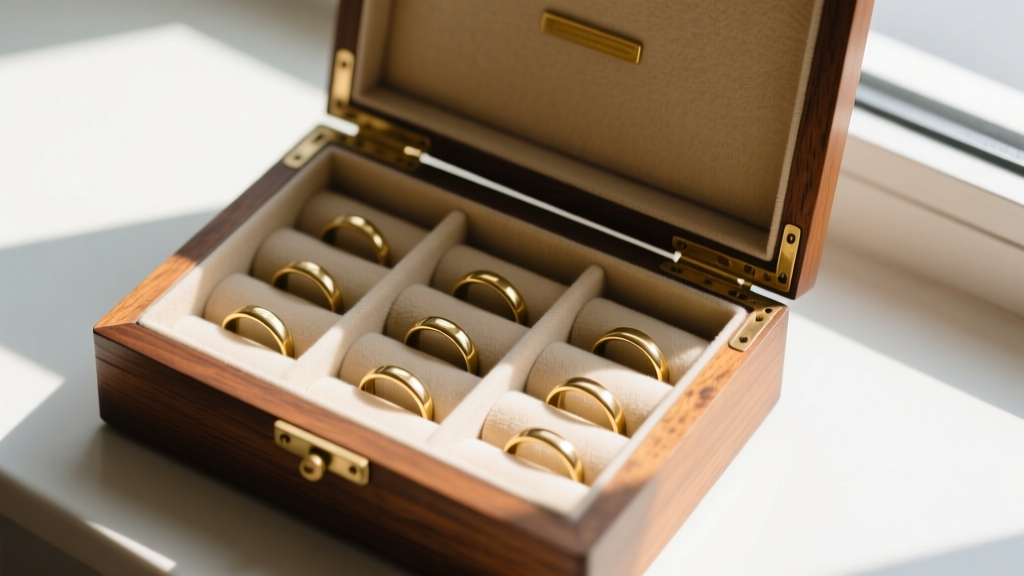
This acid migration is particularly devastating to organic gemstones like pearls and coral, which are composed of calcium carbonate and will literally dissolve or lose their luster when exposed to acidic off-gassing. According to guidelines from the Victoria and Albert Museum Conservation Department, any vintage box intended for active jewelry storage must undergo a complete interior remediation if the original lining is compromised.
Archival Lining Replacement Protocol
- Removal: Carefully lift the original fabric using a micro-spatula and a conservation-grade solvent (like pure ethanol) to soften historic animal glues without raising the wood grain.
- Barrier Application: Apply a sealing coat of microcrystalline wax or a specialized acrylic barrier (such as Paraloid B-72) to the bare interior wood to halt any residual acid migration from the timber itself.
- Material Selection: Replace the lining with an archival-grade, acid-free, lignin-free material. Unbleached cotton flannel or modern polyester micro-suede (which is chemically inert) are the preferred choices for 2026 conservation standards.
- Adhesive: Use a reversible, pH-neutral adhesive like wheat starch paste or a conservation-grade PVA (e.g., Jade 403) to ensure the lining can be safely removed by future conservators.
Conservation vs. Restoration: Preserving the Patina
When dealing with vintage jewelry box wood surfaces, the modern conservation ethos heavily favors preservation over aggressive restoration. Stripping a 150-year-old shellac or French polish finish to apply modern polyurethane destroys both the historical value and the breathable nature of the wood. Instead, focus on stabilization and gentle cleaning.
For minor surface dirt and grime, use a mild solution of naphtha or mineral spirits applied with a lint-free cotton cloth. Avoid water-based cleaners entirely, as they will cause the wood fibers to swell and cloud the historical finish. To nourish dried-out timber and provide a protective, inert barrier against moisture fluctuations, apply a thin coat of Renaissance Wax. This microcrystalline wax, originally developed by the British Museum, is completely acid-free, non-yellowing, and provides a hard, durable seal that protects both the wood and the metal hardware from ambient humidity.
Finally, inspect the brass or steel escutcheons and hinges. Vintage hardware should never be polished to a mirror shine using abrasive compounds, as this removes the protective patina and accelerates future oxidation. A gentle wipe with a dry, soft-bristled brush and a light application of mineral oil to the hinge pins is sufficient to maintain mechanical function without compromising the artifact's historical integrity. For comprehensive guidelines on caring for mixed-material antiques, the National Park Service Museum Handbook remains an indispensable resource for collectors and archivists alike.


