The Vintage Jewelry Organizer Trend: 2026 Style Analysis
Discover 2026's top vintage jewelry organizer trends, from Art Deco revival to Mid-Century modern. Learn material specs, anti-tarnish tips, and styling.

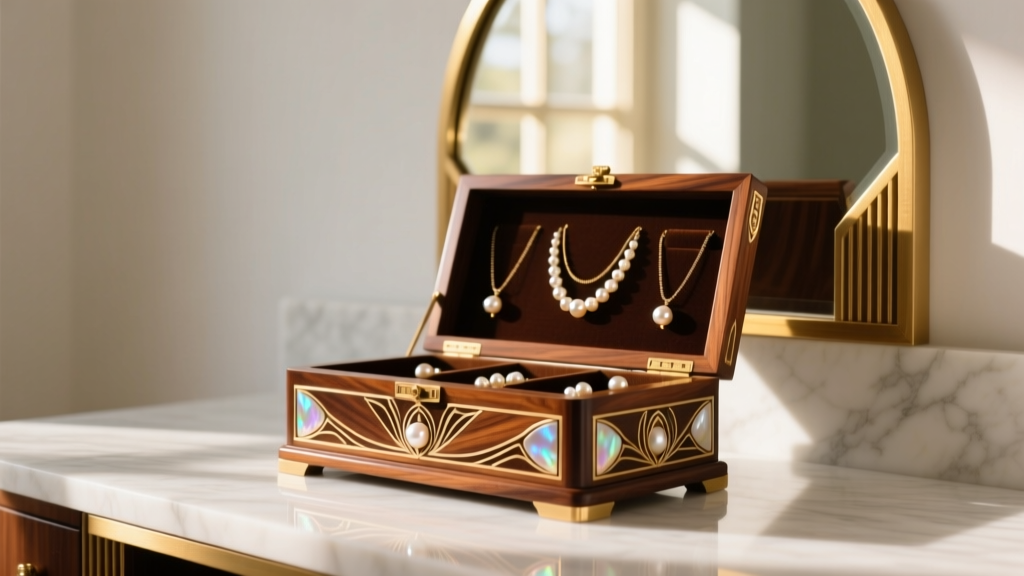
The landscape of luxury storage is undergoing a profound tactile rebellion. As we move through 2026, the sterile, hyper-minimalist acrylic displays of the early 2020s have been entirely eclipsed by a profound hunger for history, patina, and craftsmanship. At the center of this shift is the vintage jewelry organizer—a category that has evolved from a niche antique pursuit into a mainstream design imperative. Today’s collectors and everyday enthusiasts alike are recognizing that how you store your heirlooms is just as critical as the pieces themselves. This analysis breaks down the material science, aesthetic movements, and preservation frameworks driving the vintage storage revival.
The 2026 Shift: Why Vintage Storage is Dominating
The psychology of nostalgic curation is deeply tied to the concept of 'forever pieces.' In an era of fast fashion and mass-produced accessories, a genuine vintage jewelry organizer signals intentionality. Design historians note that the current market is heavily favoring pieces with visible joinery, hand-tooled leather, and natural material degradation that tells a story. Unlike modern MDF (medium-density fiberboard) boxes wrapped in synthetic PU leather, authentic vintage pieces were constructed using dovetail joints, solid hardwoods, and silk-backed velvets. The investment in a vintage piece is not merely aesthetic; it is an investment in structural longevity that modern flat-pack alternatives simply cannot replicate.
Material Breakdown: Authentic vs. Vintage-Inspired
When sourcing a vintage jewelry organizer, understanding the chemical properties of historical materials is critical. Many mid-century and Victorian boxes utilized materials that, while beautiful, can actively harm sensitive gemstones and precious metals if not properly retrofitted.
| Material | Era / Style | Tarnish & Damage Risk | Avg. Market Price (2026) |
|---|---|---|---|
| Bakelite (Polyoxybenzylmethylenglycolanhydride) | 1930s Art Deco | Low (Chemically inert, safe for all metals) | $450 - $1,200 |
| Dyed Silk-Velvet | Victorian / Edwardian | High (Early sulfur-based dyes accelerate silver tarnish) | $300 - $800 |
| Burl Walnut & Cedar | Mid-Century Modern | Medium (Cedar off-gasses acids that damage pearls and opals) | $600 - $2,500 |
| Shagreen (Stingray Leather) | 1920s French Deco | Low (Highly durable, requires specific humidity control) | $1,500 - $4,000 |
Top 3 Vintage Aesthetics Trending in 2026
1. Art Deco Geometric Inlay
The Art Deco revival remains the most sought-after aesthetic in high-end vintage storage. Characterized by Macassar ebony, stark geometric lines, and mother-of-pearl or brass inlay, these organizers are treated as sculptural vanity pieces. The hardware on authentic 1920s Deco boxes often features 18k gold-plated brass escutcheons and heavy, spring-loaded hinges. When shopping, verify the inlay is flush with the wood veneer; modern reproductions often use raised, glued-on acrylic decals that peel over time.
2. Mid-Century Curved Walnut & Brass
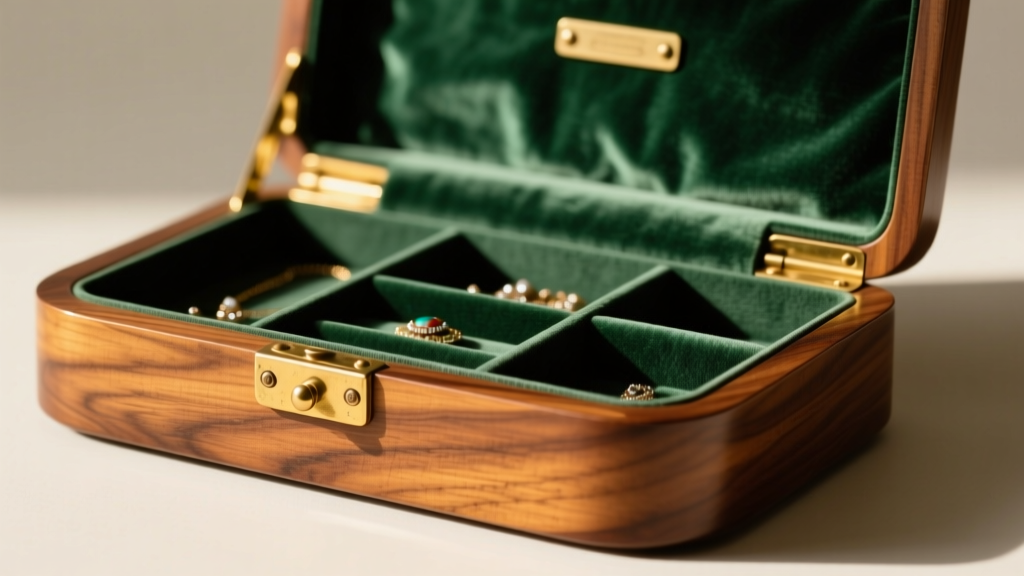
Moving into the 1950s and 60s, the vintage jewelry organizer adopted the organic, sweeping curves of Mid-Century Modern furniture. Look for tambour (slatted) roll-top doors and minimalist, unlacquered brass pulls. The danger here lies in the interior lining: many mid-century boxes used synthetic foams that have since degraded into a sticky, acidic residue. Always inspect the interior with a UV flashlight to check for foam degradation before purchasing.
3. Victorian Tufted Leather & Tooled Gold
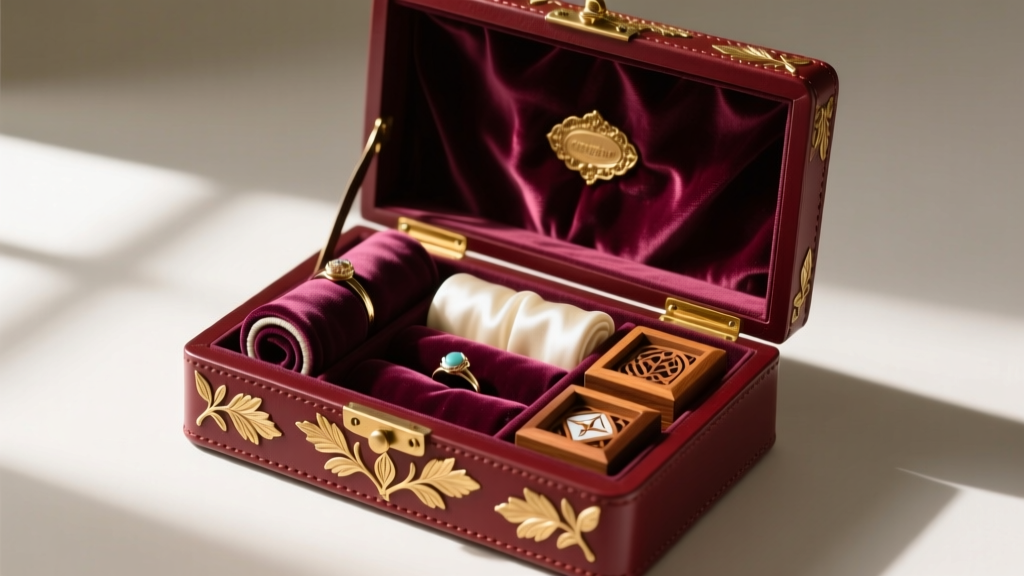
For collectors of cameos, mourning jewelry, and heavy gold chains, the Victorian leather-bound box is paramount. These feature hand-stitched, silk-tufted interiors and exterior gold-leaf tooling. The structural integrity of the cardboard-and-leather composite shells is the primary failure point; ensure the corners are not separating and that the leather has not suffered from 'red rot,' a common acidic degradation in 19th-century vegetable-tanned leathers.
Anti-Tarnish Integration in Vintage Designs
The greatest challenge of using a historical organizer is that they were built before modern anti-tarnish technology existed. According to the Gemological Institute of America (GIA), silver tarnish (silver sulfide) is primarily caused by hydrogen sulfide and sulfur dioxide in the ambient air, which are often trapped inside the porous linings of antique boxes.
"Never store silver in direct contact with unsealed wood, rubber bands, or certain vintage velvet linings, as these materials emit sulfur compounds that rapidly accelerate tarnishing." — Victoria and Albert Museum Conservation Department
The 2026 Retrofit Framework:
To safely use a vintage jewelry organizer for sterling silver and white gold, you must intercept these gases. The gold standard is Pacific Silvercloth, a 100% cotton flannel embedded with microscopic silver particles that act as a sacrificial anode, absorbing the tarnish-causing gases before they reach your jewelry. Cut the Silvercloth to size and line the bottom of the vintage compartments using acid-free, double-sided archival tape. Additionally, tuck 3M Anti-Tarnish strips into the corners of the box; these strips absorb airborne sulfides and need replacing every 6 to 12 months depending on your local humidity.
Sourcing and Restoration: A Buyer's Framework
Restoring a vintage jewelry organizer requires a delicate touch. Harsh chemical polishes will strip the patina and destroy historical value. Follow this expert-approved checklist when acquiring and restoring your piece:
- Hardware Cleaning: Use a mild solution of distilled water and a few drops of conservation-grade soap (like Orvus WA Paste) on a microfiber cloth for brass hardware. Never use Brasso on vintage plated brass, as it will strip the gold layer down to the base metal.
- Wood Nourishment: Apply a micro-crystalline wax, such as Renaissance Wax, to wooden exteriors. Unlike silicone-based sprays (e.g., Pledge), Renaissance Wax will not build up a cloudy residue and is the standard recommended by the Smithsonian Museum Conservation Institute for stabilizing antique wood and leather.
- Lining Replacement: If the original velvet is stained or off-gassing, carefully remove it using a flat spatula. Replace it with acid-free, un-dyed suede or modern anti-tarnish felt, adhering it with wheat starch paste or archival PVA glue rather than hot glue, which can melt and bleed through delicate veneers.
- Pearl & Opal Safety: If your vintage organizer features a cedar or camphor wood lining, do not store organic gems (pearls, coral, tortoiseshell) or water-bearing stones (opals) inside. The acidic off-gassing and moisture-wicking properties of these woods will cause pearls to craze and opals to crack.
Final Verdict on the Vintage Movement
The resurgence of the vintage jewelry organizer in 2026 is a rejection of disposable culture. By understanding the material science, historical context, and preservation requirements of these pieces, collectors can transform a beautiful antique into a functional, safe haven for their most prized adornments. Whether you are drawn to the sharp geometry of Art Deco or the warm, organic curves of Mid-Century design, integrating a vintage organizer into your space elevates the daily ritual of dressing into an act of historical appreciation.


