White Armoire Jewelry Box Trends for Modern Interiors
Explore 2026 interior trends for the white armoire jewelry box, from matte finishes and fluted glass to anti-tarnish linings and LED integration.

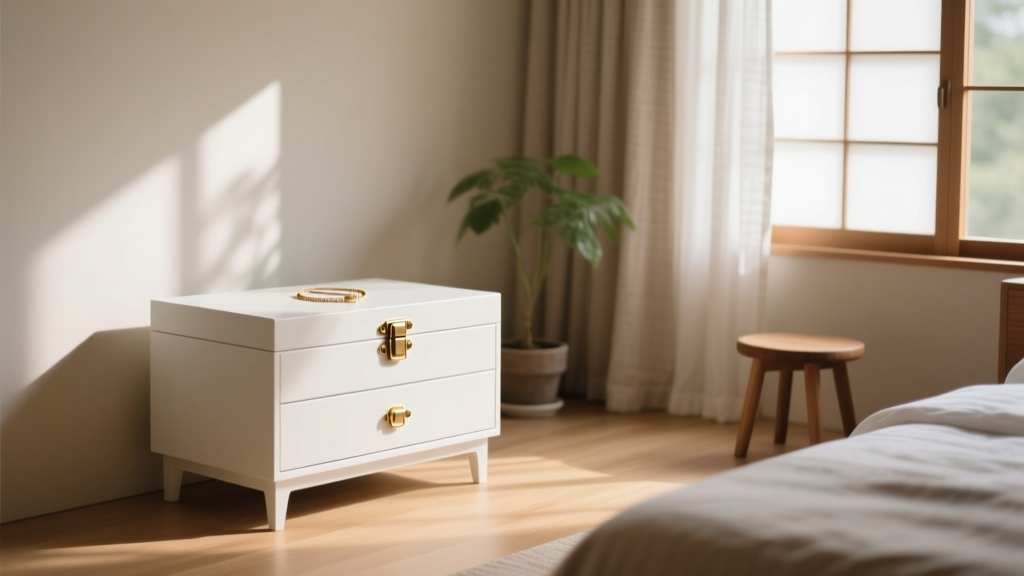
The Evolution of the White Armoire Jewelry Box in 2026
The landscape of luxury home organization has shifted dramatically as we move through 2026. Gone are the days when jewelry storage was relegated to cluttered, dark mahogany valets or hidden plastic bins. Today, the white armoire jewelry box stands at the intersection of functional preservation and high-end interior design. Driven by the 'quiet luxury' and Japandi movements, modern collectors are demanding storage solutions that act as serene, architectural focal points within their dressing rooms and bedrooms.
According to trend forecasts highlighted by Architectural Digest, the emphasis in 2026 is on tactile materials, calming color palettes, and concealed functionality. A white armoire jewelry box perfectly encapsulates this ethos. By utilizing crisp, reflective, or matte white finishes, these pieces bounce natural light around the room, making them ideal for smaller boutique dressing spaces or minimalist bedrooms where visual weight must be carefully managed.
Material Science: Beyond Basic MDF
Historically, budget-friendly jewelry armoires were constructed from heavy, moisture-prone MDF (Medium-Density Fiberboard) coated in thick, high-gloss polyurethane that often yellowed over time. The 2026 market has pivoted toward superior material grades that ensure longevity and aesthetic purity.
Solid Wood vs. Engineered Cores
Premium white armoires now frequently feature a solid poplar or rubberwood frame. These woods offer exceptional screw-holding strength for heavy, mirrored doors and resist the warping that plagues engineered woods in fluctuating humidity. When engineered wood is used, top-tier manufacturers opt for moisture-resistant MDF (MR-MDF) sealed with a catalyzed water-based lacquer. This specific finish provides a velvety, matte appearance that resists micro-scratches and fingerprint smudges—a critical feature for daily-use touchpoints.
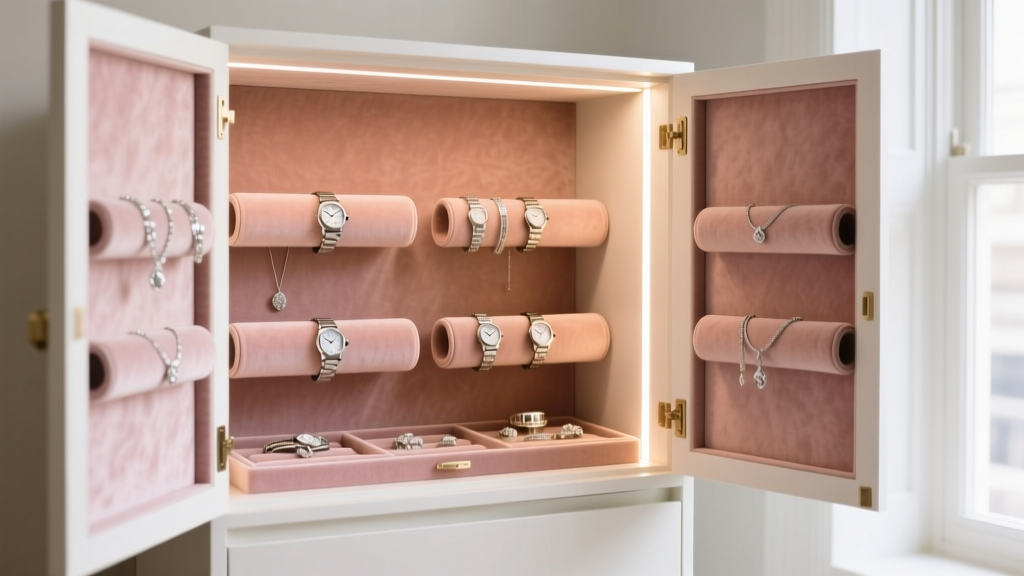
Interior Configurations: Where Function Meets Preservation
The true mark of an expert-level jewelry storage piece lies behind the doors. A beautiful white exterior means nothing if the interior environment accelerates the degradation of your collection. Silver, copper, and even certain gold alloys are highly susceptible to tarnishing caused by hydrogen sulfide and moisture in the ambient air. The Gemological Institute of America (GIA) emphasizes that proper micro-climate control within storage units is essential for preserving gemstone brilliance and metal integrity.
The Anti-Tarnish Hierarchy
Standard velvet linings, while visually plush, offer zero chemical protection against oxidation. In 2026, high-end white armoire jewelry boxes are lined with advanced, chemically treated textiles. Below is a breakdown of the interior materials currently dominating the market.
| Lining Material | Tarnish Resistance | Best For | Price Tier |
|---|---|---|---|
| Standard Velvet | None | Costume jewelry, short-term display | Budget |
| Treated Flannel | Moderate (Zinc-infused) | Everyday silver and gold pieces | Mid-Range |
| Pacific Silvercloth | Exceptional (Embedded silver particles) | Heirloom silver, high-karat gold, pearls | Premium |
| Microsuede | Low (unless chemically treated) | Diamonds, platinum, scratch-prone gems | Mid-to-High |
For serious collectors, seeking out an armoire lined with genuine Pacific Silvercloth is non-negotiable. This material acts as a sacrificial anode, tarnishing itself so your jewelry does not, effectively neutralizing airborne pollutants before they reach your metals.
Design Trends: Integrating the Armoire into Modern Spaces
The aesthetic execution of the white armoire jewelry box has evolved to match contemporary architectural details. We are seeing three distinct design trends dominating the 2026 storage market:
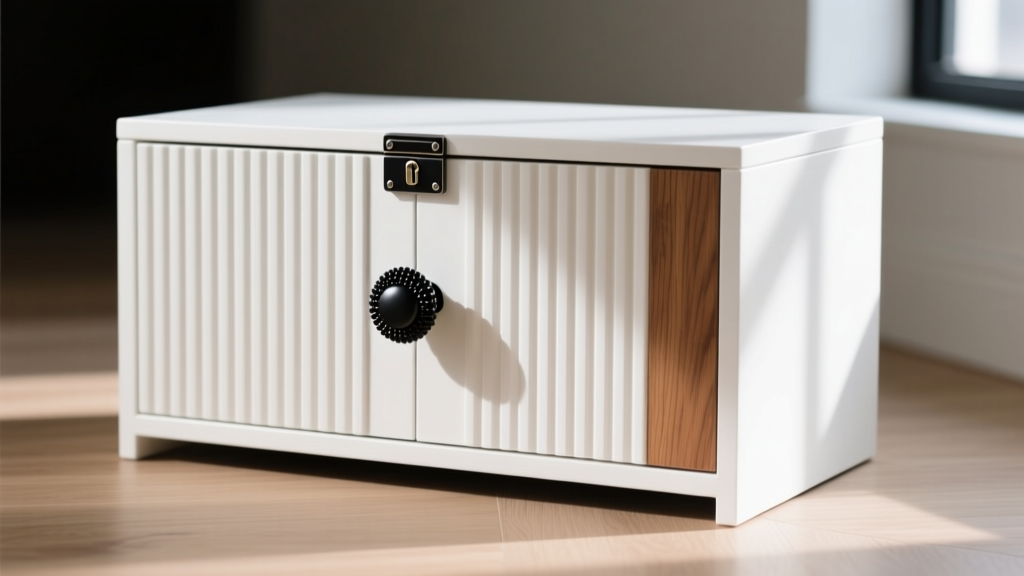
- Fluted and Reeded Textures: Flat panel doors are being replaced with vertical fluted wood detailing. This adds dimensional interest and casts soft shadows, preventing the large white mass of the armoire from looking clinical or flat.
- Concealed Mirroring: Rather than a mirror on the outside of the door, designers are integrating beveled mirrors on the interior panels or utilizing antique, smoked mirror finishes on the exterior to break up the starkness of pure white.
- Hardware as Jewelry: The knobs and pulls on a white armoire are treated as the 'jewelry' of the furniture itself. Knurled matte black brass, unlacquered brushed gold, and fluted crystal pulls are the top choices for creating a bespoke, high-contrast look.
Lighting Innovations: CRI and Color Temperature
Integrated lighting is no longer a luxury add-on; it is a standard expectation. However, the sophistication of the lighting has improved. Cheap, cool-blue LEDs (6000K) distort the color of gemstones and make yellow gold look sickly. The 2026 standard for premium white armoires is the integration of high-CRI (Color Rendering Index > 90) LED strips set to 3000K (warm white) or 3500K (neutral white). This specific color temperature range accurately renders the fire of diamonds, the deep greens of emeralds, and the true warmth of rose gold, ensuring you see your pieces exactly as they will appear in natural sunlight.
Buyer’s Guide: Sizing and Spatial Planning
Before investing in a freestanding or wall-mounted white armoire jewelry box, precise spatial planning is required to ensure ergonomic functionality.
"The biggest mistake consumers make with jewelry armoires is ignoring the door swing and the user's stance. You need a minimum of 24 inches of clear floor space in front of the unit to stand comfortably while sorting necklaces, which often require two hands and full arm extension." — Elara Vance, Certified Interior Organization Specialist
Dimensional Standards
Wall-mounted units typically range from 14 to 18 inches in width and protrude 4 to 6 inches from the wall. These are ideal for utilizing the back of a closet door or a narrow hallway alcove. Freestanding armoires, which often double as room dividers or vanity companions, generally measure 16 to 24 inches wide, 8 to 12 inches deep, and stand between 48 and 60 inches tall. When selecting a freestanding model, ensure the base includes adjustable leveling feet; jewelry armoires are heavily top-loaded with metal and glass, making them prone to tipping on uneven hardwood or thick carpets if not properly stabilized.
Final Thoughts on Curating Your Storage
The white armoire jewelry box has successfully transitioned from a utilitarian container to a sophisticated element of interior architecture. By prioritizing advanced anti-tarnish linings, high-CRI lighting, and tactile exterior finishes, you are not just organizing your collection—you are actively preserving its financial and sentimental value. As you curate your space in 2026, let your storage reflect the same intentionality and beauty as the pieces it holds within.


