Mackenzie Childs Jewelry Box: Technical Storage & Preservation Guide
An expert technical analysis of the Mackenzie Childs jewelry box, covering enamel construction, interior microclimates, and anti-tarnish retrofitting.

The Intersection of Whimsical Aesthetics and Archival Storage
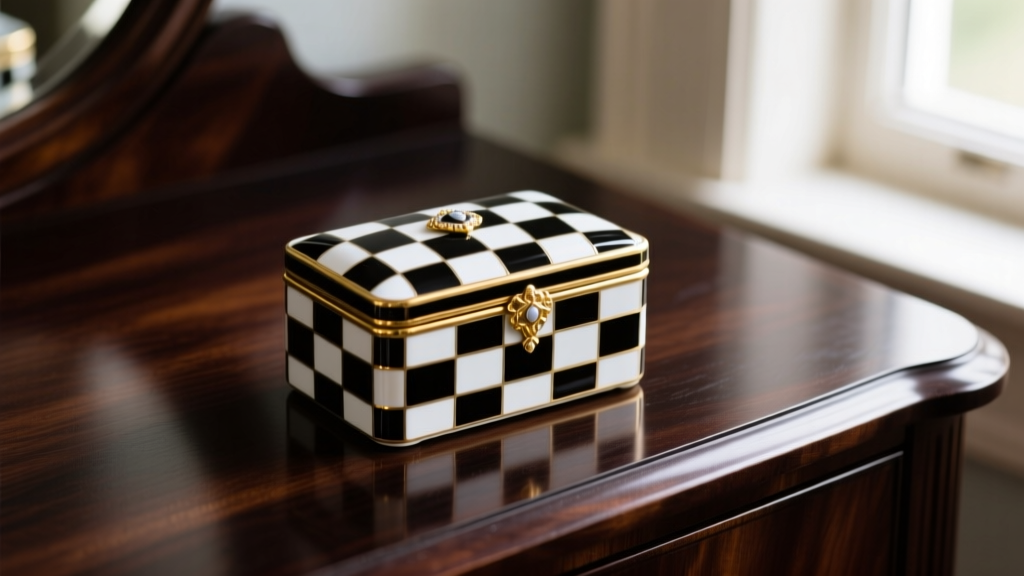
When collectors and jewelry enthusiasts invest in a Mackenzie Childs jewelry box, they are primarily acquiring a piece of functional art. Renowned for their signature Courtly Check pattern, hand-painted glazes, and whimsical silhouettes, these pieces are staples in high-end interior design. However, from the perspective of horological and gemological preservation, a decorative exterior does not automatically equate to an optimized archival microclimate. Fine jewelry—particularly sterling silver, porous gemstones like opals, and karat gold—requires strict environmental controls to prevent oxidation, sulfide tarnishing, and moisture-induced degradation.
This expert deep dive dissects the material science, structural mechanics, and interior microclimates of the Mackenzie Childs jewelry box. We will explore the technical limitations of standard decorative linings and provide actionable, non-destructive retrofitting strategies to transform these beautiful vessels into safe, long-term preservation environments for your most valuable pieces.
Substrate and Glaze: Analyzing the Exterior Shell
To understand how a Mackenzie Childs jewelry box interacts with its environment, we must first examine its exterior construction. The brand primarily utilizes two distinct material categories for their decorative boxes: enameled steel and cast resin.
Enameled Steel and the Risk of Substrate Oxidation
The iconic Courtly Check enamel pieces are crafted by hand-painting glazes over a heavy-gauge steel substrate, which is then fired in a kiln. This vitreous enamel creates a hard, glass-like surface that is highly resistant to UV fading and physical scratching. However, the technical vulnerability lies in the steel core. If the enamel chips or cracks due to blunt force impact, the underlying steel is exposed to ambient humidity. Unlike aluminum, which forms a protective oxide layer, exposed steel will undergo ferrous oxidation (rust). In a humid environment (above 60% Relative Humidity), this rust can bleed into the interior lining, potentially staining light-colored velvet and introducing acidic iron oxide particles that can pit soft metals like high-karat gold or silver.
Cast Resin and Dimensional Stability
For their more sculptural, three-dimensional boxes (such as animal motifs or floral shapes), Mackenzie-Childs often uses cast resin. Resin is entirely impervious to rust and offers excellent dimensional stability. However, certain lower-grade polyurethane resins can off-gas trace amounts of volatile organic compounds (VOCs) and plasticizers over time, especially when exposed to heat. While generally safe for most metals, prolonged exposure to acidic off-gassing can degrade the luster of natural pearls and porous turquoise.
The Interior Microclimate and Tarnish Kinetics
The most critical factor in jewelry storage is the interior microclimate. Most decorative jewelry boxes, including many from Mackenzie-Childs, utilize a flocked velvet or synthetic satin lining adhered to a cardboard or MDF (medium-density fiberboard) armature.
The Chemistry of Silver Sulfide Formation
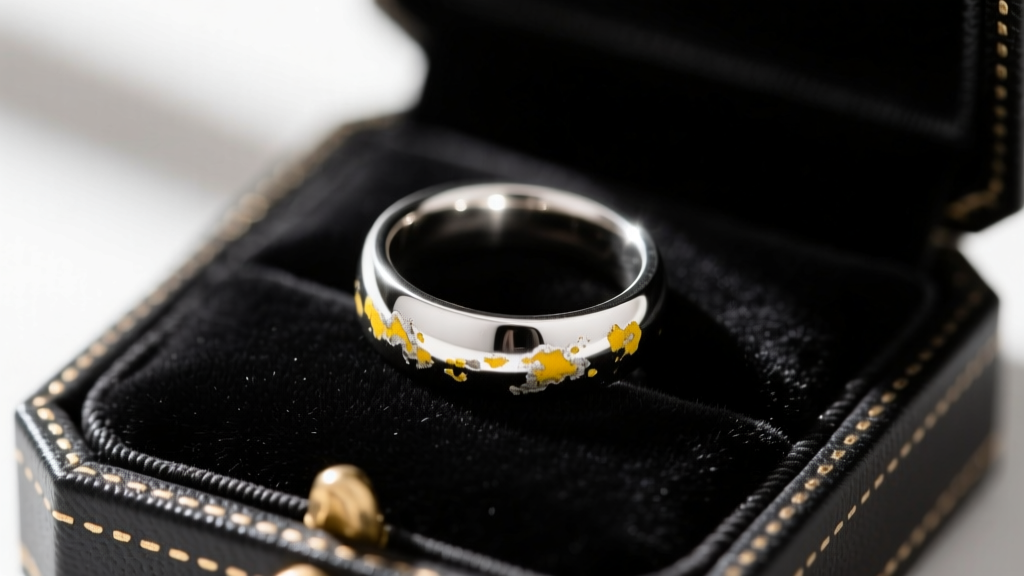
Sterling silver (92.5% silver, 7.5% copper) is highly susceptible to tarnishing. Tarnish is not a surface dirt; it is a chemical reaction where silver reacts with hydrogen sulfide (H2S) in the atmosphere to form silver sulfide (Ag2S). Standard flocked velvet does not neutralize H2S. Furthermore, the synthetic adhesives used to bind the flocking to the MDF armature can contain sulfur compounds that actually accelerate the tarnishing process in a closed environment.
Moisture Retention in Flocked Linings
Flocked velvet is highly hygroscopic. In a bedroom with an ambient Relative Humidity (RH) of 65%, the velvet lining can absorb and trap moisture, creating a localized microclimate with an RH exceeding 75%. According to the Gemological Institute of America (GIA), prolonged exposure to high humidity can cause the copper alloys in rose gold to oxidize and can lead to the structural degradation of organic gems like amber and coral.
Retrofitting for Preservation: Non-Destructive Upgrades
You do not need to compromise the aesthetic integrity of your Mackenzie Childs jewelry box to achieve archival-grade storage. By employing non-destructive retrofitting techniques, you can neutralize the interior microclimate.
- Pacific Silvercloth Slipcovers: Do not use permanent spray adhesives to line the box. Instead, measure the interior compartments and sew or fold custom slipcovers using Pacific Silvercloth. This material is embedded with microscopic zinc and copper particles that preferentially react with H2S, sacrificing themselves to keep your silver pristine.
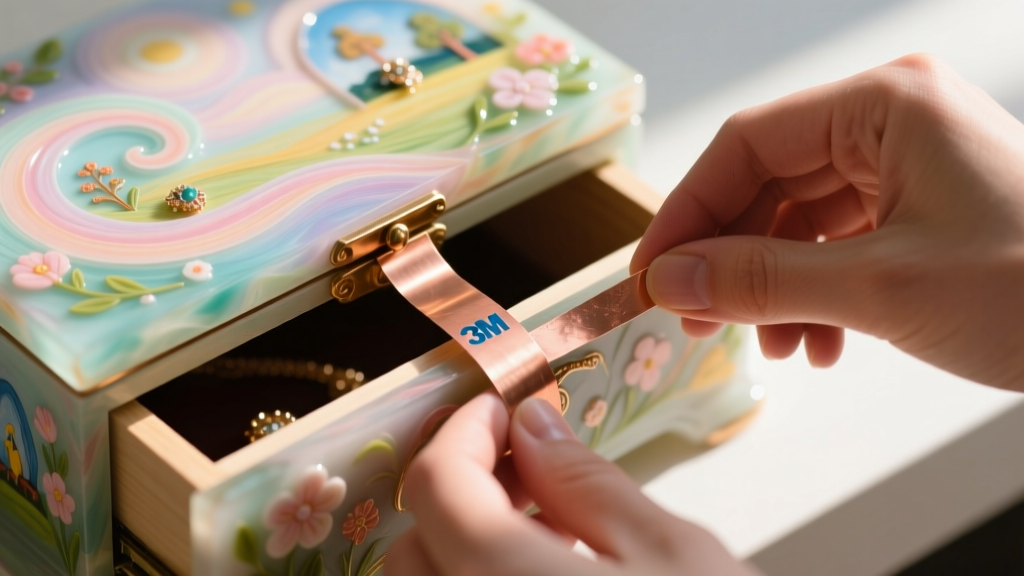
- 3M Anti-Tarnish Strips: For smaller, enclosed compartments, utilize 3M Anti-Tarnish Strips. These strips utilize copper carbonate chemistry to absorb sulfur gases. A single 1x2 inch strip can protect a 1-cubic-foot enclosed space for up to 6 months. Simply place one in the corner of the main lid compartment.
- Silica Gel Desiccant Packets: To combat the hygroscopic nature of the velvet, place two or three indicating silica gel packets (which change color when saturated) in the lower drawer. This will artificially depress the localized RH to a safe 40-45% range.
Hinge Mechanics and Weight Distribution Tolerances
Decorative boxes prioritize visual hardware over mechanical endurance. The hinges on a Mackenzie Childs enamel box are typically brass-plated steel with decorative finials. While aesthetically pleasing, they are not engineered for high-torque loads.
When storing heavy items—such as multi-strand pearl necklaces, solid gold link bracelets, or large cabochon pendants—the cumulative weight can exceed 200 grams. If this weight is suspended from a hook on the inside of the lid, the downward torque can warp the hinge pins over time, causing the lid to sag and fail to close flush. A flush seal is vital for maintaining the anti-tarnish microclimate. To prevent mechanical failure, always store pieces heavier than 150 grams in the lower, flat-laying drawers rather than suspending them from the lid hooks.
Material Comparison: Decorative vs. Archival Storage
To contextualize the performance of the Mackenzie Childs jewelry box, we must compare its material properties against dedicated archival storage solutions.
| Feature | Mackenzie-Childs (Enamel/Resin) | Wolf (Carbon Fiber/Leather) | Mele & Co (Solid Wood/Satin) |
|---|---|---|---|
| UV Resistance | Excellent (Vitreous Glaze) | High (Treated Leather) | Moderate (Requires Polish) |
| Interior Tarnish Control | Poor (Standard Flock) | Excellent (LusterLoc™) | Moderate (Satin/Polycarb) |
| Impact Resistance | Low (Enamel Chips) | High (Carbon Fiber) | Moderate (Wood Dents) |
| Moisture Trapping | High (Hygroscopic Velvet) | Low (Treated Suede) | Moderate (Wood breathes) |
Strategic Placement: Mitigating Environmental Damage
Where you place your Mackenzie Childs jewelry box within your home drastically affects both the exterior artistry and the interior preservation capabilities.
Expert Rule of Thumb: Never place enameled or resin decorative boxes on a vanity directly facing a south-facing window. While the enamel glaze is UV stable, the thermal cycling (heating during the day, cooling at night) causes the steel substrate and the glass-like enamel to expand and contract at different rates. Over years, this thermal stress can induce micro-crazing in the glaze.
Furthermore, avoid placing the box in en-suite bathrooms. The rapid spikes in humidity from hot showers will instantly saturate the flocked velvet lining, turning the interior into a high-humidity tarnish chamber. Keep the box in a climate-controlled bedroom or dressing room where the ambient temperature remains between 65°F and 72°F (18°C - 22°C) and RH is maintained below 50%.
Verdict: Bridging the Gap Between Art and Archive
The Mackenzie Childs jewelry box remains a triumph of decorative arts, offering an unparalleled whimsical charm that mass-produced storage solutions cannot replicate. However, as a standalone preservation vessel for high-value fine jewelry, its standard interior microclimate falls short of archival requirements due to hygroscopic linings and a lack of active tarnish-neutralizing chemistry.
By understanding the material science of the enamel and resin shells, and by implementing simple, non-destructive retrofits like Pacific Silvercloth and 3M anti-tarnish strips, collectors can successfully bridge the gap. You can preserve the breathtaking exterior artistry while engineering a safe, chemically neutral sanctuary for your most precious gemstones and precious metals.


