Indianapolis Jewelry Store Windsor Jewelry Reopens: Archival Storage
As the historic Indianapolis jewelry store Windsor Jewelry reopens, discover the 2026 trends in archival-grade storage for vintage and estate collections.

The Catalyst: A New Era for Estate Jewelry Curation
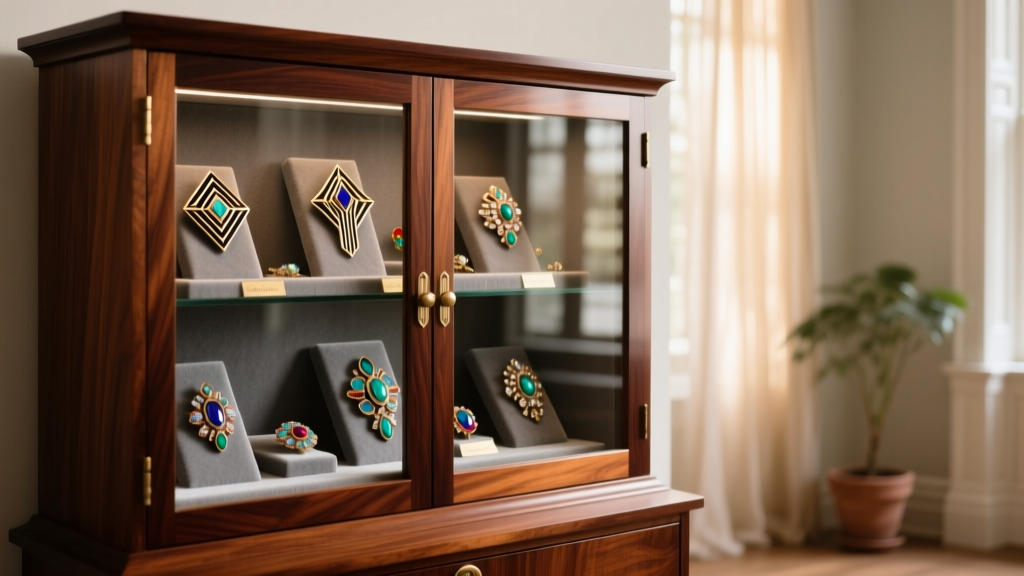
When the historic Indianapolis jewelry store Windsor Jewelry reopens its meticulously restored flagship in 2026, it marks far more than a simple retail revival. Founded in 1926, the institution has long been a cornerstone of the Midwest luxury market, renowned for its exceptional estate and vintage collections. However, this highly anticipated reopening has inadvertently ignited a macro-trend among private collectors and horologists: a definitive shift away from traditional, decorative velvet boxes toward museum-grade archival storage.
As high-net-worth collectors view the carefully preserved Georgian and Art Deco pieces showcased in the store's new heritage gallery, the realization is clear. Standard commercial jewelry organizers actively degrade antique pieces over time. The 2026 preservation renaissance is all about applying institutional conservation science to the home environment, ensuring that heirloom pieces survive the next century without chemical or structural compromise.
The 2026 Shift: From Display Cases to Archival Preservation
For decades, the standard for luxury jewelry storage was defined by aesthetics: mahogany exteriors, brass hinges, and plush velvet interiors. From a conservation standpoint, this is a nightmare. Traditional velvet is often dyed with acidic compounds and backed with animal-based glues that off-gas over time, creating a micro-environment of corrosive vapors. Furthermore, the plastic inserts used in mid-century and mass-market organizers frequently contain Polyvinyl Chloride (PVC).
PVC is inherently unstable. As it degrades, it releases hydrogen chloride gas and plasticizers that can cause "bronze disease" in copper alloys, permanently cloud cellulose-based organic gems like amber, coral, and tortoiseshell, and leave a sticky, irreversible residue on gold and platinum. The modern collector, inspired by institutional standards championed by the American Institute for Conservation, is now demanding inert, chemically stable materials for their home vaults.
Material Breakdown: What True Archival Storage Requires
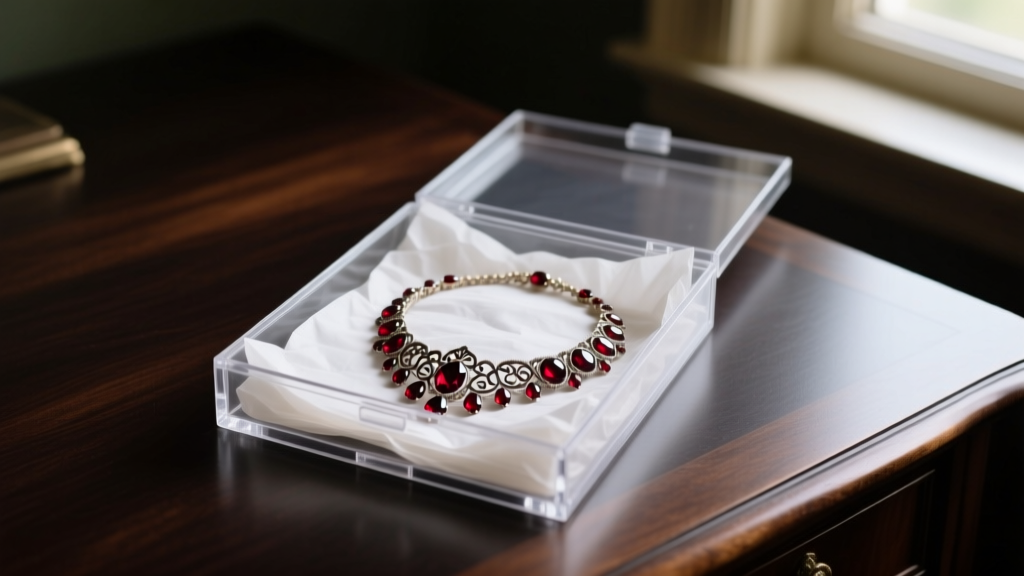
Transitioning to archival storage requires a strict audit of every material that touches your jewelry. The goal is to achieve a pH-neutral, off-gas-free environment. Below is a comparison of standard retail storage materials versus their archival-grade counterparts.
| Component | Standard Retail Storage | Archival-Grade Alternative | Why It Matters |
|---|---|---|---|
| Plastics / Inserts | PVC, Polystyrene (PS) | Polypropylene (PP), Polyethylene (PE) | PP and PE are chemically inert and will not off-gas corrosive plasticizers. |
| Lining Fabrics | Synthetic Velvet, Silk | Unbleached Cotton, Pacific Silvercloth | Prevents acidic dye transfer and actively neutralizes sulfur in the air. |
| Paper / Tissue | Standard Wood-Pulp Paper | Acid-Free, Lignin-Free Tissue (pH 7.0-8.5) | Prevents acid migration that can etch soft stones and degrade pearl nacre. |
| Adhesives | Rubber-based glues | Acid-free PVA, Starch Paste | Prevents sulfur and acidic vapor buildup inside enclosed compartments. |
Curating Your Own Estate Collection: A Step-by-Step Framework
Adopting the preservation standards seen in top-tier galleries requires a methodical approach to organizing your collection. It is not simply about buying a more expensive box; it is about understanding the physical and chemical vulnerabilities of your specific pieces.
Step 1: Segregation by Mohs Hardness
The Gemological Institute of America emphasizes that improper physical storage is a leading cause of micro-abrasions in estate jewelry. Never store mixed gems in a single compartment. Diamonds (Mohs 10) will effortlessly scratch emeralds (7.5-8), sapphires (9), and opals (5.5-6.5). Each major piece should be housed in its own individual PP bag or wrapped in unbuffered acid-free tissue before being placed in a compartmentalized archival box.
Step 2: Special Protocols for Foil-Backed and Porous Stones
Victorian and Georgian jewelry frequently features foil-backed stones (like rose-cut diamonds or garnets) set in closed-back collets. Moisture is the enemy of the foil; if water penetrates the setting, the foil oxidizes, turns black, and ruins the stone's brilliance. These pieces must never be cleaned in ultrasonic machines and must be stored in strictly humidity-controlled environments. Similarly, porous organics like pearls and turquoise require a slightly different approach—they should not be stored in completely airtight plastic, as they require trace ambient moisture to prevent cracking and crazing.
Step 3: Climate Control and Anti-Tarnish Specifics
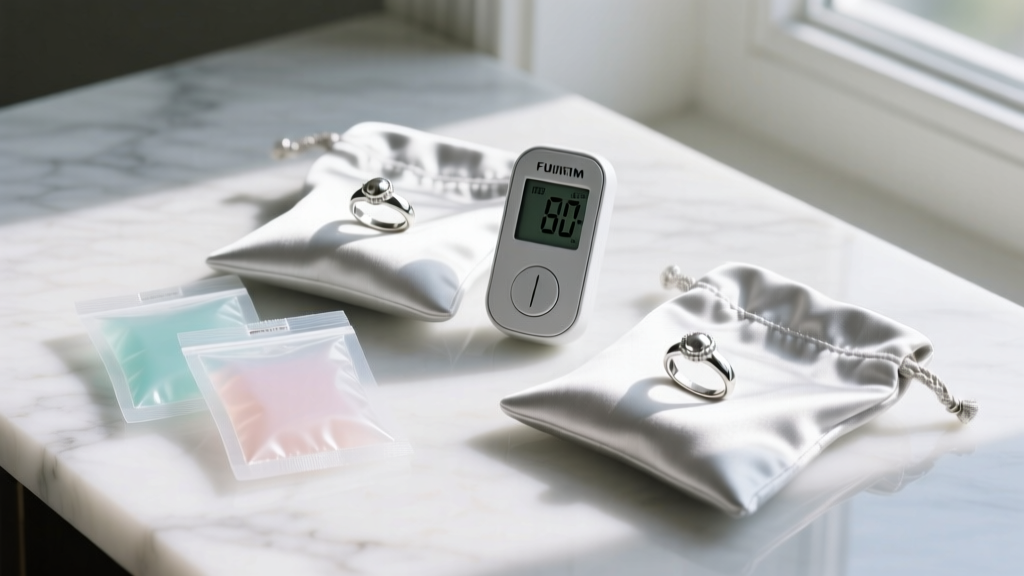
Tarnish is a chemical reaction between silver or copper alloys and hydrogen sulfide ($H_2S$) or sulfur dioxide ($SO_2$) present in ambient air. To combat this, collectors are turning to Pacific Silvercloth, a specialized 100% cotton flannel embedded with microscopic silver particles. These particles act as a sacrificial anode, reacting with the sulfur in the air before it can reach your jewelry. Unlike chemical anti-tarnish strips that expire in months, Pacific Silvercloth remains effective for decades as long as it is never washed.
Furthermore, maintaining a stable Relative Humidity (RH) is critical. The Smithsonian Museum Conservation Institute recommends an RH of 45% (± 5%) for mixed metal and organic collections. Utilizing cobalt-free, indicating silica gel packets inside your storage cabinetry helps buffer against humidity spikes, while a digital hygrometer ensures you can monitor the micro-climate in real-time.
Sourcing Museum-Grade Storage Solutions in 2026
As the demand for archival storage surges, sourcing the right materials has become easier, though it requires looking beyond standard jewelry retailers. Conservation suppliers such as Gaylord Archival and University Products offer the exact PP boxes, acid-free tissue, and Ethafoam carving blocks used by museum registrars. For custom cabinetry, collectors are commissioning local woodworkers to build cases using powder-coated steel or kiln-dried, sealed hardwoods, fitted with UV-filtering acrylic glazing (such as Optium Museum Acrylic) to protect light-sensitive enamels and dyed jadeites from photodegradation.
Final Thoughts on the Preservation Renaissance
The revival of historic institutions reminds us that fine jewelry is not merely decorative; it is a tangible historical artifact. By abandoning the acidic, off-gassing storage methods of the past and embracing the rigorous, science-backed archival standards of 2026, collectors ensure that the craftsmanship of the past remains flawless for the generations of the future. True luxury is not just in the wearing, but in the meticulous preservation of the piece.


