The Ultimate Guide to Jewelry Box Painting: Blanks, Paints & Finishes
Discover what to look for in paintable jewelry box blanks, non-tarnishing paints, and safe sealants. Your ultimate jewelry box painting buying guide.

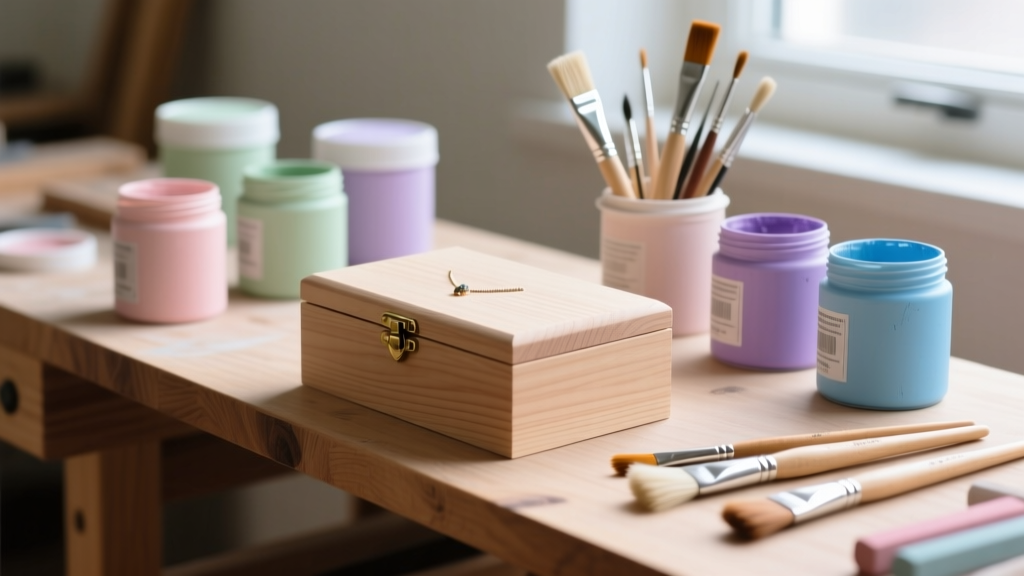
Customizing a wooden keepsake box is a rewarding intersection of woodworking, fine art, and archival jewelry care. However, jewelry box painting is not as simple as slapping a coat of leftover wall paint onto a wooden blank. The interior microclimate of a jewelry box directly impacts the longevity of your precious metals and gemstones. Using the wrong paints or sealants can introduce sulfur compounds and volatile organic compounds (VOCs) that accelerate silver tarnishing and degrade delicate pearls.
Whether you are an artisan looking to sell custom pieces or a hobbyist restoring a vintage keepsake, this comprehensive buying guide will walk you through exactly what to look for when sourcing paintable blanks, selecting chemically safe paints, and choosing the right protective topcoats in 2026.
Why Material Choice Matters in Jewelry Box Painting
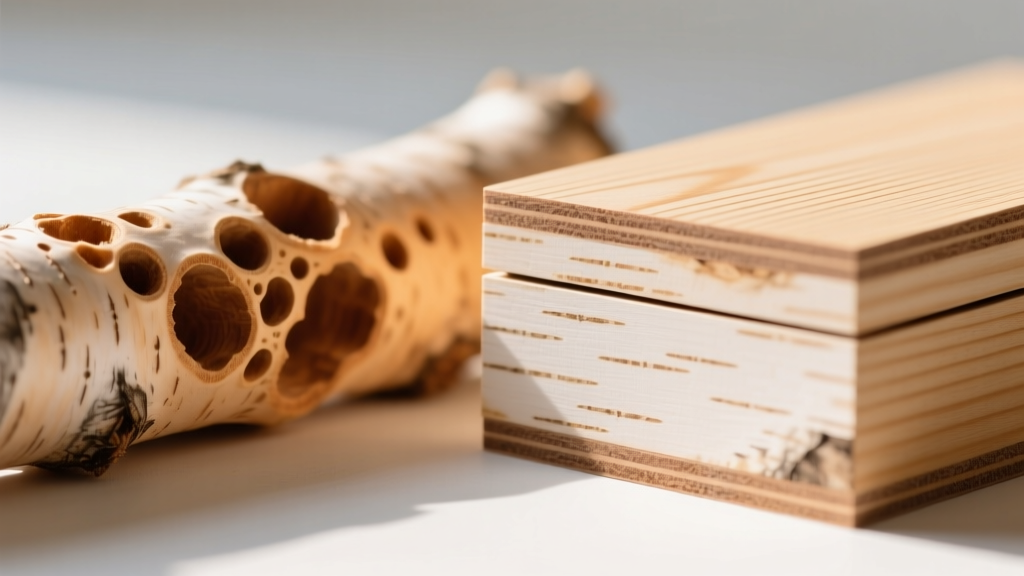
The substrate you choose dictates your prep work, paint absorption, and the final durability of the piece. When shopping for paintable jewelry box blanks, you will generally encounter three primary materials. Understanding their cellular structure is critical for a flawless finish.
Basswood: The Artisan’s Favorite
Basswood is exceptionally soft, lightweight, and features a tight, uniform grain that practically begs for detailed acrylic work and chalk paint. Because it is low-density, it absorbs primers quickly. Buying Tip: Always buy kiln-dried basswood blanks with a moisture content below 8% to prevent warping after you apply water-based paints.
Birch Plywood: The Durable Workhorse
Baltic birch plywood offers superior structural integrity, making it ideal for larger, multi-drawer jewelry armoires. The edge grain, however, is highly porous and requires a dedicated wood filler or edge-banding before painting to avoid a striped, uneven finish on the sides.
MDF (Medium-Density Fiberboard): Proceed with Caution
While MDF provides a perfectly smooth, grain-free surface for high-gloss enamel paints, it is highly susceptible to moisture swelling. More importantly for jewelry storage, unsealed MDF can off-gas formaldehyde and acidic compounds. If you must use MDF, it requires a complete encapsulation with a shellac-based primer like Zinsser B-I-N to protect your jewelry from acidic vapors.
What to Look for When Buying Paintable Blanks
Not all craft store blanks are created equal. When evaluating a paintable jewelry box, inspect the joinery and hardware before purchasing.
| Feature | What to Look For (Premium) | What to Avoid (Budget/Craft) |
|---|---|---|
| Joinery | Dovetail or box-finger joints; glued and pinned. | Simple butt joints held only by staples or brad nails. |
| Hinges | Solid brass butt hinges with removable pins. | Flimsy, pre-attached steel piano hinges that rust under paint. |
| Sanding | Pre-sanded to 150-grit; smooth to the touch. | Rough, splintered edges requiring heavy power sanding. |
| Interior | Unfinished, raw wood ready for anti-tarnish lining. | Pre-lined with cheap synthetic felt (traps moisture). |
The Best Paints for Jewelry Box Painting (And Which to Avoid)
The chemistry of your paint matters immensely when storing sterling silver, copper, and organic gems like pearls or amber. According to the Gemological Institute of America (GIA), sulfur and certain chemical vapors are the primary culprits behind rapid silver tarnishing. Therefore, your paint selection must prioritize low-VOC, non-sulfur formulations.
1. High-Quality Chalk Paint (Best for Matte & Distressed Looks)
Brands like Annie Sloan or Rust-Oleum Chalked offer excellent adhesion with minimal prep work. Chalk paint is inherently low-VOC and breathable. However, it is highly porous and must be sealed properly, or it will act as a sponge for ambient humidity, creating a damp microclimate inside the box.
2. Water-Based Acrylic Enamels (Best for Durability)
Modern water-based acrylic enamels cure to a hard, furniture-grade shell. They are chemically stable once fully cured (usually 21-30 days) and will not off-gas harmful vapors that damage jewelry. Look for '100% acrylic' resins rather than vinyl-acrylic blends, which remain slightly tacky and can peel.
3. Paints to Strictly Avoid
- Standard Oil-Based Alkyds: These take months to fully off-gas. The prolonged release of VOCs can discolor pearls and degrade soft resins.
- Cheap Spray Paints: Many aerosol paints contain propellants and solvents that leave a microscopic, permanent oily residue that transfers to jewelry.
- Uncertified Milk Paints: While natural, some raw milk paint recipes use casein proteins that can attract pests or develop mold in humid environments if not sealed with a specialized topcoat.
Sealants and Topcoats: Protecting Your Finish and Your Jewelry
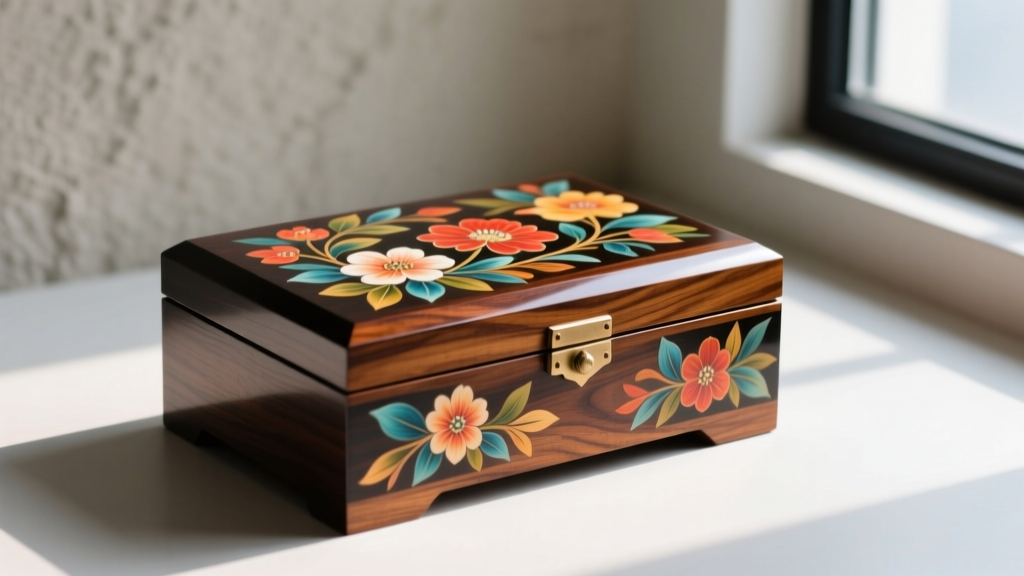
A paint job is only as good as its topcoat. For jewelry box painting, the sealant must provide physical protection against scratches while remaining chemically inert. As noted in Wood Magazine's comprehensive finish guide, water-based polyurethanes have largely replaced solvent-based lacquers for interior woodwork due to their clarity and safety.
The Topcoat Hierarchy
- Water-Based Polyurethane (Top Recommendation): Products like General Finishes High Performance Water Based Topcoat offer a crystal-clear, non-yellowing shield. It cures to a hard, inert plastic that locks in any residual paint odors and prevents moisture exchange. Choose a satin or matte finish to mimic the look of fine furniture.
- Clear Shellac: A natural, alcohol-based resin. Shellac is an incredible odor and vapor barrier, making it perfect for sealing the interior of the jewelry box before adding felt. However, it is not durable enough for the high-wear exterior lid.
- Furniture Wax (Use with Caution): While wax feels beautiful, it never truly 'cures.' In warm climates, wax can soften and transfer onto jewelry or fabric linings. Avoid wax on the interior or near the hinges.
Pro-Tip for Curing: Never line or store jewelry in a freshly painted box. Even 'fast-dry' water-based polyurethanes require a minimum of 14 to 21 days to fully cross-link and off-gas. Keep the box propped open in a climate-controlled room with a gentle fan to accelerate the curing process.
Interior Linings: The Final Step for Archival Storage
Once your exterior jewelry box painting is complete and fully cured, the interior requires an archival-grade lining. Do not use standard craft felt, which is often made from recycled plastics and dyed with acidic colors that can pit gold and tarnish silver.
Instead, invest in Pacific Silvercloth or a treated anti-tarnish flannel. These fabrics are embedded with microscopic silver particles that intercept and absorb corrosive gases (like hydrogen sulfide) before they reach your jewelry. Adhere the fabric using a pH-neutral, acid-free glue stick or double-sided archival tape to ensure the adhesive does not bleed through and stain the fabric over time.
Final Verdict & Sourcing Recommendations
Successful jewelry box painting requires a holistic approach that respects both the aesthetics of woodworking and the chemistry of jewelry preservation. When buying blanks, prioritize kiln-dried basswood or Baltic birch with solid brass hardware. For the finish, stick to low-VOC water-based acrylics or chalk paints, and always encapsulate the exterior with a high-grade water-based polyurethane.
For sourcing premium blanks, look beyond the local craft aisle. Specialized woodworking suppliers like Rockler or Woodcraft offer precision-cut, unfinished hardwood boxes with superior joinery that will elevate your custom painting projects from amateur crafts to heirloom-quality keepsakes.


