Best Wood Jewelry Box With Drawers: 2026 Buyer's Guide
Discover how to choose the perfect wood jewelry box with drawers. Our 2026 guide covers wood grades, joinery, anti-tarnish linings, and sizing.

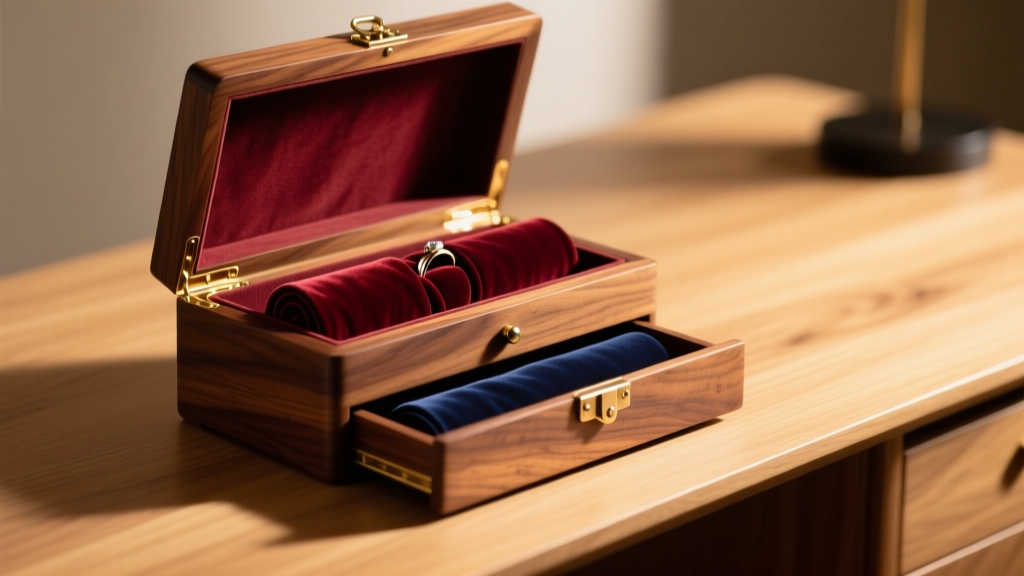
The Enduring Standard: Why Wood Remains the Ultimate Storage Medium
In an era dominated by acrylic displays and fast-furniture particleboard, a solid wood jewelry box with drawers remains the gold standard for serious collectors. As we navigate the 2026 market, the divide between heirloom-quality cabinetry and disposable, mass-produced veneer boxes has never been wider. A premium wooden organizer does more than look beautiful on a vanity; it provides structural stability, mitigates humidity fluctuations, and, when properly lined, actively prevents the chemical degradation of precious metals.
However, not all wooden boxes are created equal. Marketing terms like 'wood finish' or 'engineered wood' often mask substandard MDF (Medium-Density Fiberboard) that warps under humidity and off-gasses adhesives that can damage porous gemstones like pearls and opals. This comprehensive buyer’s guide will decode the anatomy of a high-quality wood jewelry box with drawers, equipping you with the exact specifications to look for before making an investment.
Decoding Wood Species: Hardwoods vs. Engineered Alternatives
The longevity of your jewelry box begins with its primary material. When evaluating a wood jewelry box with drawers, you must look beyond the stain and identify the actual species and grade of the wood used.
The Hardwood Hierarchy
Premium boxes utilize kiln-dried hardwoods, prized for their tight grain structures and resistance to denting. The durability of these woods is measured on the Janka hardness scale. According to the Wood Database, higher Janka ratings indicate better resistance to the daily wear and tear of sliding drawers and setting down heavy metal pieces.
- Black Walnut (Janka: 1,010 lbf): The quintessential luxury choice. It offers a rich, dark chocolate hue with a straight, open grain that takes a hand-rubbed oil finish beautifully.
- Hard Maple (Janka: 1,450 lbf): Exceptionally dense and pale, maple is ideal for modern, minimalist designs. Its closed grain prevents dust accumulation and resists scratching from sharp jewelry prongs.
- Cherry (Janka: 995 lbf): Known for its reddish undertones that deepen and oxidize into a rich patina over time when exposed to ambient light.
The Engineered Wood Trap
Many budget-friendly boxes advertised online are constructed from MDF or particleboard wrapped in a thin wood veneer. While initially attractive, MDF acts like a sponge in humid environments (like bathrooms), causing the drawer tracks to swell and seize. Furthermore, the urea-formaldehyde resins used in MDF can accelerate the tarnishing of silver and degrade the silk threads of pearl necklaces over time.
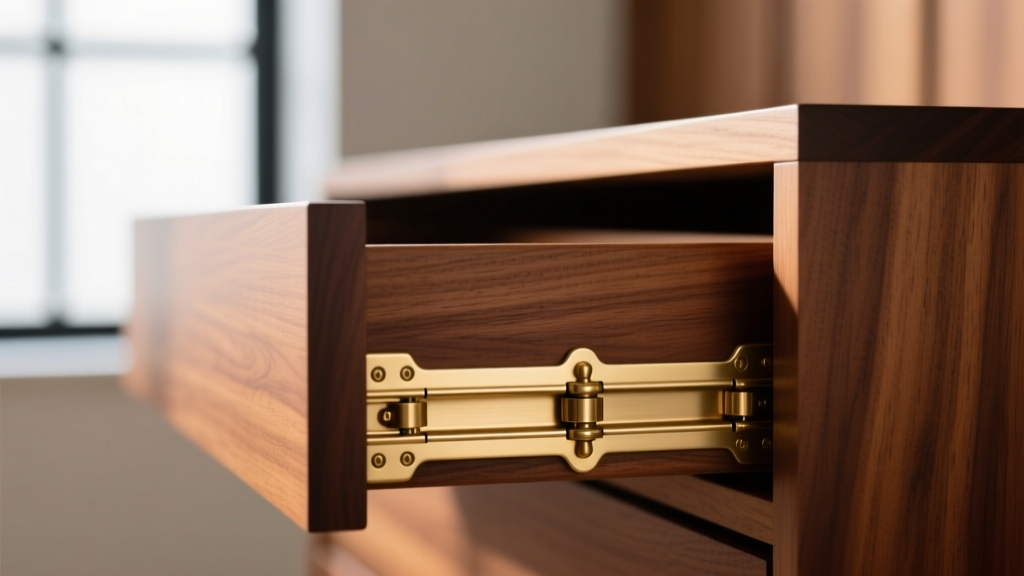
Drawer Mechanics and Joinery: The Hidden Quality Indicators
The most common failure point in any wood jewelry box with drawers is the drawer front separating from the side panels. This happens when manufacturers rely on butt joints secured with brad nails and cheap wood glue. To ensure your box lasts for generations, inspect the joinery and hardware.
Traditional Joinery Techniques
Look for boxes that advertise English dovetail or French dovetail joinery. These interlocking geometric joints provide massive tensile strength, ensuring the drawer front will never pull away, even when the drawer is fully extended and loaded with heavy gold chains or gemstone sets. A secondary, acceptable option for mid-tier boxes is the locking miter joint, which offers excellent glue surface area and a clean, seamless exterior look.
Hardware and Drawer Slides
The slides dictate how smoothly the drawers operate and how well they align when closed. Misaligned drawers allow dust and airborne sulfur to enter, accelerating tarnish.
| Hardware Type | Material | Lifespan | Best Application |
|---|---|---|---|
| Wood-on-Wood Runners | Hardwood / Wax | Generations | Traditional, antique-style boxes; requires occasional paraffin waxing. |
| Side-Mount Ball-Bearing | Zinc-plated Steel | 15-20 Years | Heavy, multi-tier drawer sets holding dense metal jewelry. |
| Undermount Soft-Close | Steel / Nylon | 10-15 Years | Modern luxury boxes; prevents slamming which can dislodge gemstone settings. |
| Plastic Rollers | Nylon / PVC | 2-4 Years | Budget boxes; prone to cracking and track derailment. |
Interior Lining: The Chemistry of Tarnish Prevention
A beautiful wooden exterior is useless if the interior lining destroys your jewelry. Standard polyester felt or cheap velvet traps ambient moisture and does nothing to stop the chemical reaction between silver and hydrogen sulfide in the air, which causes black silver sulfide tarnish. The Gemological Institute of America (GIA) emphasizes that proper storage environments are critical for maintaining the luster of both metals and sensitive organic gems.
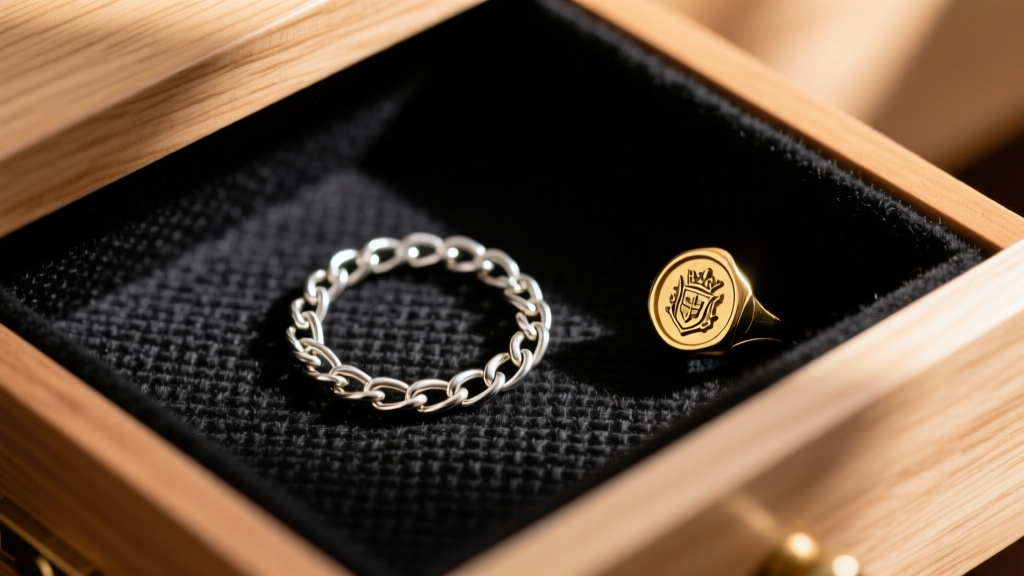
What to Demand in 2026
When shopping for a wood jewelry box with drawers, seek out interiors lined with anti-tarnish treated flannel or Pacific Silvercloth. These fabrics are embedded with microscopic silver or zinc particles that act as sacrificial anodes. They attract and neutralize corrosive gases before those gases can reach your jewelry. Additionally, ensure the lining is applied with acid-free adhesives; standard rubber-based glues can yellow over time and emit volatile organic compounds (VOCs) that harm porous stones like turquoise and malachite.
Expert Tip: If you are purchasing a vintage or unfinished wooden box, you can line the drawers yourself using acid-free archival tissue paper and anti-tarnish strips (like 3M Silver Protector), replacing them every six months to maintain a corrosive-free microclimate.
Sizing and Compartmentalization Framework
The utility of a wood jewelry box with drawers relies heavily on its internal geometry. Before purchasing, measure your existing collection against these standard compartment dimensions to ensure a proper fit without crowding, which can lead to scratched metals and tangled chains.
- Ring Rolls and Slots: Standard slots are 0.75 inches wide, which is too tight for modern statement rings or men's signets. Look for adjustable dividers or slots measuring at least 1.25 inches across.
- Watch Pillows and Cabinets: A standard watch pillow requires a minimum clearance of 3.5 inches wide by 2.5 inches high. If you collect oversized dive watches (44mm+ cases), ensure the drawer depth is at least 4 inches to prevent the crystal from pressing against the drawer above.
- Long Chain Drops: To prevent knotting, necklaces should hang vertically. Look for a dedicated deep drawer or a drop-front compartment with a minimum vertical clearance of 14 to 16 inches to accommodate opera-length chains and layered pendants.
- Bracelet Bars: Ideal interior drawers feature removable, velvet-wrapped horizontal bars with at least 7 inches of width to drape tennis bracelets and bangles without bending their structural integrity.
Environmental Controls: Managing Humidity and Light
Wood is a hygroscopic material, meaning it naturally absorbs and releases moisture from the surrounding air. While solid hardwood is relatively stable, extreme fluctuations can cause drawers to stick or warp. High-end wood jewelry boxes now incorporate subtle environmental controls to protect sensitive pieces.
Look for boxes featuring hidden silica gel compartments beneath the drawer floors. These allow you to regulate the internal relative humidity, keeping it in the optimal 40-50% range. This is especially vital if you live in a coastal or high-humidity climate, where moisture can cause copper alloys to develop verdigris and degrade the elastic threads in beaded jewelry. Furthermore, ensure the box features a tight-fitting lid with a weather-strip or felt lip seal to block out dust and ambient light, which can fade heat-treated gemstones like kunzite and amethyst over time.
Final Verdict: Investing in an Heirloom
A well-crafted wood jewelry box with drawers is not merely a container; it is a preservation vault for your most cherished assets. By prioritizing solid kiln-dried hardwoods, traditional dovetail joinery, premium ball-bearing or waxed wood runners, and chemically treated anti-tarnish linings, you secure a piece of functional furniture that will outlast the jewelry it holds. When evaluating your options this year, ignore the superficial gloss of veneer and demand the structural integrity and material science that true craftsmanship provides.


