Beginner Guide to Organizing With an Umbra Jewelry Box
Discover how to organize, protect, and display your daily accessories with our beginner-friendly guide to using an Umbra jewelry box effectively.

Why Minimalist Storage Changes the Game
When most beginners start collecting jewelry, they default to the traditional, bulky, velvet-lined chest. While these have their place, they often fail the modern wearer who wants quick access, visual inventory, and aesthetic integration into their bedroom or vanity space. Enter the architectural, multi-functional world of modern design. Learning how to properly utilize an umbra jewelry box is about shifting your mindset from merely hiding your accessories to strategically displaying and protecting them.
Unlike airtight vault-style boxes, modern minimalist organizers prioritize form, material contrast, and daily accessibility. However, this increased airflow and use of unconventional materials—like raw concrete, turned mango wood, and clear acrylic—require a specific approach to jewelry care. This guide will break down the core models, material-specific risks, and the exact protocols you need to keep your metals shining and gemstones safe.
Breaking Down the Core Models
Umbra produces several distinct storage solutions, each engineered for a different type of collector. Understanding the metallurgical and gemological implications of these materials is the hallmark of an organized enthusiast.
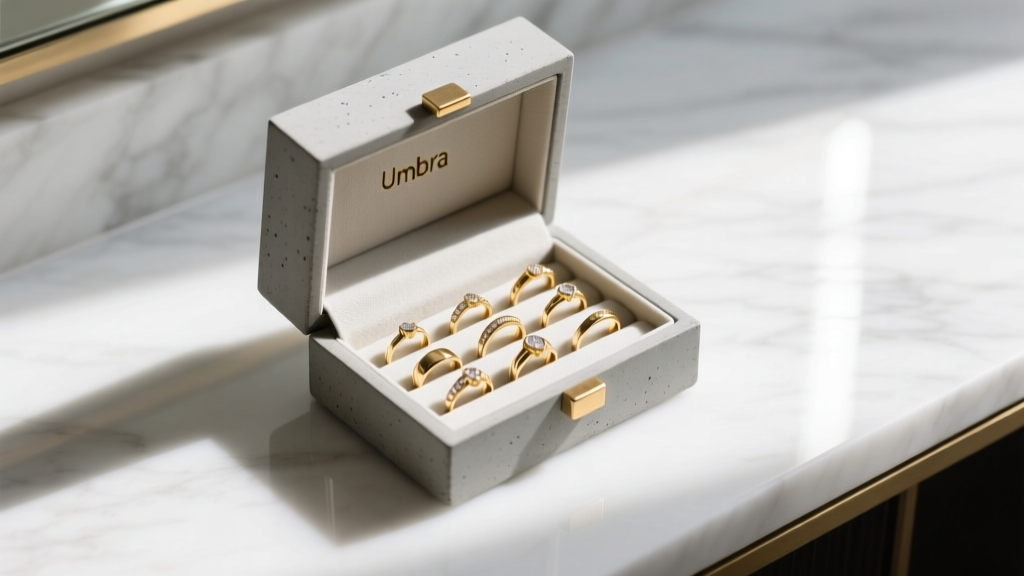
The Concrete & Brass Valet: Umbra Tesora
The Tesora is arguably the brand's most iconic piece, featuring a weighted concrete base and a solid brass lid. It is designed primarily for rings, stud earrings, and small pendants. The heavy concrete base prevents it from sliding across your dresser when you drop a heavy signet ring inside.
Expert Warning: Concrete is naturally alkaline (pH 11-13). According to the Gemological Institute of America (GIA), organic gemstones like pearls, coral, and opals are highly sensitive to alkaline environments. Never store pearls directly against raw concrete, as it can degrade the nacre over time. Always place organic gems in a small silk pouch before resting them inside the Tesora.
Furthermore, the solid brass lid will develop a natural patina from the oils on your hands. Beginners often mistake this oxidation for dirt. You can either embrace the lived-in antique look or polish it monthly with a brass-specific compound to maintain the high-gloss factory finish.
The Concealed Vault: Umbra Stowaway
For those who prefer to keep their collection out of sight but highly organized, the Stowaway utilizes a mango wood frame with a mirrored front panel. The mirror creates an optical illusion that expands small vanity spaces, while the interior features specialized hooks for necklaces and a ring roll.
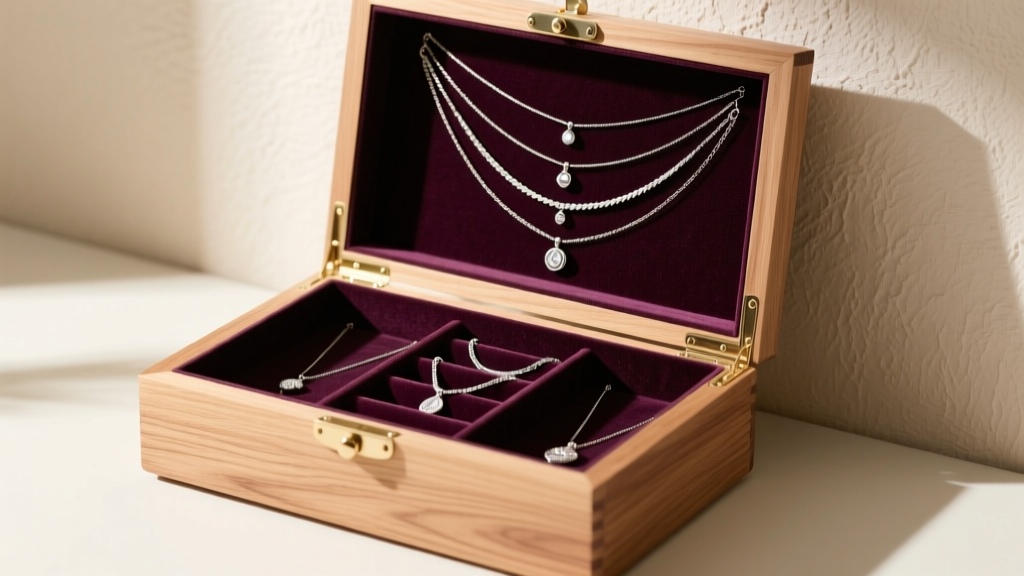
The primary advantage here is the separation of chains. By hanging necklaces vertically on the interior hooks, you eliminate the friction and tangling that occurs when chains are piled in a drawer. However, because the wood interior is not completely airtight, silver chains are still exposed to ambient sulfur in your room, necessitating active tarnish prevention (detailed below).
The Stackable System: Umbra Keep
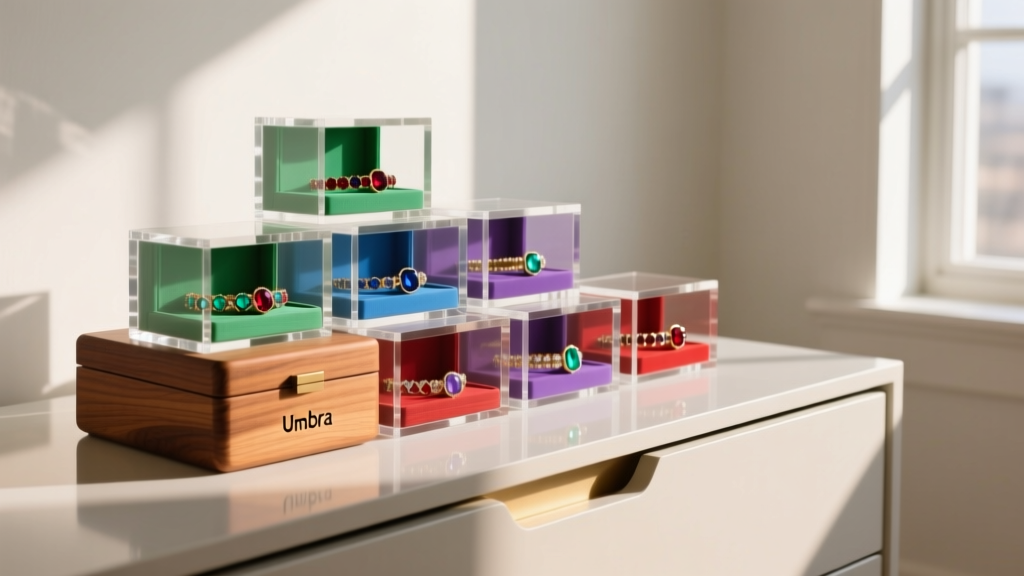
The Keep system features clear acrylic drawers topped with beechwood lids. It is designed for the visual collector who wants to see their inventory at a glance. The stackable nature allows you to separate categories: one drawer for daily wear studs, another for statement cocktail rings, and a third for layered bracelets.
Care Note: Acrylic scratches easily. Never use glass cleaners like Windex, which contain ammonia. Ammonia can cause micro-fractures in acrylic over time and is disastrous if it drips onto porous gemstones like turquoise or lapis lazuli. Clean your Keep boxes with a damp microfiber cloth and mild soap.
Material Comparison & Tarnish Risk Matrix
Choosing the right box depends heavily on the metals you own. Sterling silver, for instance, reacts with hydrogen sulfide in the air to form silver sulfide (tarnish). Because minimalist boxes offer higher airflow than traditional velvet chests, you must match your metal to the right environment.
| Model | Primary Materials | Airflow Level | Tarnish Risk | Best Metal Type |
|---|---|---|---|---|
| Tesora | Concrete, Solid Brass | Moderate (Lip seal) | Medium | Gold, Platinum, Brass |
| Stowaway | Mango Wood, Mirror, Velvet | Low (Drawer seal) | Low-Medium | Sterling Silver, Gold |
| Keep | Acrylic, Beechwood | High (Drawer gaps) | High | Stainless Steel, Gold Vermeil |
The Beginner Anti-Tarnish Protocol
Because modern designs prioritize accessibility over hermetic sealing, you must introduce active anti-tarnish agents into your storage routine. Jewelers of America recommends controlling both moisture and sulfur exposure to maintain metal luster. Here is the exact protocol to retrofit your minimalist boxes for maximum protection:
- 3M Anti-Tarnish Strips: These small, inexpensive paper strips contain copper particles that intercept and absorb airborne sulfur before it can reach your sterling silver. Tuck one strip into the back corner of your Stowaway drawer or Keep acrylic bin. Replace them every 6 months.
- Silica Gel Packets: Moisture accelerates the chemical reactions that cause tarnish and can warp wooden components over time. Save the silica packets from new shoe or bag purchases and place them inside your storage units to maintain a dry microclimate.
- Pacific Silvercloth Lining: If you are storing high-value heirloom silver in an open-concept dish, line the bottom with Pacific Silvercloth. This specialized cotton fabric is embedded with microscopic silver particles that act as a sacrificial shield, tarnishing themselves so your jewelry does not.
Step-by-Step: Loading Your Box for Daily Wear
Organization is only effective if it matches your daily routine. A well-loaded system should reduce the time it takes to get ready in the morning. Follow this workflow to establish a functional hierarchy:
- Zone 1 (The Drop Zone): Use the lid of your Tesora or the top beechwood lid of your Keep box as a temporary valet. When you come home and remove your daily wedding band or signet ring, place it here. This prevents you from misplacing everyday items and keeps them off the bathroom sink.
- Zone 2 (The Active Rotation): Hang your 3-4 most frequently worn necklaces on the Stowaway hooks. Keep the clasps fastened to prevent the chains from slipping through the loops. Arrange them by length (16-inch chokers in the back, 24-inch pendants in the front) to avoid visual clutter.
- Zone 3 (The Archive): Store seasonal or occasion-specific pieces (like heavy crystal earrings or multi-strand pearl necklaces) in the lower drawers of the Keep system, nestled inside their original soft pouches to prevent gemstone-to-gemstone scratching. Diamonds, ranking a 10 on the Mohs scale, will easily scratch softer stones like emeralds or opals if stored loose together.
Final Thoughts on Modern Organization
Transitioning to a modern, architectural storage solution elevates your daily dressing ritual. By understanding the specific material properties of concrete, wood, and acrylic, and by implementing a proactive anti-tarnish strategy, you ensure that your collection remains as pristine as the day you bought it. An umbra jewelry box is not just a container; it is a functional display piece that respects both the artistry of your jewelry and the design of your living space.


