Little Mermaid Jewelry Box Guide: Safe Storage for Beginners
Discover how to choose, line, and organize a little mermaid jewelry box to protect your treasures from tarnish and damage with our beginner guide.

Why Themed Storage Requires Extra Care
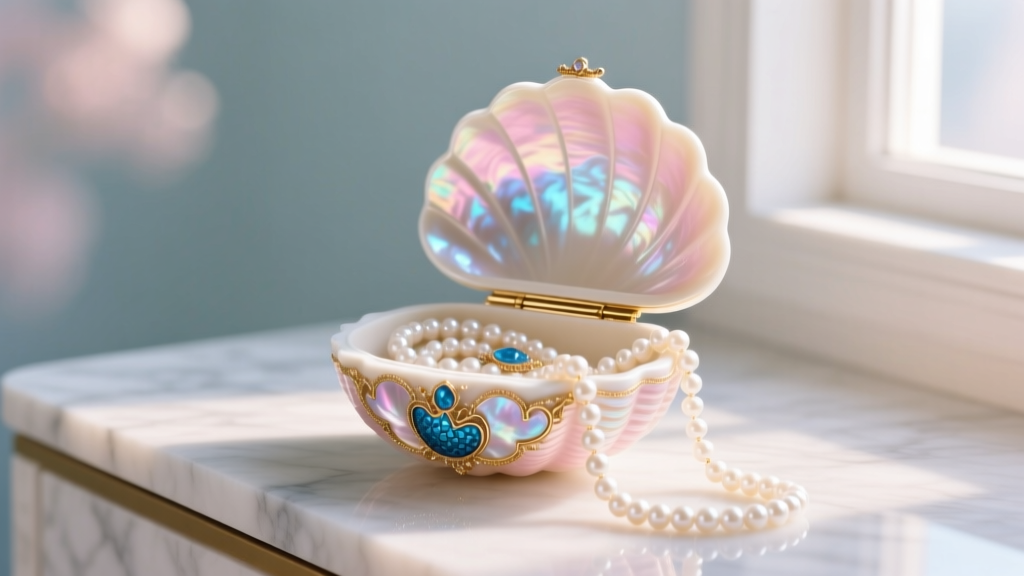
For many jewelry enthusiasts, a little mermaid jewelry box represents the perfect intersection of whimsical aesthetics and functional storage. Whether shaped like a clamshell, adorned with sea-glass mosaics, or featuring intricate resin mermaid figurines, these themed organizers are incredibly popular. However, beginners often make a critical mistake: prioritizing the exterior design over the interior chemistry.
Novelty and themed jewelry boxes are frequently manufactured using cost-effective materials that can actively harm your precious metals and gemstones. The Gemological Institute of America (GIA) consistently warns that improper storage environments are the leading cause of accelerated tarnishing and gemstone degradation. When you purchase a highly decorative piece, the manufacturer's budget is often spent on the exterior paint and sculpting, leaving the interior lined with cheap, acidic fabrics or bare, off-gassing wood. This guide will teach you how to evaluate, upgrade, and properly organize your oceanic-themed storage to ensure your jewelry remains as pristine as a pearl.
The Hidden Danger of Novelty Materials
To understand how to protect your jewelry, you must first understand the chemistry of tarnish. Silver, copper, and brass alloys react with sulfur compounds and moisture in the air to form silver sulfide—the black, dull layer we recognize as tarnish.
Many affordable themed boxes are constructed from Medium-Density Fiberboard (MDF) or particleboard. The synthetic resins and adhesives used to bind these wood fibers often contain sulfur-based compounds. When enclosed in a small, unventilated space, these compounds off-gas directly onto your jewelry. Furthermore, the cheap polyester or synthetic velvet linings used in mass-produced boxes can trap ambient humidity against the metal, creating a microclimate that accelerates oxidation. If you own a beautiful little mermaid jewelry box but notice your silver rings turning black within weeks, the box itself is likely the culprit.
Evaluating Box Materials: A Comparison Guide
Before purchasing or upgrading your storage, it is essential to identify the base material of the box. Here is a breakdown of common materials used in themed jewelry storage and their inherent risks.
| Material | Aesthetic Pros | Storage Cons | Tarnish Risk Level |
|---|---|---|---|
| Cast Resin | Allows for highly detailed mermaid figures and shell textures. | Heavy, brittle if dropped, interiors often left unpainted. | Low (if sealed properly) |
| MDF / Particleboard | Lightweight, affordable, easy to paint with oceanic colors. | Adhesives off-gas sulfur; highly susceptible to warping in humidity. | High |
| Solid Hardwood | Heirloom quality, naturally durable, can be carved. | Expensive, heavy, requires specific non-acidic finishes. | Very Low |
| Ceramic / Porcelain | Beautiful glazed finishes, excellent for ring cones. | Extremely fragile, limited internal compartmentalization. | Zero |
If you already own an MDF-based little mermaid jewelry box, do not despair. You can easily mitigate the risks by upgrading the interior lining and utilizing anti-tarnish absorbers, which we will cover in the next section.
Upgrading the Interior for Anti-Tarnish Protection
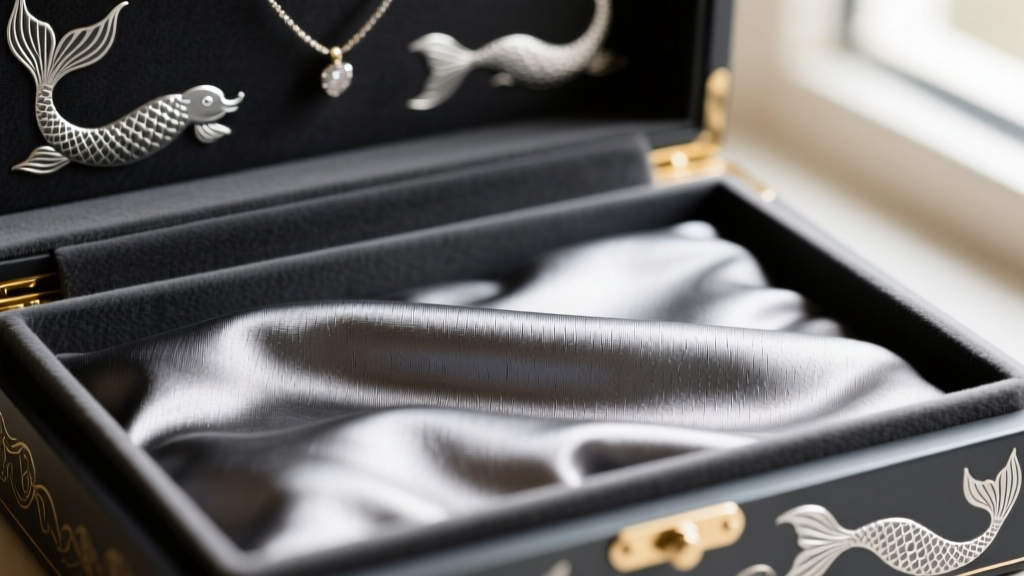
Transforming a novelty box into a safe haven for your fine jewelry requires replacing or covering the factory lining. The gold standard for silver storage is Pacific Silvercloth, a 100% cotton flannel embedded with microscopic silver particles that capture and neutralize sulfur gases before they reach your jewelry. For gold and gemstones, untreated, unbleached cotton or acid-free archival tissue is ideal.
Step-by-Step Lining Replacement
Upgrading your box is a beginner-friendly DIY project that takes less than an hour. Follow these steps to ensure a safe, professional-grade interior:
- Step 1: Remove the old lining. Use a plastic putty knife to gently pry up the existing fabric. If it was glued, use a citrus-based adhesive remover to clean the bare wood or resin. Avoid harsh chemical solvents like acetone, which can melt resin or strip the exterior paint.
- Step 2: Measure and cut foam padding. Purchase high-density, acid-free polyurethane foam (often sold for upholstery). Cut it to fit the base of the compartments. This provides a cushion that prevents gemstone chipping.
- Step 3: Apply the safe adhesive. Never use standard super glue or spray adhesives, as they emit destructive vapors. Instead, use an acid-free, pH-neutral PVA glue (such as Lineco Neutral pH Adhesive) or double-sided archival tape.
- Step 4: Drape the Silvercloth. Carefully lay your anti-tarnish fabric over the foam, pulling it taut and securing it to the walls of the compartment. Trim any excess with sharp fabric shears.
Strategic Organization for Oceanic Collections
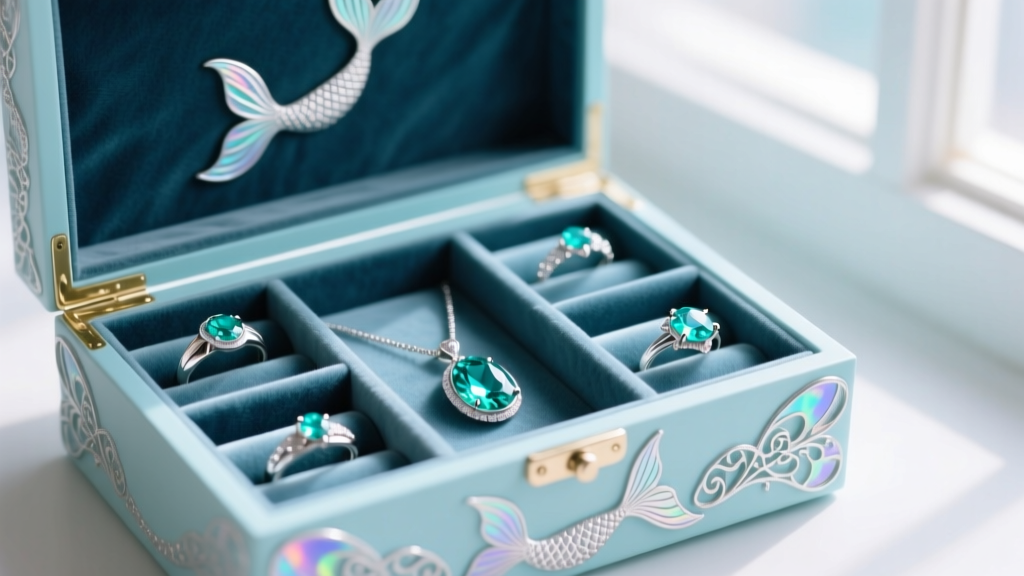
A little mermaid jewelry box often features unique compartments—perhaps a trident-shaped ring holder, a clamshell ring dish, or deep drawers meant for 'sea glass.' Organizing your jewelry correctly within these spaces is vital for preventing physical damage.
Storing Pearls and Organic Gems
Pearls, coral, and amber are organic gemstones that contain trace amounts of water. According to the Smithsonian Museum Conservation Institute, sealing organic gems in airtight plastic baggies or unventilated safes can cause them to dehydrate, leading to microscopic cracking and a loss of luster. Your little mermaid jewelry box is actually ideal for pearls, provided it is not completely airtight. Store your pearl necklaces flat in the widest drawer to prevent the silk thread from stretching. Never hang pearls on a hook, as gravity will weaken the silk over time.
Managing Chains and Pendants
Necklaces are notorious for tangling, especially delicate cable chains (typically 0.9mm to 1.2mm thick). If your themed box features a lid with hooks, use them. However, ensure the chains do not swing and collide with one another when the box is moved. For boxes without hooks, lay the chain flat in a wide compartment, leaving the clasp unfastened but resting just outside the edge of the fabric to prevent it from snagging on the links.
Environmental Control and Maintenance
Even with upgraded linings, controlling the micro-environment inside your jewelry box is the final step in professional-grade preservation.
First, invest in 3M Anti-Tarnish Strips. These small, unobtrusive paper strips absorb airborne sulfides and can protect the interior of a standard-sized jewelry box for up to six months. Simply tuck one into the corner of your main compartment and set a calendar reminder to replace it bi-annually.
Second, manage moisture. If you live in a humid coastal climate (fitting for a mermaid theme!), place a small, breathable silica gel desiccant packet inside the box. Do not use the cheap silica packets that come in shoe boxes, as they often contain cobalt chloride, a toxic indicator dye. Instead, purchase jewelry-safe, cobalt-free silica gel beads. This will keep the relative humidity inside the box below 40%, effectively halting the oxidation process for silver and copper alloys.
Final Thoughts on Themed Storage
Owning a little mermaid jewelry box does not mean you have to sacrifice the safety of your fine jewelry for the sake of aesthetics. By understanding the hidden dangers of mass-produced materials, taking an afternoon to install anti-tarnish linings, and practicing strategic organization, you can create a storage environment that is as functional as it is magical. Treat your storage solutions with the same care and research as the jewelry itself, and your oceanic treasures will remain brilliant for a lifetime.


