Beginner's Guide to Authenticating an Antique French Jewelry Box
Learn how to identify, authenticate, and safely store treasures in an antique French jewelry box. Discover key eras, materials, and interior lining tips.

The Allure of French Craftsmanship
Owning an antique French jewelry box is about more than just having a place to store your rings and necklaces; it is about preserving a piece of decorative art history. From the opulent, gilded eras of the French Empire to the sleek, geometric lines of the 1920s, French artisans set the global standard for luxury storage. However, for beginners, navigating the antique market can be daunting. Reproductions are common, and improper storage in vintage containers can actually damage modern jewelry. This guide will walk you through the essential markers of authenticity, the historical eras you need to know, and how to retrofit a vintage interior for safe, archival-level jewelry organization in 2026.
Defining the Eras: What to Look For
To authenticate an antique French jewelry box, you must first understand the three primary historical periods that dominate the market. Each era features distinct woodworking techniques, hardware, and aesthetic philosophies.
The Napoleon III Period (1852–1870)
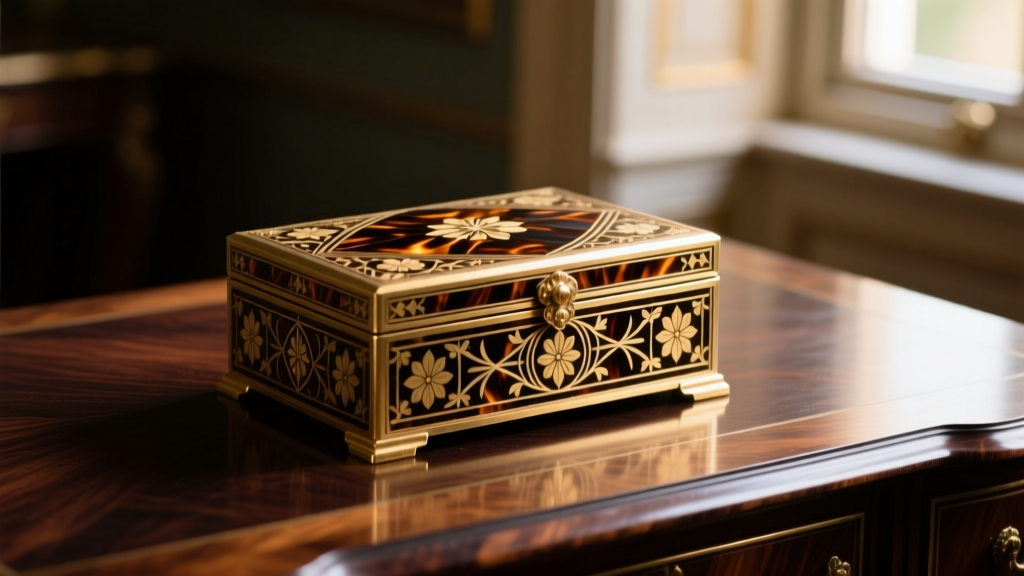
This era is synonymous with extreme opulence and eclecticism. Boxes from this period frequently feature Boulle work—a painstaking marquetry technique using inlaid brass and tortoiseshell (or synthetic substitutes in later reproductions). According to The Metropolitan Museum of Art, true Boulle marquetry requires precise, interlocking cuts that create a seamless, shimmering surface. Napoleon III boxes also heavily utilize ormolu (gilt bronze) mounts, often depicting classical motifs like acanthus leaves, cherubs, or mythological figures.
Art Nouveau (1890–1910)
As a reaction against industrialization, the Art Nouveau movement embraced organic, flowing lines. An antique French jewelry box from this era will often feature marquetry depicting floral motifs, dragonflies, or winding vines, utilizing contrasting wood veneers like mahogany, walnut, and fruitwoods. The Victoria and Albert Museum notes that French Art Nouveau pieces, particularly those from the Nancy School, prioritize the natural grain of the wood over heavy gilding.
Art Deco (1920–1939)
Art Deco brought sharp angles, symmetry, and exotic materials. Look for boxes crafted from Macassar ebony, burl walnut, or shagreen (stingray leather). The hardware is typically sleek, geometric, and sometimes incorporates chrome or nickel plating rather than traditional gold-toned ormolu.
Key Authentication Markers for Beginners
Spotting a genuine piece requires looking past the exterior polish and examining the structural and material details. Here is a practical checklist for your next estate sale or antique fair visit.
- Examine the Dovetail Joints: Open the drawers (if applicable). Hand-cut dovetails from the 19th century will be slightly asymmetrical and varied in size. Perfectly uniform, machine-cut dovetails indicate a 20th-century reproduction.
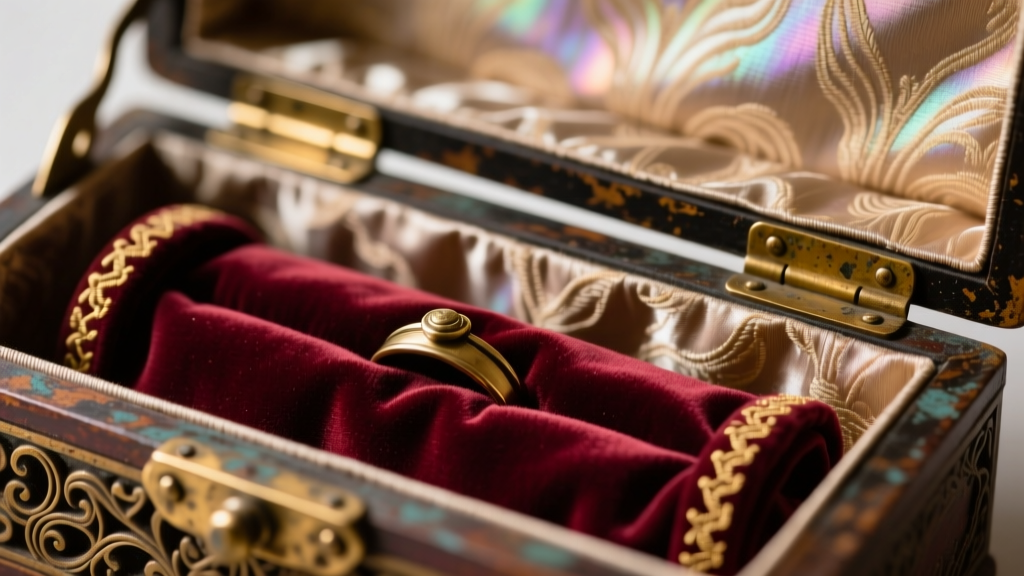
- Inspect the Ormolu Mounts: Authentic 19th-century ormolu was created using mercury gilding, which yields a soft, matte, and deeply rich gold finish. Later electroplated reproductions often look overly bright, brassy, or have a plastic-like sheen.
- Check the Escutcheons and Hinges: The brass escutcheon (keyhole guard) should show signs of hand-filing. Hinges should be made of solid brass, often with a slight patina. Modern steel hinges painted gold are an immediate red flag.
- The Interior Scent and Feel: A genuine antique will smell of aged wood, beeswax, and old textiles. A chemical or sharp varnish smell suggests recent manufacturing or heavy, inappropriate restoration.
Comparing French Box Styles and Materials
Use this quick reference table to identify the style of an antique French jewelry box at a glance.
| Era | Primary Woods & Materials | Distinctive Features | Typical Hardware |
|---|---|---|---|
| Napoleon III | Rosewood, Tortoiseshell, Brass | Boulle marquetry, heavy ornamentation | Mercury-gilt ormolu, elaborate brass locks |
| Art Nouveau | Walnut, Mahogany, Fruitwoods | Organic inlays, floral/nature motifs | Cast bronze with naturalistic shapes |
| Art Deco | Macassar Ebony, Burl, Shagreen | Geometric veneers, sharp angles | Chrome, nickel, or streamlined brass |
| Provincial | Oak, Cherry, Pine | Carved motifs, rustic charm, simpler lines | Wrought iron or simple brass pulls |
Safe Storage: The Hidden Dangers of Vintage Linings
While the exterior of an antique French jewelry box is a masterpiece, the interior can be a hazard to your modern jewelry collection. This is a critical concept that many beginners overlook when transitioning to vintage storage.
The Problem with Antique Textiles
Original 19th-century silk, moire, and velvet linings were often dyed using acidic compounds and heavy metals. Furthermore, the glues used to adhere these fabrics to the wooden carcass, as well as the wool felts used in ring rolls, naturally off-gas sulfur and acidic vapors over time. According to Britannica, the preservation of mixed-material antiques requires strict climate control, but for jewelry storage, the environment inside the box is what matters most. Sulfur off-gassing will rapidly cause sterling silver to develop black silver sulfide tarnish, while acidic dyes can degrade the nacre of natural pearls and corrode copper-alloy costume jewelry.
Retrofitting for Archival Safety
You do not need to destroy the historical integrity of the box to make it safe for daily use. Follow these professional conservation strategies:
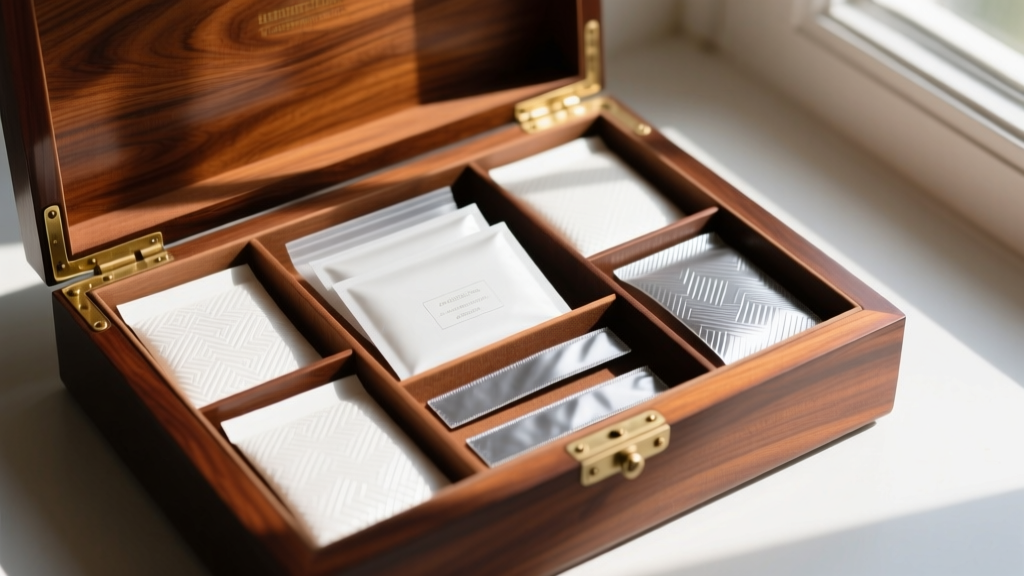
- Barrier Layers: Line the bottom of the compartments with archival-quality, acid-free Mylar sheets. This creates an impermeable barrier between your jewelry and the acidic vintage textiles.
- Anti-Tarnish Integration: Tuck 3M Anti-Tarnish Strips or Pacific Silvercloth tabs into the hidden corners of the box. These materials absorb sulfur gases before they can react with your silver and copper pieces.
- Removable Trays: For highly valuable pieces, use removable, acid-free acrylic or polypropylene trays that sit inside the antique compartments. This allows you to utilize the beautiful exterior of the box while providing a chemically inert environment for the jewelry.
- Pearl Care: Never store pearls in airtight plastic bags inside a vintage box. Pearls require ambient humidity to prevent cracking. Store them in unbleached, acid-free cotton pouches placed gently on top of the retrofitted lining.
Sourcing and Market Pricing in 2026
The market for antique French furniture and decorative objects has stabilized, making it an excellent time for beginners to enter the space. However, pricing varies wildly based on condition, provenance, and the integrity of the interior.
Pro Tip: Do not pay a premium for an 'untouched' interior if you plan to use the box for daily jewelry storage. A box that has been professionally retrofitted with archival materials by a conservator often holds more practical value for a collector.
Expected Price Ranges
- Provincial & Rustic Boxes (1850–1900): $150 – $450. These are often made of solid oak or cherry, featuring hand-carved floral motifs. They are durable and excellent for everyday, casual storage.
- Napoleon III Boulle Boxes (1860–1880): $800 – $3,500. The price heavily depends on the condition of the tortoiseshell (missing pieces are expensive to repair) and the completeness of the ormolu mounts.
- Art Deco Veneer Boxes (1920–1935): $1,200 – $5,000+. High-end pieces by recognized makers like Émile-Jacques Ruhlmann or featuring pristine shagreen and ivory inlays command top dollar at auction houses.
Where to Buy
For authenticated pieces with guarantees, explore curated platforms like 1stDibs or Chairish. For better deals that require a trained eye, browse Etsy using specific French search terms like 'boîte à bijoux ancienne' or 'coffret Napoléon III'. If you are traveling to Europe, the Marché aux Puces de Saint-Ouen in Paris remains the premier destination, specifically the Marché Biron, which specializes in high-end antique furniture and decorative arts.
Final Thoughts on Vintage Organization
An antique French jewelry box is a functional piece of art that bridges the gap between historical craftsmanship and modern organization. By learning to identify the subtle markers of genuine Boulle work, understanding the structural differences between Art Nouveau and Art Deco, and taking the necessary steps to neutralize acidic vintage interiors, you can safely house your precious metals and gemstones in a piece of history. Approach the market with patience, prioritize structural integrity over superficial polish, and your vintage storage solution will protect your collection for generations to come.


