Care & Cleaning Guide for Custom Jewelry for Girlfriend
Discover expert cleaning and maintenance tips to keep custom jewelry for your girlfriend pristine. Learn material-specific care for gold, silver, and gems.

When you invest in custom jewelry for girlfriend gifts, you are giving more than just an accessory; you are presenting a bespoke piece of art with deep emotional resonance. However, custom pieces often feature unique alloy blends, intricate milgrain detailing, and specialized gemstone settings that standard commercial cleaning methods can easily damage. As we move through 2026, custom jewelers increasingly use advanced setting techniques and alternative metals, making specialized care more important than ever.
This comprehensive guide provides actionable, material-specific maintenance protocols to ensure her custom piece remains as flawless as the day it was crafted.
The Material Matrix: Identifying Your Custom Piece
Before applying any cleaning solution, you must identify the exact metal and gemstone composition. Custom jewelers often mix metals for specific colors, which drastically alters their chemical reactivity.
| Metal Type | Standard Purity | Tarnish Risk | Ultrasonic Safe? |
|---|---|---|---|
| Yellow Gold | 14K (58.5%) / 18K (75%) | Low | Yes |
| Rose Gold | 14K / 18K (Copper alloy) | Medium (Oxidation) | Yes |
| Sterling Silver | 92.5% Silver, 7.5% Copper | High (Silver Sulfide) | Yes |
| Argentium Silver | 96% Silver, Germanium | Very Low | Yes |
| Platinum | 95% Platinum, 5% Ruthenium | None (Patina only) | Yes |
Step-by-Step Cleaning Protocols by Metal Type
14K and 18K Gold (Yellow, White, and Rose)
Gold is inherently non-reactive, but the alloys mixed with it are not. Rose gold contains a high percentage of copper, which can develop a dark oxidation layer if exposed to chlorine or harsh household cleaners. White gold is typically rhodium-plated; aggressive scrubbing will wear this plating away, revealing the yellowish alloy beneath.
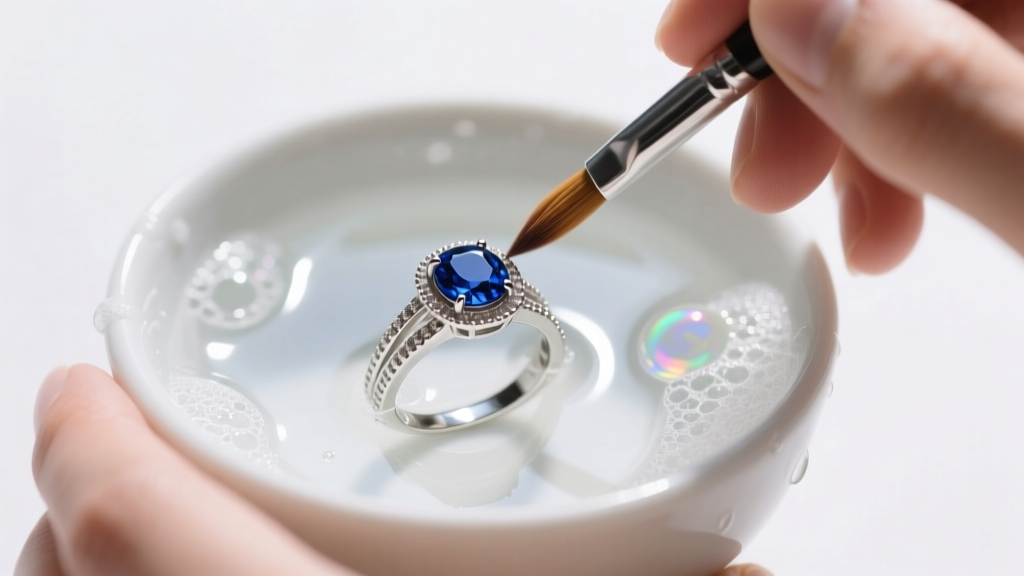
- The Solution: Mix 3 drops of mild, phosphate-free dish soap (like Dawn) into 1 cup of lukewarm distilled water.
- The Method: Soak the piece for 15 minutes. Use a baby-soft toothbrush to gently sweep along the gallery (the underside of the setting) where skin oils and lotions accumulate.
- The Rinse: Rinse under lukewarm running water and dry immediately with a lint-free microfiber cloth to prevent water spots.
Sterling Silver and Argentium Silver
Tarnish on sterling silver is a chemical reaction between the copper alloy and sulfur compounds in the air, creating silver sulfide. If her custom piece features intentional oxidation (blackened crevices for contrast), avoid chemical dips that will strip the dark patina.
Pro-Tip for Heavy Tarnish: For solid silver pieces without gemstones, use an electrochemical bath. Line a glass bowl with aluminum foil (shiny side up), add 1 tablespoon of baking soda and 1 tablespoon of sea salt, and pour in boiling water. Submerge the silver for 3 minutes. The sulfur transfers from the silver to the aluminum, reversing the tarnish without removing any metal.
Gemstone-Specific Maintenance: Protecting the Centerpiece
The metal is only half the equation. Gemstones are graded on the Mohs scale of hardness, but hardness only dictates scratch resistance, not toughness (resistance to chipping) or stability (resistance to chemicals and heat).
Diamonds, Sapphires, and Rubies (Mohs 8-10)
These stones are exceptionally durable and can withstand ultrasonic cleaners (typically operating at 42 kHz). However, diamonds are lipophilic, meaning they naturally attract and hold grease. This is why a diamond ring can look cloudy after just a week of wear. Clean these weekly with a dedicated jewelry degreaser or an ammonia-based glass cleaner (like Windex) sprayed onto a soft brush—never directly onto the setting, to avoid fluid trapping.
Emeralds, Opals, and Pearls (Mohs < 7.5)
These require extreme caution. According to the Gemological Institute of America (GIA), emeralds are almost always treated with cedar oil to mask natural fissures. Ultrasonic vibrations and warm soapy water will strip this oil, leaving the stone fractured and cloudy. Opals contain 3% to 21% water; sudden temperature changes or ultrasonic waves will cause them to crack (craze). Pearls are organic calcium carbonate; acids (even mild vinegar or perfume) will dissolve their nacre.
- Emeralds: Wipe gently with a damp, untreated microfiber cloth. Re-oil professionally every 2-3 years.
- Opals & Pearls: Clean only with a barely damp cloth. Never submerge them in water.
Tools of the Trade: What to Buy and What to Avoid
To maintain custom jewelry for girlfriend gifts properly, curate a specialized cleaning kit. Avoid generic commercial dips, which often contain thiourea—a toxic chemical that can pit metals and damage porous stones.
- Connoisseurs Precious Jewelry Cleaner: A safe, ammonia-free liquid solution ideal for gold, platinum, and diamonds.
- Sunshine Polishing Cloths: Impregnated with micro-abrasives and anti-tarnish agents. Use the inner white cloth for delicate gemstones and the outer yellow cloth for bare metal.
- Ultrasonic Cleaner (42 kHz): Excellent for diamond tennis bracelets and plain gold chains, but strictly forbidden for emeralds, opals, pearls, and tanzanite.
- Jewelry Steamers: While popular, high-pressure steam can easily dislodge stones in custom tension settings or fracture included gems.
Long-Term Storage and Professional Maintenance Schedules
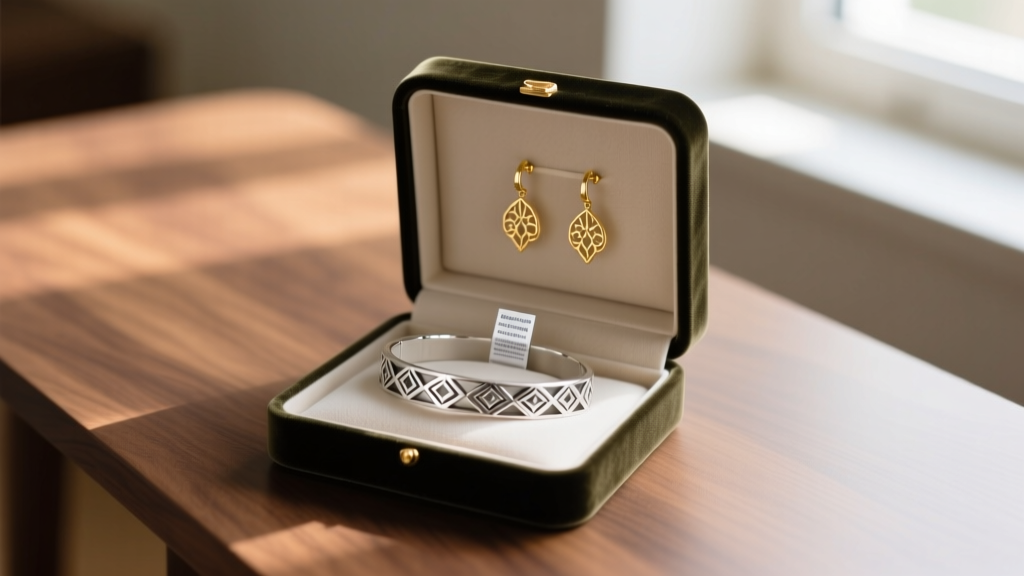
Proper storage is the most overlooked aspect of jewelry maintenance. Tossing custom pieces into a shared jewelry box guarantees micro-scratches, as diamonds will easily scratch gold, silver, and softer gemstones.
The Ideal Storage Environment
Store each piece individually in acid-free tissue paper or soft flannel pouches. For silver, place a 3M anti-tarnish strip inside the pouch or box; these strips absorb sulfur and hydrogen sulfide from the air, preventing tarnish for up to 12 months. Avoid storing jewelry in bathrooms, as the high humidity and fluctuating temperatures accelerate oxidation and degrade organic gems like pearls.
Professional Maintenance Schedule
The Federal Trade Commission (FTC) advises consumers to rely on professional jewelers for structural maintenance. Establish a schedule with the original custom jeweler:
- Every 6 Months: Professional ultrasonic cleaning and steam polishing (if safe for the stones).
- Annually: Prong tightening and setting checks. Custom settings, particularly bezel and tension mounts, can warp slightly with daily impacts, risking stone loss.
- Every 2-3 Years: Rhodium replating for white gold pieces and professional re-oiling for emeralds.
By adhering to these precise, material-specific protocols, you ensure that the custom jewelry you gifted remains a brilliant, enduring testament to your relationship, completely free from the damage caused by improper commercial cleaning shortcuts.