2026 Trends: Personalized Jewelry for Her Beyond Nameplates
Discover 2026 style trends for personalized jewelry for her. Move beyond basic nameplates to topographic rings, soundwave pendants, and hidden engravings.

The Death of the Basic Nameplate: 2026's Shift to Stealth Personalization
For the past decade, the market for personalized jewelry for her has been dominated by overt, highly visible markers: Carrie-style nameplate necklaces, oversized initial pendants, and zodiac signet rings. While these pieces hold sentimental value, the 2026 style landscape has decisively pivoted toward what industry insiders call 'stealth' or 'whisper' personalization. Modern consumers are seeking pieces that appear minimalist and avant-garde to the outside world, but harbor deeply intimate, data-driven meanings known only to the wearer and the giver.
This shift is driven by a desire for subtlety in professional and formal environments, combined with advancements in micro-manufacturing. According to trend forecasts highlighted by JCK Online, the luxury sector is moving away from mass-produced monograms and toward bespoke, biometric, and geospatial data integration. We are no longer just engraving a name; we are casting the exact audio waveform of a wedding vow, or CNC-milling the precise topographic elevation of the trail where a couple first met.
Top-Tier Trending Formats in Hyper-Personalization
To truly understand the current market, we must look at the specific formats that are replacing traditional engraving. These techniques require advanced CAD/CAM modeling and specialized metallurgy.
Topographic and Geospatial Mapping
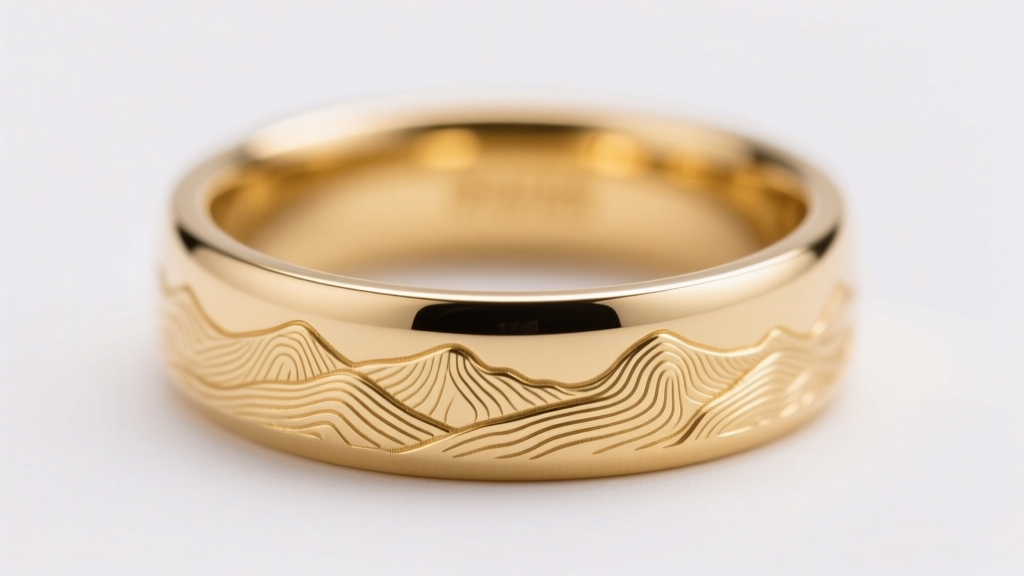
Topographic jewelry translates real-world LiDAR or GPS elevation data into 3D STL files, which are then milled into metal. The most popular application for personalized jewelry for her in this category is the 'hidden landscape' ring. The exterior of the band remains a sleek, polished dome, while the interior features a 0.5mm-deep relief map of a meaningful location. Because the interior of a ring is subject to friction and moisture, these maps are typically milled into 14k yellow gold or Platinum 950, avoiding the porous nature of lower-karat alloys.
Biometric and Soundwave Castings
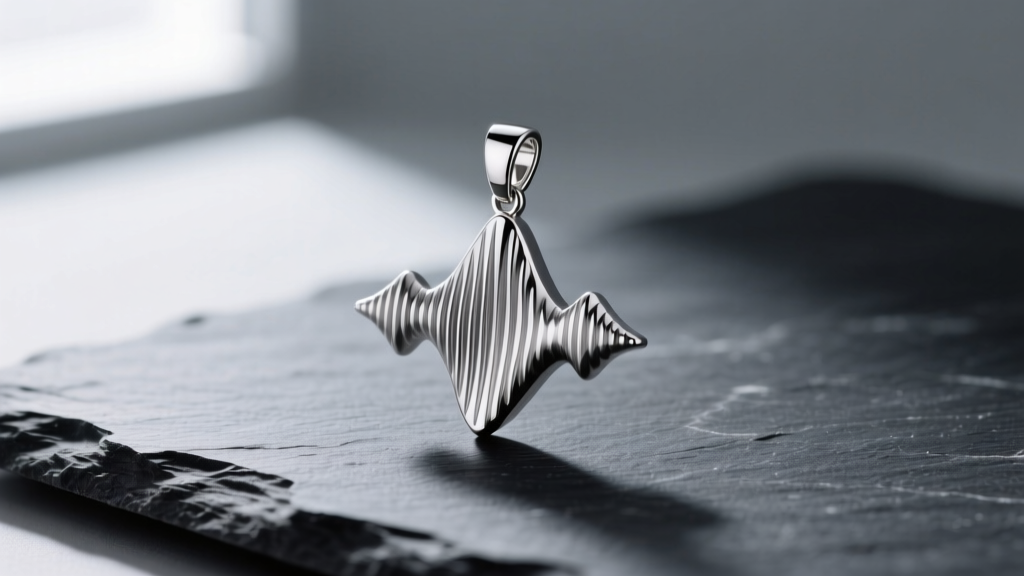
Soundwave jewelry has evolved from simple 2D laser etchings into fully three-dimensional sculptural pendants. By isolating a specific audio clip—such as a laugh or a vow—the audio is normalized to -3dB to prevent clipping, and the waveform is extruded into a 3D model. This model is then 3D printed in castable wax resin and subjected to traditional lost-wax casting. The result is a wearable, abstract sculpture that is literally shaped by the voice of a loved one.
Material Science: What Holds a Micro-Engraving Best?
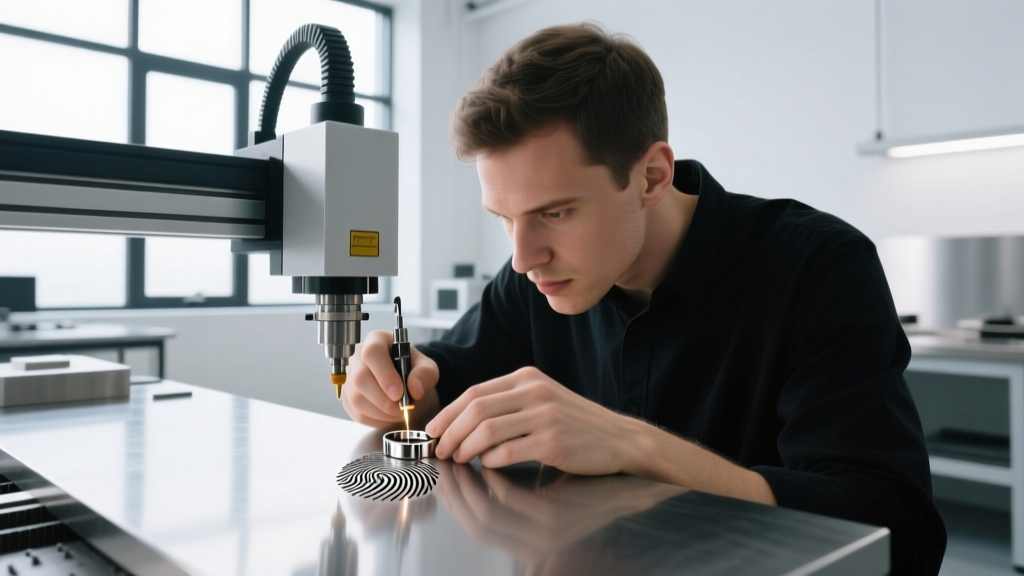
When dealing with hyper-personalization, the choice of metal is not just about color preference; it is a matter of structural integrity and laser compatibility. Fiber lasers (operating at a 1064 nm wavelength) are the industry standard for micro-engraving, capable of achieving line widths as narrow as 0.05mm. However, different metals react to this intense, localized heat in vastly different ways.
The Gemological Institute of America (GIA) frequently notes that understanding metal hardness and thermal conductivity is vital for jewelry longevity. Below is a technical breakdown of the best metals for stealth personalization in 2026.
| Metal Alloy | Vickers Hardness (HV) | Laser Compatibility | Best Use Case | Avg. Bespoke Price Range |
|---|---|---|---|---|
| Platinum 950 (95% Pt, 5% Ru) | 125 - 135 | Exceptional (No oxidation) | Inner-band fingerprints, micro-text | $1,800 - $3,500 |
| 14k Yellow Gold (58.5% Au) | 130 - 150 | Very Good (Slight discoloration) | Topographic maps, coordinate dials | $900 - $2,200 |
| 18k White Gold (Rhodium Plated) | 120 - 140 | Poor (Laser burns off plating) | Avoid for micro-engraving | N/A |
| Grade 5 Titanium (Ti-6Al-4V) | 340 - 360 | Good (High contrast, deep cuts) | Soundwave ridges, exterior etching | $450 - $1,200 |
Notice the exclusion of 18k White Gold. When a fiber laser strikes rhodium-plated white gold, the heat strips the plating, revealing the yellowish alloy beneath. For hidden engravings that require high contrast without the need for re-plating, Platinum 950 remains the undisputed king of bespoke personalization.
Sourcing and Pricing: The 2026 Market Landscape
The barrier to entry for creating personalized jewelry for her has bifurcated. On one end, semi-custom e-commerce platforms utilize automated parametric CAD scripts to generate coordinate rings or simple soundwave etchings. These are generally priced between $250 and $600, utilizing 10k or 14k gold and standard CNC routing.
On the other end of the spectrum are master jewelers and specialized bespoke studios. Commissioning a piece that involves hand-guilloché enamel filling over a laser-etched fingerprint, or the lost-wax casting of a complex 3D soundwave, requires significant bench time. Expect to pay $1,500 to $4,000+ for these pieces. The premium covers the multi-step finishing process: printing the wax, investing, burning out, casting in a vacuum, cutting the sprue, sanding, and finally, the meticulous application of vitreous enamel into the micro-crevices of the data pattern.
How to Commission a Bespoke Piece (A Buyer's Framework)
If you are looking to gift a piece of hyper-personalized jewelry this year, bypass the generic 'add your name' text boxes and follow this framework to ensure a high-quality, emotionally resonant result.
- Step 1: Data Acquisition. Gather your raw data. If doing a soundwave, record the audio in a quiet room using a lossless format (WAV or FLAC), not a compressed MP3. If doing a fingerprint, use a high-resolution ink stamp on bright white paper and scan it at 1200 DPI.
- Step 2: Metal Selection. Choose your metal based on the table above. If the personalization will be on the inside of a ring (subject to skin acids and friction), opt for Platinum 950 or 14k Yellow Gold. Avoid sterling silver for hidden ring engravings, as it tarnishes and obscures micro-details.
- Step 3: Request a CAD Render. A reputable bespoke jeweler will always provide a 3D CAD rendering before casting. Check the depth of the engraving. For a fingerprint to be legible and retain enamel, the etch depth must be at least 0.15mm to 0.2mm.
- Step 4: Finish Contrast. Ask the jeweler for a 'matte' or 'brushed' finish on the engraved area, contrasted with a high-polish exterior. This light-diffusion technique makes the hidden data catch the eye only when specifically looked for.
"The true luxury of modern personalization isn't about shouting a name to the room. It's about encoding a memory into the very atomic structure of the metal, creating a private language between two people." — Master Bench Jeweler, 2026 Guild Symposium.
Final Thoughts on the Future of Gifting
The era of generic personalization is over. By embracing topographic data, biometric casting, and advanced metallurgy, you can gift personalized jewelry for her that transcends traditional adornment. These pieces are not just accessories; they are wearable archives of human experience, engineered to last generations. As manufacturing technology continues to shrink tolerances to the micron level, the only limit to what can be encoded into gold and platinum is the depth of the memory you wish to preserve.