The Definitive Jewelry Gift Guide for Milestone Anniversaries
Discover the ultimate jewelry gift guide for milestone anniversaries. Learn how to select carat weights, metal grades, and bespoke designs.

The Psychology of Milestone Gifting
Gifting jewelry for a milestone anniversary transcends the simple exchange of goods; it is an exercise in material permanence and emotional resonance. As we navigate the 2026 jewelry landscape, the modern consumer is moving away from generic, mass-produced pieces toward highly considered, technically superior creations. This definitive jewelry gift guide is engineered to help you navigate the complex intersection of metallurgy, gemology, and ergonomic design, ensuring your milestone gift withstands both the test of time and daily wear.
Decoding the Traditional vs. Modern Anniversary Matrix
The traditional anniversary material list—paper, cotton, wood—was established in the Victorian era and is largely obsolete for modern luxury gifting. Instead, we map these milestones to gemstone durability (Mohs scale) and metal longevity. Below is a strategic framework for translating traditional milestones into high-value jewelry investments.
| Milestone | Traditional Material | Modern Jewelry Translation | Technical Focus & Budget Range |
|---|---|---|---|
| 5th Year | Wood | Hardwood Inlay / Titanium | Grade 5 Titanium (Ti-6Al-4V) with stabilized burl wood. $800 - $1,500 |
| 10th Year | Tin / Aluminum | Platinum & Lab-Grown Diamonds | 950 Platinum with CVD lab diamonds (VS clarity). $2,500 - $6,000 |
| 15th Year | Crystal | Moissanite & White Sapphire | Forever One Moissanite (2.50ct+) in 18k gold. $1,500 - $3,500 |
| 20th Year | China / Porcelain | Enamel & Emerald | Guilloché enamel with Zambian emeralds (minor oil). $4,000 - $10,000+ |
Metallurgy: Platinum vs. 18k White Gold
When selecting the foundation for an anniversary ring or pendant, understanding the Vickers hardness (HV) and alloy composition of your metals is non-negotiable. Many buyers mistakenly assume 18k white gold and platinum are visually and physically identical. They are not.
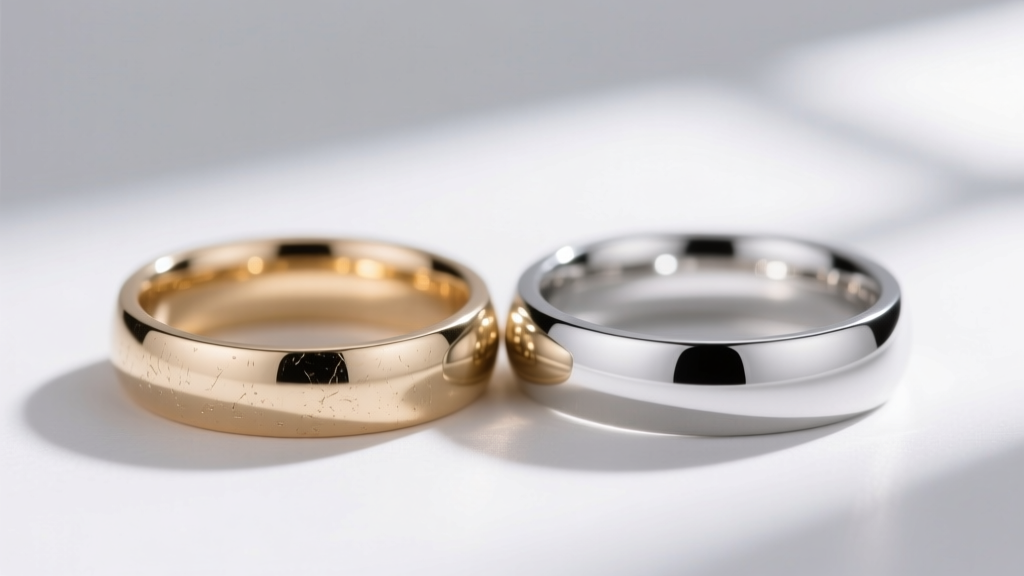
18k White Gold: Composed of 75% pure gold alloyed with metals like palladium, nickel, or zinc to achieve a silvery hue. However, its natural state is a faint yellowish-gray. To achieve the bright white finish seen in showrooms, it is electroplated with rhodium (typically 0.75 to 1.0 microns thick). This plating wears off in 12 to 24 months with daily wear, requiring ongoing maintenance. Furthermore, nickel-alloyed white gold can trigger contact dermatitis in roughly 15% of the population.
950 Platinum: An alloy of 95% platinum and 5% ruthenium or iridium. Platinum is denser and heavier, with a Vickers hardness of roughly 125 HV. Unlike gold, which loses microscopic layers of metal when scratched, platinum merely displaces, developing a soft, satiny "patina" over time that many collectors prize. It is naturally white and hypoallergenic, making it the superior choice for heirloom-level anniversary gifts. For deeper insights into metal standards, refer to the American Gem Society Metal Standards.
Gemology: Lab-Grown, Mined, and Moissanite
The gemstone market has undergone a seismic shift. When consulting any modern jewelry gift guide, you must understand the optical and chemical differences between mined diamonds, lab-grown diamonds, and simulants.
Lab-Grown Diamonds (CVD vs. HPHT)
Lab-grown diamonds share the exact carbon crystal lattice as mined diamonds, registering a 10 on the Mohs scale. However, the growth method matters. Chemical Vapor Deposition (CVD) diamonds are grown in plasma reactors and often require post-growth HPHT (High Pressure High Temperature) treatment to remove brownish tints. HPHT-grown diamonds, conversely, are created under immense pressure and can sometimes exhibit magnetic inclusions due to metallic flux. Always demand a grading report from a top-tier laboratory; the GIA's Lab-Grown Diamond Reports provide the most rigorous color and clarity assessments in the industry.
Moissanite: The Optical Powerhouse
Moissanite (Silicon Carbide) is not a diamond simulant; it is a distinct gemstone with superior optical fire. With a refractive index of 2.65-2.69 (compared to a diamond's 2.42) and a dispersion of 0.104, moissanite exhibits intense rainbow flashes. At 9.25 on the Mohs scale, it is exceptionally durable for daily wear. For a 15th anniversary, a 3-carat oval moissanite set in a platinum bezel offers massive visual impact at roughly 10% of the cost of a mined equivalent.
Ergonomics and Sizing: The Hidden Pitfalls
A technically perfect ring will be relegated to a drawer if the ergonomics are flawed. The most common failure point in anniversary ring gifting is ignoring the wearer's knuckle-to-base ratio.
- Standard Fit vs. Comfort Fit: Comfort fit bands feature a domed interior, reducing the surface area touching the skin and making them easier to slide over enlarged knuckles. They typically require a half-size down from standard flat-band measurements.
- Euro-Shanks: For recipients with large knuckles but slender finger bases, a Euro-shank (a squared-off bottom) prevents the ring from spinning while allowing the top of the ring to clear the knuckle easily.
- Sizing Beads: If the knuckle is more than two sizes larger than the finger base, opt for sizing beads (small metal spheres soldered to the inner shank) rather than sizing the ring to the knuckle, which will result in a dangerously loose fit on the base.
Bespoke vs. Off-the-Rack: A Decision Framework
Should you buy a finished piece or commission a bespoke design? According to JCK Online's Industry Analysis, custom jewelry requests have surged as buyers seek unique, narrative-driven pieces. Use this framework to decide:
Choose Off-the-Rack If:
Your timeline is under 4 weeks, your budget is strictly fixed, and you prefer established brand warranties and immediate return policies. Focus on classic solitaire or three-stone settings that never go out of style.
Choose Bespoke If:
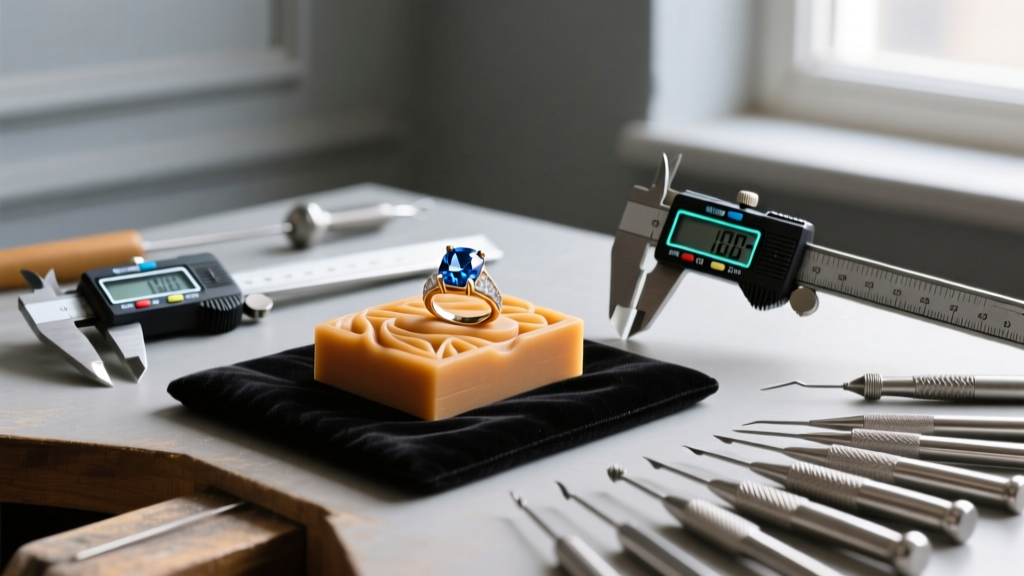
You have a minimum of 8 to 12 weeks. The bespoke process involves CAD modeling, 3D wax printing, and investment casting (which accounts for a 1.5% to 2% metal shrinkage rate that the jeweler must calculate). This route is ideal if you are repurposing inherited gemstones or require complex, interlocking wedding-band nesting that off-the-rack sets cannot accommodate.
Final Pre-Purchase Checklist
Before finalizing your milestone anniversary purchase, run through this technical checklist to ensure absolute quality and buyer protection:
- Verify the Hallmark: Ensure the inner shank is laser-inscribed with the metal purity (e.g., PT950, 18K, 750) and the manufacturer's trademark.
- Check Prong Geometry: Prongs should be smoothly rounded, not flat or snag-prone. For softer stones like emeralds, bezel settings are mandatory to prevent chipping.
Request the Imaging: Ask for a 360-degree ASET (Angular Spectrum Evaluation Tool) image if purchasing a diamond, ensuring optimal light return and avoiding severe light leakage. - Confirm the Warranty: Ensure the warranty explicitly covers rhodium re-plating (for white gold), prong re-tipping, and micro-pavé stone replacement for at least the first two years.
By prioritizing metallurgical integrity, optical performance, and ergonomic precision, your anniversary gift will transcend fleeting trends, serving as a permanent, wearable testament to your shared history.