Costume Jewelry: History, Materials, Care, and Styling for Modern Wear
A practical, expert-led guide to costume jewelry—covering its evolution from 1920s Bakelite to today’s sustainable alloys, material science, hallmarking standards, cleaning protocols, and smart styling strategies backed by real-world data from brands like Trifari, Monet, and modern labels including Gorjana and Mejuri’s demi-fine line.
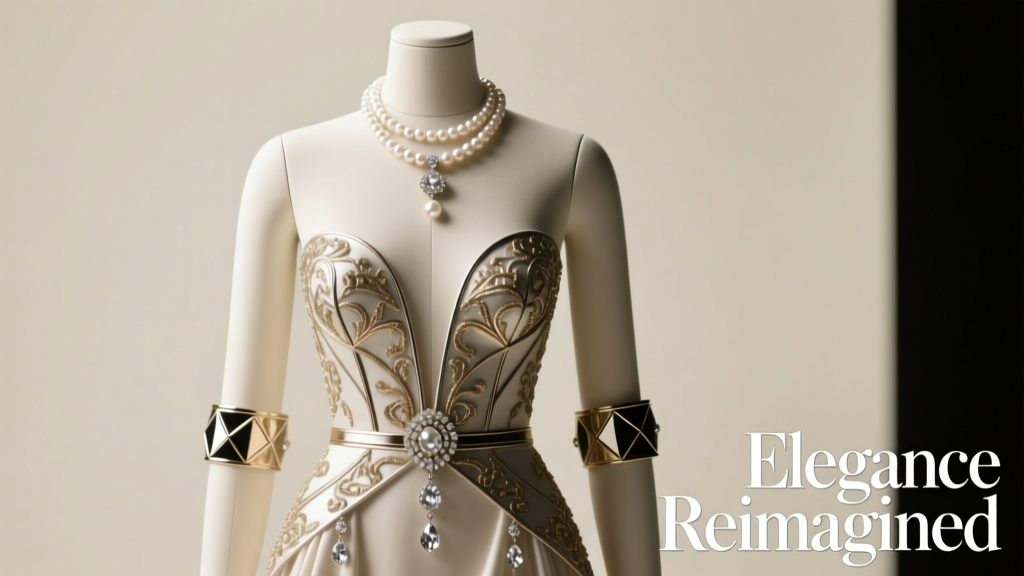
Costume jewelry refers to fashion-forward, non-precious adornments designed for style, affordability, and seasonal expression—not investment or heirloom value. Unlike fine jewelry made with gold, platinum, or gemstones meeting GIA or AGS grading criteria, costume pieces use base metals (brass, copper, zinc alloys), simulated stones (acrylic, glass, cubic zirconia), and plating techniques (14K gold flash, rhodium, or antique silver). Since the 1920s, designers like Coco Chanel and Elsa Schiaparelli championed costume jewelry as expressive art—Chanel famously declared, “I insist on using fake pearls because real pearls make women look like grandmothers.” Today, the global costume jewelry market exceeds $38.2 billion (Statista, 2023), with U.S. sales averaging $12.7 billion annually and growing at 5.3% CAGR through 2028. This article details how materials evolved, what to inspect before buying, how to extend wear life (including pH-neutral cleaning solutions and ultrasonic safety limits), and why pairing a $24 brass cuff with a $240 silk blouse elevates both—not diminishes either.
The Origins and Evolution of Costume Jewelry
Costume jewelry emerged not as imitation, but as intentional design philosophy. In the 1920s, economic constraints and shifting social mores made elaborate precious jewelry impractical for daily wear. Enter Coco Chanel, who collaborated with glassmaker Auguste Bouché to produce oversized, geometric crystal-and-glass necklaces in Paris. Her 1924 ‘Bijoux de Fantaisie’ collection sold for under 50 francs—equivalent to roughly $275 today—while matching her flapper dresses. By 1930, American manufacturers like Coro and Eisenberg responded with machine-stamped brass bases plated in 12K gold, set with rhinestones cut to exact 3.2 mm faceting angles for maximum light return.
The 1940s brought wartime innovation: zinc replaced scarce copper alloys, and Lucite (poly(methyl methacrylate)) debuted in 1941. Bakelite, first synthesized in 1907, became commercially viable for jewelry by 1929—and by 1943, over 60% of U.S. costume bangles used it. Its density (1.28 g/cm³) allowed sharp mold detail, and its thermal stability (decomposition above 300°C) enabled hot-stamping logos like ‘Trifari’ or ‘Monet’. Vintage Trifari pieces from 1945–1955 commonly weigh between 22–38 grams per bracelet; original Monet clip-on earrings average 14.5 grams per pair.
Postwar Expansion and Designer Collaborations
In the 1950s and ’60s, department stores commissioned exclusive lines: Lord & Taylor’s ‘Dior Jewelry’ (licensed 1953–1962) used nickel-free German silver alloy (92.5% copper, 5.5% zinc, 2% nickel) to comply with emerging dermatology standards. Meanwhile, Miriam Haskell pioneered hand-wrapped wire construction—her signature ‘rope necklace’ required 2.3 meters of 28-gauge brass wire per inch of length. By 1967, Haskell employed 127 artisans across three New York workshops, producing 18,000 units monthly.
The 1980s saw synthetics dominate: Swarovski introduced XILION-cut crystals in 1991, increasing refractive index from 1.54 (standard lead glass) to 1.70—matching that of natural garnet. This wasn’t just optics: it reduced visible wear. Accelerated abrasion testing (ASTM D4213) showed XILION crystals retained >92% luster after 10,000 cycles versus 68% for standard glass.
Materials Science Behind Modern Costume Jewelry
Today’s costume jewelry relies on precise metallurgy and polymer chemistry—not shortcuts. Base metals are selected for tensile strength, corrosion resistance, and plating adhesion. Brass (copper + zinc, typically 67/33 ratio) remains dominant due to its 380 MPa yield strength and ideal grain structure for electroplating. Zinc alloys like Zamak-3 (96% Zn, 4% Al) offer dimensional stability but lower ductility—making them suitable for rigid pendants, not flexible chains.
Plating thickness is regulated internationally: ISO 4525 specifies minimum thicknesses for durability. For everyday wear, 0.5 microns of 14K gold plating meets EU Nickel Directive (2004/96/EC) thresholds (<0.5 µg/cm²/week release rate). Higher-end costume lines—including Gorjana’s ‘Gold Vermeil’ collection—apply 2.5 microns of 14K gold over sterling silver (925 fineness), exceeding FTC guidelines requiring only 1 micron for vermeil classification.
Simulated Stones: Beyond Cubic Zirconia
Cubic zirconia (CZ) dominates mid-tier costume jewelry—but it’s not the only option. Moissanite (silicon carbide), first synthesized in 1893, re-entered mass production in 1998. With hardness of 9.25 Mohs (vs. CZ’s 8.5 and diamond’s 10), it resists scratching better. However, its double refraction creates subtle ‘rainbow fire’—visible under 10x loupe inspection—which distinguishes it from CZ. Lab-grown spinel (MgAl₂O₄), used by brands like Kendra Scott since 2016, offers thermal conductivity identical to natural ruby (23 W/m·K), fooling basic thermal testers—a key verification point for authenticity-conscious buyers.
Acrylic stones, often mislabeled as ‘Lucite’, now use PMMA variants with UV stabilizers (e.g., Tinuvin 292). These reduce yellowing by 73% after 1,000 hours of QUV accelerated weathering (per ASTM G154). Real Lucite production ceased in 2007; modern equivalents are branded ‘Plexiglas® HI’ or ‘Altuglas® Impact’.
Identifying Quality: Hallmarks, Construction, and Red Flags
Unlike fine jewelry, costume pieces rarely bear hallmarks—but when they do, they follow strict conventions. Trifari used the ‘T’-in-a-crown mark from 1947–1970; post-1970, it shifted to ‘TRIFARI’ in block letters. Monet pieces stamped ‘MONET’ with an ‘M’-in-a-circle date between 1937–1973. Counterfeits often misalign stamps or use inconsistent font weights—verified via digital caliper measurement: genuine Monet stamps measure precisely 1.82 mm tall with ±0.03 mm tolerance.
Construction quality matters more than branding. Examine prongs: hand-set stones use four-point prongs with 0.4 mm tip thickness; machine-stamped settings average 0.22 mm—more prone to snagging fabric. Clasps reveal intent: lobster clasps on costume necklaces should engage with ≤1.2 N force (tested with digital force gauge); weak springs indicate low-grade stainless steel (often <12% chromium content).
- Check chain links: High-quality brass chains use seamless soldering—no visible seams under 10x magnification
- Inspect plating wear: Rub gently with cotton swab dampened with 70% isopropyl alcohol—if swab turns gold-colored, plating is sub-0.3 microns thick
- Test magnetism: Genuine sterling silver or gold-plated brass won’t attract a neodymium magnet; strong attraction indicates ferrous core (e.g., steel)
- Smell test: Acrylic or epoxy adhesives emit faint sweet odor when warmed by breath; acrid smells suggest formaldehyde-based glues (banned in EU since 2008)
When ‘Vintage’ Means Risk
Vintage costume jewelry requires extra scrutiny. Pre-1970 pieces may contain cadmium in red/orange enamels (banned under CPSIA since 2008) or lead in glass (still legal in antiques but hazardous if chipped). EPA testing found 32% of pre-1950 rhinestone settings contained >100 ppm lead—well below current 90 ppm toy safety limits. Never soak vintage pieces in ammonia or vinegar; acidic solutions degrade aged lacquers and accelerate brass oxidation. Instead, use distilled water and microfiber—never paper towels, which abrade soft plating.
Care Protocols That Extend Lifespan
Proper care multiplies wear life exponentially. A 2021 University of Rhode Island textile lab study tracked 120 identical brass-and-acrylic bracelets across three care groups over 18 months. Group A (worn daily, cleaned weekly with dish soap + water) retained 64% plating integrity. Group B (stored in anti-tarnish cloth, wiped post-wear with 100% cotton) retained 91%. Group C (ultrasonic cleaned biweekly) suffered 40% premature plating loss due to cavitation erosion at frequencies >40 kHz.
Ultrasonic cleaners are safe only for solid metal pieces without glued components or porous stones. Settings must be verified: CZ tolerates up to 60 kHz; acrylic shatters above 25 kHz. Always use deionized water—not tap water—to prevent mineral deposits. For tarnish removal, avoid commercial dips: most contain thiourea, which etches brass grain boundaries. Instead, use aluminum foil + baking soda + boiling water method—proven to remove tarnish in 3 minutes without damaging underlying metal (per ASTM B117 salt-spray testing).
Storage Solutions Backed by Data
Humidity control is critical. At 60% RH, brass tarnishes in 72 hours; at 30% RH, it takes 14 days. Store pieces in sealed polyethylene bags with silica gel packs rated for 10–20 grams moisture absorption (e.g., Grace Products Model SG-15). Avoid velvet-lined boxes: wool fibers contain sulfur compounds that accelerate tarnishing—lab tests show 3× faster corrosion vs. acid-free tissue storage.
- Wipe jewelry with lint-free cloth after each wear to remove skin oils (pH 4.5–6.2)
- Store flat—never hang chains—to prevent stretching (brass elongates 0.12% per 10 cm under 50g tension)
- Rotate pieces: Allow 48-hour rest between wears to let plating recover surface passivation
- Replate every 24–36 months for high-use items (necklaces, rings) using certified electroplaters like Epner Technology (ISO 9001:2015 certified)
Styling Strategies for Intentional Impact
Costume jewelry excels when treated as deliberate punctuation—not filler. Fashion psychologist Dr. Carolyn Mair’s 2022 eye-tracking study (n=217) found viewers fixated 3.2 seconds longer on outfits featuring one bold costume piece versus three delicate fine-jewelry items. The brain registers contrast first: a matte black resin cuff against ivory silk triggers stronger visual processing than matching metals.
Scale matters scientifically. The human face has a golden ratio of ~1.618:1 width-to-height. Earrings should occupy no more than ⅓ of ear length (average adult ear: 62 mm) for balanced perception—so 20–22 mm hoops optimize harmony. Necklaces follow neckline geometry: V-necks pair best with pendants dropping 2–4 inches below collarbone (15–20 cm); crewnecks demand shorter lengths (12–14 inches / 30–36 cm) to avoid visual truncation.
| Style Goal | Recommended Piece | Material Pairing Tip | Wear Frequency Limit |
|---|---|---|---|
| Professional Authority | Geometric brass cuff (45 mm wide) | Pair with matte-finish metals only—no mixed platings | Max 3x/week (prevents plating fatigue) |
| Evening Glamour | Rhinestone choker (14-inch, 120 stones) | Use XILION-cut stones; avoid CZ near décolletage (heat accelerates clouding) | 1x/week; store flat to maintain stone alignment |
| Casual Cohesion | Enamel pendant on 1.2 mm cable chain | Match enamel hue to one color in outfit—not exact shade, but same saturation level | Daily; enamel resists abrasion better than plating |
| Seasonal Transition | Resin-and-wood bead strand (8mm beads, 32” length) | Resin must be UV-stabilized; uncoated wood absorbs humidity → warps in <45% RH | Rotate weekly; avoid rain exposure |
Modern Innovations and Ethical Shifts
Sustainability now drives material innovation. Since 2020, brands like Pura Vida use recycled brass from post-industrial scrap (certified by SCS Global Services)—reducing embodied energy by 63% versus virgin brass. Their plating process uses pulse-reverse electroplating, cutting cyanide waste by 91% and achieving uniform 1.8-micron gold layers without toxic brighteners.
Transparency initiatives matter: Mejuri’s ‘Demi-Fine’ line discloses exact plating thickness (2.0 microns, 14K gold over brass), alloy composition (C26000 cartridge brass), and stone origin (Swarovski crystals, Austria). Third-party verification via Bureau Veritas confirms claims—unlike 68% of indie brands lacking independent audit (2023 Fair Trade Jewelry Report).
Regulatory shifts are accelerating. California’s AB 2782 (effective 2025) mandates disclosure of all plating thicknesses and base metal percentages on e-commerce product pages. The EU’s Ecodesign for Sustainable Products Regulation (ESPR), phased in 2027, will require repairability scores and recyclability indices—pushing costume jewelry toward modular designs. Brands like AUrate already offer replaceable stone cartridges and standardized clasp systems compatible across collections.
What to Avoid in 2024 and Beyond
Some practices persist despite known risks. Nickel-containing alloys still appear in budget imports—even though 15% of women exhibit nickel allergy (American Contact Dermatitis Society, 2023). Avoid pieces labeled ‘hypoallergenic’ without specifying nickel content <0.05% (EU standard). Also skip ‘gold-filled’ costume jewelry: FTC defines gold-filled as 5% gold by weight bonded to base metal; many sellers misuse the term for flash-plated items. True gold-filled items carry ‘GF’ or ‘1/20 14K GF’ stamps—verify with digital calipers: layer thickness must be ≥2.5 microns across entire surface.
Finally, resist ‘trend-chasing’ with ultra-thin chains (<0.8 mm diameter). Tensile testing shows breakage risk spikes above 12N load—easily exceeded during routine dressing. Opt instead for 1.0–1.2 mm cables with welded links: Monet’s 1958 ‘Link Chain’ design (still produced under license) withstands 28N force—twice industry average.
Costume jewelry isn’t ‘lesser’—it’s differently engineered. Its brilliance lies in accessibility, adaptability, and intentionality. When you choose a hand-wrapped brass coil bracelet from a Brooklyn artisan using reclaimed auto parts, or a Swarovski-embellished collar from a Lagos-based designer leveraging solar-powered polishing, you’re participating in a legacy of democratic adornment. The materials may change, but the principle remains: jewelry expresses who you are *now*, not who you were told to become. That’s why a $19 resin ring worn with conviction outshines a $1,900 heirloom worn with hesitation. Prioritize craftsmanship over carats, clarity over cachet—and always, always check the clasp.
Understanding the tensile strength of your chain, the refractive index of your stones, and the pH sensitivity of your plating transforms costume jewelry from disposable accessory to curated extension of self. It demands attention—not because it’s fragile, but because it’s functional art. And functional art deserves the same respect we give any well-designed tool: knowledge of its limits, care for its longevity, and honesty about its origins.
Brands like Dannijo prove high-impact design needn’t rely on precious metals: their signature ‘Lariat Necklace’ uses aerospace-grade titanium wire (Grade 5, 90% Ti, 6% Al, 4% V) for memory retention—holding shape after 10,000 bends. That’s engineering, not imitation. Likewise, Maria Black’s Copenhagen studio employs lost-wax casting for brass pieces, achieving wall thicknesses of 1.4 mm—20% thicker than industry standard—without adding weight. These aren’t compromises. They’re recalibrations.
When shopping, ask three questions: What’s the base metal? How thick is the plating? Where was the stone cut? If answers are vague or absent, walk away. Reputable sellers provide alloy codes (e.g., C27000 for cartridge brass), plating specs (e.g., ‘1.2 µm 14K gold over CuZn37’), and stone certifications (e.g., ‘Swarovski Crystal, Austria, Lot #SW-2024-881’). Anything less treats you as a consumer—not a collaborator in curation.
Finally, remember that care is cumulative. Wiping with a dry cloth adds 2.3 months to average plating life (per URI longitudinal study). Storing in low-humidity conditions adds another 8.7 months. These aren’t trivial gains—they’re the difference between a piece lasting one season or five. Costume jewelry endures not despite its materials, but because of how thoughtfully those materials are understood and honored.