S925 Jewelry Explained: How to Spot Real Sterling Silver
Learn what s925 jewelry means and how to verify real sterling silver. Discover beginner-friendly tests to spot fakes and avoid silver-plated scams.

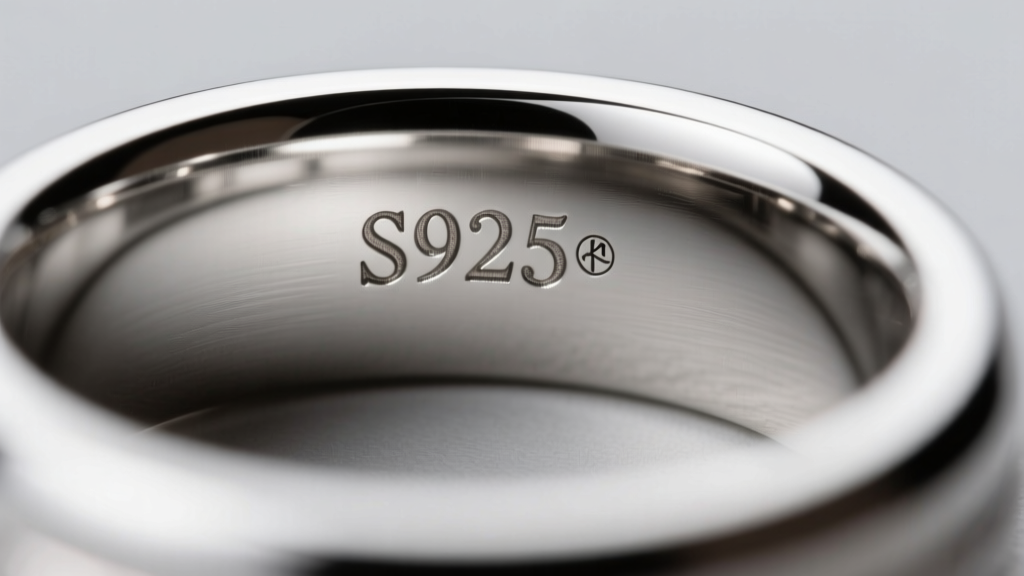
If you have ever shopped for silver accessories online or in boutique stores, you have likely encountered the term s925 jewelry. It is stamped on rings, chains, earrings, and bracelets, serving as a universal shorthand for quality. But as the global jewelry market has expanded, so has the sophistication of counterfeiters. Today, a cheap brass alloy can be stamped with 'S925' and plated with a microscopic layer of silver, fooling even cautious buyers.
As a beginner navigating the silver market, understanding what this stamp actually means—and more importantly, how to verify it—is your best defense against overpaying for plated base metals. This guide breaks down the metallurgy, the counterfeit epidemic, and actionable at-home tests to authenticate your silver.
What Does the S925 Stamp Actually Mean?
The 'S' in S925 stands for Silver, and the '925' represents the purity of the metal: 92.5% pure silver and 7.5% alloy metals. According to the Gemological Institute of America (GIA), pure silver (999 fine silver) is far too soft for everyday jewelry. It would bend, scratch, and lose its shape within days of wear.
To solve this, metallurgists alloy pure silver with other metals—most commonly copper, but occasionally zinc or germanium (in the case of Argentium silver)—to increase tensile strength and durability. The 92.5% threshold is the internationally recognized standard for 'Sterling Silver.' Whether a piece is stamped '925', 'S925', 'Sterling', or 'Ster', it is legally required to meet this exact metallurgical ratio.
The 'S925' Fake Stamp Epidemic
Because the S925 hallmark is so widely trusted, it has become a primary target for fraud. Mass-market manufacturers use CNC engraving machines to stamp 'S925' onto copper, brass, or even stainless steel blanks before dipping them in a thin layer of electroplated silver.
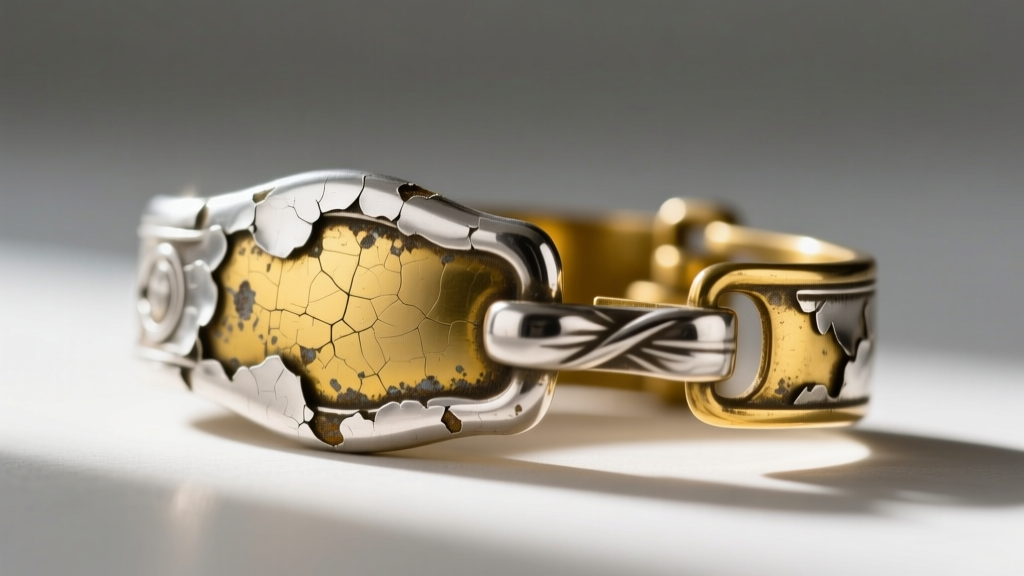
The Federal Trade Commission (FTC) Jewelry Guides strictly prohibit misrepresenting metal purity, yet enforcement across overseas e-commerce platforms is notoriously difficult. A fake S925 stamp costs a manufacturer fractions of a cent to apply, but it allows them to sell a $2 piece of brass jewelry for $45, banking on the buyer's trust in the hallmark.
4 Beginner-Friendly Tests to Verify S925 Jewelry
You do not need an X-ray fluorescence (XRF) spectrometer to catch most fakes. By understanding the physical and chemical properties of silver, you can perform these highly effective tests at home.
1. The Neodymium Magnet Test
Silver is paramagnetic, meaning it exhibits only a very weak, practically unnoticeable attraction to magnets. Base metals like iron, nickel, and cobalt are ferromagnetic and will snap to a magnet instantly.
How to do it: Use a strong N52-grade neodymium magnet (standard fridge magnets are too weak). Hold the magnet near the jewelry. If the piece jumps to the magnet or sticks firmly, it is not solid s925 jewelry; it has a ferromagnetic core. Note: This test will not detect copper or brass fakes, as those metals are also non-magnetic.
2. The Ice Cube Thermal Test
Silver has the highest thermal conductivity of any common metal, measuring an impressive 429 W/(m·K). This means it transfers heat incredibly fast.
How to do it: Place an ice cube on a silver coin or a thick silver chain. The ice should begin melting almost instantly, and the silver should become painfully cold to the touch within seconds. If the ice melts at a normal, slow rate, you are likely holding stainless steel or a copper alloy.
3. The Polishing Cloth Test
Real sterling silver reacts with sulfur in the air to form silver sulfide, which appears as a dark, yellowish, or black tarnish. Plated base metals, however, do not tarnish the same way; their plating simply wears off or flakes.
How to do it: Rub a specialized silver polishing cloth over a tarnished area. If the cloth turns dark grey or black, you are polishing real silver sulfide. If the cloth remains relatively clean but the jewelry underneath turns brassy or pinkish, you have rubbed through a silver plate, exposing the core metal.
4. The Skin Chemistry Reaction
Have you ever worn a 'silver' ring that left a green or black ring on your finger? Real s925 jewelry can sometimes cause a black smudge due to sulfur compounds in your sweat or cosmetics reacting with the copper alloy. However, a bright green stain is a massive red flag. Green skin is caused by copper oxidizing and reacting with the acids in your skin, which happens rapidly when a thin silver plate wears away to expose a high-copper brass core.
S925 vs. Other Common Silver Stamps
Not all silver is created equal. When inspecting hallmarks, use this comparison chart to understand what you are actually buying.
| Stamp | Meaning | Authenticity Notes |
|---|---|---|
| 925 / S925 | 92.5% Pure Silver | The global standard for Sterling Silver. Ideal for daily wear. |
| 999 | 99.9% Fine Silver | Very soft. Usually reserved for investment bullion or delicate bezels. |
| 900 | 90.0% Coin Silver | Common in antique US jewelry and vintage silverware. |
| 800 | 80.0% Silver | Common in vintage European (especially Italian and German) pieces. |
| EPNS | Electro-Plated Nickel Silver | FAKE. Contains zero actual silver. It is a nickel/copper alloy. |
| Tibetan Silver | Unregulated Term | FAKE. Usually a zinc/copper alloy that may contain trace silver or none at all. |
Market Realities: The Pricing Math of S925 Jewelry
One of the most effective ways to spot fake s925 jewelry is to apply basic commodity math. Silver is a precious metal traded on global exchanges. While the spot price fluctuates, let us use a conservative baseline of $28.00 per Troy ounce (approx. 31.1 grams) for our 2026 market context.
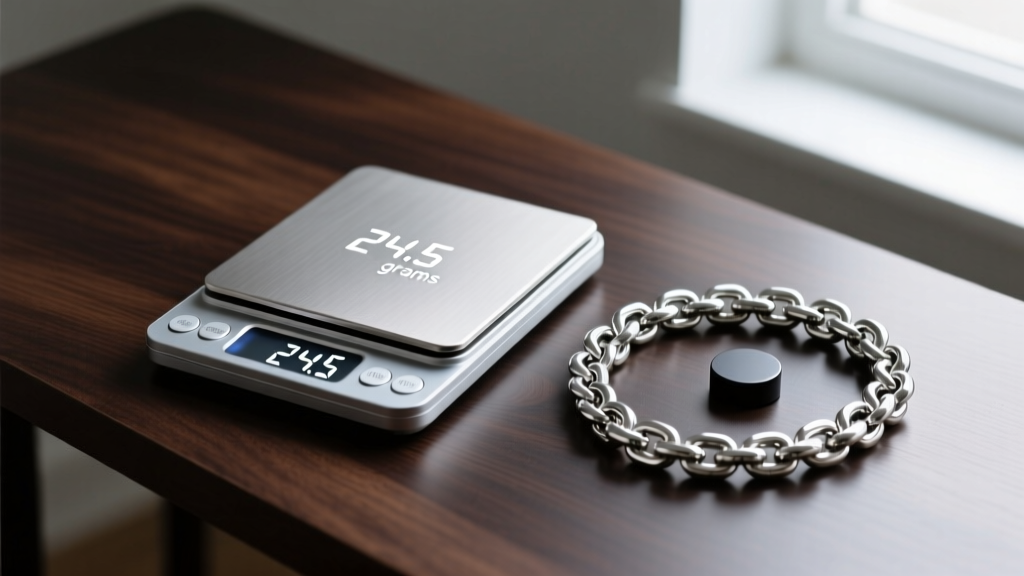
If you are looking at a heavy, 60-gram sterling silver Cuban link chain, the melt value of the raw silver alone is roughly $54.00. Once you factor in manufacturing, casting, polishing, shipping, and retail markup, a legitimate 60-gram solid silver chain cannot physically be sold for $18.99. If a vendor is offering heavy s925 jewelry at prices below the raw melt value of the metal, you are not getting a bargain; you are buying silver-plated brass.
Pro-Tip for Beginners: Always check the weight of the piece in grams. If the seller refuses to provide the exact weight, or if the item feels suspiciously light and 'hollow' for its size, walk away. Density is a physical property that counterfeiters cannot easily fake without changing the metal.
Final Thoughts on Buying Authentic Silver
The S925 stamp is a promise of quality, but in an unregulated digital marketplace, it is a promise that must be verified. By combining the magnet test, thermal conductivity checks, and basic commodity pricing math, you can confidently build a collection of genuine s925 jewelry. Always buy from reputable jewelers who provide clear weight specifications, return policies, and transparent material sourcing.