August Birthstone Jewelry: Peridot vs Spinel Durability Guide
Explore the technical durability of august birthstone jewelry. Compare peridot and spinel Mohs hardness, setting requirements, and pricing for daily wear.

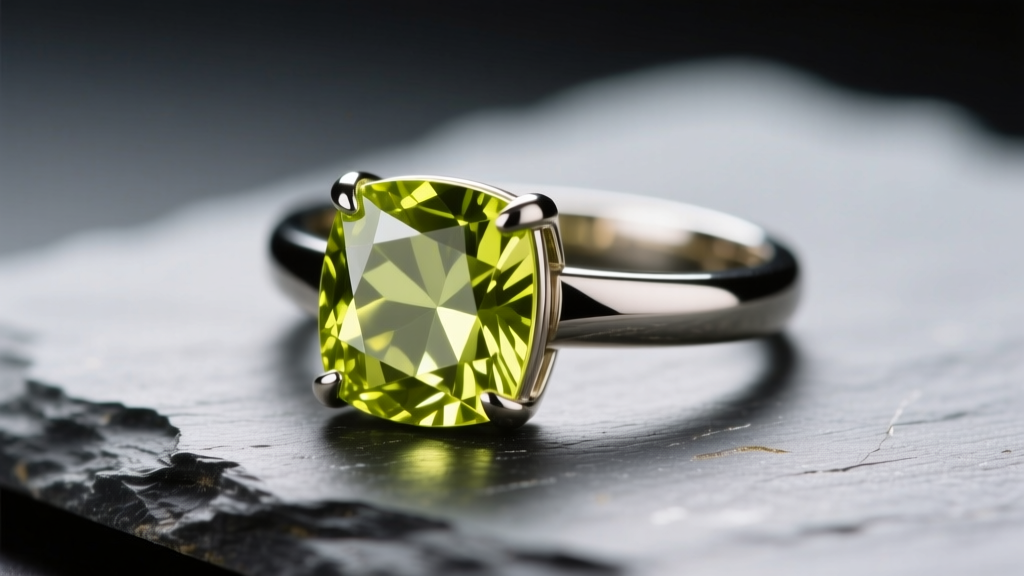
When selecting august birthstone jewelry for daily wear, aesthetic appeal must be balanced against gemological reality. While August boasts three official birthstones—peridot, spinel, and sardonyx—only two possess the mechanical properties required for lifelong, high-impact jewelry like engagement rings or everyday bracelets. In 2026, as consumers increasingly prioritize durability, ethical sourcing, and unique optical properties over traditional diamond monopolies, understanding the technical distinctions between peridot and spinel is critical for both master jewelers and informed buyers.
Historical Context and Modern Gemological Classification
Historically, red spinel was frequently misidentified as ruby, most notably in the Black Prince's Ruby in the British Imperial State Crown. Today, advanced gemological testing easily separates the two. Peridot, the gem-quality variety of olivine, has been mined for over 3,500 years, originating from the volcanic island of Zabargad in the Red Sea. Sardonyx, a banded variety of chalcedony, served as the original ancient August birthstone. However, modern jewelry engineering focuses heavily on peridot and spinel due to their superior light performance and faceting capabilities. Designing high-end august birthstone jewelry requires a deep understanding of how these specific crystal lattices behave under the stress of metalwork and daily abrasion.
Gemological Breakdown: Crystal Systems and Durability
To engineer durable august birthstone jewelry, we must first examine the crystallographic data. Peridot is an iron-magnesium silicate with an orthorhombic crystal system. Spinel is a magnesium aluminum oxide with an isometric (cubic) crystal system. Their structural differences dictate their survival in a ring setting.
Hardness, Cleavage, and Fracture Mechanics
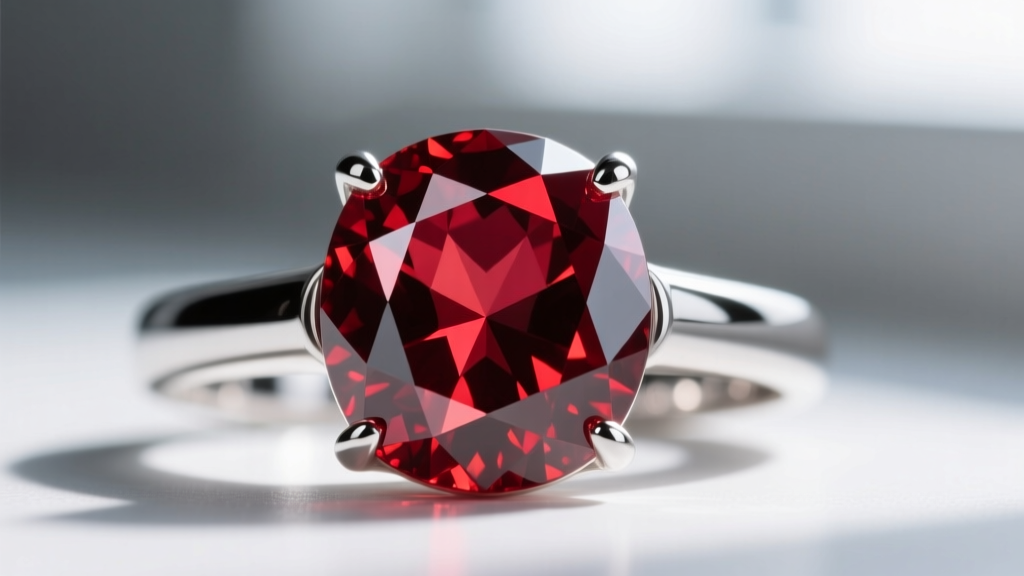
According to the Gemological Institute of America (GIA), peridot ranks 6.5 to 7 on the Mohs scale. More critically, peridot exhibits distinct cleavage on the {010} plane. Cleavage refers to the tendency of a crystal to break along flat, structural weak points. This makes peridot highly susceptible to chipping if struck at the wrong angle, particularly on the girdle or sharp corners of a step cut. Conversely, spinel ranks 8 on the Mohs scale and possesses no cleavage, breaking instead with a conchoidal fracture. This gives spinel superior toughness, making it a vastly superior candidate for exposed prong settings and high-impact daily wear.
Optical Properties and Light Performance
Peridot is doubly refractive (birefringence of 0.036), meaning light splits into two rays as it enters the stone, creating a slight doubling of facet edges visible under 10x magnification. Its refractive index (RI) sits at 1.65 to 1.69. Spinel is singly refractive (isotropic) with an RI of 1.712 to 1.736, yielding exceptional brilliance and a glass-like luster that rivals diamond in well-cut specimens. Because spinel lacks birefringence, light returns more directly to the eye, giving it a sharper, more brilliant appearance in low-light environments compared to the softer, velvety glow of peridot.
Setting Engineering and Metalwork Specifications
The structural vulnerabilities of peridot demand specific metalwork. When designing august birthstone jewelry featuring peridot, jewelers must mitigate impact risks through precise engineering.
- Bezel Settings: The gold standard for peridot. A full bezel, typically milled from 18-gauge 14k or 18k gold, encases the girdle, protecting the vulnerable cleavage planes from lateral impacts. The bezel wall should be burnished tightly to prevent debris accumulation.
- V-Prongs and Corner Protection: If a prong setting is desired, V-prongs must be used on the corners of rectangular, emerald, or step-cut peridots. Standard round prongs concentrate pressure on a single point, risking corner shearing. Prong wire should be at least 1.2mm thick to resist deformation.
- Metal Selection: 14k or 18k gold is preferred for peridot. Platinum is excellent for spinel due to its high tensile strength and secure grip, but the higher setting pressure required for platinum can sometimes induce stress fractures in heavily included peridots during the stone-setting process.
Cut Quality: Precision vs. Native Faceting
The cut of the gemstone drastically alters its structural integrity and optical performance. Peridot's birefringence requires specific crown angles (typically 35 to 40 degrees) to avoid 'windowing'—a dead zone in the center of the stone where light leaks out the pavilion. Native-cut peridots from commercial mines in China or Vietnam often feature overly deep pavilions to retain carat weight, resulting in extinction (dark areas) and increased vulnerability to chipping due to uneven girdle thickness. Precision-cut peridots, often faceted by specialized lapidaries in the US or Germany, optimize light return and ensure a level, safe girdle. Spinel, with its higher RI, is more forgiving of pavilion angles but benefits immensely from precision cutting to maximize its natural brilliance and dispersion.
Pricing Matrix and Quality Grading (2026 Market Data)
The valuation of these stones diverges significantly based on origin, color saturation, and treatment status. Below is a technical pricing matrix for fine-quality, eye-clean stones in the 1.50 to 2.50 carat range, reflecting current 2026 wholesale and retail market conditions.
| Metric | Peridot (Olivine) | Spinel (Magnesium Aluminum Oxide) |
|---|---|---|
| Top Color Grade | Vivid yellowish-green (no brown modifiers) | Vivid red (Burmese) or Neon pink (Mahenge) |
| Clarity Expectation | Eye-clean (loupe inclusions like lily pads common) | Eye-clean to slightly included (silk acceptable) |
| Price per Carat (1.5-2.5ct) | $150 - $450 USD | $800 - $6,000+ USD |
| Primary Origins | Myanmar, Pakistan, USA (Arizona) | Myanmar, Tanzania, Vietnam |
| Treatment Status | 100% Untreated (Natural) | Typically Untreated (Heat rare) |
As noted in the GIA Spinel Quality Factors guide, untreated red and pink spinels from historical deposits like Mogok, Myanmar, command massive premiums due to severe supply constraints. Conversely, peridot remains one of the most accessible untreated gemstones on the market, with Pakistani 'Supreme' grade material from the Suppatt region offering exceptional color at a fraction of the cost of top-tier spinel.
Failure Modes and Maintenance Protocols
Improper care is the leading cause of degradation in august birthstone jewelry. Jewelers and owners must adhere to strict maintenance protocols to prevent catastrophic failure.
Thermal Shock and Acid Sensitivity
Peridot is highly sensitive to thermal shock. Placing a peridot ring in an ultrasonic cleaner or exposing it to a jeweler's torch during ring sizing can cause internal stress fractures to propagate, instantly shattering the stone. Even the use of heat-absorbing gels like Kool Jewel is not a guarantee of safety. Furthermore, peridot is easily etched by sulfuric acid and can lose its polish from prolonged exposure to acidic perspiration or harsh household chemicals. Spinel, however, is highly stable and generally safe for ultrasonic cleaning, though steam cleaning should be avoided if the stone has surface-reaching fractures.
The Sardonyx Caveat for Daily Wear
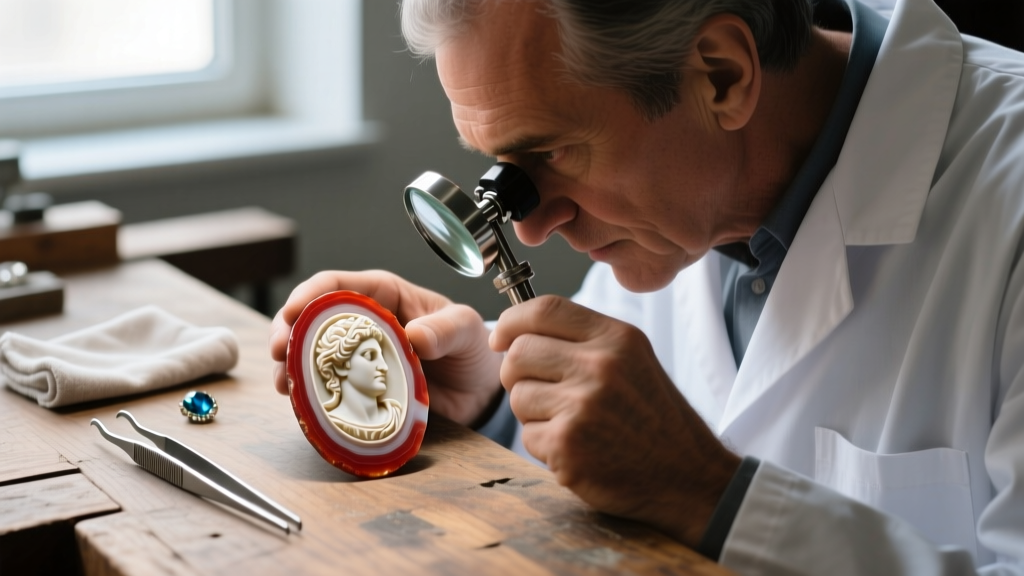
While sardonyx is August's traditional third birthstone, its Mohs hardness of 6.5 to 7 and porous, banded cryptocrystalline quartz structure make it unsuitable for faceted daily-wear rings. According to the Mindat Mineral Database, its trigonal crystal system and micro-fractures between bands make it prone to delamination under impact. It is best reserved for low-impact applications like pendants, earrings, or carved cameos, where its structural integrity is preserved through mass rather than faceting.
Sourcing, Synthetics, and Treatment Disclosures
Transparency is paramount in modern gemology. Peridot is almost never treated; its color is purely a result of iron content within its crystal lattice. This makes it a favorite for purists seeking 100% natural, untreated gemstones. Spinel is also typically untreated, though the market is currently flooded with synthetic (flux-grown or Czochralski) spinels. Buyers must demand AGL, SSEF, or GIA reports for any high-value spinel to verify natural origin. Gemologists identify Verneuil (flame-fusion) synthetic spinel by the presence of curved striae and gas bubbles, while flux-grown synthetics may contain platinum platelets from the crucible. Natural spinel will instead feature octahedral crystal inclusions, healed fractures, or fine rutile silk.
Ultimately, engineering high-quality august birthstone jewelry requires matching the stone to the wearer's lifestyle. For active individuals seeking a vibrant, lifelong daily-wear ring, spinel is the undisputed technical champion, offering diamond-like durability with exceptional color. For those who prefer the unique, earthy vibrance of peridot, protective bezel settings, precision cutting, and rigorous maintenance protocols are non-negotiable requirements for long-term survival.