Mens Birthstone Jewelry: 2026 Budget & Value Guide
Discover the true value of mens birthstone jewelry in 2026. Compare lab-grown vs. natural stones, metal costs, and durability for everyday wear.

The Real Cost of Mens Birthstone Jewelry in 2026
Navigating the market for mens birthstone jewelry requires a strategic approach that balances aesthetic preference, material longevity, and financial value. As we move through 2026, the jewelry sector has seen a massive shift in how gemstones are sourced and set, particularly in men's designs. The rise of premium lab-grown alternatives and advanced metallurgy has completely rewritten the traditional pricing models. For men, jewelry is often subjected to harsher daily conditions—knocking against steering wheels, gym equipment, and tools. Therefore, evaluating value isn't just about the initial price tag; it is about the cost-per-wear and the structural integrity of the piece over a decade. According to the GIA Gem Encyclopedia, understanding the intersection of gemstone hardness and metal tensile strength is the foundational step in making a financially sound jewelry investment.
Durability Meets Budget: The Mohs Scale Factor
When assessing the budget for men's birthstone rings or bracelets, the Mohs scale of mineral hardness is your most critical financial metric. A softer stone might be cheaper upfront, but if it scratches, chips, or shatters within six months, its true value plummets. Men's rings, in particular, require stones that rank at least a 7.5 on the Mohs scale to withstand accidental impacts without requiring costly repolishing or replacement.
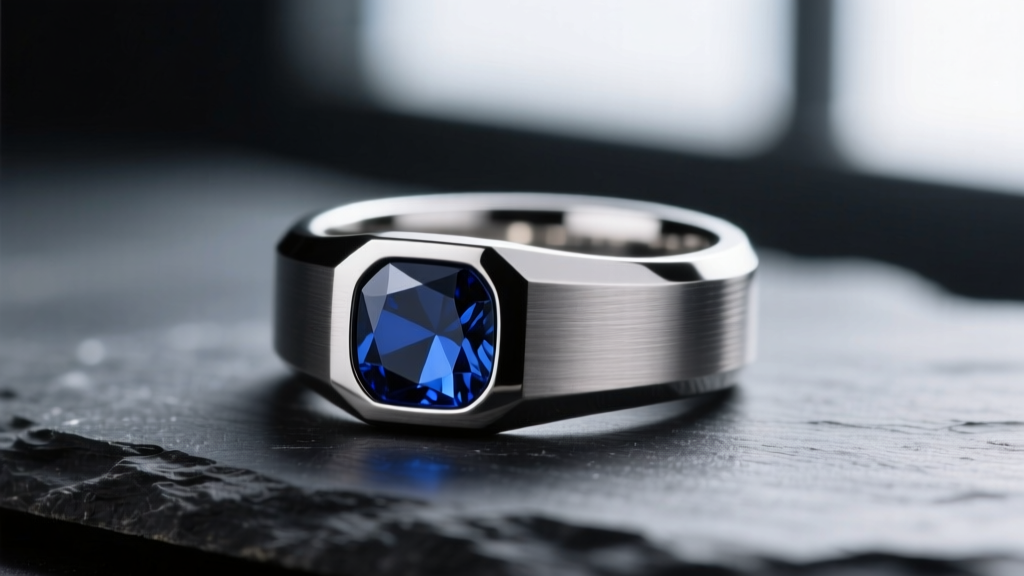
For example, traditional birthstones like Opal (October, Mohs 5.5-6.5) or Pearl (June, Mohs 2.5-4.5) are notoriously fragile. If a client wants an October birthstone for an everyday ring, recommending a bezel-set Fire Opal or a dark Boulder Opal with a steel backing will cost more initially ($300-$600) but will save hundreds in replacement stones compared to a fragile prong-set white opal ($150). Conversely, September's Sapphire (Mohs 9) and April's Diamond (Mohs 10) offer generational durability, making their higher upfront costs highly justifiable from a value perspective.
| Birthstone (Month) | Mohs Hardness | Men's Wearability | Avg. Budget Range (Natural) | Avg. Budget Range (Lab-Grown) |
|---|---|---|---|---|
| Sapphire (Sept) | 9.0 | Excellent (Everyday) | $1,200 - $4,000+ | $80 - $250 |
| Ruby (July) | 9.0 | Excellent (Everyday) | $1,500 - $5,000+ | $90 - $300 |
| Spinel (Aug) | 8.0 | Very Good | $400 - $1,200 | $60 - $150 |
| Onyx (Alt. Dec) | 7.0 | Good (With Bezel) | $50 - $150 | $20 - $60 |
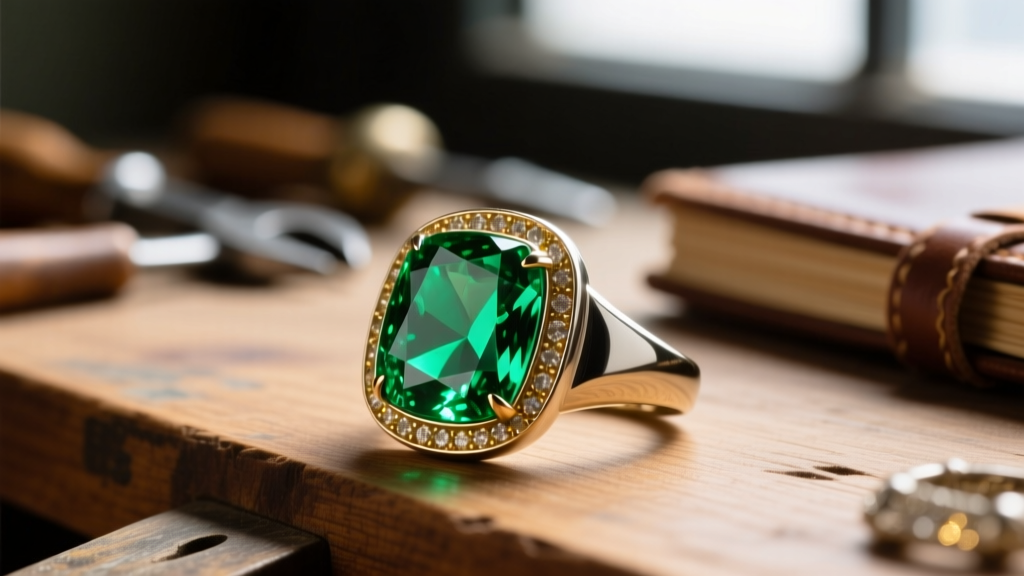
| Emerald (May) | 7.5 - 8.0 | Fair (Brittle/Fissures) | $800 - $3,500+ | $150 - $400 |
Metal Allocations: Where to Spend and Where to Save
The metal housing the birthstone accounts for 40% to 70% of the total budget in men's jewelry. In 2026, smart buyers are reallocating funds from high-karat gold to advanced alternative metals or lower-karat golds to prioritize the gemstone's quality and security.
Tungsten & Titanium (The Budget Kings)
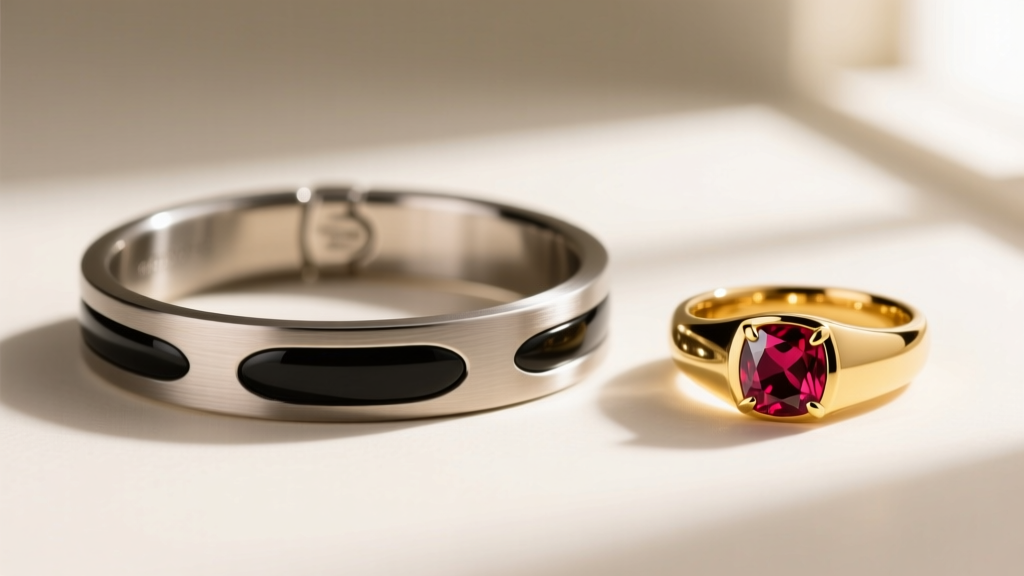
If your total budget is under $250, tungsten carbide and aerospace-grade titanium are the undisputed champions of value. Tungsten carbide boasts a Mohs hardness of 8.5 to 9, meaning it will never scratch or lose its polish. A black tungsten ring with a flush-set lab-grown ruby can be sourced for $80 to $120. However, the trade-off is brittleness; tungsten cannot be resized and can shatter under extreme blunt force (like a heavy hammer strike). Titanium (Grade 5 / Ti-6Al-4V) offers incredible tensile strength and is featherlight, making it ideal for men's birthstone bracelets and dog tags, usually ranging from $100 to $300 depending on the inlay complexity.
14k vs 18k Gold (The Value Sweet Spot)
For traditionalists who want precious metals, 14k gold is the ultimate value proposition for men's active lifestyles. While 18k gold (75% pure gold) offers a richer color and higher resale prestige, its Vickers hardness is roughly 125, making it prone to bending and prong deformation. 14k gold (58.5% pure gold) has a Vickers hardness closer to 140-150, providing significantly better grip on gemstone prongs. Allocating your budget to a 14k gold setting and a high-clarity lab-grown stone yields a vastly superior piece of everyday jewelry compared to an 18k setting with a heavily included, low-grade natural stone.
2026 Price Bracket Breakdown for Men
To effectively budget for mens birthstone jewelry, it helps to categorize the market into three distinct tiers based on current 2026 retail pricing and material combinations.
- Tier 1: The Pragmatist ($50 - $200)
Focused on alternative metals (tungsten, stainless steel, titanium) paired with lab-grown stones or durable opaque gems like Black Onyx, Lapis Lazuli, or Malachite. Expect bezel or flush settings that protect the stone. Ideal for first-time buyers or men working with their hands. - Tier 2: The Enthusiast ($250 - $800)
The sweet spot for 10k or 14k solid gold, sterling silver with heavy rhodium plating, and premium lab-grown sapphires, rubies, or emeralds. This tier allows for intricate signet ring designs, channel-set birthstone bands, and custom engravings. You are paying for precise lapidary work and reliable metallurgy. - Tier 3: The Heirloom Collector ($1,000 - $5,000+)
Reserved for 18k gold or platinum settings featuring untreated, natural gemstones with verifiable origins (e.g., Burmese Rubies, Colombian Emeralds). At this level, you are paying for rarity, natural inclusions that act as a fingerprint, and the intrinsic resale value of the raw materials. The American Gem Society strongly recommends obtaining independent lab reports (like GIA or AGL) for any natural stone purchase in this bracket.
Lab-Grown vs. Natural: A Value Assessment
The most significant budget variable in 2026 is the choice between lab-grown and natural birthstones. Lab-grown stones are chemically, physically, and optically identical to their mined counterparts. For men's jewelry, where stones are often cut into larger, bolder shapes (like emerald cuts or cushion cuts for signet rings), the price difference is staggering.
A 2-carat natural blue sapphire of decent color and clarity will easily command $2,500 to $4,000. A visually identical 2-carat lab-grown sapphire costs between $100 and $180. This $2,000+ savings can be reallocated to upgrade the metal from 14k gold to platinum, resulting in a heavier, more indestructible ring.
However, from a strict financial investment standpoint, lab-grown stones possess virtually zero resale value. They are a depreciating consumer good, much like a luxury watch or a car. If your definition of 'value' includes passing down an asset that retains market liquidity, natural stones with documented provenance are the only viable choice. If 'value' means maximizing visual impact, size, and durability for the lowest possible fiat expenditure, lab-grown is the undisputed winner.
Final Verdict: Maximizing Your Investment
Ultimately, assessing the budget and value of mens birthstone jewelry requires aligning the piece with the wearer's lifestyle. For the active man, a bezel-set lab-grown sapphire in a 14k gold or tungsten band offers the highest utility-to-cost ratio, ensuring the ring survives decades of wear without requiring maintenance. For the collector or executive, investing in a natural, untreated ruby set in platinum provides an heirloom-quality asset that holds intrinsic market value. By prioritizing Mohs hardness, understanding the structural realities of metal alloys, and making an informed choice on stone origin, you can secure a piece of men's jewelry that delivers exceptional value long after the initial purchase.